Why Plant Extraction Efficiency Drops and How to Fix It
Oct 10, 2026
Efficiency loss in botanical processing is rarely dramatic. It creeps — a yield point here, an extra hour there, a solvent bill that grows quietly every quarter — until the plant is running twice the cycles for the same output. Most of the time the raw material is fine and the recipe is fine; the plant extraction equipment is the limiting factor. Xi'an Bioland Instrument Co., Ltd. builds ultrasonic plant extraction equipment designed specifically to remove those hidden losses: cavitation-driven cell wall rupture at 40–60 °C, complete cycles in 24–40 minutes, yield improvements of 50–500%, and integrated vacuum concentration with 92–96% solvent recovery. Every unit is SUS304/316L, CE and ISO certified, GMP/FDA compliant, and backed by 15 years of process engineering. This article walks through the real reasons efficiency drops — and the equipment-level fixes that restore it.
Common Causes Behind Low Extraction Efficiency
Cell Walls That Never Fully Open
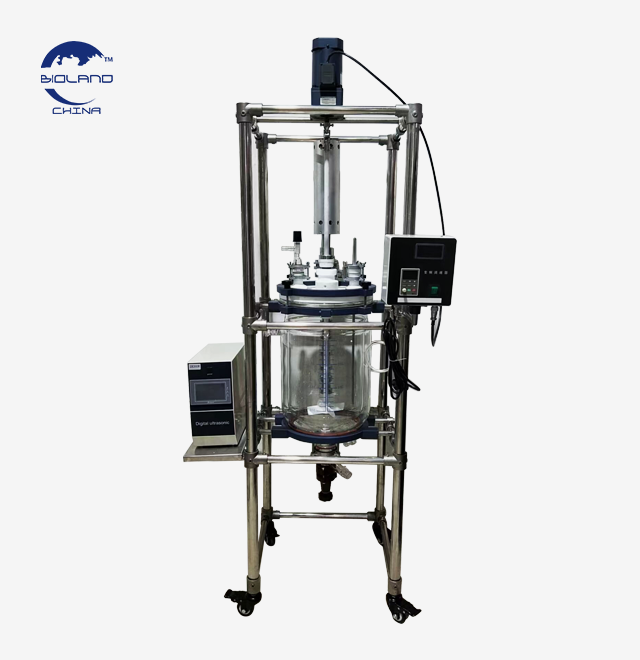
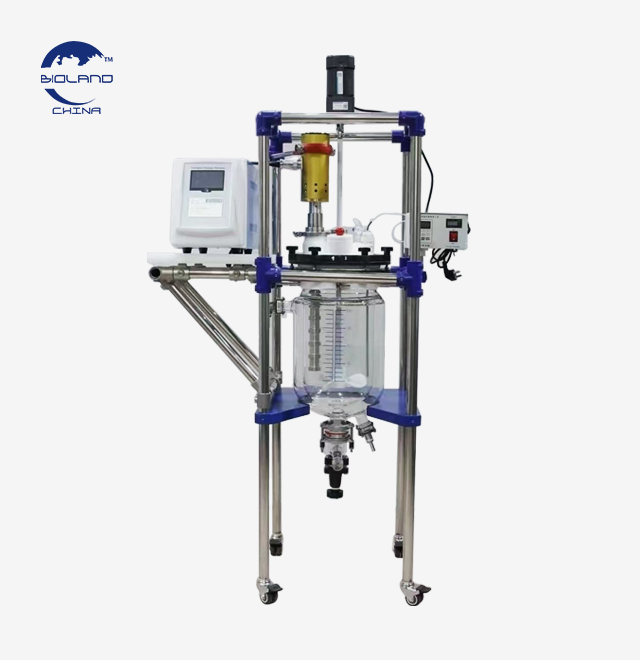
Cellulose, lignin and pectin form a barrier that hot water penetrates slowly. In conventional decoction, a large fraction of flavonoids, polysaccharides and alkaloids simply stays locked inside intact cells. Ultrasonic plant extraction equipment solves this mechanically: collapsing cavitation bubbles generate micro-jets that fracture cell walls and create direct diffusion channels. The active compound does not have to wait for slow osmosis — it is released in minutes rather than hours.
Wrong Solvent, Wrong Ratio
A surprising number of efficiency complaints trace back to solvent selection. Polar glycosides need water or dilute ethanol; triterpenes, oleoresins and essential oils need 70–95% ethanol or a dedicated organic solvent. Bioland's plant extraction equipment accepts water, ethanol, methanol or acetone and runs under negative, atmospheric or positive pressure, so the process can be matched to the molecule instead of the molecule being forced to fit the tank.
A Ginkgo Flavonoid Case: 6.2% to 9.8%
A Jiangsu herbal extract supplier was stuck at 6.2% total flavone glycosides from ginkgo leaf despite three-pass reflux. Their pain: high steam bills, long cycles, and buyers demanding 24% purified grade. We supplied a 300 L ultrasonic plant extraction equipment unit running 60% ethanol at 55 °C for 35 minutes, two passes. Yield reached 9.8%, cycle time fell from nine hours to under two, and steam consumption dropped roughly 40%. The client reported payback in eight months.
Over-Extraction of the Wrong Things
Efficiency is not just quantity. Prolonged boiling drags out starch, pectin and protein that clog filters and complicate purification. Because cavitation is selective and short, liquor from Bioland instrument plant extraction equipmentcontains fewer impurities, making separation and purification faster and cheaper downstream. One client cut resin column regeneration frequency by a third after switching.
How Equipment Settings Affect Extraction Results
Temperature: The Most Expensive Mistake
Running hotter feels like it should extract more. In practice, above 70–80 °C anthocyanins fade, quercetin oxidizes, polysaccharide chains depolymerize and volatile aromatics escape. The optimum window for ultrasonic plant extraction equipment is 40–60 °C. Below that, diffusion slows; above it, degradation begins. PID control on our systems holds setpoint within ±1 °C, which is why batch results stop drifting.
Time: Longer Is Not Better
Most botanical extractions reach equilibrium far earlier than operators assume. With ultrasound, 24–40 minutes typically captures the optimum — more than two-thirds shorter than traditional decoction. Extending beyond that consumes energy, degrades actives and extracts impurities. Bioland instrument's plant extraction equipment uses PLC timing and online concentration monitoring so the endpoint is measured, not guessed by the clock.
Vacuum Level and Concentration Temperature
Concentration is the second place efficiency leaks. Atmospheric evaporation cooks the extract a second time. Our plant extraction equipment concentrates at −0.085 MPa with evaporation temperature of 60–100 °C and short residence time. Secondary vapour passes through condenser, cooler and oil separator, then returns to the extraction tank as fresh solvent, creating genuine reflux extraction until the liquor runs colourless.
Particle Size, Loading and Solid-Liquid Ratio
Grinding to 20–40 mesh usually gives the best balance — finer material extracts faster but blinds filters. Overloading the vessel restricts solvent circulation and creates dead zones where ultrasound cannot reach. Bioland engineers supply a validated loading and ratio sheet for each material before the plant extraction equipment ships, typically recommending 1:8 to 1:12 for leaves and 1:15 to 1:25 for polysaccharide-rich material.
Ways to Improve Yield and Process Stability
Move From Manual Judgement to Automation
Two operators running the same manual tank will produce two different extracts. Bioland instrument's intelligent PLC control system handles solvent charging, temperature ramping, ultrasonic timing, transfer, concentration and automatic discharge. With online concentration measurement and in-line CIP washing, plant extraction equipment achieves continuous feeding and discharge, pipelined and automated concentration, and batch-to-batch RSD typically below 3%.
A Chilli Oleoresin Case: Consistency Wins the Contract
An Indian oleoresin producer kept failing colour-value specs — batches ranged from 60,000 to 92,000 CU. Buyers wanted ±5%. Bioland installed 500 L plant extraction equipment with PLC control, fixed ultrasonic power density and automated endpoint detection at 50 °C. Colour value stabilized at 88,000–92,000 CU, capsaicin recovery improved 23%, and the client secured a two-year supply contract they had previously lost on consistency grounds.
Multi-Stage and Reflux Strategies
Single-pass extraction always leaves value in the marc. Ourplant extraction equipment supports hot reflux circulation, Soxhlet dynamic extraction, percolation, and water or alcohol precipitation on the same skid. Staging two shorter passes almost always beats one long pass: the second pass works against a fresh concentration gradient, recovering 12–18% additional active that a single soak abandons.
Closing the Solvent Loop
Ethanol cost can exceed electricity cost in alcohol-based processes. The condenser–cooler–oil separator chain on Bioland plant extraction equipment recovers 92–96% of solvent per batch, and residual colourless liquor in the extraction tank is reused as the next cycle's charge. For a plant running 300 batches annually, that recovery alone often justifies the equipment upgrade.
Key Factors That Reduce Plant Extraction Performance
Dead Zones and Poor Energy Distribution
Cheap ultrasonic tanks mount a few transducers on one wall, leaving cold spots where material never sees cavitation. Bioland instrument distributes transducer arrays to deliver uniform power density across the full vessel volume. This is the single most overlooked design difference between low-cost imports and engineered plant extraction equipment — and it shows up directly in yield variance.
Fouling, Scaling and Poor Cleaning
Scorched residue on jacket walls reduces heat transfer batch after batch, so operators compensate with higher steam pressure, accelerating the problem. All wetted parts of our plant extraction equipment are mirror-polished SUS304 or SUS316L with sanitary tri-clamp fittings, three-layer insulation and in-line CIP spray balls. Jacket pressure is controlled at 0.09–0.3 MPa, and demisters on both vapour outlets prevent carryover.
Undersized or Mismatched Auxiliaries
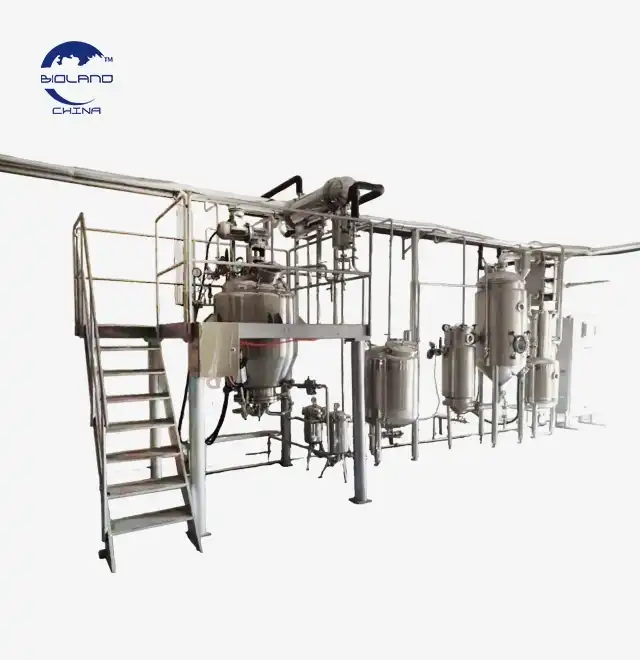
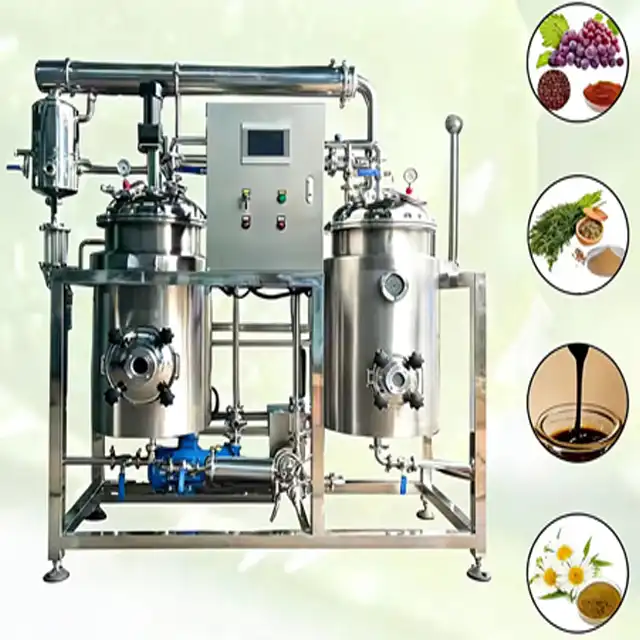
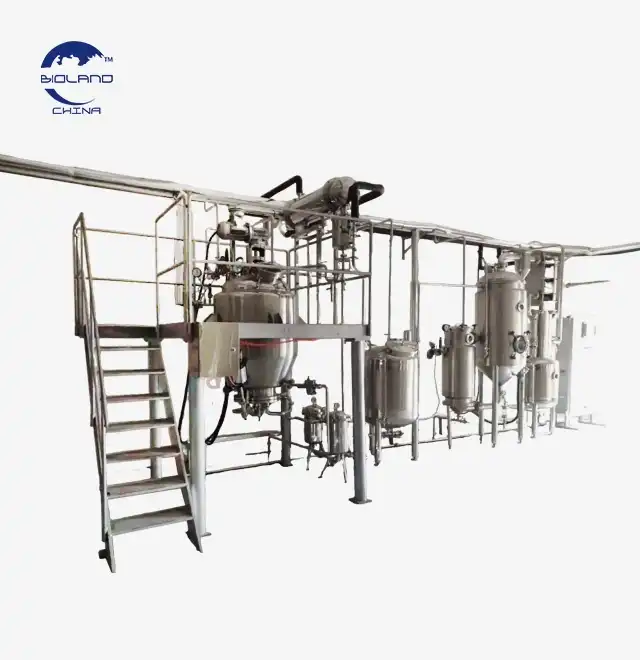
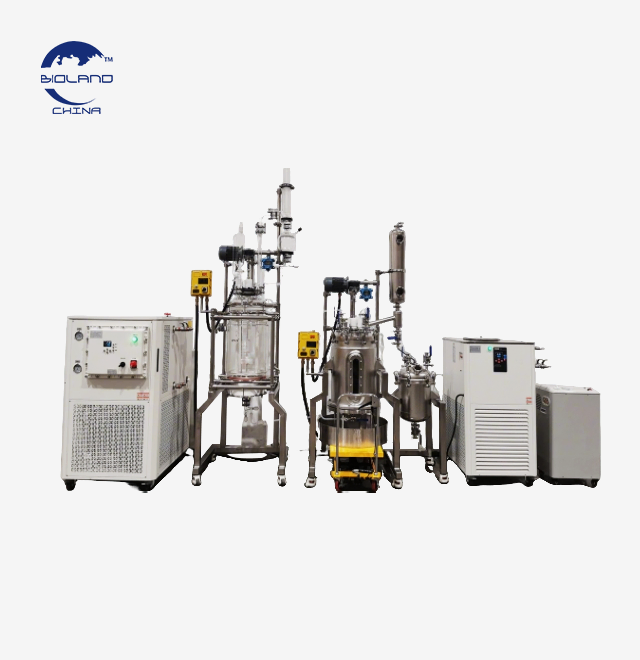
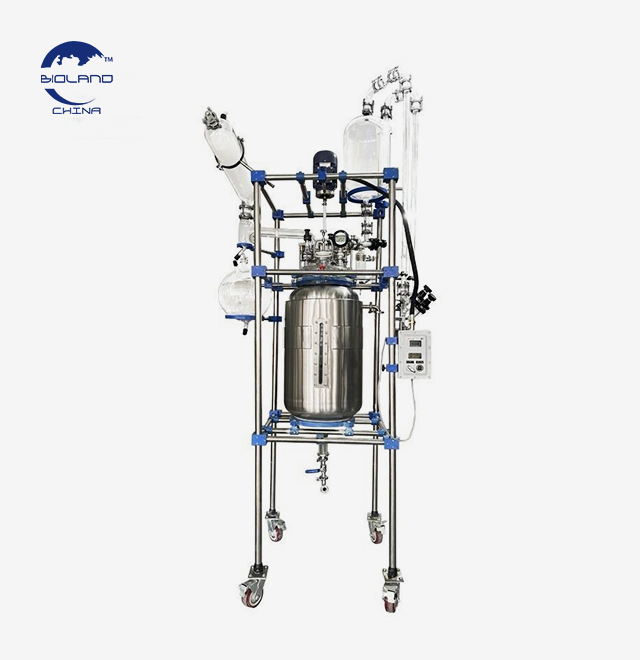
A perfect extraction tank paired with an undersized condenser or a weak vacuum pump will bottleneck the entire line. Complete Bioland instrument plant extraction equipment includes ultrasonic generator and transducers, extraction tank, tubular heater, evaporator, condenser, oil separator, oil collector, liquid pump, metering tank, storage tank, filter, vacuum pump and control cabinet — sized as a matched system. Where no steam exists, a thermal-oil heating package is added.
Operator Practice and Safety Discipline
Efficiency and safety are linked. Leaking seals lose solvent and vacuum simultaneously. Bioland instrument supplies explosion-proof motors and electrics for ethanol service, nitrogen blanketing, pressure relief, earthing and interlocked vacuum control, plus documented SOPs covering seal inspection, transducer temperature monitoring and mandatory CIP after each campaign. Well-maintained plant extraction equipmentholds its performance for years.
Solutions for Better Extraction Efficiency Control
Start With a Pilot, Not a Guess
Scaling a lab recipe straight to production is how efficiency gets lost. Most clients begin with 50 L or 100 L plant extraction equipment to establish solvent ratio, temperature curve and ultrasonic dwell, then scale to matched production geometry. Commissioning on site then takes under two weeks instead of months of trial batches.
Selecting the Right Model
Standard models span BL-TN-C50L to BL-TN-C500L: volumes 50, 100, 200, 300 and 500 L; evaporation capacity 20, 50, 70, 100 and 200 kg/h; motor power 2.7–3.5 kW; steam consumption 25–250 kg/h; system vacuum −0.085 MPa; compressed air 0.5–0.6 MPa; evaporation temperature 60–100 °C. Larger production plant extraction equipment is engineered to order by our in-house R&D team.
Technology parameter
Model
BL-TN-C50L
BL-TN -C100L
BL-TN -C200L
BL-TN -C300L
BL-TN -C500L
Volume (L)
50
100
200
300
500
Evaporation capacity (kg/h)
20
50
70
100
200
Motor power(KW)
2.7
2.7
2.7
3.5
3.5
Steam consumption(kg/h)
25
60
90
120
250
System vacuum (MPa)
-0.085
-0.085
-0.085
-0.085
-0.085
Pressure of jacket(MPa)
0.09~0.3
0.09~0.3
0.09~0.3
0.09~0.3
0.09~0.3
Compressed air (MPa)
0.5~0.6
0.5~0.6
0.5~0.6
0.5~0.6
0.5~0.6
Evaporation temperature(°C)
60~100
60~100
60~100
60~100
60~100
A Propolis Case: Solving Wax Interference
A Turkish propolis processor struggled with wax emulsifying into their tincture, dropping flavonoid purity below 15%. Bioland instrument configured 200 L plant extraction equipment for 75% ethanol at 45 °C, 30 minutes, with controlled cooling separation of wax before concentration. Total flavonoid content reached 22.4%, filtration losses dropped by half, and the client added a second line within a year for royal jelly and pollen actives.
One Asset, Many Products
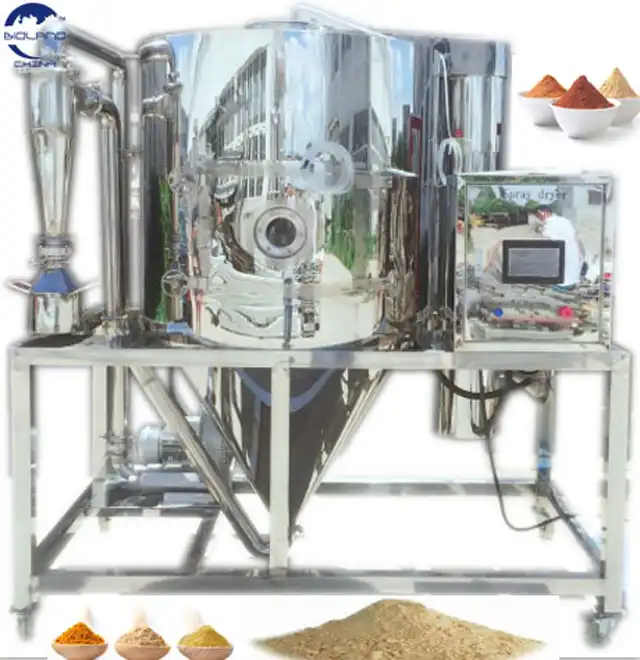
Idle equipment is inefficient equipment. The same Bioland instrument plant extraction equipment runs stevia glycosides, mushroom and Ganoderma polysaccharides, tea polyphenols and aromatic oils, coffee caffeine, quercetin and rutin from sophora bud or mulberry leaf, natural pigments including anthocyanins and carotenoids, rose and peppermint essential oils, wheat germ oil, soy and marine fish protein, goji and jujube actives, and peony seed oil.
Service That Protects Your Investment
Customized plant extraction equipment ships in about 30 business days; catalogue units in 5–7 days. Sea, rail and air freight are all supported. A dedicated specialist sends weekly photo or video production updates, detailed inspection media before dispatch, and clients may schedule a Factory Acceptance Test at our Xi'an facility. Every system carries a one-year warranty with lifetime maintenance support.
Conclusion
Falling extraction efficiency almost always has an identifiable cause: unopened cell walls, the wrong solvent, excessive temperature, guessed endpoints, uneven ultrasonic energy, fouled surfaces or mismatched auxiliaries. Each is fixable at the equipment level. Bioland instrument's ultrasonic plant extraction equipment addresses them together — 40–60 °C cavitation, 24–40 minute cycles, 50–500% yield gains, PLC automation, online concentration monitoring, vacuum concentration and 92–96% solvent recovery. With CE and ISO certification, GMP/FDA-compliant SUS304/316L construction and 15 years of engineering behind it, every plant extraction equipment system is delivered as a validated process solution, from pilot scale to full production lines.
FAQ
1. How much can ultrasonic extraction improve yield?
Typically 50–500% versus traditional decoction, with real cases such as ginkgo flavonoids rising from 6.2% to 9.8%.
2. What temperature should I run?
40–60 °C is optimal, protecting flavonoids, polysaccharides, pigments and volatile aromatics while reducing energy cost.
3. Can one machine handle different raw materials?
Yes. Water, ethanol, methanol or acetone systems are supported, covering leaves, roots, fungi, resins, seeds and spices.
4. What capacities are available?
50 L, 100 L, 200 L, 300 L and 500 L as standard, with customized larger production lines on request.
5. Is solvent recovered?
Yes — the condenser, cooler and oil separator chain recovers 92–96% of ethanol per batch.
Stop Losing Yield — Let Bioland Instrument Diagnose Your Process
Bioland Instrument has spent 15+ years engineering extraction, concentration, distillation, reaction, filtration, crystallization, emulsification and drying systems for clients across Europe and Southeast Asia. Our CE and ISO certified, GMP/FDA-compliant plant extraction equipment is designed by an in-house R&D team around your specific botanical, target compound and throughput — with a validated parameter sheet, not a generic brochure spec. You get competitive factory pricing, full OEM/ODM support, weekly photo and video production tracking, optional Factory Acceptance Testing, flexible sea, rail and air shipping, a one-year warranty and lifetime maintenance. Tell us your raw material, current yield and daily capacity, and our engineers will return a tailored process flow and quotation. Contact us atinfo@biolandequip.com.
References
1. Chemat, F., Rombaut, N., Sicaire, A.-G., Meullemiestre, A., Fabiano-Tixier, A.-S., & Abert-Vian, M. Ultrasound Assisted Extraction of Food and Natural Products: Mechanisms, Techniques, Combinations, Protocols and Applications. Ultrasonics Sonochemistry.
2. Vilkhu, K., Mawson, R., Simons, L., & Bates, D. Applications and Opportunities for Ultrasound Assisted Extraction in the Food Industry — A Review. Innovative Food Science and Emerging Technologies.
3. Azmir, J., Zaidul, I. S. M., Rahman, M. M., et al. Techniques for Extraction of Bioactive Compounds from Plant Materials: A Review. Journal of Food Engineering.
4. Chemat, F., Vian, M. A., & Cravotto, G. Green Extraction of Natural Products: Concept and Principles. International Journal of Molecular Sciences.
5. Ameer, K., Shahbaz, H. M., & Kwon, J.-H. Green Extraction Methods for Polyphenols from Plant Matrices and Their Byproducts: A Review. Comprehensive Reviews in Food Science and Food Safety.
6. Mason, T. J., Chemat, F., & Vinatoru, M. The Extraction of Natural Products Using Ultrasound or Microwaves. Current Organic Chemistry.
The reactor is beautifully mirror-polished and fully complies with GMP requirements for the pharmaceutical industry. The performance is excellent! Overall, we are very satisfied! We also provided with some feedback on our process improvements, which we hope will be helpful.
2024-04-09
Laboratory
Excellent and professional service. Always reply our questions very fast. All reactors and chiller we received are good too.
2024-02-15
Research Institute
Quality is beyond our expectation actually. After we got the extraction equipment and started using it, the performance was beyond our expectation. Very easy to use and very efficient to run. Service always respond us very quickly. Was also very helpful to help us. Thanks Bioland team. Very happy to work with you.
2023-11-20
Biotech Company
We are happy about the new purchase as always. Equipment and services are both good.
2023-08-05
Instrument Lab
This is the second order with Bioland instrument and everything is good as the first dateText.
2023-05-12
Global Trading Partner
Bioland instrument team is very helpful and professional. The sales helped us select the right equipment for our application, and their logistics people handled the transportation and customs declaration for our shipment. All that saved us a lot of work.