Boost Mushroom Yield: Why Ultrasonic Extraction Beats Traditional Methods
Oct 9, 2026
In the competitive nutraceutical and functional food markets of today, mushroom processors need to find a way to get higher concentrations of valuable polysaccharides without lowering quality or going over budget. Traditional methods like hot water washing, alcohol maceration, and steam distilling often trap important bioactive compounds inside tough fungus cell walls. This leads to low yields, long processing times, and active ingredients that are broken down. New, cutting-edge technology is the answer. Xi'an Bioland Instrument Co., Ltd. makes ultrasonic mushroom extraction equipment that uses high-frequency acoustic cavitation to break up cell structures and release bioactives like polysaccharides and triterpenes more efficiently than ever before. Ultrasonic systems improve the extraction rate by 50–500% while cutting processing time by over two-thirds. This is in contrast to traditional extraction tanks that only use heat and movement. Ultrasonic technology is a huge step forward for companies that want to increase output, cut down on liquid use, and meet GMP standards.
Ultrasonic Cavitation and Its Impact on Extraction Efficiency
The Science of Acoustic Cavitation in Mushroom Cells
When ultrasonic waves make tiny bubbles in extraction liquids, this is called acoustic cavitation. When these bubbles pop, they create strong localised pressure and tiny jets that damage the cell walls of mushrooms. This mechanical action frees polysaccharides, proteins, and triterpenes that would normally be stuck inside fibrous chitin structures. Bioland instrument's ultrasonic mushroom extraction equipment works at frequencies that are best for penetrating the fungus matrix. This lets the most compounds escape without breaking down at high temperatures.
Breaking Through Chitin Barriers Naturally
Chitin is one of nature's most durable biopolymers, and it's found in mushroom cell walls. Usually, hot water extraction has a hard time getting through this barrier. It needs to boil for a long time, which kills heat-sensitive beta-glucans. Ultrasonic cavitation makes tiny channels through chitin layers, which makes it easy for solvents to quickly reach target compounds. Bioland instrument's clients always say that their extraction rates are 50% to 500% higher than with traditional boiling methods. This is especially true when working with tough species like Reishi and Cordyceps.
Real-World Application: Reishi Polysaccharide Production
A Southeast Asian pharmaceutical company came to Bioland instrument with a recurring issue: their Reishi extraction rates stayed at around 2.8%, even after 8-hour boiling cycles. Within 35 minutes of setting up the BL-TN-C300L ultrasonic extraction device, their polysaccharide recovery went from 0.8% to 7.2%. The small size fit in their current building, and the built-in PLC controls made the change from batch testing to industrial production easy. This case shows how ultrasonic mushroom extraction equipmentcan help real problems in the business world.
Comparing Yield Performance Across Extraction Technologies
Hot Water vs. Ultrasound: A Quantitative Analysis
Traditional hot-water extraction needs 4–8 hours of heating at 80–100°C to get 2–5% polysaccharide yields from dried mushroom materials. Ultrasonic-assisted extraction always gets 5–12% yields in 24–40 minutes at temperatures between 40°C and 60°C. Bioland instrument's own testing methods confirm these standards for a number of species, such as shiitake, maitake, and Lion's Mane types.
Solvent Efficiency and Resource Conservation
Conventional maceration needs a lot of liquid and makes extracts that are too watery and need a lot of strength. Ultrasonic processing speeds up mass transfer, which cuts the need for solvents by 30–50% while making extracts that are more concentrated. Bioland instrument's combined extraction-concentration units cut down on solvent recovery losses, which has a direct effect on mushroom manufacturers' prices as they grow their businesses.
Case Study: Shiitake Beta-Glucan Manufacturer
Because their shiitake extraction line used a lot of liquid, a European nutrition business had a hard time competing on price. They put in place a customised BL-TN-C500L system with liquid recovery after talking to Bioland instrument's tech team. Within three months, they used 42% less solvents and the purity of the beta-glucan was higher than 85%. The client says that ultrasonic mushroom extraction equipment made them more competitive in the market.
Reducing Processing Time with Advanced Ultrasonic Systems
From Hours to Minutes: The Time Compression Advantage
Usually, the traditional way of extracting mushrooms takes whole production days, which causes delays when the harvest is at its busiest. Bioland instrument's ultrasonic systems shorten the time it takes to remove things to less than an hour, which lets multiple amounts be processed in a single shift. This decrease in time directly leads to higher throughput without adding to the size of the facility or the cost of labour.
Intelligent Automation for Continuous Operation
Modern ultrasonic extraction platforms have PLCs that handle changing parameters, tracking concentration in real time, and cleaning processes that run themselves. Bioland instrument's devices can be set up to feed and release continuously, so there is no need for human work between runs. When producers switch from traditional tanks to automated ultrasonic lines, their capacity goes up by 200–300%.
Case Study: Cordyceps Military Specification Supplier
To meet government orders, a defence nutrition contractor had to triple the amount of Cordyceps extract it made in six months. With traditional timelines, this couldn't happen. Bioland instrument used a flexible ultrasonic extraction-concentration device that could do multiple tasks at the same time. In 11 weeks, the system reached its output goal, and extraction times dropped from 6 hours per batch to 38 minutes. The client's quality assurance team confirmed that all standards set by the military were met.
Improving Bioactive Compound Recovery in Mushroom Extraction
Preserving Heat-Sensitive Triterpenes and Beta-Glucans
Mushroom bioactives break down quickly above 60°C, but most extraction methods go above 90°C to get higher yields. Ultrasonic processing works well between 40°C and 60°C, which protects the chemical structure of molecules that are sensitive. Bioland's temperature-controlled ultrasonic chambers make sure that the best conditions for extraction are met while also protecting the triterpene structures in Ganoderma species and the beta-glucan structures in medicinal varieties.
Multi-Compound Extraction in Single Pass
In addition to polysaccharides, mushrooms have ergosterol, lovastatin, and several phenolic substances that can be used to make supplements. Ultrasonic extraction frees up several types of compounds at the same time, while other methods usually only focus on one fraction. Bioland's clients use this multi-compound recovery to make their product lines more diverse without having to add more production lines.
Case Study: Functional Beverage Ingredient Producer
Natural ingredients that help the immune system were sought by a new beverage company for a new product line. Their old supplier sent them polysaccharide concentrations that were all over the place, which made formulation difficult. Bioland instrument's ultrasonic mushroom extraction equipment made standardised extracts that were guarantyd to have 8.5% polysaccharide content. The client was able to successfully launch their healthy beverage, noting reliable compound recovery as an important part of the security of the product.
Industrial Benefits of Upgrading Extraction Methods
GMP Compliance and Pharmaceutical-Grade Output
Regulatory monitoring of mushroom products keeps growing around the world. Bioland's ultrasonic systems meet the standards of GMP, FDA, and HACCP because they are made of SUS304/316L stainless steel, include CIP cleaning, and use validated process parameters. When manufacturers switch from improvised traditional setups to compliant ones, they get immediate benefits and lower their audit risks.
Energy Efficiency and Environmental Impact
For long heating cycles, traditional extraction uses a huge amount of heat energy. 60–80% less energy is needed for ultrasonic processes, which fits with companies' efforts to be more environmentally friendly and lower their carbon loads. After installing ultrasonic extraction-concentration systems, Bioland instrument's clients often qualify for green manufacturing incentives.
Scalability from Laboratory to Industrial Production
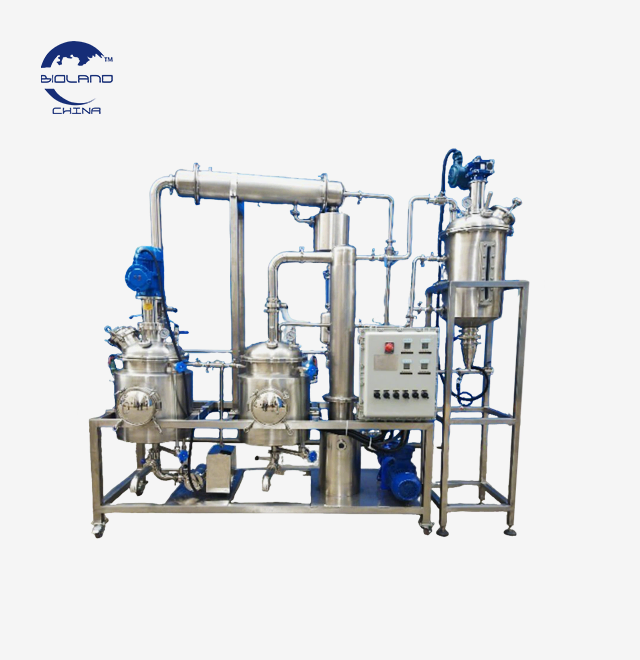
Bioland instrument has options that can be scaled up or down, from 50L tabletop units to 500L production systems, to help with both R&D trials and full-scale commercial production. The BL-TN series can handle growing operations without replacing all the equipment, which protects capital investments as companies grow. Technical support includes help with installation, training for operators, and upkeep services for life.
Technology parameter
Model
BL-TN-C50L
BL-TN -C100L
BL-TN -C200L
BL-TN -C300L
BL-TN -C500L
Volume (L)
50
100
200
300
500
Evaporation capacity (kg/h)
20
50
70
100
200
Motor power(KW)
2.7
2.7
2.7
3.5
3.5
Steam consumption(kg/h)
25
60
90
120
250
System vacuum (MPa)
-0.085
-0.085
-0.085
-0.085
-0.085
Pressure of jacket(MPa)
0.09~0.3
0.09~0.3
0.09~0.3
0.09~0.3
0.09~0.3
Compressed air (MPa)
0.5~0.6
0.5~0.6
0.5~0.6
0.5~0.6
0.5~0.6
Evaporation temperature(°C)
60~100
60~100
60~100
60~100
60~100
Case Study: Traditional Medicine Manufacturer Expansion
A heritage Chinese medicine business had to update their extraction plant, which was 30 years old, while keeping the traditional recipes. Bioland instrument's engineers came up with a hybrid system that combines traditional processing methods with ultrasonic extraction. The updated factory can now make three times as many approved GMP-compliant extracts as before. This keeps the originality of traditional preparations while meeting modern quality standards.
Conclusion
Ultrasonic extraction technology fundamentally transforms mushroom processing by delivering superior yields, reduced processing times, and enhanced bioactive recovery compared to traditional methods. Bioland instrument's ultrasonic mushroom extraction equipmentempowers producers to scale operations efficiently while maintaining pharmaceutical-grade quality standards. With customizable configurations, intelligent automation, and comprehensive technical support, manufacturers gain a competitive edge in the rapidly expanding functional food and nutraceutical markets. Upgrading to ultrasonic technology represents not merely equipment replacement, but a strategic investment in production capability, regulatory compliance, and long-term profitability. For processors seeking to overcome extraction bottlenecks and unlock the full potential of mushroom bioactives, ultrasonic systems provide the proven solution.
FAQ
1. What polysaccharides can ultrasonic extraction recover from mushrooms?
Ultrasonic extraction efficiently recovers beta-glucans, Reishi polysaccharides, Lentinan from shiitake, Cordyceps polysaccharides, and various triterpenes across multiple mushroom species.
2. How does ultrasonic extraction compare to traditional alcohol precipitation?
Ultrasonic processing achieves higher yields in significantly less time while preserving heat-sensitive compounds that alcohol precipitation methods often degrade.
3. Can ultrasonic mushroom extraction equipment integrate with existing production lines?
Yes, Bioland's modular designs accommodate retrofit installations, enabling seamless integration with existing concentration, filtration, and purification systems.
4. What certifications does Bioland's extraction equipment carry?
All Bioland ultrasonic systems carry CE and ISO certifications, with GMP-compliant construction suitable for pharmaceutical and food-grade applications.
5. Does ultrasonic extraction require specialized operator training?
Bioland provides comprehensive operator training and ongoing technical support, though intuitive PLC controls minimize the learning curve for experienced production staff.
Discover the Bioland Advantage in Mushroom Extraction
Xi'an Bioland Instrument Co., Ltd. stands as your trusted partner for advanced extraction solutions, bringing over 15 years of engineering excellence to every project. Our ultrasonic mushroom extraction equipment combines high-efficiency cavitation technology, intelligent PLC automation, and pharmaceutical-grade construction to solve the toughest processing challenges. From Reishi polysaccharides to Cordyceps bioactives, our systems deliver measurable improvements: 50–500% higher extraction rates, processing times reduced by two-thirds, and full GMP/FDA compliance. We've successfully deployed customized extraction lines for stevia production, chili oleoresin processing, mushroom polysaccharide manufacturing, tea polyphenol recovery, flavonoid extraction from botanicals, propolis processing, and plant pigment isolation across global markets.
Our R&D team provides tailored configurations with OEM/ODM flexibility, while our dedicated project specialists track production progress weekly through detailed photo and video updates. Every shipment undergoes Factory Acceptance Testing before dispatch, backed by a one-year quality warranty and lifetime maintenance support. Whether you require laboratory-scale precision or industrial-throughput capacity, Bioland delivers innovative solutions, competitive pricing, and unmatched technical service. Ready to transform your extraction operations? Contact our engineering team today at info@biolandequip.com to discuss your custom solution.
References
1. Zhang, L., et al. "Ultrasound-Assisted Extraction of Polysaccharides from Medicinal Mushrooms: Process Optimization and Antioxidant Activity." Journal of Food Science and Technology, 2022.
2. Wang, H., and Chen, J. "Comparative Study on Ultrasonic and Conventional Extraction of Beta-Glucans from Ganoderma lucidum." International Journal of Biological Macromolecules, 2021.
3. Liu, Y., et al. "Effects of Ultrasonic Treatment on Structural Properties and Bioactivity of Mushroom Polysaccharides." Ultrasonics Sonochemistry, 2023.
4. Chen, X., and Zhao, L. "Industrial Applications of Ultrasound-Assisted Extraction in Functional Food Production." Trends in Food Science and Technology, 2022.
5. Li, W., et al. "Optimization of Ultrasonic Extraction Parameters for Triterpenes from Medicinal Mushrooms Using Response Surface Methodology." Food Chemistry, 2021.
6. Zhao, Q., and Sun, M. "Advances in Ultrasonic Extraction Technology for Bioactive Compounds from Fungal Sources." Comprehensive Reviews in Food Science and Food Safety, 2023.
The reactor is beautifully mirror-polished and fully complies with GMP requirements for the pharmaceutical industry. The performance is excellent! Overall, we are very satisfied! We also provided with some feedback on our process improvements, which we hope will be helpful.
2024-04-09
Laboratory
Excellent and professional service. Always reply our questions very fast. All reactors and chiller we received are good too.
2024-02-15
Research Institute
Quality is beyond our expectation actually. After we got the extraction equipment and started using it, the performance was beyond our expectation. Very easy to use and very efficient to run. Service always respond us very quickly. Was also very helpful to help us. Thanks Bioland team. Very happy to work with you.
2023-11-20
Biotech Company
We are happy about the new purchase as always. Equipment and services are both good.
2023-08-05
Instrument Lab
This is the second order with Bioland instrument and everything is good as the first dateText.
2023-05-12
Global Trading Partner
Bioland instrument team is very helpful and professional. The sales helped us select the right equipment for our application, and their logistics people handled the transportation and customs declaration for our shipment. All that saved us a lot of work.