How Ultrasonic Extraction Improves Active Ingredient Recovery
Oct 9, 2026
In modern botanical processing, manufacturers face growing pressure to obtain higher purity compounds while lowering energy use and protecting heat-sensitive materials. How Ultrasonic Extraction Improves Active Ingredient Recovery is a question many producers in food, nutraceutical and pharmaceutical industries ask when traditional methods fail to reach target yields. For businesses looking to solve these process challenges, investing in advanced ultrasonic extraction equipment offers a practical pathway to maximize output without sacrificing compound quality. Designed with process efficiency in mind, ultrasonic extraction equipment from Xi’an Bioland Instrument Co.,Ltd. helps transform raw plant materials into higher-value extracts by focusing on cell-level release rather than prolonged boiling, giving manufacturers a competitive advantage from research to large-scale production.
Enhancing Compound Release Through Cavitation Effects
The Science Behind Acoustic Cavitation
Many extraction failures begin at the cellular level, where active ingredients remain trapped inside rigid plant walls. Utilizing ultrasonic extraction equipment takes advantage of acoustic cavitation, where high-frequency sound waves create microscopic bubbles in solvent. These bubbles form and collapse within microseconds, generating powerful shear forces that disrupt tough cell structures and allow solvents to reach internal compounds much faster than soaking alone.
Turning Plant Cell Walls Into Accessible Pathways
For producers processing dense materials like mushrooms, cell wall disruption is often the biggest pain point. With properly tuned ultrasonic extraction equipment, cavitation micro-jets penetrate fibrous tissue without aggressive grinding alone. Referencing the process design of Bioland's mushroom-focused system (https://www.biolandequip.com/ultrasonic-extraction/ultrasonic-extraction-equipment-of-mushroom), this targeted disruption is especially effective for ultrasonic extraction mushrooms projects focused on the extraction of polysaccharides from reishi, shiitake and other functional fungi.
Protecting Sensitive Compounds During Disruption
A common customer concern is damaging bioactives while breaking cells. Modern ultrasonic extraction equipment applies controlled energy at lower temperatures between 40–60℃, preventing thermal degradation. This balance allows delicate molecules to remain stable while cavitation still forces compound release, setting a foundation for higher recovery rates.
Creating A Solution-Focused Extraction Basis
Rather than over-processing raw material to force yields, Bioland instrument engineers design ultrasonic extraction equipment to release actives strategically. By solving the cell-trapping problem first, processors can optimize solvents for specific targets like extraction of flavonoids or ultrasound assisted extraction of quercetin, preventing unnecessary impurity buildup for easier downstream purification.
Improving Extraction Efficiency of Plant Materials
Addressing Industry-Wide Yield Loss
Across botanical industries, a frequent customer pain point is paying for biomass but only recovering a fraction of its value. Applying ultrasonic extraction equipment directly addresses this by increasing mass transfer between solvent and plant tissue. With cavitation-driven diffusion, recovery rates can rise by 50–500% compared to conventional maceration, turning low-yield batches into profitable production runs.
Tailoring To Diverse Botanical Applications
Different crops require different process strategies, and versatile ultrasonic extraction equipment must adapt to them. For a stevia extraction machine application, gentle waves help extract steviol glycosides from stevia leaves without co-extracting harsh bitterness. In a Chilli Oleoresin Extraction Plant, controlled ultrasound assists in drawing capsaicin and capsicum oil resin while limiting excess waxes that complicate filtration.
Maximizing Functional Food And Beverage Extracts
Beverage producers often struggle with time-consuming batches for teas and coffees. A configured ultrasonic extraction equipment line can function similarly to a tea extraction machine or Coffee Extraction Machine to obtain tea polyphenols, amino acids, flavonoids, aromatic oils and coffee alkaloids including caffeine. These gains help functional food brands meet demand without expanding costly tank farms.
Case-Focused Value For Niche Materials
Specialty processors, such as a propolis extraction machine project, need to separate phenolic acids and flavonoids from wax-heavy resin. Using ultrasonic extraction equipment with ethanol solvents improves penetration through propolis clusters, while pigment extraction from plants operations (anthocyanins, betalains, carotenoids and chlorophyll from orange peel or botanicals) benefit from short cycles. Paired with Bioland instrument's tincture extraction machine setups for herbal tinctures, these real application cases let processors solve specific pain points with one adaptable platform.
Optimizing Parameters For Higher Active Ingredient Yield
Selecting The Right Solvent And Material Ratio
Even the best ultrasonic extraction equipment needs proper process selection to reach peak recovery. Customers often inquire about water versus ethanol when targeting varied compounds. For hydrophilic targets like mushroom β-glucans or plant proteins, aqueous phases work well, while ethanol suits ultrasound assisted extraction of quercetin from sophora or celery, or flavonoid recovery from ginkgo and honeysuckle.
Balancing Time, Temperature And Ultrasonic Power
Process engineers know over-exposure wastes energy while under-exposure leaves actives behind. Optimized ultrasonic extraction equipment typically achieves ideal yields within 24–40 minutes at 40–60℃, cutting extraction time by over two-thirds versus hot reflux. Bioland instrument's PLC-controlled ultrasonic extraction equipment allows precise power modulation, preventing localized overheating for heat-sensitive compounds like volatile oils, mint or rose essential aromatic oils.
Engineering For Scalability And Compliance
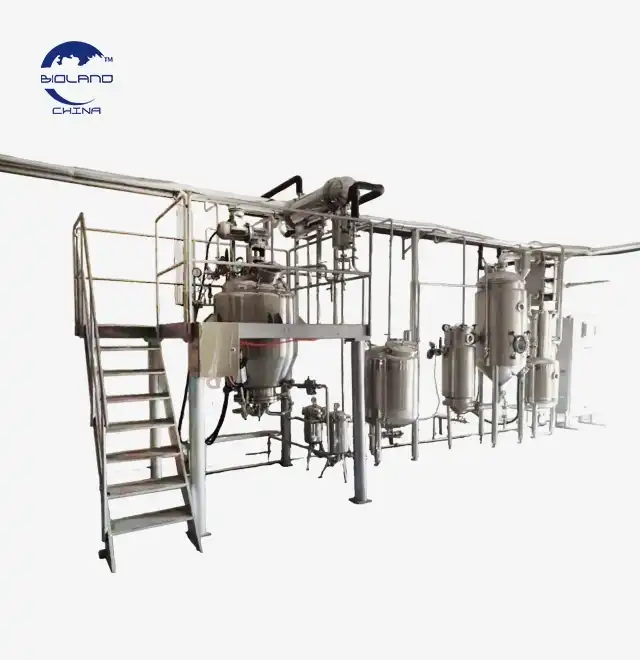
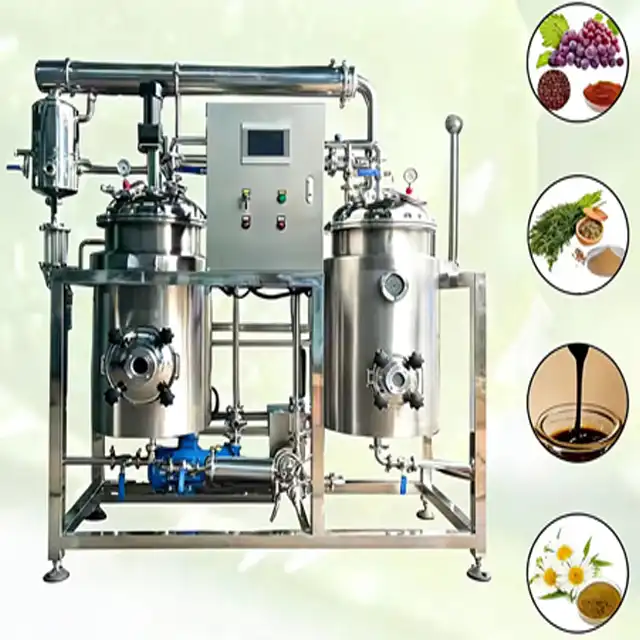
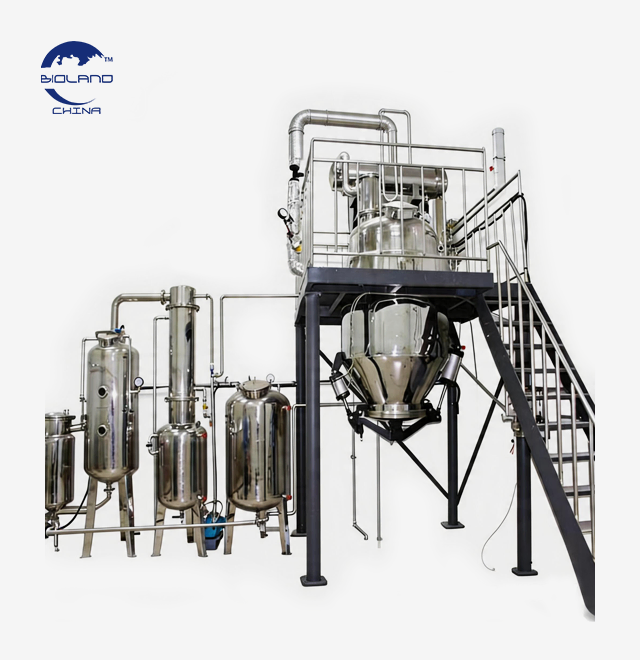
Growing brands need lab data to transfer to pilot without yield drops. Bioland instrument manufactures ultrasonic extraction equipment in SUS304/316L with GMP-compliant, CIP online cleaning and three-layer insulation to meet food HACCP and pharmaceutical requirements. With BL-TN series capacities (50L–500L), evaporation up to 200 kg/h and -0.085 MPa vacuum, this ultrasonic extraction equipment bridges R&D and ton-scale production while keeping batch-to-batch variance minimal.
Applying Parameters To Proven Production Lines
For turnkey success, parameter tuning is paired with application expertise. Whether running a mushroom polysaccharide line, tea polyphenol extraction, stevia extraction machine project, or chilli oleoresin extraction plant, Bioland's technical team builds a custom process around the ultrasonic extraction equipment. This solution-expert approach focuses on each client's production difficulty first, then engineers parameters to secure measurable yield gains before equipment purchase.
Reducing Loss Of Valuable Botanical Compounds
Preventing Thermal And Oxidative Degradation
A major pain point for high-value extracts is losing potency during prolonged heating. Unlike extended reflux, low-temperature ultrasonic extraction equipment minimizes hydrolysis and oxidation of delicate actives. This protection is crucial when performing extraction of flavonoids from heat-sensitive herbs, or processing pigment extraction from plants like anthocyanins that fade under high thermal stress.
Minimizing Impurities For Easier Purification
Excessive boiling often extracts starches, pectins and tannins that complicate purification and raise costs. Controlled ultrasonic extraction equipment focuses mechanical force on cells instead of dissolving bulk polymers. The result is a cleaner miscella with fewer impurities, benefiting refined outputs such as propolis extracts, tincture extraction machine formulations, wheat germ oil, sea fish protein, peony seed oil or capsicum red pigment with less downstream processing.
Preserving Volatiles And Specialty Oils
Producers of fragrances face product value loss if essential oils evaporate. Purpose-built ultrasonic extraction equipment operates under adjustable pressure with condenser and oil separation systems to retain plant aromatic oils, including rose, peppermint, valerian and other volatile fractions. For diversified lines covering coffee extraction machine batches and tea extraction machine oils simultaneously, this compound preservation protects margins per kilogram of biomass.
Real-World ROI Through Less Waste
Consider a processor expanding from lab trials to a mushroom polysaccharides line for reishi or shiitake: biomass cost is fixed, so every percent of recovered polysaccharide is direct profit. By utilizing ultrasonic extraction equipment to limit thermal loss and impurity load, Bioland instrument helps clients convert process waste into sellable product. With OEM/ODM support, CE/ISO certifications, GMP standards, FAT (Factory Acceptance Testing) procedures, weekly photo updates on production progress, and lifetime maintenance services, the comprehensive safeguards and reliable after-sales support provided by Bioland translate directly into tangible economic benefits for customers.
For contract manufacturers, inconsistency erodes client trust more than speed alone. Industrial-grade ultrasonic extraction equipment maintains uniform energy distribution through its ultrasonic system, extraction tank, condensers, vacuum pump and PLC automation. This structural stability allows repeatable recovery for long-running projects like stevia extraction machine production lines, tea polyphenol lines or chilli oleoresin extraction plant operations.
Integrating Extraction And Concentration Into One Workflow
Process downtime often occurs between extraction and concentration stages. Bioland instrument's ultrasonic extraction equipment design integrates low-temperature extraction with vacuum concentration (circulating back secondary steam to the tank), supporting water or ethanol extraction, heat-reflux, percolation and alcohol/water precipitation. From ultrasonic extraction mushrooms and extraction of polysaccharides, to extraction of flavonoids and ultrasound assisted extraction of quercetin, this continuous workflow prevents actives from sitting in hot holding tanks.
Strengthening Trust Through Proven Project Experience
Reliable output requires both machinery and project know-how. Xi’an Bioland Instrument Co.,Ltd. has over 15 years in distillation, extraction, reaction and separation with an in-house R&D and technical team providing full-process solutions. Successful cases include natural pigment and anthocyanin lines, propolis extraction machine projects, coffee extraction machine and tea extraction machine lines, Lycium barbarum polysaccharides, soybean protein, dendrobium actives and functional ingredients. Every ultrasonic extraction equipment order benefits from pre-sales process matching, in-production tracking, FAT at Bioland's facility, global sea/rail/air shipping and a one-year warranty.
Future-Proofing With Custom, Multi-Purpose Capability
Customer demands shift between crops seasonally, so flexibility protects capital investment. Multi-purpose ultrasonic extraction equipment adapts between tincture extraction machine runs, propolis, pigments, plant proteins, oils and volatile extracts without full line replacement. With customizable configurations, Bioland instrument positions ultrasonic extraction equipment not as a single-purpose unit, but as an expandable extraction solution that solves evolving process difficulties while maintaining industrial consistency.
Conclusion
Improving active ingredient recovery requires solving plant-cell resistance, thermal loss and batch instability together rather than one factor alone. By applying controlled cavitation, low-temperature operation and automated process control, ultrasonic extraction equipment helps manufacturers raise yields, preserve valuable compounds and stabilize production at scale. With compliant engineering and application-based design, this technology enables processors to turn raw biomass into consistent, high-value extracts that strengthen both product quality and long-term manufacturing profitability.
FAQs
Q1: How does ultrasonic extraction equipment increase recovery rates?
A: It uses cavitation shear forces to break plant cells, improving solvent penetration and boosting yields by 50–500% versus traditional methods.
Q2: What materials work best with ultrasonic extraction equipment?
A: It's ideal for mushrooms, stevia, tea, coffee, herbs for flavonoids or quercetin, propolis, pigments, oils and plant proteins.
Q3: Is low temperature safe for heat-sensitive compounds?
A: Yes. Most processes run at 40–60℃, protecting volatile oils and bioactives while maintaining strong extraction efficiency.
Q4: Can Bioland's equipment meet GMP production standards?
A: Yes. Built with SUS304/316L, CIP, PLC control and designed to comply with GMP, FDA and HACCP requirements.
Q5: How fast is extraction compared to traditional methods?
A: Optimized cycles usually take 24–40 minutes, shortening extraction time by over two-thirds while improving compound recovery.
Take Action With Bioland Instrument For Smarter Extraction
Looking to solve your plant extraction challenges instead of overpaying for low yields? Bioland Instrument (Xi’an Bioland Instrument Co.,Ltd.) is your process-solution partner for advanced ultrasonic extraction equipment backed by 15+ years of engineering expertise. From custom OEM/ODM designs and CE/ISO-GMP compliance to FAT testing, weekly production updates, lifetime maintenance and global delivery, Bioland delivers proven application lines with real results. Ready to match the right ultrasonic extraction equipment to your raw material and target actives? Contact our technical team today at info@biolandequip.com to discuss your project and gain a tailored extraction solution built for lasting ROI.
References
1. Mason, T. J., & Lorimer, J. P. Applied Sonochemistry: The Uses of Power Ultrasound in Chemistry and Processing. Wiley-VCH, 2002.
2. Vinatoru, M. "An overview of the ultrasonically assisted extraction of bioactive principles from herbs." Ultrasonics Sonochemistry, 2001.
3. Chemat, F. et al. "Ultrasounds as a promising tool for extraction of natural products." Ultrasonics Sonochemistry, 2017.
4. Toma, M. et al. "Investigation of the effects of ultrasound on vegetal tissues during solvent extraction." Ultrasonics Sonochemistry, 2001.
5. Herrera, M. C. & Luque de Castro, M. D. "Ultrasound-assisted extraction of phenolic compounds from strawberries." Analytical and Bioanalytical Chemistry, 2005.
6. Rostagno, M. A. et al. "Ultrasound-assisted extraction of isoflavones from soy beverages blended with fruit juices." Journal of Chromatography A, 2003.
The reactor is beautifully mirror-polished and fully complies with GMP requirements for the pharmaceutical industry. The performance is excellent! Overall, we are very satisfied! We also provided with some feedback on our process improvements, which we hope will be helpful.
2024-04-09
Laboratory
Excellent and professional service. Always reply our questions very fast. All reactors and chiller we received are good too.
2024-02-15
Research Institute
Quality is beyond our expectation actually. After we got the extraction equipment and started using it, the performance was beyond our expectation. Very easy to use and very efficient to run. Service always respond us very quickly. Was also very helpful to help us. Thanks Bioland team. Very happy to work with you.
2023-11-20
Biotech Company
We are happy about the new purchase as always. Equipment and services are both good.
2023-08-05
Instrument Lab
This is the second order with Bioland instrument and everything is good as the first dateText.
2023-05-12
Global Trading Partner
Bioland instrument team is very helpful and professional. The sales helped us select the right equipment for our application, and their logistics people handled the transportation and customs declaration for our shipment. All that saved us a lot of work.