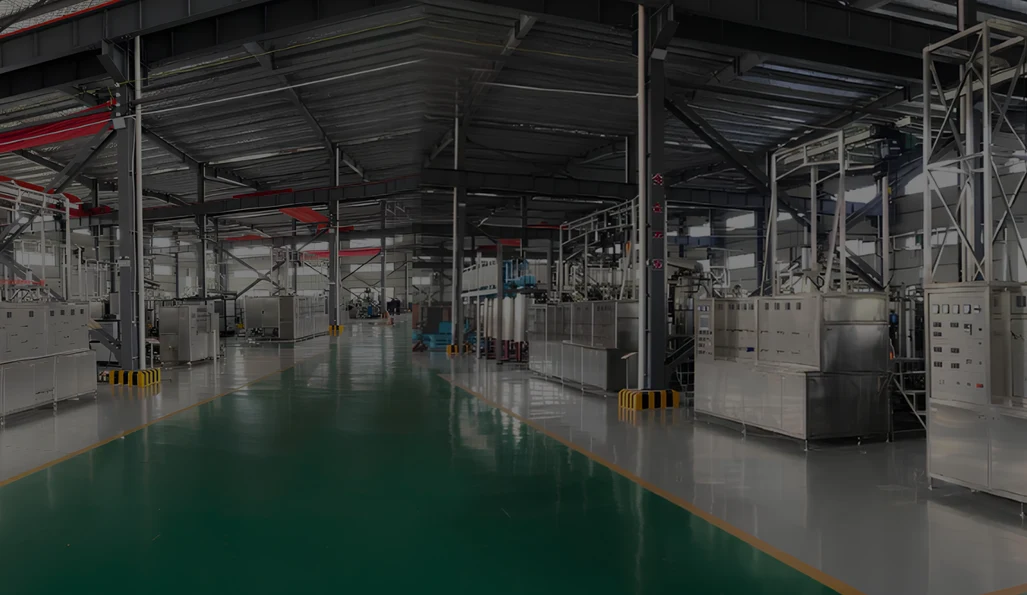
Stevia Extraction Machine for Natural Sweetener Manufacturing
Sep 28, 2026
The global shift away from refined sugar has turned stevia into one of the most valuable botanicals on the market — and it has also exposed how poorly conventional boiling tanks handle steviol glycosides. Xi'an Bioland Instrument Co., Ltd. answers that gap with an ultrasonicstevia extraction machine engineered specifically for natural sweetener manufacturing. Built from SUS304/316L stainless steel, GMP-compliant, and CE/ISO certified, each Bioland stevia extraction machine combines low-temperature ultrasonic cell-wall disruption with integrated concentration, delivering yield gains of 50–500% over traditional water decoction while cutting extraction time by more than two-thirds. With 15+ years of process engineering, OEM/ODM capability, and full line customization, Bioland does not simply sell a stevia extraction machine — it delivers a validated sweetener production solution.
Key Extraction Steps in Stevia Sweetener Production
Raw Material Preparation and Solvent Selection
Stevia rebaudiana leaves, stems, and roots all contain steviol glycosides, but the distribution differs sharply. Before loading the stevia extraction machine, material is dried to 8–10% moisture and milled to 20–40 mesh. Bioland's engineers help clients select solvents — purified water, 30–70% food-grade ethanol, or a staged combination — based on the target Reb-A to stevioside ratio. Correct pre-treatment alone typically lifts first-pass recovery by 8–12% before ultrasound is even applied.
Ultrasonic-Assisted Extraction Inside the Tank
Once solvent is charged at a 1:8 to 1:12 ratio, transducers mounted on the extraction vessel generate cavitation that ruptures leaf parenchyma cells. This is where the stevia extraction machine earns its value: glycosides diffuse out in 24–40 minutes at only 40–60 °C, instead of 3–4 hours of near-boiling decoction. Heat-sensitive Reb-M and Reb-D remain intact, and pigment and pectin co-extraction drops noticeably, easing downstream work.
Separation, Concentration, and Refining
After extraction, liquid is pumped through a filter into the evaporator. The concentration section of the stevia extraction machine operates under −0.085 MPa vacuum at 60–100 °C, recovering ethanol through the condenser and oil separator for reuse. Secondary vapour is condensed and returned to the extraction tank as fresh solvent, creating true reflux extraction. The resulting concentrate moves to resin adsorption, decolorization, and spray drying.
Solvent Recovery and Batch Closure
Closing the loop matters commercially. Bioland instrument configures every stevia extraction machinewith a condenser–cooler chain that recovers 92–96% of ethanol per batch. Residual colourless liquor in the extraction tank is reused in the next cycle, cutting solvent purchase costs. CIP nozzles then clean the vessel automatically, and the batch record is exported from the PLC — an audit trail that GMP and FDA-oriented buyers increasingly demand.
Improving Stevia Extract Quality with Advanced Equipment
The Bitterness Problem Customers Bring to Us
A Paraguayan sweetener producer contacted Bioland instrument with a familiar complaint: their extract carried a persistent liquorice aftertaste and tested at only 82% total glycosides. Prolonged boiling had degraded Reb-A and pulled in chlorophyll and tannins. We proposed a 500 L ultrasonic stevia extraction machine running 55 °C, 35-minute cycles with 55% ethanol.
The Measurable Result
Within three production months, their total steviol glycoside purity rose from 82% to 94.6%, Reb-A retention improved by 17%, and decolorization resin consumption fell 30%. Because the stevia extraction machine works at low temperature, thermal degradation products largely disappeared, and their bitterness panel score improved by two full points. Payback on the equipment was reported at eleven months.
Why Low-Temperature Ultrasound Protects Sweetness
Steviol glycosides hydrolyse and epimerize when held above 80 °C for long periods. The Bioland instrument stevia extraction machine avoids this entirely — cavitation, not heat, does the extraction work. The same principle benefits other heat-labile actives, which is why the identical platform is sold as an ultrasonic mushroom polysaccharide unit, a propolis extraction machine, and a tea extraction machine for tea polyphenols and aromatic oils.
Consistency Batch After Batch
Quality managers care less about one good batch than about 200 identical ones. Online concentration monitoring, temperature PID control, and fixed ultrasonic power density inside the stevia extraction machine keep batch-to-batch RSD below 3%. For clients supplying beverage multinationals, that repeatability is often the deciding specification.
Equipment Features for Commercial Sweetener Manufacturing
Materials, Structure, and GMP Compliance
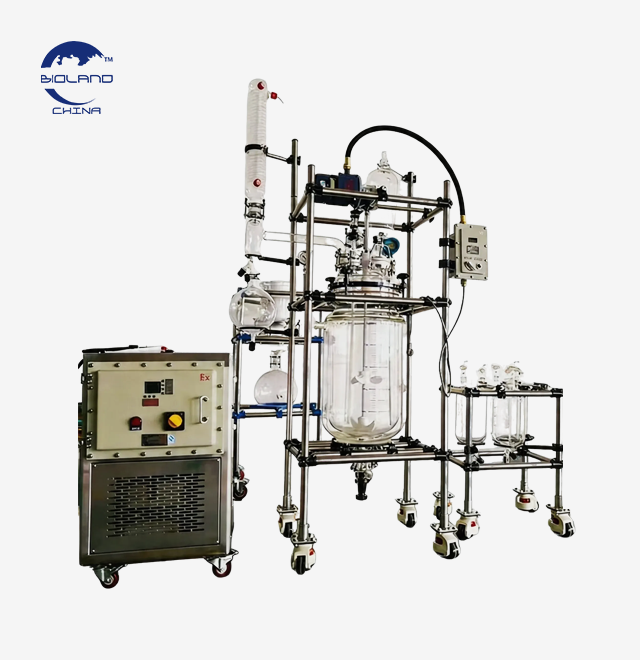
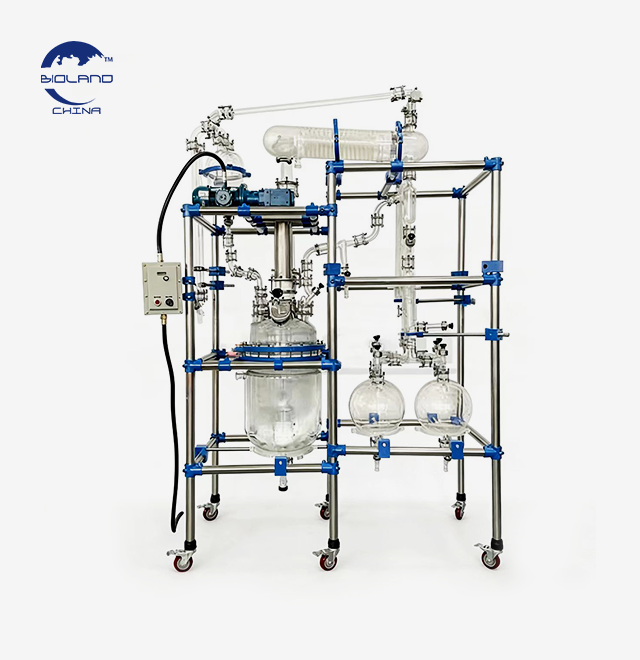
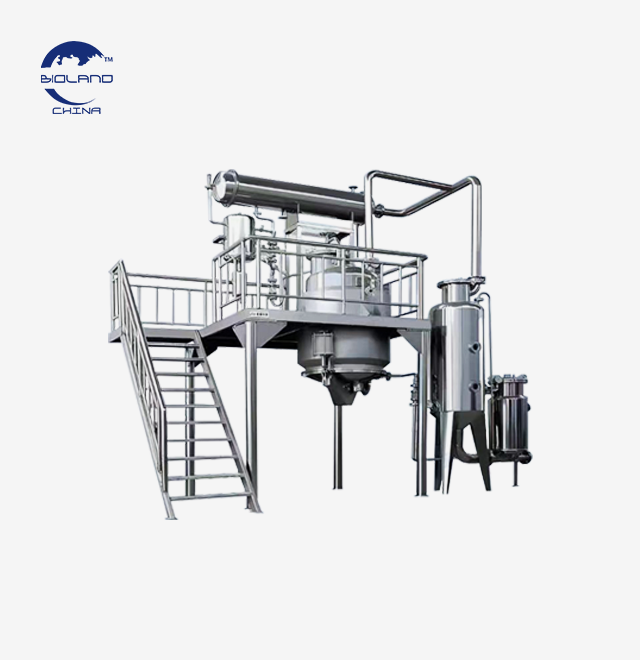
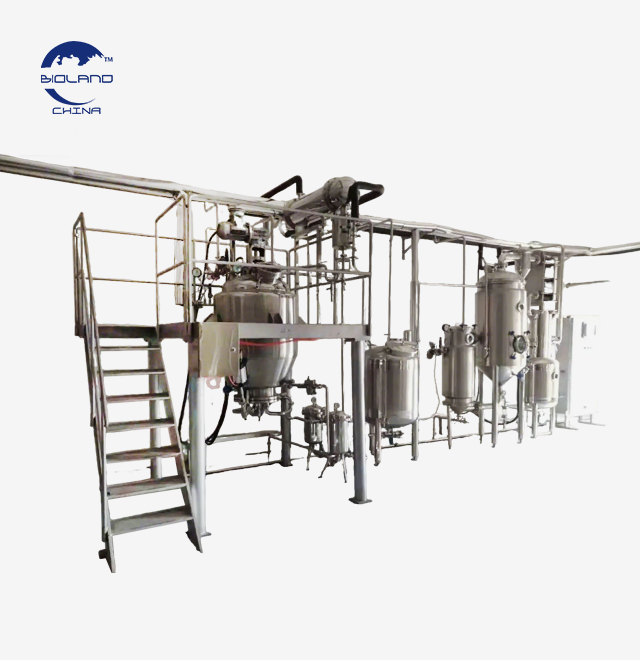
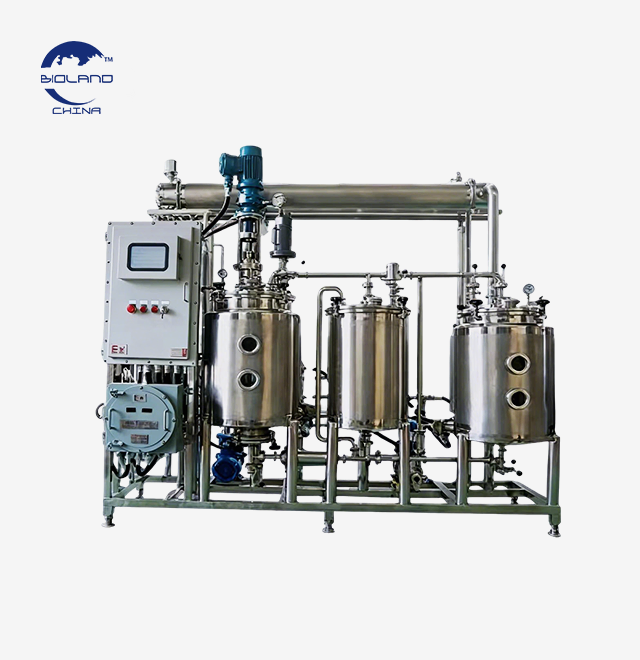
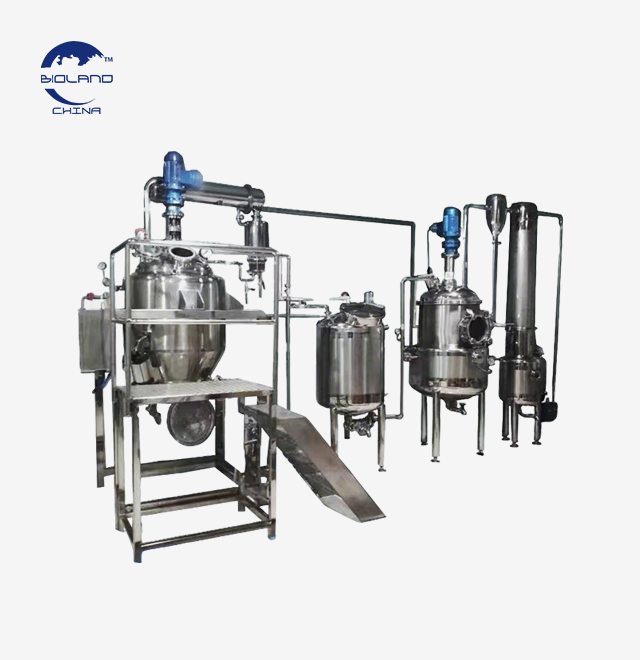
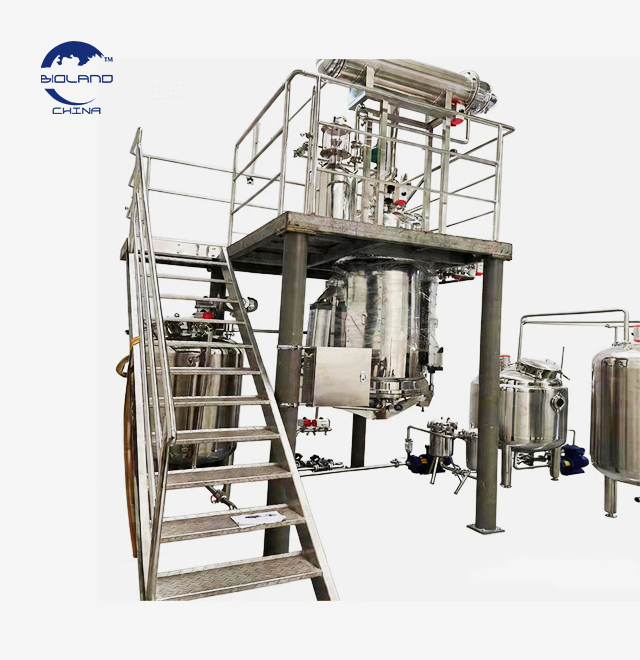
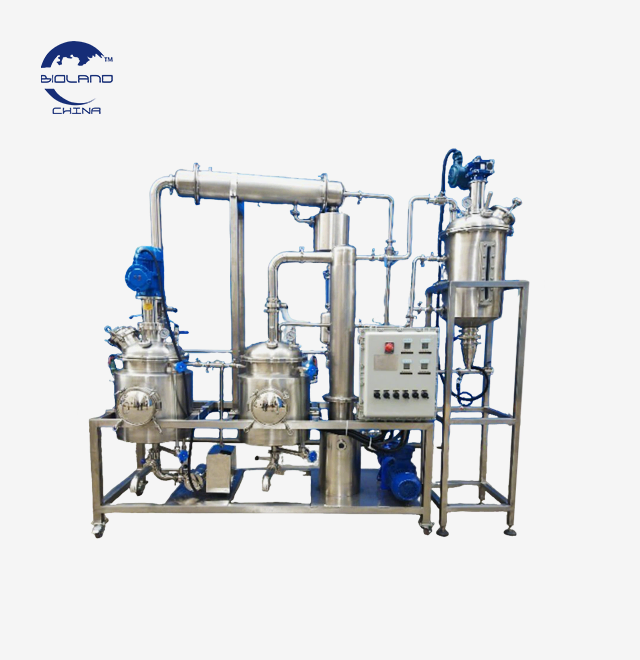
Each stevia extraction machine is fabricated in SUS304 or SUS316L with mirror-polished internal surfaces, three-layer insulation, and sanitary tri-clamp connections. The complete system comprises the ultrasonic generator and transducers, extraction tank, tubular heater, evaporator, condenser, oil separator, oil collector, liquid pump, metering tank, storage tank, filter, vacuum pump, and control cabinet. Demisters sit on both the extraction tank and evaporator vapour outlets. Steam-free plants can add a thermal-oil heating package.
Multi-Process Flexibility
One asset, many processes. The Bioland instrument stevia extraction machine supports ultrasonic low-temperature extraction, ambient ultrasonic extraction, Soxhlet dynamic extraction, hot reflux extraction, water or alcohol precipitation, and percolation. It operates under negative, atmospheric, or positive pressure, and handles water, ethanol, methanol, or acetone systems. That versatility lets a stevia plant also run chilli oleoresin, quercetin from sophora bud, or ginkgo flavonoid campaigns on the same skid.
Technical Parameters at a Glance
Standard models range from BL-TN-C50L to BL-TN-C500L. Evaporation capacity spans 20 kg/h at 50 L to 200 kg/h at 500 L; motor power 2.7–3.5 kW; steam consumption 25–250 kg/h; system vacuum −0.085 MPa; jacket pressure 0.09–0.3 MPa; compressed air 0.5–0.6 MPa; evaporation temperature 60–100 °C. Larger custom volumes for a production stevia extraction machine are engineered to order.
Technology parameter
Model
BL-TN-C50L
BL-TN -C100L
BL-TN -C200L
BL-TN -C300L
BL-TN -C500L
Volume (L)
50
100
200
300
500
Evaporation capacity (kg/h)
20
50
70
100
200
Motor power(KW)
2.7
2.7
2.7
3.5
3.5
Steam consumption(kg/h)
25
60
90
120
250
System vacuum (MPa)
-0.085
-0.085
-0.085
-0.085
-0.085
Pressure of jacket(MPa)
0.09~0.3
0.09~0.3
0.09~0.3
0.09~0.3
0.09~0.3
Compressed air (MPa)
0.5~0.6
0.5~0.6
0.5~0.6
0.5~0.6
0.5~0.6
Evaporation temperature(°C)
60~100
60~100
60~100
60~100
60~100
Safe Operation and Maintenance
Explosion-proof motors and electrics are available for ethanol service, along with pressure relief, earthing, nitrogen blanketing, and interlocked vacuum control. Operators are trained to verify seal integrity, monitor transducer temperature, and run CIP after every campaign. Bioland provides a one-year warranty with lifetime maintenance support for every stevia extraction machine shipped.
Enhancing Production Efficiency with Automated Systems
From Manual Valves to PLC Control
A Chinese herbal ingredient factory ran six operators per shift on manual tanks and still lost batches to over-boiling. After installing an automated 300 L stevia extraction machine, the intelligent PLC system managed solvent charging, temperature ramp, ultrasonic timing, transfer to the evaporator, and discharge. Labour dropped to two operators, and off-spec batches fell from 7% to under 1%.
Continuous Feeding and Online Monitoring
Bioland instrument's automation package enables continuous feed and discharge, pipelined concentration, online concentration measurement, automatic discharge, and in-line CIP washing. Because the stevia extraction machine reports Brix and temperature in real time, endpoint decisions stop being guesswork. One customer reduced concentration cycle time by 22% simply by ending evaporation at the correct measured density rather than a fixed clock time.
Energy and Solvent Savings
Running at 40–60 °C instead of 95 °C cuts steam demand substantially. Combined with 92–96% ethanol recovery, a mid-size stevia extraction machine line has helped clients reduce utility and solvent cost per kilogram of extract by roughly 25–35%. For a plant producing 20 tonnes of stevia extract annually, that saving alone often exceeds the capital difference between a basic tank and a proper ultrasonic system.
A Polysaccharide Case with Transferable Lessons
A Fujian mushroom processor used the same automated platform for lentinan and Ganoderma polysaccharides. Extraction yield rose from 4.1% to 6.8%, and cycle time dropped from 4 hours to 45 minutes. The client later ordered a second stevia extraction machine configuration for goji polysaccharide, proving how one validated design serves multiple botanical programmes.
Scaling Stevia Processing for Growing Market Demand
Piloting Before You Commit
Most buyers start with a 50 L or 100 L stevia extraction machine for R&D and small-batch validation. Bioland instrument supplies matching pilot units so that solvent ratio, ultrasonic power, and temperature curves established in the lab transfer directly to production geometry. This de-risks scale-up and shortens commissioning, typically to under two weeks on site.
Building the Full Production Line
Scaling means more than a bigger tank. Bioland designs complete lines: pre-treatment and milling, multi-stage ultrasonic extraction, filtration, resin columns, membrane concentration, crystallization reactors, and spray or freeze drying. A recent Southeast Asian project paired three 500 L stevia extraction machine units in cascade with a falling-film evaporator, reaching 1.2 tonnes of dried leaf processed per day at 95% Reb-A purity.
Customization, Lead Times, and Logistics
Customized stevia extraction machine systems ship in about 30 business days; standard catalogue units in 5–7 days. Sea, rail, and air freight are all supported. OEM and ODM orders are welcome, and clients receive weekly photo or video progress updates from a dedicated specialist, plus full inspection media before dispatch — or an on-site Factory Acceptance Test at our Xi'an facility.
A Diversified Revenue Strategy
Market demand fluctuates, so smart processors diversify. Clients have used their stevia extraction machine for chilli capsaicin and oleoresin, tincture manufacturing, coffee caffeine extraction, natural pigments including anthocyanins and carotenoids, rose and peppermint essential oils, soy and marine fish protein, wheat germ oil, and peony seed oil. One machine, many markets — that is how a stevia extraction machine keeps paying for itself year-round.
Conclusion
Natural sweetener manufacturing rewards processors who protect glycoside integrity while controlling cost, and that is exactly what an ultrasonicstevia extraction machine from Xi'an Bioland Instrument delivers. Low-temperature cavitation raises yield 50–500%, shortens cycles to 24–40 minutes, preserves Reb-A and Reb-M, and reduces solvent and energy spend. Backed by CE and ISO certification, GMP/FDA-compliant construction, SUS304/316L fabrication, PLC automation, and 15 years of extraction engineering, every stevia extraction machine is supplied as a complete, documented solution. From 50 L pilot units to multi-tonne production lines, Bioland partners with you from process trial through commissioning, warranty, and lifetime maintenance support.
FAQ
1. What yield improvement can a stevia extraction machine deliver?
Compared with traditional water decoction, ultrasonic extraction typically improves recovery by 50–500%, depending on raw material quality and solvent system.
2. What temperature and cycle time are recommended?
Optimal results are achieved at 40–60 °C with 24–40 minute extraction cycles, protecting heat-sensitive steviol glycosides.
3. Can the machine process other botanicals?
Yes. The same platform extracts mushroom polysaccharides, tea polyphenols, propolis flavonoids, chilli oleoresin, quercetin, essential oils, and natural pigments.
4. What sizes are available?
Standard models run 50 L, 100 L, 200 L, 300 L and 500 L, with larger customized volumes on request.
5. What is the delivery time and warranty?
Customized units ship in about 30 business days, standard units in 5–7 days, with a one-year warranty and lifetime maintenance.
Ready to Turn Stevia Leaves into Premium Sweetener Profit?
Talk to Bioland Instrument — a professional manufacturer and solution provider with 15+ years in distillation, concentration, reaction, extraction, separation, filtration, purification, crystallization, emulsification, mixing and drying equipment. Our CE and ISO certified, GMP-compliant stevia extraction machine systems are built by an in-house R&D team of senior engineers who design customized lines around your raw material, capacity, and purity targets. Enjoy competitive factory pricing, OEM/ODM support, weekly production photo and video updates, optional Factory Acceptance Testing, flexible sea/rail/air shipping, a one-year warranty and lifetime maintenance. Send us your leaf specification and target output today, and our technical team will return a tailored process flow and quotation. Contact us at info@biolandequip.com.
References
1. Lemus-Mondaca, R., Vega-Gálvez, A., Zura-Bravo, L., & Ah-Hen, K. Stevia rebaudiana Bertoni, Source of a High-Potency Natural Sweetener: A Comprehensive Review on the Biochemical, Nutritional and Functional Aspects. Food Chemistry.
2. Chemat, F., Rombaut, N., Sicaire, A.-G., Meullemiestre, A., Fabiano-Tixier, A.-S., & Abert-Vian, M. Ultrasound Assisted Extraction of Food and Natural Products: Mechanisms, Techniques, Combinations, Protocols and Applications. Ultrasonics Sonochemistry.
3. Puri, M., Sharma, D., & Barrow, C. J. Enzyme-Assisted Extraction of Bioactives from Plants. Trends in Biotechnology.
4. Jaitak, V., Bandna, Singh, B., & Kaul, V. K. An Efficient Microwave-Assisted Extraction Process of Stevioside and Rebaudioside-A from Stevia rebaudiana. Phytochemical Analysis.
5. Gerwig, G. J., te Poele, E. M., Dijkhuizen, L., & Kamerling, J. P. Stevia Glycosides: Chemical and Enzymatic Modifications of Their Carbohydrate Moieties to Improve the Sweet-Tasting Quality. Advances in Carbohydrate Chemistry and Biochemistry.
6. Ameer, K., Shahbaz, H. M., & Kwon, J.-H. Green Extraction Methods for Polyphenols from Plant Matrices and Their Byproducts: A Review. Comprehensive Reviews in Food Science and Food Safety.
The reactor is beautifully mirror-polished and fully complies with GMP requirements for the pharmaceutical industry. The performance is excellent! Overall, we are very satisfied! We also provided with some feedback on our process improvements, which we hope will be helpful.
2024-04-09
Laboratory
Excellent and professional service. Always reply our questions very fast. All reactors and chiller we received are good too.
2024-02-15
Research Institute
Quality is beyond our expectation actually. After we got the extraction equipment and started using it, the performance was beyond our expectation. Very easy to use and very efficient to run. Service always respond us very quickly. Was also very helpful to help us. Thanks Bioland team. Very happy to work with you.
2023-11-20
Biotech Company
We are happy about the new purchase as always. Equipment and services are both good.
2023-08-05
Instrument Lab
This is the second order with Bioland instrument and everything is good as the first dateText.
2023-05-12
Global Trading Partner
Bioland instrument team is very helpful and professional. The sales helped us select the right equipment for our application, and their logistics people handled the transportation and customs declaration for our shipment. All that saved us a lot of work.