How to Choose a Protein Extraction Machine by Process Scale
Sep 21, 2026
Selecting the rightprotein extraction machine is not simply a matter of comparing tank volumes or motor power. The decision must be driven by your current batch size, target throughput, extraction kinetics, automation needs, and future expansion plans. Many first-time buyers focus only on initial capacity and later find themselves constrained by long cooling times, poor reproducibility, or insufficient solvent recovery. Xi’an Bioland Instrument Co.,Ltd. approaches scale selection as a process engineering challenge, not just an equipment sale. With more than 15 years of experience, CE and ISO certified manufacturing, and GMP-compliant designs, Bioland helps clients move from bench-top trials to full production using the same core ultrasonic extraction technology. This guide explains how to choose a protein extraction machine based on process scale, using practical examples from plant proteins, mushroom polysaccharides, tea polyphenols, and botanical active ingredients.
What Equipment Capacity Is Suitable for Different Production Scales?
Laboratory R&D and Proof-of-Concept Work
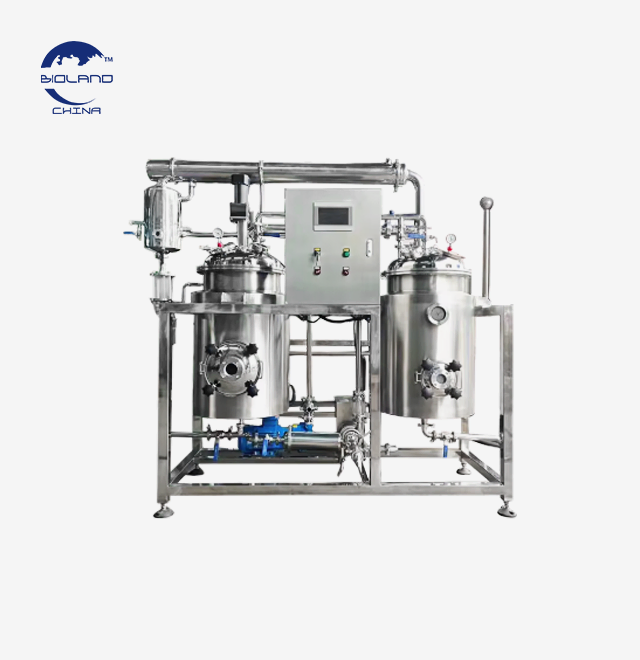
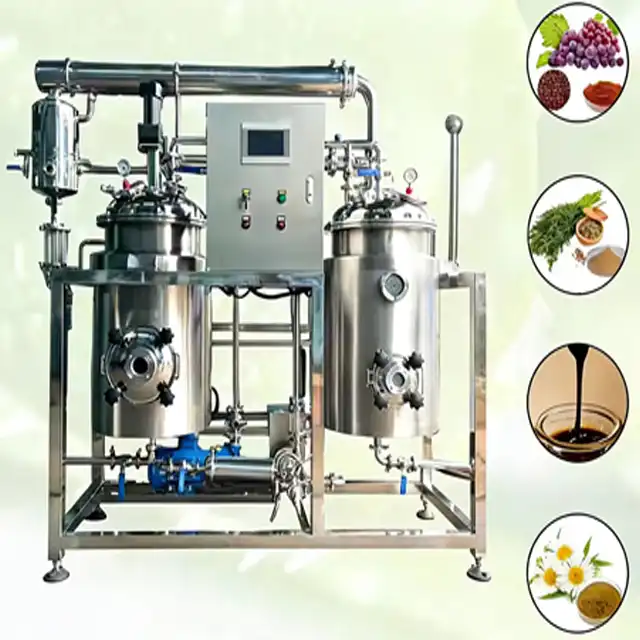
For universities, research institutes, and startup laboratories, a 50 L protein extraction machine is usually the right starting point. At this scale, researchers can validate ultrasonic parameters, solvent ratios, temperature profiles, and extraction duration before committing to larger vessels. A compact system also simplifies material handling and reduces solvent waste during early trials. Bioland instrument’s BL-TN-C50L model offers 20 kg/h evaporation capacity, which is sufficient for sample preparation and small pilot batches. The same machine can also perform tincture extraction, polysaccharide isolation, and flavonoid recovery without changing hardware. Starting with a small protein extraction machine helps teams understand process behavior before scaling, reducing the risk of failed pilot batches.
Pilot Production and Process Validation
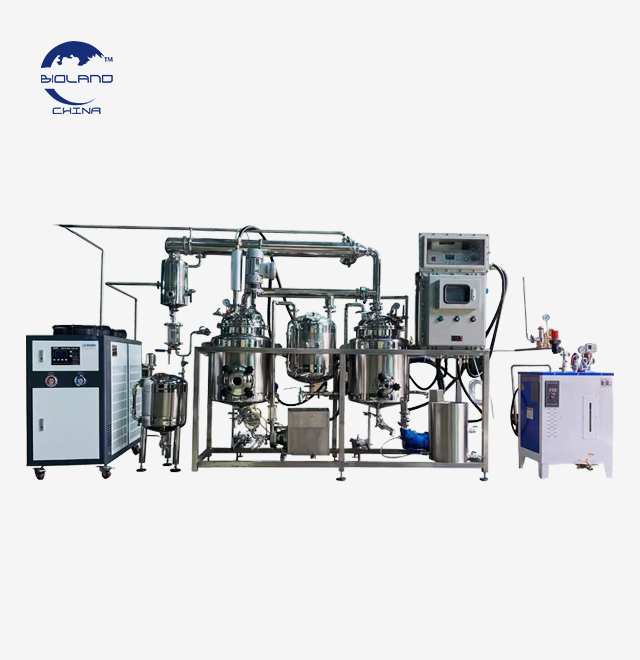
Clients moving from R&D into pilot production typically require a 100 L to 200 L protein extraction machine. At this stage, the goal is to reproduce laboratory results under conditions closer to commercial production. A 200 L system with 70 kg/h evaporation capacity supports meaningful yield measurements and allows evaluation of CIP cleaning efficiency, automated discharge, and solvent recycling. Pilot-scale extraction is essential for products such as stevia leaf glycosides, chilli oleoresin, and mushroom polysaccharide-protein complexes, where raw material variability affects final quality. A well-designed pilot protein extraction machine also generates engineering data for full-scale design, including heat transfer rates, cavitation field distribution, and filtration bottlenecks.
Industrial Production and Multi-Shift Operation
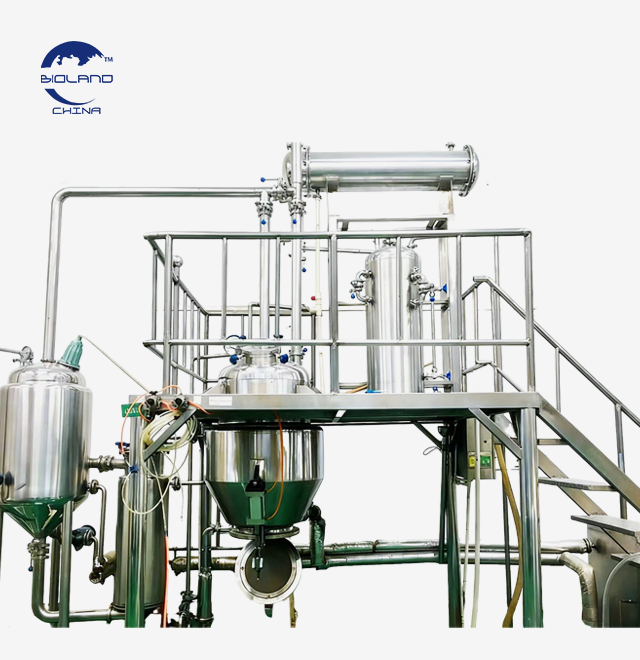
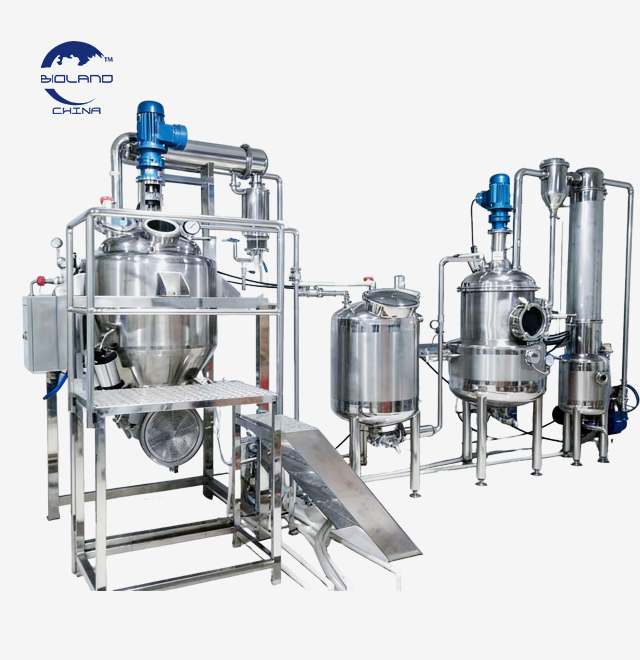
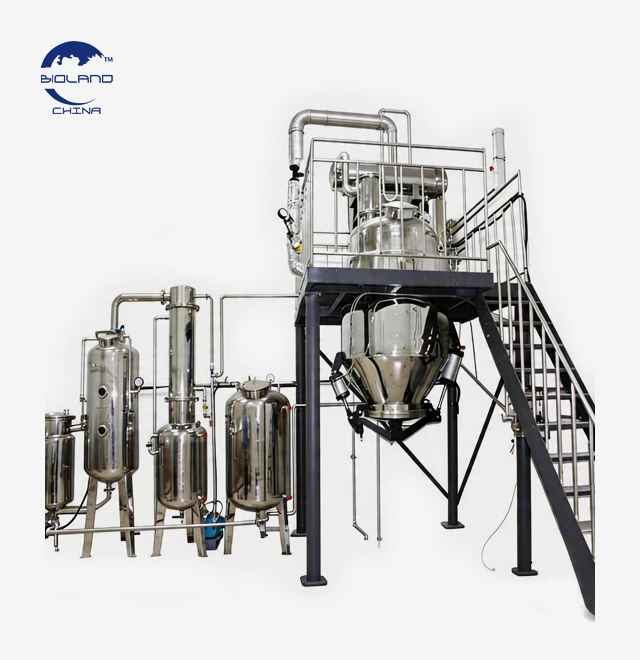
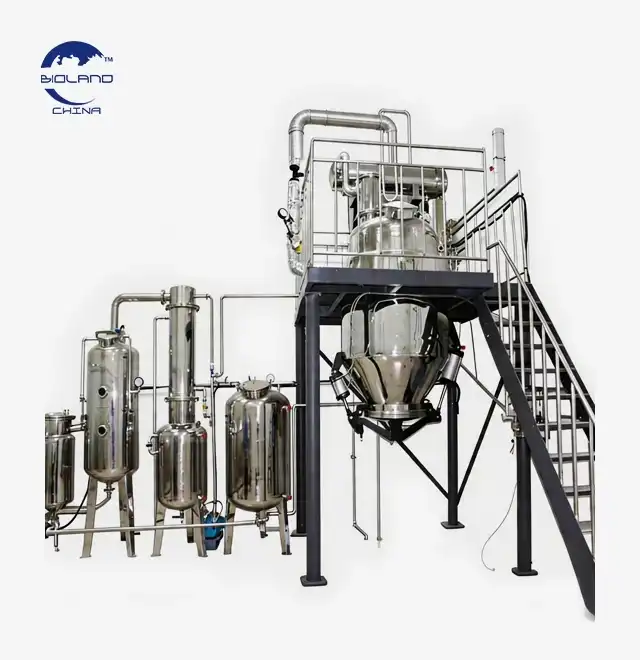
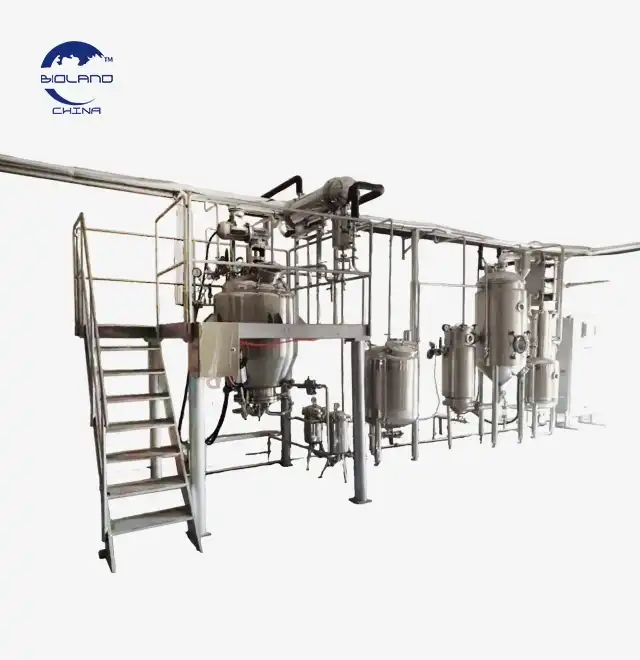
For continuous manufacturing, 300 L and 500 L protein extraction machine models are common. A 500 L system with 200 kg/h evaporation capacity can handle multi-batch daily operation, making it suitable for plant protein isolates, tea polyphenol lines, and natural pigment extraction. Industrial buyers should choose a protein extraction machine that supports semi-continuous operation, automatic feeding and discharging, and real-time concentration monitoring. This reduces operator dependence and ensures consistent extract quality across shifts. Bioland instrument’s industrial models can be customized into complete production lines, integrated with storage tanks, filtration skids, and vacuum concentration units to meet specific throughput targets.
Matching Equipment Capacity to Raw Material Characteristics
The physical makeup of the biomass also affects the choice of capacity. Materials that are dense and woody, like chilli, liquorice root, or coffee beans, may need more liquid contact time and stronger ultrasonic cavitation. Things that are light and porous, like mushroom powder or tea leaves, extract more quickly. A protein extraction machine that lets you change the ultrasonic power and residence time lets you use the same-sized vessel to effectively process different types of raw materials. Instead of choosing a single machine that is too big, it is usually better to choose a modular system that can be extended with an extra extraction tank or a bigger evaporator. This saves money and keeps the process flexible.
How Does Batch Size Affect Protein Extraction Equipment Selection?
Minimum Working Volume and Liquid Retention
The minimum working amount of a protein extraction machine is an important factor that is often missed. If the container is too big for the batch, the ultrasonic sensors might not be able to couple with the liquid phase properly. This could cause uneven cavitation and bad extraction. For example, putting 20 litres of liquid into a 500-liter tank doesn't work well and can damage the seals on the pumps by letting air in. So, it's better to pick a protein extraction machine whose working volume is the same as the batch size that will actually be used. The engineering team at Bioland says to choose a tank size so that the working amount stays between 50 and 80 percent of the total capacity.
Heat Transfer and Cooling Demands
Larger batch sizes produce more ultrasonic heat and need better cooling to keep the temperature of the extraction between 40°C and 60°C. A protein extraction machine with a jacketed tank, an external heat exchanger, and precise temperature control keeps bioactivity and stops proteins from breaking down. But as the batch size goes up, the ratio of surface area to volume goes down, which makes it harder to control the temperature. This happens a lot when tea polyphenol and mushroom polysaccharide extraction are done too hot, because it lowers the yield and molecular weight. Using the right batch size and pressure concentration keeps the process safe at the right temperature without making the extraction time longer.
Solvent-to-Solid Ratio and Mixing Efficiency
If the amount of liquid to solid is too low, it can be hard for the solvent to get into large batches. When you stir things the old-fashioned way, the biomass may settle or float depending on its density, which decreases the contact area. Ultrasonic cavitation in a protein extraction machine gets around this problem by making tiny jets of liquid that push into the cell wall. The batch level does, however, still change how even the sound field is. At both the test and industrial scales, the extraction tank should be made with a lot of ultrasonic horns or sensors placed in a way that keeps dead zones to a minimum. This makes sure that every particle gets enough cavitation energy, which is very important for proteins and carbohydrates that are valuable.
Solids Handling and Discharge Logistics
You have to deal with spent biomass after extraction based on the batch size. A small protein extraction machine can be emptied by hand, but a 500 L system needs to be automatically discharged, have a bottom valve, and maybe a screw conveyor or slurry pump. When mushroom polysaccharide is extracted, the leftover biomass is sticky and high in fibre, which makes cleaning by hand hard and time-consuming. Once the scale goes above 200 L, automatic release and CIP systems become economically important. Getting a protein extraction machine with built-in cleaning tools and automatic release cuts down on downtime between batches and makes the machine work better overall.
Which Power and Processing Parameters Matter at Each Scale?
Ultrasonic Power Density and Amplitude Control
Ultrasonic power is not an isolated number. What matters is power density — watts per liter of working volume. A 50 L protein extraction machine may use 2.7 kW motor power effectively, but a 500 L vessel needs proportionally distributed transducers to maintain the same cavitation intensity. If power density drops, extraction time increases and recovery falls. In our stevia extraction line projects, maintaining consistent power density across scale-up was essential to keep steviol glycoside recovery above 90% of laboratory values. A properly engineered protein extraction machine allows amplitude adjustment so operators can tune energy input for soft leaves, hard roots, or viscous mushroom slurries.
Temperature Control and Thermal Degradation Windows
Every protein and bioactive has a thermal degradation window. Conventional extraction at 80–100°C may damage heat-sensitive peptides, while ultrasonic extraction at 40–60°C preserves functional properties. At larger scale, heat removal becomes the limiting factor because ultrasonic energy dissipates as heat inside the liquid. Therefore, a protein extraction machine designed for 300 L or 500 L operation should include an external cooling loop or a jacketed vessel with adequate coolant flow. Our chilli oleoresin customers found that keeping extraction below 55°C at 200 L scale protected capsaicin color and pungency, while reducing oxidative degradation by more than 25%.
Extraction Time and Agitation Profile
At laboratory scale, extraction time is often 20–30 minutes. At pilot and industrial scale, mixing and mass transfer limitations may extend this to 40–60 minutes. However, a well-designed protein extraction machine still reduces total extraction time by two-thirds compared with conventional methods, even at 500 L capacity. The extraction recipe should include ramp-up time, hold time at target temperature, and cooling time before discharge. Parameters such as ultrasonic pulse mode and duty cycle also affect cavity formation and should be validated at each scale to avoid over-processing.
Vacuum Level and Solvent Recovery Efficiency
Concentration after extraction is an integral part of processing. A protein extraction machine with built-in vacuum concentration operates at -0.05 to -0.09 MPa, lowering evaporation temperature to 60–100°C. This protects sensitive components and recovers solvent for reuse. The amount of vacuum applied depends on the solvent system and target concentration endpoint. For ethanol-based tincture extraction, higher vacuum reduces ethanol loss and improves safety. In tea polyphenol and coffee extraction, vacuum concentration prevents oxidation of polyphenols and caffeine during solvent removal.
How Should Automation and Process Control Be Evaluated?
PLC Control and Recipe Management
A modern protein extraction machine should include a PLC-based control system that stores multiple extraction recipes. This is particularly useful for toll manufacturers and companies processing several botanical materials on the same equipment. Operators can select a validated recipe for soy protein, stevia leaf, or propolis extraction, and the system automatically controls temperature, ultrasonic power, vacuum level, and extraction time. Recipe management reduces operator error and shortens training time. For GMP production, electronic batch records provided by the protein extraction machine simplify documentation and audit readiness.
Online Monitoring and Data Logging
Online concentration monitoring is a valuable feature for large-scale operation. Instead of taking manual samples every 10 minutes, the operator can monitor real-time Brix or dissolved solids. This helps determine the optimal endpoint for extraction and concentration. A protein extraction machine with data logging capabilities also allows engineers to review process parameters and identify deviations before product quality is affected. For natural pigment extraction, online color monitoring can be integrated to ensure consistent product shade and intensity across batches.
Automated Discharge and Cleaning Systems
Manual discharge and washing can consume significant time between batches. An automated protein extraction machinewith bottom discharge, pneumatic valves, and CIP spray balls reduces cleaning time and improves production uptime. This is particularly important for sticky or viscous extracts such as propolis, mushroom polysaccharides, and fish protein hydrolysates. CIP systems also improve repeatability by ensuring consistent cleaning between batches, preventing cross-contamination. In multi-product plants, this flexibility directly increases the return on investment of the extraction line.
Safety Interlocks and Solvent Handling
When processing ethanol or other flammable solvents, safety interlocks are essential. A properly designed protein extraction machine includes pressure relief valves, solvent vapor detection, and safe zone classification for electrical components. The system should operate under atmospheric, negative, or positive pressure depending on process needs, with interlocks preventing accidental opening under vacuum or over-temperature. This matters not only for operational safety but also for regulatory compliance in pharmaceutical and food applications.
What Equipment Features Support Future Production Expansion?
Modular Skid Design and Parallel Processing
One of the biggest advantages of a well-designed protein extraction machine is modularity. Instead of replacing a small unit with a larger one, clients can add a second extraction tank or additional ultrasonic reactor to the existing skid. This reduces capital cost and preserves process validation. For instance, a company producing mushroom polysaccharides may start with a 100 L system, then add a 200 L extraction vessel and larger evaporator when demand grows. Modular design also allows parallel processing of different products, increasing factory flexibility without a full line rebuild.
Customization and OEM/ODM Support
Xi’an Bioland Instrument Co.,Ltd. provides OEM and ODM services for clients requiring non-standard configurations. A protein extraction machine can be customized with additional condensers, oil separators, filtration units, or heat exchangers, depending on the product. Our technical team also designs complete production lines for stevia glycosides, tea polyphenols, chilli oleoresin, mushroom polysaccharides, and natural pigments. Customized products typically have a lead time of 30 business days, while standard units are ready in 5–7 days.
Upgradable Automation and Digital Integration
As production volume grows, automation needs evolve. A future-ready protein extraction machine should allow software upgrades, additional sensors, and integration with plant-wide SCADA or MES systems. This digital readiness is essential for pharmaceutical and food manufacturers seeking continuous process verification. Bioland instrument’s systems are built with open-architecture control platforms, allowing clients to add online concentration sensors, conductivity monitors, or FTIR analyzers as needed.
After-Sales Support and Production Tracking
Choosing a supplier with strong after-sales capability protects long-term performance. Bioland assigns a dedicated specialist to each order, providing weekly photo or video updates during manufacturing. After completion, clients can inspect the protein extraction machine via detailed documentation or schedule a Factory Acceptance Test (FAT) at our facility. We offer one-year quality warranty with lifetime maintenance, supporting clients throughout the equipment lifecycle and helping them scale production confidently.
Conclusion
Choosing the right protein extraction machine by process scale requires balancing current batch size against future expansion. Laboratory users benefit from 50 L systems for method development, while pilot plants typically need 100–200 L capacity for process validation. Industrial producers should select 300–500 L protein extraction machine models with integrated vacuum concentration, PLC control, and CIP cleaning. Power density, temperature control, and automation are just as important as vessel volume. With modular design and OEM/ODM support, Bioland Instrument provides scalable solutions that grow with your production needs.
FAQ
1. What size protein extraction machine is best for laboratory research?
A 50 L protein extraction machine is ideal for R&D, allowing method development and small sample preparation with minimal solvent waste.
2. Can I scale up from a pilot machine to industrial production without changing technology?
Yes. Bioland designs modular systems so clients can expand from 100 L or 200 L pilot units to 500 L industrial protein extraction machine models with consistent ultrasonic parameters.
3. Why is ultrasonic power density important in large extraction tanks?
Power density affects cavitation uniformity. A properly designed protein extraction machine maintains sufficient watts per liter even at larger scale, ensuring consistent extraction efficiency.
4. How long does customization take for a protein extraction machine?
Customized protein extraction machine systems typically have a lead time of about 30 business days, while standard models are ready in 5–7 days.
5. Does Bioland provide installation and after-sales support?
Yes. We offer weekly production updates, FAT options, one-year warranty, and lifetime maintenance for every protein extraction machine, supported by CE and ISO certified engineering.
Build Your Scalable Extraction Line with Bioland Instrument
From lab-scale trials to full production lines, Bioland Instrument delivers the right protein extraction machine for your process scale. We combine 15+ years of engineering experience with CE, ISO, and GMP-compliant manufacturing to provide ultrasonic extraction, integrated concentration, and complete turnkey solutions. Whether you need a single 50 L unit for tincture extraction or a 500 L industrial line for tea polyphenols, mushroom polysaccharides, or plant protein, our OEM/ODM team supports every step. Clients receive weekly production tracking, FAT inspection, and lifetime maintenance. Contact info@biolandequip.comtoday to discuss your throughput goals and receive a tailored process solution.
References
1. Chemat, F., & Vian, M. A. (2014). Alternative solvents for natural products extraction. Springer.
2. Patist, A., & Bates, D. (2008). Ultrasonic innovations in the food industry. Innovative Food Science and Emerging Technologies, 9(2), 147–154.
3. Awad, T. S., Moharram, H. A., Shaltout, O. E., et al. (2012). Applications of ultrasound in analysis, processing and quality control of food. Food Research International, 48(2), 410–427.
4. Esclapez, M. D., García-Pérez, J. V., Mulet, A., & Cárcel, J. A. (2011). Ultrasound-assisted extraction of natural products. Food Engineering Reviews, 3(2), 108–120.
5. Vinatoru, M., Mason, T. J., & Calinescu, I. (2017). Ultrasonically assisted extraction and the determination of plant material yield. TrAC Trends in Analytical Chemistry, 97, 159–178.
6. Lianfu, Z., & Zelong, L. (2008). Optimization and comparison of ultrasound-assisted extraction and microwave-assisted extraction for tea polyphenols. Ultrasonics Sonochemistry, 15(5), 731–737.
The reactor is beautifully mirror-polished and fully complies with GMP requirements for the pharmaceutical industry. The performance is excellent! Overall, we are very satisfied! We also provided with some feedback on our process improvements, which we hope will be helpful.
2024-04-09
Laboratory
Excellent and professional service. Always reply our questions very fast. All reactors and chiller we received are good too.
2024-02-15
Research Institute
Quality is beyond our expectation actually. After we got the extraction equipment and started using it, the performance was beyond our expectation. Very easy to use and very efficient to run. Service always respond us very quickly. Was also very helpful to help us. Thanks Bioland team. Very happy to work with you.
2023-11-20
Biotech Company
We are happy about the new purchase as always. Equipment and services are both good.
2023-08-05
Instrument Lab
This is the second order with Bioland instrument and everything is good as the first dateText.
2023-05-12
Global Trading Partner
Bioland instrument team is very helpful and professional. The sales helped us select the right equipment for our application, and their logistics people handled the transportation and customs declaration for our shipment. All that saved us a lot of work.