How Does Chemical Batch Reactor Ensure Consistent Product Quality Output
Jul 10, 2026
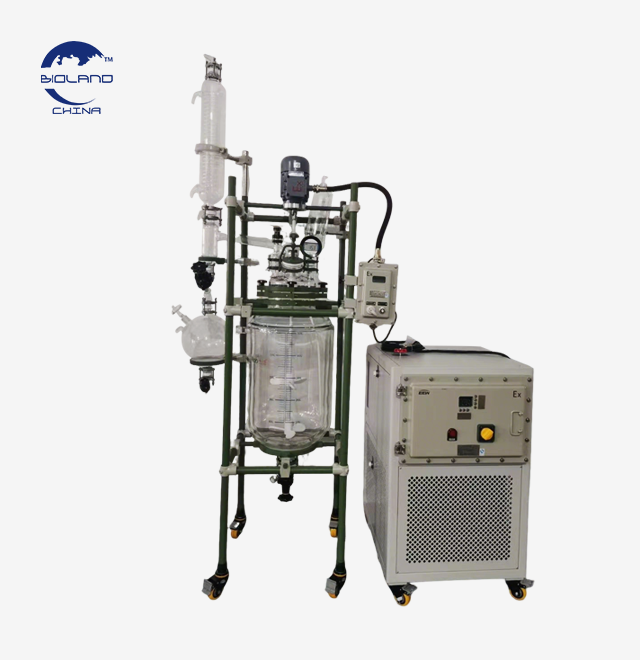
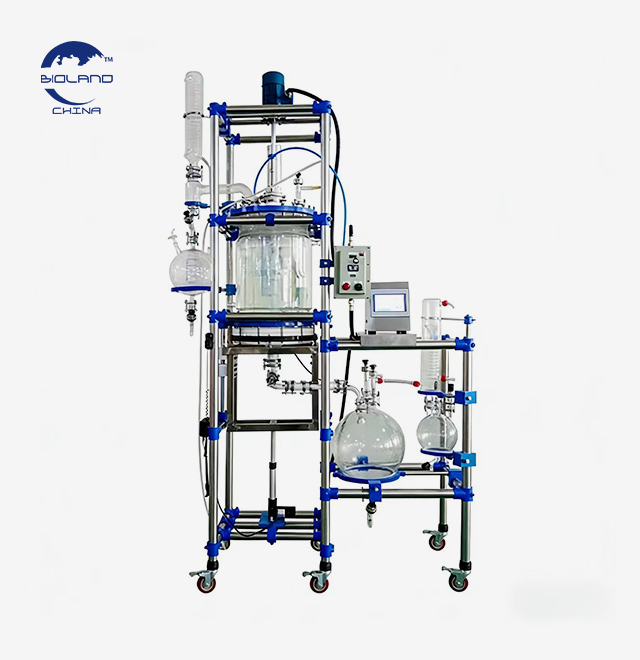
Buyers sourcing achemical batch reactorfor pharmaceutical intermediates, fine chemical synthesis, or pilot-scale production all face the same underlying question: can the equipment deliver the same result, batch after batch, without drifting yields or unpredictable impurities. Xi'an Bioland Instrument Co., Ltd. has spent more than 15 years answering exactly that question. Our chemical batch reactor platform combines fully transparent GG17 borosilicate glass construction, dual-jacket temperature control, and modular flange configurations so that every reaction — from a 5-liter lab trial to a 200-liter pilot run — behaves in a reproducible, traceable, and compliant way. Below, we break down the process controls, engineering design, and quality management systems that make a Bioland chemical batch reactor a dependable core of your production line, supported by real customer cases and CE, ISO, GMP and FDA-aligned manufacturing.
Key process controls for maintaining batch reaction consistency
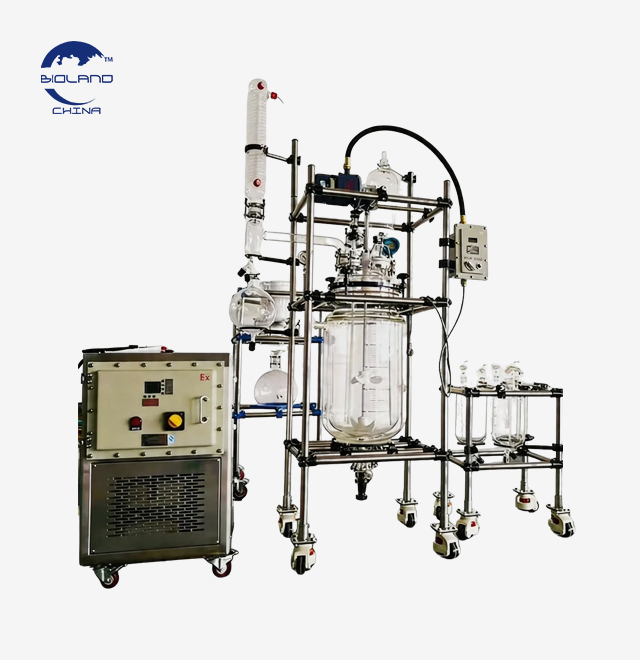
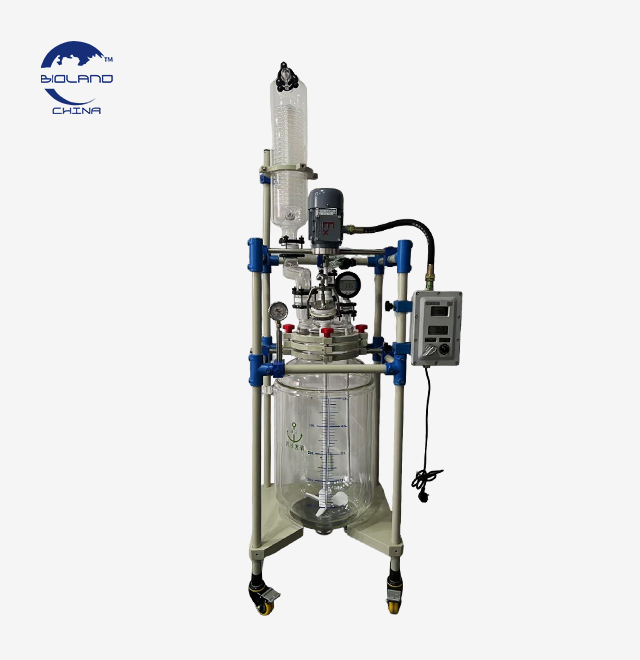
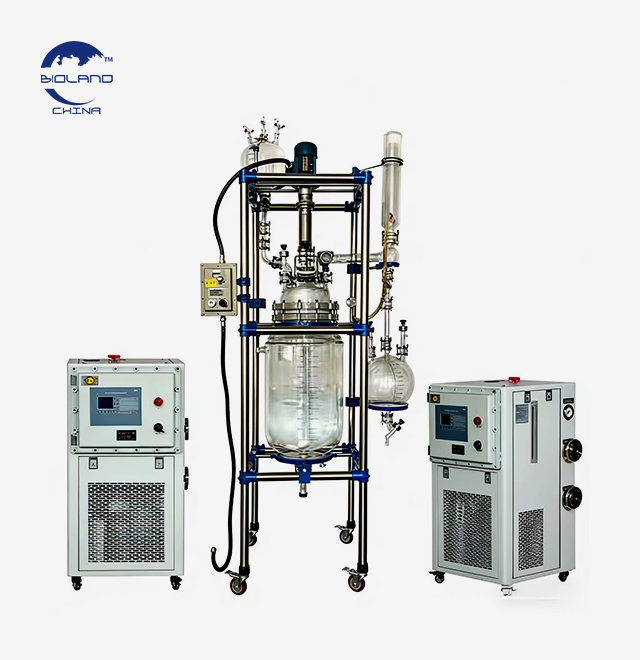
Consistency in a chemical batch reactor starts with visibility. Because operators cannot fix what they cannot see, Bioland's reactor uses a fully transparent glass vessel so every stage of the reaction — color change, precipitate formation, phase separation — is visible in real time. This removes the "black box" uncertainty common with stainless steel batch reactors and allows technicians to intervene immediately if a reaction begins drifting from its target profile, which directly protects repeatability across multiple production runs.
Visualized monitoring for real-time reaction judgment
A chemical batch reactor built from high-borosilicate GG17 glass lets engineers confirm reaction endpoints visually instead of relying purely on secondary instrumentation. Operators can watch for crystallization onset, gas evolution, or emulsion breaking, then log the exact conditions at that moment. This visual feedback loop is one of the most requested features by pharmaceutical and fine chemical clients evaluating a chemical batch reactor, because it shortens troubleshooting time and improves batch-to-batch traceability.
Standardized loading and charging sequences
Every Bioland unit is fitted with a standard multi-neck flange lid — typically a six-port configuration — that supports dropping funnels, thermometer wells, and reflux condensers in fixed positions. Standardizing how raw materials enter the vessel, in what order and at what rate, is one of the simplest but most effective consistency controls available, and it is built into the vessel geometry itself rather than left to improvisation.
Data logging across the reaction lifecycle
Modern batch reaction operations depend on documented process data: charge time, temperature ramp, agitation speed, vacuum level, and hold duration. Bioland's PLC-integrated control options allow this information to be captured automatically for every production cycle, giving quality teams an audit trail that satisfies GMP-style documentation requirements without adding manual recording burden to the operator.
Case snippet: catalyst evaluation program
A specialty chemical producer needed a reactor system that could support repeated catalyst screening without cross-contamination between trials. Bioland supplied a jacketed glass vessel with quick-clean flange fittings, cutting changeover time between catalyst runs and improving comparability of results across the screening program.
Role of temperature, mixing, and pressure control in quality assurance
Temperature, agitation, and pressure are the three variables that most directly determine whether a chemical batch reactor produces a consistent product or a variable one. Bioland engineers each unit with a dual-jacket shell so that heating and cooling media circulate independently of the reaction mass, protecting sensitive intermediates from localized hot spots that would otherwise cause side reactions or degradation.
Wide-range, dual-jacket temperature control
The dual-jacket design on the Bioland unit supports a working range from about -80°C for low-temperature condensation up to 300°C for high-temperature synthesis. This range means a single vessel can serve multiple process stages — cooling for crystallization, then heating for reflux — without swapping equipment, which itself reduces a major source of batch-to-batch variability.
Agitator geometry matched to viscosity and reaction type
Mixing uniformity inside the vessel depends heavily on impeller design. Bioland customizes stirring paddle geometry to the viscosity and reaction type of each client's process, since a paddle tuned for low-viscosity solvent extraction will underperform in a thicker crystallization slurry. Correct agitator selection inside the reactor improves oxygen transfer, heat distribution, and mass transfer, all of which feed directly into product consistency.
Vacuum and pressure regulation for reflux and evaporation
A reactor paired with a vacuum system reaching approximately -0.095 MPa allows lower-temperature distillation and reflux, protecting heat-sensitive compounds while still achieving efficient solvent recovery. Pressure control inside the vessel is managed through the same dual-jacket and sealing system, so operators can move between atmospheric, vacuum, and mildly pressurized steps within one continuous process.
Case snippet: biopharmaceutical fermentation optimization
A biopharmaceutical company in South America faced insufficient dissolved-oxygen efficiency, long fermentation cycles, and imprecise process control that limited product purity in oxidation-sensitive synthesis. Bioland customized a 50-liter double-layer unit with a redesigned agitator, raising dissolved-oxygen efficiency by roughly 30% and shortening the fermentation cycle. The transparent vessel also let technicians watch color and precipitate changes in real time, adjusting conditions immediately to protect the purity of intermediate compounds, while sealed ports supported inert-gas protection for chiral, oxygen-sensitive syntheses.
How reactor design improves product uniformity and stability
Product uniformity depends on more than process settings; it depends on the physical construction of the chemical batch reactor itself. Bioland uses GG17 borosilicate glass for every chemical batch reactor vessel because of its exceptional resistance to strong acids, strong bases, and organic solvents, without leaching metal ions into the reaction mass — a critical requirement for high-purity pharmaceutical intermediates and biologically active compounds.
Chemical-resistant glass construction
Because a reactor vessel made from GG17 glass will not corrode or introduce contamination the way carbon steel vessels can over repeated cycles, product purity remains stable from the first batch to the thousandth. This chemical inertness is one of the core reasons pharmaceutical, biotech, and fine-chemical buyers specifically request a glass vessel over a metal alternative.
Modular flange configuration for process flexibility
Standard flange ports on the Bioland unit connect freely to condensers, dropping funnels, temperature probes, and vacuum pumps, letting one chemical batch reactor adapt to distillation, extraction, catalytic, or crystallization workflows. This modularity means clients scaling from lab trial to pilot production can reuse the same equipment platform across multiple process stages rather than re-engineering equipment for each step.
Sealing systems and structural durability
The Bioland unit uses double-protection sealing — PTFE combined with mechanical seals — alongside a variable-frequency, spark-free drive motor to reduce noise and mechanical wear. Lift-and-rotate lid structures simplify charging, discharging, and cleaning, extending the operational life of the vessel and reducing unplanned downtime across long production campaigns.
Case snippet: precious metals solvent extraction
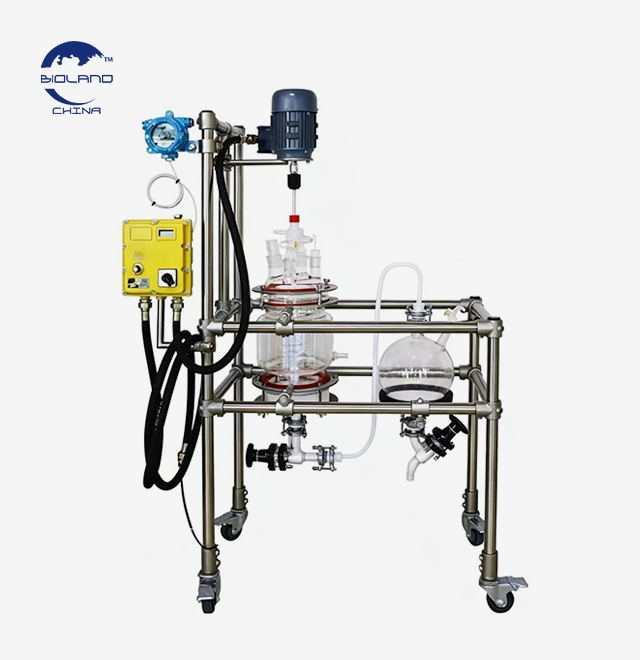
A European precious-metals producer needed to replace undersized, low-efficiency separation equipment ahead of a new production line. Traditional equipment could not scale, and standard vessels lacked the customization needed for the corrosive process stream. Bioland supplied four 200-liter explosion-proof double-layer chemical batch reactor units alongside nine 50-liter explosion-proof rotary evaporators, engineered to ExdIIBT4 explosion-proof standards for high-hazard environments.
Modular manufacturing on this order cut delivery time by roughly 40%, letting the client start production 15 days ahead of schedule. Annual capacity rose by about 30%, and the units ran more than 1,000 hours without failure. Precise -80°C to 200°C temperature control combined with a transparent vessel let operators monitor highly corrosive mixing and reaction states directly, avoiding the impurities that metal equipment corrosion would otherwise introduce.
Quality management factors in chemical batch reactor operations
Consistent output from achemical batch reactor is not only an engineering question, it is a quality-management and supplier-reliability question. Xi'an Bioland Instrument Co., Ltd. is a professional manufacturer and solution provider for R&D, production, and sales of distillation, concentration, reaction, extraction, separation, filtration, purification, crystallization, emulsification, mixing, and drying equipment, alongside supporting heating, cooling, and vacuum devices, with more than 15 years of experience in the field.
Certification and compliance as a quality baseline
Every Bioland unit is manufactured under ISO safety standards and holds CE certification, with production processes aligned to GMP and FDA expectations. For pharmaceutical and fine-chemical buyers, sourcing a chemical batch reactor from a certified manufacturer removes a major compliance risk before the equipment even reaches the pilot floor, since documentation and safety standards are already built into the build process.
Non-standard customization built around client processes
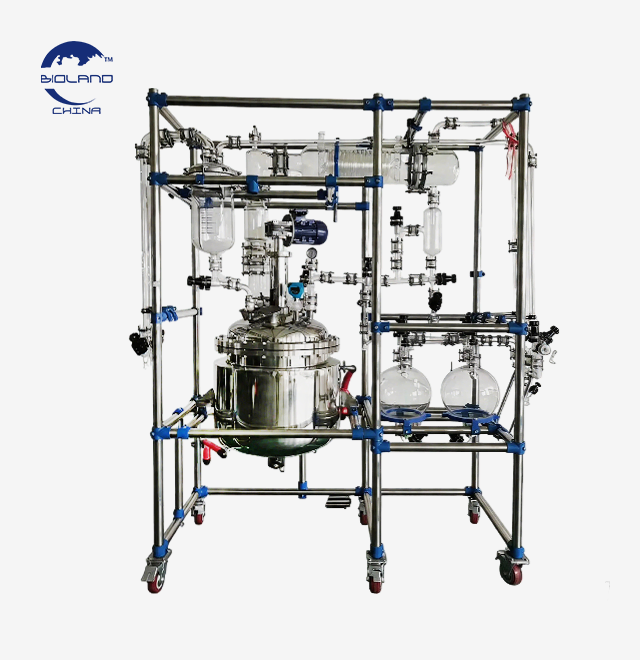
Bioland's engineering team customizes each chemical batch reactor according to a client's specific experimental or production requirements, adjusting size, shape, material, and internal structure rather than forcing a standard vessel onto a non-standard process. Clients can also specify a fully explosion-proof chemical batch reactor system, PLC-based full automation, integrated temperature control, lift-and-rotate design, filtration, crystallization, ultrasonic crystallization, tail-gas absorption, distillation columns, and purification-concentration modules, all configured to order around the requested chemical batch reactor build.
Production tracking and after-sales support
Once an order is confirmed, Bioland assigns a dedicated specialist to track chemical batch reactor production weekly, sharing photos or video of progress so clients always know the manufacturing status of their equipment. After production completes, detailed photos or videos are provided for client inspection before shipment, and clients may also arrange a Factory Acceptance Test (FAT) at the Bioland facility once the chemical batch reactor is ready, adding another verification layer before the unit leaves the plant.
Case snippet: chemical intermediate manufacturer
A chemical intermediate producer needed a customized chemical batch reactor capable of handling both nitric acid processing and glycerin acidification lines without cross-batch contamination. Bioland delivered a purpose-built chemical batch reactor configuration matched to both process streams, backed by CE and ISO documentation the client needed for downstream pharmaceutical and industrial customers. Customized units typically ship within 30 business days, while standard configurations are generally ready in 5–7 days, supported by sea, rail, or air freight and a one-year warranty with lifetime maintenance.
Conclusion
A chemical batch reactor delivers consistent product quality when visual process control, precise temperature and pressure regulation, chemically resistant construction, and disciplined quality management work together. Bioland Instrument's 15-plus years of engineering experience, CE/ISO/GMP/FDA-aligned manufacturing, and non-standard customization capability let pharmaceutical, chemical, and biotech clients scale from lab trial to pilot production with confidence. Backed by documented case results and dedicated after-sales tracking, Bioland's chemical batch reactor platform functions less like a single piece of equipment and more like a complete process-consistency solution.
FAQ
Q1: What temperature range can a Bioland chemical batch reactor handle?
A: The dual-jacket design supports roughly -80°C to 300°C, covering both low-temperature condensation and high-temperature reactions.
Q2: Can the chemical batch reactor be customized for explosion-proof environments?
A: Yes, units can be built to ExdIIBT4 explosion-proof standards with PLC automation.
Q3: What certifications does the chemical batch reactor carry?
A: All units are ISO safety-compliant, CE certified, and manufactured to GMP/FDA-aligned standards.
Q4: How long does a customized chemical batch reactor take to produce?
A: Customized units typically take about 30 business days; standard units ship in 5–7 days.
Q5: Does Bioland support Factory Acceptance Testing?
A: Yes, clients may inspect via photos/video weekly or schedule an FAT at the factory before shipment.
Ready to Solve Your Process Consistency Challenge?
If inconsistent yields, contamination risk, or scale-up uncertainty are slowing down your production line, it may be time to rethink the chemical batch reactor at the center of your process. Xi'an Bioland Instrument Co., Ltd. brings more than 15 years of experience engineering distillation, extraction, crystallization, and reaction equipment for pharmaceutical, biotech, chemical, and food industry clients worldwide. Every Bioland chemical batch reactor is backed by ISO and CE certification, GMP/FDA-aligned manufacturing, a dedicated in-house R&D team, and full OEM/ODM customization support — from vessel size and material to PLC automation and explosion-proof configurations.
Our team tracks your chemical batch reactor through every stage of production, sharing weekly photo and video updates and offering Factory Acceptance Testing before shipment, so there are no surprises when your equipment arrives. Whether you're scaling a lab process to pilot production or replacing aging, corrosion-prone equipment, our engineers can design a chemical batch reactor solution around your exact process requirements at a competitive price. Contact our team today at info@biolandequip.com to discuss your project, request a custom quote, or start planning your next chemical batch reactor build with Bioland Instrument.
References
1. Levenspiel, O. Chemical Reaction Engineering. John Wiley & Sons.
2. Fogler, H. S. Elements of Chemical Reaction Engineering. Prentice Hall.
3. Nauman, E. B. Chemical Reactor Design, Optimization, and Scaleup. John Wiley & Sons.
4. Paul, E. L., Atiemo-Obeng, V. A., and Kresta, S. M. (Eds.). Handbook of Industrial Mixing: Science and Practice. John Wiley & Sons.
5. Rase, H. F. Chemical Reactor Design for Process Plants. John Wiley & Sons.
6. Perry, R. H., and Green, D. W. (Eds.). Perry's Chemical Engineers' Handbook. McGraw-Hill.
The reactor is beautifully mirror-polished and fully complies with GMP requirements for the pharmaceutical industry. The performance is excellent! Overall, we are very satisfied! We also provided with some feedback on our process improvements, which we hope will be helpful.
2024-04-09
Laboratory
Excellent and professional service. Always reply our questions very fast. All reactors and chiller we received are good too.
2024-02-15
Research Institute
Quality is beyond our expectation actually. After we got the extraction equipment and started using it, the performance was beyond our expectation. Very easy to use and very efficient to run. Service always respond us very quickly. Was also very helpful to help us. Thanks Bioland team. Very happy to work with you.
2023-11-20
Biotech Company
We are happy about the new purchase as always. Equipment and services are both good.
2023-08-05
Instrument Lab
This is the second order with Bioland instrument and everything is good as the first dateText.
2023-05-12
Global Trading Partner
Bioland instrument team is very helpful and professional. The sales helped us select the right equipment for our application, and their logistics people handled the transportation and customs declaration for our shipment. All that saved us a lot of work.