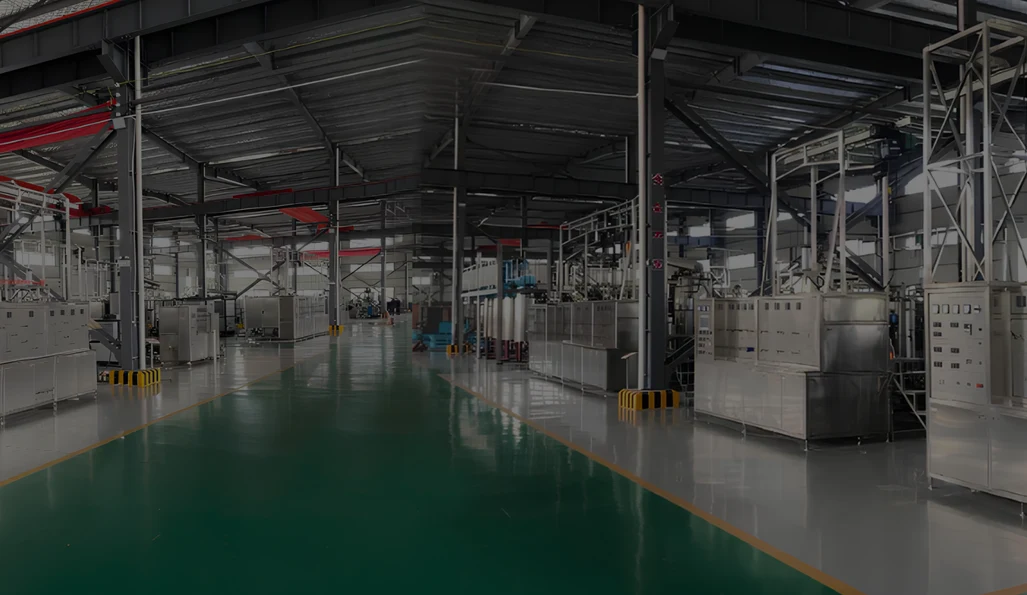
Herbal extract makers don't get a better return on investment (ROI) just by getting a bigger tank. Real returns happen when more valuable compounds are recovered, batch times are cut, energy and solvent use is reduced, product consistency is improved, and handling that requires a lot of work is cut down. Bioland Instrument sells ultrasonic herbal extraction equipmentthat can handle these production issues by offering a full process solution that includes ultrasonic-assisted extraction, controlled solvent treatment, filtration, vacuum concentration, solvent recovery, automated discharge, and cleaning that is ready for CIP.
The right ultrasonic herbal extraction equipment can make a big difference for companies that make tinctures, essential oils, botanical pigments, mushroom polysaccharides, flavonoids, tea polyphenols, and natural active ingredients. Bioland Instrument uses ultrasonic cavitation technology along with GMP-compliant stainless steel construction, PLC control, capacity customisation, and engineering support. The company doesn't just sell one extraction tank; instead, it helps clients build an effective extraction-to-concentration line that fits their raw materials, output goals, utilities, quality standards, and plans for future growth.
How Ultrasonic Technology Improves Herbal Extraction Efficiency
Cavitation Helps Release More Valuable Herbal Compounds
Mass transfer is the most direct way that ultrasonic herbal extraction equipment can help you make money. High-frequency sound waves make cavitation bubbles in the liquid during ultrasonic treatment. It creates localised commotion, micro-jets, and mechanical force when those bubbles pop. This can change the shape or structure of plant cell layers, which lets the fluid get deeper into the material and break down target chemicals more quickly.
For manufacturers, this means that active compounds don't just need to be soaked for a long time or reacted at high temperatures. Ultrasonic extraction can greatly improve extraction performance compared to traditional methods, with improvements in the range of 50–500% found in practice. These changes depend on the type of plant, particle size, fluid ratio, and process factors.
Shorter Extraction Cycles Increase Daily Output
Long extraction cycles tie up tanks, labor, heating utilities, and production space. By improving solvent contact with herbal raw materials, ultrasonic herbal extraction equipment can often achieve an effective extraction result within approximately 24–40 minutes. This can reduce extraction time by more than two-thirds compared with some conventional soaking or decoction processes.
Shorter cycles create an important operational advantage: the same extraction room can process more batches without necessarily adding new tanks. For a growing botanical-extract business, increasing throughput from existing floor space is often more valuable than simply purchasing larger equipment. Production managers also gain more predictable scheduling for filtration, concentration, drying, and packaging.
Moderate Temperatures Help Preserve Process Value
Many botanical active ingredients are sensitive to excessive heating, oxidation, or hydrolysis. Flavonoids, polyphenols, aromatic fractions, pigments, and some functional ingredients can benefit from controlled processing temperatures. Ultrasonic herbal extraction equipment commonly works in a moderate extraction range of approximately 40–60°C, depending on the material and solvent system.
Lower-temperature operation can support both product quality and energy management. Rather than relying exclusively on heat to accelerate extraction, ultrasonic cavitation contributes mechanical energy to the process. This gives manufacturers a practical way to balance extraction efficiency with protection of heat-sensitive ingredients.
A stevia producer needed to recover steviosides from leaves, stems, and roots but faced long extraction cycles that limited daily output. The customer’s available workshop area could not accommodate several additional extraction tanks.
Bioland instrument proposed ultrasonic herbal extraction equipment with controlled extraction, circulation, filtration, and concentration. By improving solvent contact and shortening the active extraction stage, the customer could plan more batch turnover within the existing space while maintaining a scalable process for a stevia extraction machine production line.
Cost Savings and Production Benefits of Ultrasonic Extraction Systems
Lower Labor Demand Through Automated Process Sequencing
Manual extraction operations often require repeated solvent charging, valve switching, circulation checks, discharge procedures, and batch monitoring. These tasks increase labor cost and can also lead to variation between shifts. Bioland’s ultrasonic herbal extraction equipment can include PLC electrical controls, programmed extraction timing, temperature monitoring, automatic discharge, online concentration monitoring, and optional CIP cleaning functions.
Automation does not only save labor. It helps transform individual operator experience into defined process parameters. When solvent volume, ultrasonic time, extraction temperature, and concentration conditions are repeatable, the factory can create clearer batch records and reduce avoidable inconsistencies in extract strength, color, or density.
Solvent Recovery Converts Waste into Operating Savings
Ethanol is widely used for tinctures, flavonoids, propolis, botanical phenolics, aromatic components, and many herbal active ingredients. However, solvent consumption can become a major operating expense if recovery is not integrated into the process. A complete ultrasonic herbal extraction equipment line can include vacuum concentration, condensers, cooling units, recovery tanks, pumps, and storage vessels.
During concentration, generated secondary vapor passes through a condenser and cooling system, where it returns to liquid form. Depending on the validated process and product requirements, recovered solvent may be reused for subsequent extraction cycles. This reduces fresh solvent demand and helps manufacturers improve the economic performance of ethanol-based extraction lines.
Vacuum Concentration Helps Reduce Thermal Load
After extraction and filtration, the herbal liquid usually requires concentration before drying, formulation, or filling. A ultrasonic herbal extraction equipment system can integrate vacuum concentration to reduce the boiling point of the extract liquid. Typical system vacuum can reach approximately -0.085 MPa, while practical concentration conditions may be controlled around -0.05 to -0.09 MPa.
This approach supports more efficient evaporation and allows processors to operate with greater control over thermal exposure. Bioland models range from 50 L to 500 L, with evaporation capacities from approximately 20 kg/h to 200 kg/h, helping customers select a configuration matched to actual production volume.
Application Scenario: Tincture Processing Needed Better Solvent Control
A herbal tincture manufacturer used ethanol to extract active compounds but experienced rising solvent costs and inconsistent concentrate density. The plant relied on separate extraction and concentration units, increasing transfer losses and manual work.
Bioland instrument designed ultrasonic herbal extraction equipment with integrated ethanol extraction, filtration, vacuum concentration, and solvent recovery. The customer gained a more connected workflow and improved visibility over solvent use, making the tincture extraction machine process easier to manage.
Enhancing Extract Quality Through Advanced Extraction Processes
High yield is not the only quality indicator. If an extraction process produces excessive impurities, filtration and purification can become expensive and slow. Properly selected ultrasonic herbal extraction equipment improves solvent penetration and can support more controlled extraction conditions, helping manufacturers develop a cleaner extract liquor that is easier to filter, concentrate, standardize, or further purify.
Bioland instrument engineers consider raw-material behavior before recommending equipment. A dense root powder, fibrous leaf material, sticky propolis, pigment-rich peel, and hydrated mushroom powder behave differently in solvent. The equipment configuration should therefore include suitable filtration, circulation, agitation, and concentration arrangements rather than a standard one-size-fits-all vessel.
Flexible Processing for Diverse Herbal Ingredients
A versatile ultrasonic herbal extraction equipment platform can support ultrasonic low-temperature extraction, room-temperature extraction, solvent extraction, dynamic Soxhlet-style processes, heat reflux extraction, water precipitation, alcohol precipitation, and percolation. This flexibility is valuable for companies with diversified botanical product portfolios.
The same production facility may process water-soluble polysaccharides in one campaign and ethanol-soluble flavonoids in another. It may also produce extracts for pharmaceutical, cosmetic, food, beverage, and nutraceutical markets. With suitable cleaning procedures and customized piping, manufacturers can use one integrated system for multiple products while maintaining more controlled process separation.
Flavonoid Extraction Benefits from Controlled Conditions
Flavonoids are valuable compounds in many medicinal plants, fruits, vegetables, and botanical by-products. They can be extracted from ginkgo leaves, bamboo leaves, chrysanthemum, ginger, lotus leaves, Sophora japonica buds, onion skins, purple gromwell leaves, and other materials. Ultrasonic herbal extraction equipment can help improve extraction of flavonoids by increasing contact between the solvent and the plant matrix.
For quercetin-focused projects, ultrasound assisted extraction of quercetin can be applied to larch, celery, mulberry leaves, Sophora buds, cypress, and other plants containing quercetin or its precursors, including rutin and quercitrin. Moderate temperature and controlled extraction time are particularly useful when producers need consistent botanical-extract specifications.
Application Scenario: Mushroom Polysaccharide Quality Was Unstable
A mushroom ingredient producer extracted polysaccharides from reishi, shiitake, tremella, and enoki mushrooms. The customer faced inconsistent extract concentration because raw materials varied in particle size and water absorption.
Bioland instrument configured ultrasonic herbal extraction equipment with controlled water extraction, circulation, filtration, and vacuum concentration. The process gave the customer more stable handling of extraction of polysaccharides and a stronger foundation for standardizing finished mushroom extract batches.
Reducing Operational Expenses with Ultrasonic Equipment Solutions
Integrated Design Reduces Manual Transfer and Material Loss
A fragmented production layout can quietly increase cost. When extract liquid is transferred between separate tanks, filters, pumps, and concentrators, the factory spends more time cleaning, handling hoses, waiting for operators, and managing product loss. Bioland instrument’s ultrasonic herbal extraction equipment can be supplied as an integrated system that connects extraction, heating, filtration, vacuum concentration, condensation, solvent collection, and storage.
Typical configurations may include an ultrasonic system, extraction tank, tubular heater, evaporator, condenser, oil separator, collection tank, liquid pump, metering tank, filter, vacuum pump, and electrical cabinet. Anti-foam devices can also be arranged at extraction and evaporation vapor outlets to support stable operation.
Energy Management Starts with Process Design
Energy consumption is influenced by more than motor power. It depends on extraction time, heating demand, insulation, concentration load, utility availability, solvent recovery, and batch scheduling. Ultrasonic herbal extraction equipment can reduce energy pressure by shortening extraction cycles and operating at moderate temperatures during the extraction stage.
Bioland systems use three-layer insulation options to help reduce heat loss. For facilities without steam infrastructure, thermal-oil heating can be added. Typical jacket pressure is approximately 0.09–0.3 MPa, while compressed-air requirements are generally around 0.5–0.6 MPa. Engineering teams should review site utilities before finalizing a production line.
CIP Cleaning Protects Productivity Between Batches
Cleaning downtime is often underestimated during equipment investment planning. A plant producing tea extract, botanical pigments, propolis, and herbal tinctures needs to clean thoroughly between campaigns. Ultrasonic herbal extraction equipment with optional CIP online cleaning can simplify cleaning routines and support GMP-oriented operations.
A planned maintenance routine should include inspection of seals, pumps, valves, filters, ultrasonic components, vacuum connections, and solvent pipelines. Proper operation and preventive maintenance reduce unexpected interruptions, extend equipment life, and help keep the extraction line available when production demand increases.
Application Scenario: Natural Pigment Production Had High Cleaning Costs
A producer performing pigment extraction from plants processed orange peel pigment, anthocyanins, carotenoids, chlorophyll, and betacyanins. Different pigments left color residues in the equipment and required lengthy manual cleaning between batches.
Bioland supplied ultrasonic herbal extraction equipment with hygienic stainless-steel construction, CIP-ready design, integrated filtration, and customized process connections. The customer reduced cleaning complexity and gained a more practical route for producing multiple natural-color extracts.
Maximizing Long-Term Returns in Herbal Extract Manufacturing
Choose Scalable Capacity Instead of Overbuying
The best investment is not always the largest machine. Capacity selection should account for daily raw material loading, solvent ratio, batch duration, filtration speed, evaporation rate, cleaning schedule, labor plan, and expected sales growth. Bioland provides ultrasonic herbal extraction equipment in 50 L, 100 L, 200 L, 300 L, and 500 L configurations.
Technology parameter
Model
BL-TN-C50L
BL-TN -C100L
BL-TN -C200L
BL-TN -C300L
BL-TN -C500L
Volume (L)
50
100
200
300
500
Evaporation capacity (kg/h)
20
50
70
100
200
Motor power(KW)
2.7
2.7
2.7
3.5
3.5
Steam consumption(kg/h)
25
60
90
120
250
System vacuum (MPa)
-0.085
-0.085
-0.085
-0.085
-0.085
Pressure of jacket(MPa)
0.09~0.3
0.09~0.3
0.09~0.3
0.09~0.3
0.09~0.3
Compressed air (MPa)
0.5~0.6
0.5~0.6
0.5~0.6
0.5~0.6
0.5~0.6
Evaporation temperature(°C)
60~100
60~100
60~100
60~100
60~100
A 50 L system is appropriate for laboratory development, formula verification, and pilot trials. A 500 L line can support larger commercial batches with evaporation capacity reaching approximately 200 kg/h. This scalable range enables customers to develop processes at a manageable investment level and expand when market demand is proven.
A production line delivers stronger ROI when it can serve several revenue-generating products. Bioland’s ultrasonic herbal extraction equipment can support tea polyphenols, coffee alkaloids and caffeine, plant proteins, wheat germ oil, goji and jujube actives, soybean protein, essential oils, rose oil, peppermint oil, valerian aromatic ingredients, chili pigments, marine fish protein, peony seed oil, and more.
The same technology also supports a Chilli Oleoresin Extraction Plant for capsaicin and chili oleoresin, a propolis extraction machine for flavonoids and phenolic acids, and tea extraction machine or Coffee Extraction Machine projects. This flexibility lets manufacturers diversify their product portfolio without creating completely separate infrastructure for every botanical material.
Supplier Experience Reduces Project Risk
Xi’an Bioland Instrument Co., Ltd. has more than 15 years of experience in the design, production, and sales of extraction, distillation, concentration, reaction, separation, filtration, purification, crystallization, emulsification, mixing, drying, heating, cooling, and vacuum equipment. The company serves laboratory R&D, biopharmaceutical, pharmaceutical chemical, food, beverage, cosmetic, and new-material industries.
Bioland supplies ultrasonic plant extraction machines, ethanol extraction machines, extraction concentration units, CO2 extraction machines, supercritical fluid extraction equipment, essential-oil distillation systems, reactors, Nutche filter reactors, vacuum filtration systems, homogenizer mixers, mixing tanks, vacuum spray dryers, freeze dryers, and ultrasonic homogenizers. Its products are exported to Europe, Southeast Asia, and other markets.
Application Scenario: Chili Oleoresin Expansion Needed a Complete Line
A chili processor wanted to extract capsaicin and chili oleoresin but had concerns about solvent handling, filtration, product concentration, and future capacity expansion. Buying an extractor alone would not resolve the complete production challenge.
Bioland instrument proposed ultrasonic herbal extraction equipment as part of an integrated Chilli Oleoresin Extraction Plant concept. The solution included extraction, filtration, concentration, recovery, and engineering support, helping the client evaluate the process as a complete investment rather than isolated equipment purchases.
Bioland Instrument provides CE and ISO-certified quality assurance, GMP/FDA-oriented manufacturing practices, OEM/ODM customization, one-year quality warranty, and lifetime maintenance. Customized systems generally require about 30 business days, while standard equipment is commonly available within 5–7 days. During manufacturing, dedicated personnel can provide weekly progress photos or videos, final inspection materials, and Factory Acceptance Test arrangements before shipment.
Conclusion
Ultrasonic herbal extraction improves ROI by increasing extraction efficiency, shortening batch time, lowering energy and solvent use, improving extract consistency, and supporting multi-product manufacturing. Bioland Instrument’s ultrasonic herbal extraction equipment integrates ultrasonic cavitation, filtration, vacuum concentration, solvent recovery, automation, and GMP-oriented design into a scalable process solution. Whether producing flavonoids, tea polyphenols, mushroom polysaccharides, tinctures, pigments, propolis extracts, or essential oils, manufacturers can turn extraction bottlenecks into measurable long-term production advantages.
FAQ
What is ultrasonic herbal extraction equipment used for?
It is used to extract flavonoids, polysaccharides, polyphenols, pigments, essential oils, alkaloids, and other plant active compounds.
How fast is ultrasonic extraction?
Many applications reach effective extraction within approximately 24–40 minutes, depending on material and solvent conditions.
Can the system process ethanol and water?
Yes. It supports water extraction, ethanol extraction, and compatible solvent extraction processes.
What capacity options are available?
Typical models include 50 L, 100 L, 200 L, 300 L, and 500 L systems.
Can Bioland provide a complete extraction line?
Yes. Systems can include extraction, filtration, concentration, solvent recovery, PLC control, and CIP options.
Improve Extraction Profitability with Bioland Instrument
Your extraction equipment should create more than output—it should deliver stronger yield, stable quality, lower operating cost, and a clear route to future growth. Bioland Instrument provides customized ultrasonic herbal extraction equipment for herbal medicines, botanical ingredients, food extracts, cosmetic actives, nutraceuticals, and specialty natural products. Our solutions combine ultrasonic low-temperature extraction, SUS304/316L stainless-steel construction, PLC automation, vacuum concentration, filtration, solvent recovery, and GMP-oriented process design. With CE and ISO certification, experienced engineers, OEM/ODM support, competitive pricing, weekly production updates, inspection videos, FAT options, one-year warranty, and lifetime maintenance, Bioland is ready to become your process solution partner. Tell us your raw material, capacity target, solvent system, and product goal. Contact us today at info@biolandequip.com.
References
1. Azmir, J., et al. “Techniques for Extraction of Bioactive Compounds from Plant Materials: A Review.” Journal of Food Engineering, 2013.
2. Chemat, F., Vian, M. A., and Cravotto, G. “Green Extraction of Natural Products: Concept and Principles.” International Journal of Molecular Sciences, 2012.
3. Vinatoru, M. “An Overview of the Ultrasonically Assisted Extraction of Bioactive Principles from Herbs.” Ultrasonics Sonochemistry, 2001.
4. Rostagno, M. A., Prado, J. M., and colleagues. Natural Product Extraction: Principles and Applications. Royal Society of Chemistry, 2013.
5. Tiwari, B. K. “Ultrasound: A Clean, Green Extraction Technology.” Trends in Analytical Chemistry, 2015.
6. Wang, L., and Weller, C. L. “Recent Advances in Extraction of Nutraceuticals from Plants.” Trends in Food Science & Technology, 2006.
The reactor is beautifully mirror-polished and fully complies with GMP requirements for the pharmaceutical industry. The performance is excellent! Overall, we are very satisfied! We also provided with some feedback on our process improvements, which we hope will be helpful.
2024-04-09
Laboratory
Excellent and professional service. Always reply our questions very fast. All reactors and chiller we received are good too.
2024-02-15
Research Institute
Quality is beyond our expectation actually. After we got the extraction equipment and started using it, the performance was beyond our expectation. Very easy to use and very efficient to run. Service always respond us very quickly. Was also very helpful to help us. Thanks Bioland team. Very happy to work with you.
2023-11-20
Biotech Company
We are happy about the new purchase as always. Equipment and services are both good.
2023-08-05
Instrument Lab
This is the second order with Bioland instrument and everything is good as the first dateText.
2023-05-12
Global Trading Partner
Bioland instrument team is very helpful and professional. The sales helped us select the right equipment for our application, and their logistics people handled the transportation and customs declaration for our shipment. All that saved us a lot of work.