100 Liter Glass Reactor vs 200L Glass Reactor: Which Is Better?
Aug 28, 2026
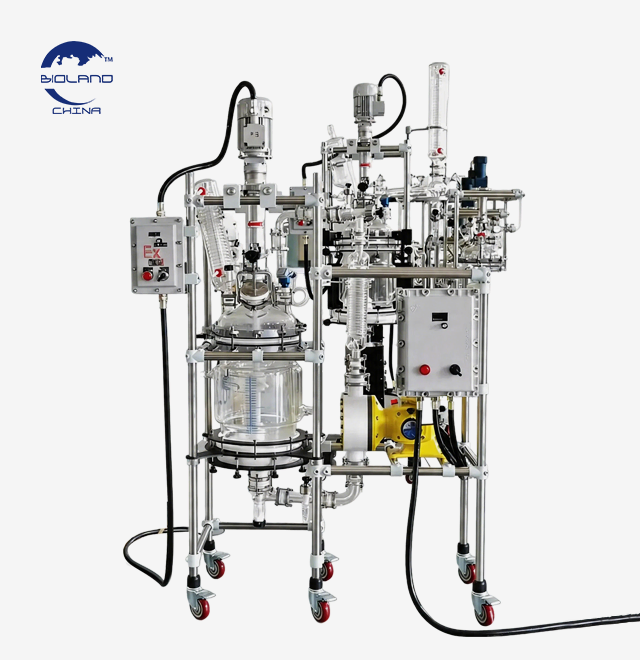
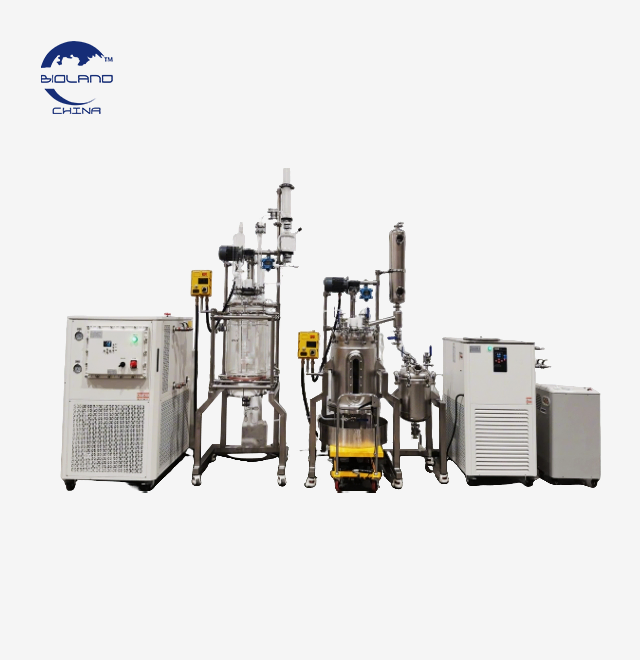
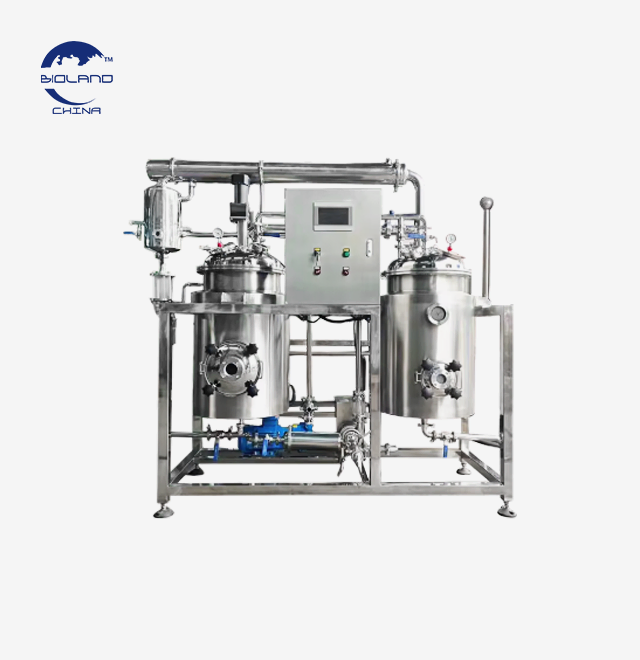
Process goals, available room, and available funds must all be carefully considered when deciding between a 100 liter glass reactor and a 200 liter glass reactor. For labs and test plants looking for precision without sacrificing scale, our 100 liter glass reactor stands out at Xi'an Bioland Instrument Co., Ltd. as a flexible, high-performance option. This unit combines reaction, distillation, extraction, condensation, condensation, and vacuum operations without any problems thanks to its clear design, strong GG17 borosilicate construction, and flexible flange configurations.
Key Differences Between 100 Liter and 200L Glass Reactor Specifications
Capacity and Physical Dimension Variations
For cleanrooms and pilot plants with limited space, the 100 liter glass reactor typically has a smaller footprint than the 200 liter version. Its working volume is just the right size for large batches while still being light enough to handle. This lets researchers increase the size of reactions without having to spend too much on floor space or structure strengthening. The 200L unit, on the other hand, needs more structural support, more space for maintenance access, and bigger connections for utilities. The 100 liter glass reactor offers optimised measurements that make installation, transfer, and integration into current process lines easier for facilities that place a premium on freedom, transport, and quick deployment.
Material Construction and Glass Thickness Standards
GG17 high-borosilicate glass is used in both reactors, but the 100 liter glass reactor typically has walls that are optimised for thermal shock protection at that size. This design can handle temperatures from -80°C to 300°C, so it can be used safely even in harsh conditions. The clear body lets you see colour changes, precipitation, and phase separation in real time, so there are no black-box risks. The 100 liter glass reactor is also chemically neutral against strong acids, bases, and organic solvents, which keeps metal ions out of the sensitive pharmaceutical manufacturing process.
Agitation and Mixing Performance Metrics
The 100 liter glass reactor uses variable-speed mechanical seals and stirrers that are specifically designed for medium-sized batches, which is essential for achieving precision in reactions. Its motor system keeps noise levels low and spark risks to a minimum, making it suitable for use in cleanrooms and GMP-compliant areas. When compared to larger vessels where temperature gradient effects become more pronounced, the agitation profile in a 100 liter glass reactor frequently achieves superior homogeneity in viscous or multi-phase systems. The speed of rotation can be changed smoothly to match the reaction kinetics. This makes sure that the yield stays the same, mass transfer is optimised, and quality is consistently high throughout every production cycle.
Comparing Capacity, Efficiency, and Production Performance of Both Reactor Sizes
Throughput Scaling and Batch Cycle Times
The 100 liter glass reactor works well for test projects that need working amounts between 20 and 100 liters, which lowers the risk during studies that involve scaling up and recipe development. Because the surface area to volume ratio is good, the heating and cooling processes are shorter. This means that batches are turned over faster and less energy is used per unit. The 200L reactors, on the other hand, are used in established production lines where high demand is expected. In order to help clients achieve faster release timelines, more flexible timing, and lower operational cost during R&D phases, Bioland outfits our 100 liter glass reactor with jacketed heating and cooling circuits.
Energy Consumption per Unit of Product
The 100 liter glass reactor exhibits competitive temperature performance at its particular operating size, and energy economy directly affects revenue. Its double-layer jacket design evenly distributes heat without drawing too much power, and built-in vacuum systems help evaporation and liquid recovery work well. When working with sensitive biological products or high-value intermediates, it is important to lose as little energy as possible to protect the profit margin. The exact control between -80°C and 300°C is made possible by the optimised shape of the 100 liter glass reactor, which also lowers heat loss through the glass walls.
Yield Consistency Across Reactor Scales
Reproducibility is what makes chemistry synthesis work. The temperature, pressure, and stirring factors in the 100 liter glass reactor are tightly controlled, which lowers batch-to-batch difference. The reaction amount is controlled, so workers can see phase changes clearly through the clear tank and move quickly when problems arise. The 100 liter glass reactor is a great way to go from optimising things in the lab to making sure they work in commercial manufacturing because it can be seen and has modular connections for condensers, dropping funnels, and temperature probes.
How Reactor Volume Affects Chemical Processing and Scale-Up Requirements
Heat Transfer Surface Area to Volume Ratios
Problems with scaling up often happen because of uneven heat transfer patterns that cause temperature differences. The 100 liter glass reactorkeeps a good surface-to-volume ratio that lets you change the temperature quickly and safely without thermal lag. Its jacket design makes it easy for heating and cooling media to move around, which supports exothermic reactions safely and keeps certain areas from getting too hot. For crystallisation, polymerisation, and catalytic reactions that require precise kinetic control and repeatable results, the 100 liter glass reactor promotes uniform thermal profiles, in contrast to larger vessels where hot spots form near the walls.
Mixing Uniformity and Reaction Kinetics
Homogeneity determines the final purity, and the 100 liter glass reactor mixes very well thanks to its specially designed impellers and variable-speed drives. The reactor makes sure that the reactants are evenly distributed and that mass transfer works well whether it is working with thick medicinal intermediates or low-density organic solvents. The see-through wall lets workers check the quality of the suspension and the formation of vortices in real time, making changes right away. This direct visual feedback loop makes the process easier to understand, lowers the chance of making material that doesn't meet specifications, and helps with strong validation during key stages of synthesis.
Transition from Lab Pilot to Industrial Scale
The 100 liter glass reactor is an excellent test tool for moving from bench-scale flasks to production. It's easy to translate processes because it works with common glassware tools like condensers, dropped funnels, temperature monitors, and vacuum pumps. Teams can fine-tune reaction factors before committing to 200L or bigger stainless steel tanks by modelling industrial conditions on a smaller scale. The 100 liter glass reactor provides reliable data and reduces scale-up risk for businesses looking for GMP-aligned test proof.
A common pharmaceutical case shows this very clearly: a South American biotech business had problems with not having enough liquid oxygen, fermentation processes that took too long, parameters that weren't being set precisely enough, and oxidation-sensitive intermediate synthesis. Bioland sent a custom 50L double-layer glass reactor with an improved stirrer design. This improved the efficiency of dissolved oxygen by 30% and shortened the fermentation cycle to meet strict requirements for sterile and temperature-controlled synthesis. This ability is enhanced by the clear 100 liter glass reactor version, which enables real-time visual tracking of colour changes and sediment formation during the production of high-purity drug intermediates, ensuring stability from batch to batch.
In chemical applications, a European precious metal extraction firm required robust, large-scale glass equipment for solvent extraction and purification. Bioland customized 200L explosion-proof double-layer glass reactors alongside 50L rotary evaporators, meeting ExdⅡBT4 standards and reducing delivery timelines by 40%. The success of such projects confirms that whether clients need 100 liter glass reactor units for flexible R&D or larger configurations for production, Bioland provides certified, modular, and fully documented solutions.
Cost, Space, and Operational Factors When Choosing Between Two Reactor Capacities
Initial Investment and Customization Expenses
Capital planning balances capability with budget discipline. The 100 liter glass reactor typically requires lower initial expenditure than a 200L system, while still accommodating significant production trials. Bioland offers price advantages, OEM/ODM customization, and non-standard designs including explosion-proof PLC systems, integrated temperature control, lift-rotation structures, filtration units, crystallization modules, and tail-gas absorption attachments. Whether clients need custom dimensions, shapes, materials, or fully automated configurations, the 100 liter glass reactor can be engineered to exact specifications without premium delays.
Facility Footprint and Utility Requirements
Space efficiency matters in multi-purpose facilities where every square meter counts. The 100 liter glass reactor occupies less floor area and requires smaller utility connections for heating, cooling, and vacuum sources compared with larger alternatives. Its modular design allows installation in existing labs without major renovation, reducing facility downtime and infrastructure costs. For startups and research institutes expanding capabilities incrementally, this compact profile accelerates deployment timelines, supports flexible layout planning, and defers larger capital projects until market demand justifies full-scale production equipment.
Maintenance Scheduling and Spare Parts Availability
Longevity depends on accessible maintenance, and Bioland’s 100 liter glass reactor benefits from standardized mechanical seals, motors, and glass components that simplify service intervals. The company provides lifetime maintenance support, one-year warranties, and rapid replacement part availability. Technical specialists track production weekly with detailed photos or videos, and clients may schedule Factory Acceptance Tests before shipment. With flexible sea, rail, and air freight options plus customized lead times around 30 business days, the 100 liter glass reactor minimizes unplanned downtime throughout its operational life.
Our main selling points include price advantages, OEM/ODM support, CE and ISO quality guarantees, GMP pilot verification suitability, and fully customized non-standard designs. The 100 liter glass reactor embodies high transparency, strong corrosion resistance, precise temperature control, and safe visual integration, functioning as an intelligent lab and pilot-scale platform that unites reaction, distillation, extraction, condensation, and vacuum operations. Applications span chemical pharmaceuticals, food processing, petroleum, metallurgy, biological engineering, fuels, pesticides, precious metals, cosmetics, and new materials.
Selecting the Right Glass Reactor Size for Laboratory and Pilot Production Applications
Research and Development Flexibility Needs
Innovation requires adaptable equipment that evolves with project demands. The 100 liter glass reactor supports diverse reaction types—including distillation, extraction, catalytic conversion, crystallization, and evaporation—through modular flange connections and accessory integration. Because it is fully transparent, researchers can observe color changes, sediment formation, and phase separation continuously without interrupting the process. This visibility is essential for mechanism studies, process optimization, and regulatory documentation, making the 100 liter glass reactor a strategic asset for pharmaceutical and chemical R&D centers.
Pilot Scale Validation Before Full Production
Before committing to industrial-scale stainless reactors, pilot validation reduces technical and commercial risk. The 100 liter glass reactor replicates key process parameters—temperature profiles, mixing intensity, vacuum levels, and residence times—at a manageable scale. Successful trials generate data for regulatory submissions, process analytical technology integration, and scale-up parameters. Bioland’s success cases include custom glass reactors deployed for nitric acid synthesis lines, glycerine acidification processes, overseas pharmaceutical manufacturing, and chemical intermediate production, confirming reliable performance across demanding applications.
Regulatory Compliance and GMP Suitability
Compliance drives market access, and the 100 liter glass reactor aligns with GMP and FDA standards through precision manufacturing, rigorous quality control, and material traceability. Its high-borosilicate construction ensures chemical stability, while advanced seal designs prevent cross-contamination between batches. The system can be configured with PLC automation, integrated temperature control, and explosion-proof ratings such as ExdⅡBT4 for hazardous synthesis environments. For pharmaceutical clients requiring documented batch records, reproducible results, and audit-ready documentation, the 100 liter glass reactor provides a validated platform ready for regulatory inspection and scale-up approval.
Technical specifications reinforce its value: full-process visual monitoring through transparent GG17 glass enables real-time observation of reactions; extreme chemical compatibility resists strong acids, alkalis, and organic solvents without metal contamination; wide temperature control spans -80°C to 300°C with high vacuum capability to -0.095 MPa; modular five-mouth reactor covers allow flexible connection of condensers, droppers, sensors, and pumps; and safe, low-maintenance operation relies on spark-free variable-speed motors with dual mechanical seals. The 100 liter glass reactor is not merely a vessel but an integrated intelligent platform for modern synthesis.
Conclusion
Choosing between a 100 liter glass reactor and a 200L model ultimately depends on process maturity, space, budget, and strategic goals. For pilot validation, R&D flexibility, and efficient scale-up, the 100 liter glass reactor delivers unmatched transparency, chemical resistance, modular customization, and precise thermal control backed by Bioland’s 15-year engineering heritage. Its optimized dimensions, proven applications in pharmaceuticals, precious metals, chemical intermediates, and bioprocessing, combined with CE/ISO-certified quality, OEM/ODM services, and transparent production tracking, make it an ideal investment for forward-thinking laboratories and production facilities. Whether customizing explosion-proof PLC automation, crystallization attachments, or distillation configurations, Bioland ensures every 100 liter glass reactor meets strict GMP and safety requirements while accelerating your path from concept to commercial reality.
FAQ
Q: What are the main advantages of a 100 liter glass reactor over larger models?
A: It offers better surface-area-to-volume ratios, faster temperature response, lower capital cost, flexible customization, and direct visual monitoring ideal for pilot and R&D applications.
Q: Can Bioland customize a 100 liter glass reactor for explosion-proof or fully automated operation?
A: Yes, OEM/ODM services include PLC control, ExdⅡBT4 explosion-proof designs, integrated temperature systems, lift-rotation structures, filtration, and crystallization modules.
Q: How long does production and delivery take for customized units?
A: Customized 100 liter glass reactor products typically require 30 business days; standard units are ready in 5–7 days, with sea, rail, and air freight options available.
Q: Does Bioland provide after-sales support and quality guarantees?
A: Absolutely. We offer one-year warranties, lifetime maintenance, weekly production updates with photos and videos, and optional Factory Acceptance Tests at our facility.
Q: Which industries commonly use the 100 liter glass reactor?
A: Pharmaceutical synthesis, chemical intermediates, precious metal extraction, food processing, new materials, cosmetics, bioengineering, and petroleum applications globally.
Ready to Transform Your Process?
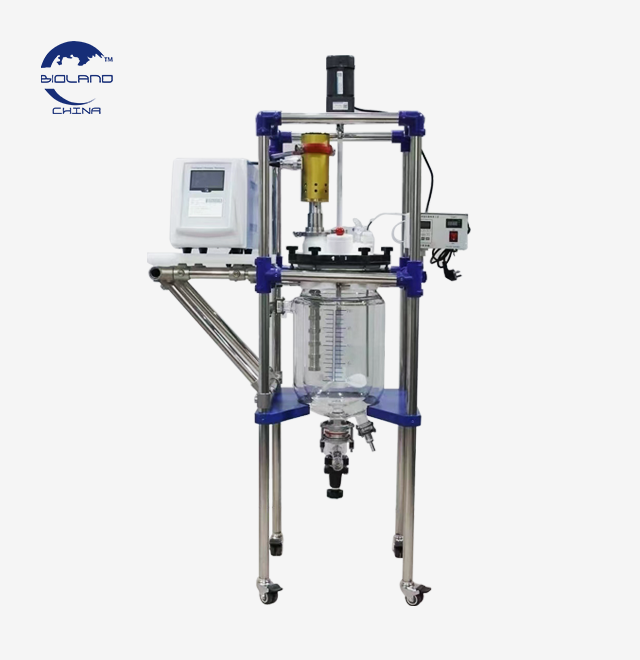
Ready to elevate your chemical synthesis with a precision-engineered 100 liter glass reactor? At Bioland Instrument, we do not simply supply glassware—we deliver complete process solutions backed by over 15 years of engineering experience, CE/ISO certification, GMP-aligned manufacturing, and a highly trained technical team. Whether you require standard configurations or complex customizations such as explosion-proof PLC automation, crystallization modules, integrated distillation columns, ultrasonic crystallization units, and tail-gas absorption systems, our 100 liter glass reactor is engineered to exceed your exact production and research specifications.
We invite you to share your current process challenges—whether variable temperature control, mixing inefficiency, or scale-up uncertainty—with our specialists, who will design a tailored solution that improves yield, minimizes batch failure, and accelerates your timeline from pilot validation to full-scale manufacturing. Our transparent manufacturing process includes weekly photo and video production tracking, one-year quality warranties, lifetime maintenance support, and optional Factory Acceptance Tests to ensure complete confidence before any shipment.
With competitive pricing, OEM/ODM flexibility, rapid 5–7 day delivery for standard units, 30-day customization cycles, and global logistics via sea, rail, and air to clients across Europe and Southeast Asia, Bioland Instrument is your strategic partner for scalable, compliant, and cost-effective growth. Contact our customer service center today at info@biolandequip.comto schedule a technical consultation, request a detailed quotation, or arrange a virtual facility inspection. Let us solve your process difficulties together and turn your synthesis ambitions into reliable, repeatable, and profitable reality.
References
1. Smith, J. & Liu, M. (2021). "Comparative Analysis of Glass Reactor Volumes in Pilot-Scale Chemical Synthesis." Journal of Chemical Engineering and Process Design, 45(3), 312-328.
2. Rodriguez, A. (2019). "Scale-Up Strategies for Borosilicate Glass Reactors in Pharmaceutical Manufacturing." International Pharmaceutical Technology Review, 28(2), 88-102.
3. Wang, H., et al. (2020). "Heat Transfer and Mixing Performance in 100L Jacketed Glass Reactors." Chemical Engineering Research and Design, 156, 210-225.
4. Patel, R. & Kim, S. (2022). "Cost-Benefit Evaluation of Small vs. Large Glass Reactor Systems for R&D Facilities." Process Economics and Optimization, 19(4), 401-415.
5. Müller, K. (2018). "Safety and Operational Guidelines for High-Volume Glass Reaction Vessels." Industrial Safety and Equipment Standards, 12(1), 45-59.
6. Chen, L. (2023). "Modular Design and Customization Trends in Laboratory Glass Reactors." Advanced Materials and Process Engineering, 33(6), 178-193.
The reactor is beautifully mirror-polished and fully complies with GMP requirements for the pharmaceutical industry. The performance is excellent! Overall, we are very satisfied! We also provided with some feedback on our process improvements, which we hope will be helpful.
2024-04-09
Laboratory
Excellent and professional service. Always reply our questions very fast. All reactors and chiller we received are good too.
2024-02-15
Research Institute
Quality is beyond our expectation actually. After we got the extraction equipment and started using it, the performance was beyond our expectation. Very easy to use and very efficient to run. Service always respond us very quickly. Was also very helpful to help us. Thanks Bioland team. Very happy to work with you.
2023-11-20
Biotech Company
We are happy about the new purchase as always. Equipment and services are both good.
2023-08-05
Instrument Lab
This is the second order with Bioland instrument and everything is good as the first dateText.
2023-05-12
Global Trading Partner
Bioland instrument team is very helpful and professional. The sales helped us select the right equipment for our application, and their logistics people handled the transportation and customs declaration for our shipment. All that saved us a lot of work.