Why Choose an Automated Solid Phase Synthesizer for Better Yield?
Jul 31, 2026
In solid phase synthesis, yield loss doesn't usually happen all at once. Instead, it happens slowly over dozens of manual steps like coupling, washing, and deprotection, where timing, temperature, and how the reagents are handled change slightly from batch to batch. Xi'an Bioland Instrument Co., Ltd. makes an automated solid phase synthesizer that completely gets rid of that drift. It has explosion-proof safety, clear high-borosilicate glass, PTFE filters, and PLC-controlled process automation all in one platform. Our automated solid phase synthesizer does every coupling cycle, wash step, and temperature transition exactly as programmed. This is why research and production teams choose it to increase and stabilize yield across peptide, resin, and carrier-material synthesis programs instead of relying on skilled operators.
How Automation Improves Reaction Accuracy and Consistency
Programmable Cycle Control Removes Manual Timing Errors
When someone does solid phase synthesis by hand, they have to keep track of the coupling time, wash time, and reagent addition over dozens of cycles. Even small timing errors add up over a long sequence. This doesn't happen with an automated solid phase synthesizer because it always follows the pre-programmed cycle timing exactly the same way. This means that a 45-amino-acid sequence gets the exact same coupling and deprotection conditions on residue one as it does on residue forty-five, which protects the yield throughout the whole synthesis. Researchers who have done the same sequence by hand and then on an automated solid phase synthesizer often say that getting rid of the small timing drift that happens during long, repeated human rounds is the best way to get a higher return.
PLC and Touchscreen Interface for Repeatable Recipes
When you manually control the agitation, temperature, and filtration, there is some variation that shows up as different coupling efficiency between batches. An automated solid phase synthesizer with PLC control and a touchscreen interface lets operators save and repeat exact process recipes. This means that a synthesis route that has been optimized once can be used in every batch without having to rely on operator memory or handwritten protocols. This is especially important in places that are running several synthesis programs at the same time. With an automated solid phase synthesizer, one team can confidently switch between tested recipes instead of having to re-figure out process conditions from notes every time a sequence changes.
Consistent Reagent Delivery Across Every Coupling Cycle
The accuracy with which reagents are delivered directly affects coupling efficiency. Using a pipette or valve to change the amounts of reagents added from cycle to cycle introduces variation that can be eliminated by anautomated solid phase synthesizer's programmed dosing and timing. Extra reagent ratios stay the same across a multi-step sequence when reagents are delivered consistently. This is very important because even small under-dosing in an early step can cause sequences to be cut or removed later on in the synthesis. This risk is taken away by an automated solid phase synthesizer, which delivers the same amount of programmed reagent at the same point in every cycle, no matter how long or repetitive the sequence gets as a whole.
Explosion-Proof Safety That Protects Long Automated Runs
Automated synthesis often runs unattended for extended periods, and an automated solid phase synthesizer rated explosion-proof across 20L, 30L, 50L, and 100L capacities keeps these long runs safe without requiring constant operator supervision. This certified safety rating matters directly for yield protection, since an uncontrolled pressure event mid-sequence can compromise an entire multi-day synthesis run in seconds. Teams running an automated solid phase synthesizer overnight or across a weekend depend on this certified safety margin to protect both personnel and the batch itself during unattended operation.
Optimizing Synthesis Conditions for Higher Product Yield
Case Study: Thymosin Peptide Yield Improvement Through Automation
A pharmaceutical research group preparing thymosin peptide for pilot verification faced coupling inefficiency, resin loss during solvent transfer, and inconsistent purity between manually run development batches.
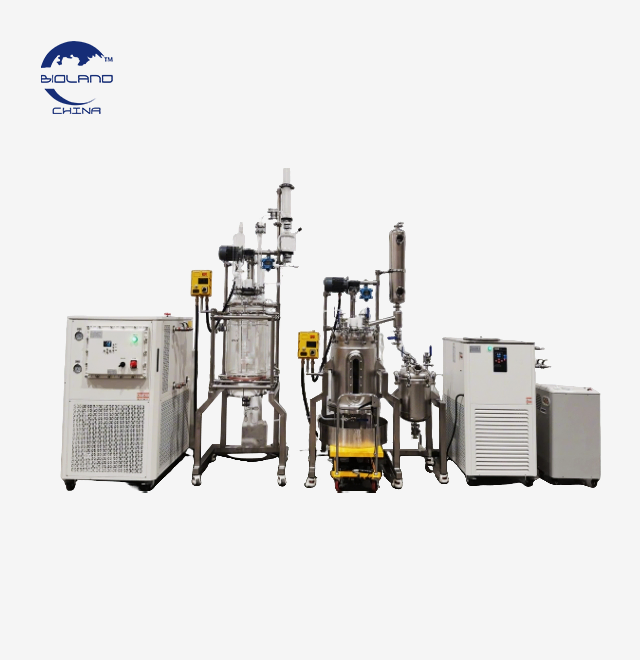
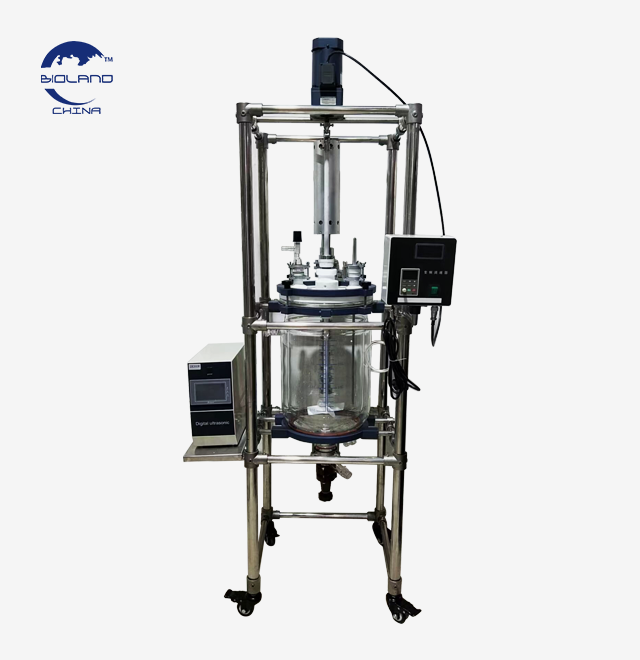
The team adopted a 50L automated solid phase synthesizer from Bioland Instrument, configured with programmable agitation and a PTFE filtration base, running coupling, deprotection, and washing entirely inside one transparent, temperature-controlled vessel.
Because the automated solid phase synthesizer executed each cycle identically and kept the resin bed in place throughout filtration, resin loss dropped sharply compared to the team's previous transfer-based process, and batch-to-batch purity variation narrowed considerably.
Wide Temperature Range Supports Reaction-Specific Optimization
Different coupling chemistries perform best within different temperature windows, and an automated solid phase synthesizer with a jacket rated from -20°C to 200°C lets researchers dial in the exact conditions each sequence requires rather than compromising with a fixed, one-size-fits-all temperature. Precise, programmable ramp rates protect sensitive intermediates from thermal stress that would otherwise reduce coupling yield. Because the temperature program on an automated solid phase synthesizer is stored and repeated exactly, researchers can also compare results across different sequences with confidence that thermal history was not a hidden variable.
Reducing Resin Loss Through Integrated Filtration
Every transfer between separate reaction and filtration equipment risks resin loss, and an automated solid phase synthesizer with a built-in PTFE filtration base eliminates this by running reaction, washing, and filtration inside the same sealed vessel. Because the resin bed never leaves a controlled environment, yield losses tied to material handling drop substantially compared to processes requiring manual transfer between separate units.
Optimizing Coupling Reagent and Solvent Selection
Equipment automation only delivers its full yield benefit when paired with correctly matched solvent and reagent chemistry. An automated solid phase synthesizer performs best when solvent polarity, coupling reagent concentration, and resin swelling behavior are matched to the specific sequence being built, since even a perfectly automated cycle cannot compensate for mismatched chemistry slowing diffusion into the resin bead. Process teams typically pair chemistry optimization with equipment automation together during method development, using an automated solid phase synthesizer to isolate whether a yield problem originates from reagent selection or from process execution.
Reducing Process Variations with Automated Control Systems
Case Study: Antimicrobial Peptide Screening Throughput and Consistency
A biotech company screening candidate antimicrobial peptides needed to run frequent small-batch syntheses without sacrificing reproducibility, but manual operation on their previous equipment introduced too much variation between candidate sequences to compare results reliably.
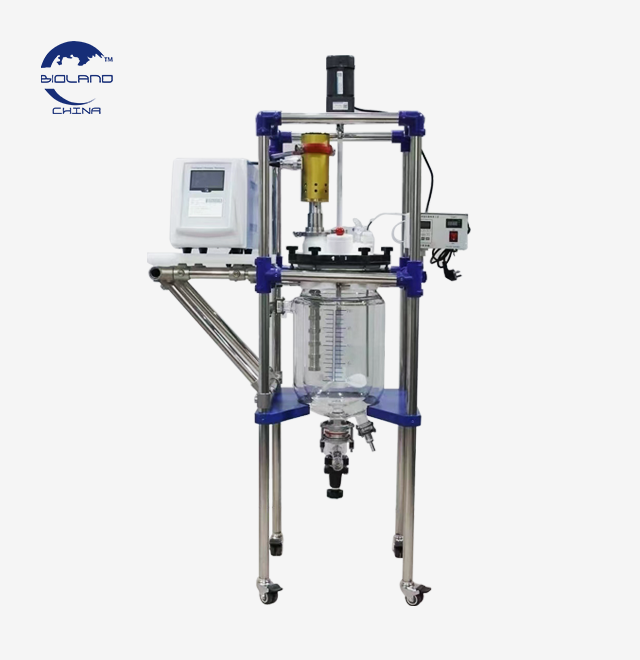
Bioland Instrument supplied a 20L automated solid phase synthesizer with a quick-release PTFE filter plate, letting operators reset between syntheses quickly while the automated control system kept process parameters identical across every new candidate tested.
The consistency gained let the screening team compare candidate sequences with far greater confidence, since any purity or yield difference observed could be attributed to the chemistry itself rather than process variation introduced by manual handling.
Standardizing Conditions Across Multi-Batch Campaigns
Comparing results across a long development campaign requires minimizing unexplained variability between batches, and an automated solid phase synthesizeraccomplishes this by removing operator-to-operator differences entirely. Storing and repeating validated process parameters precisely reduces the parameter drift that otherwise makes it difficult to draw reliable conclusions from a multi-batch comparison study.
Data Logging for Process Traceability and Troubleshooting
Beyond execution, an automated solid phase synthesizer with PLC-based data logging captures temperature, agitation, and cycle timing throughout each run, giving process teams a documented record to reference when investigating a yield deviation. This traceability turns troubleshooting from guesswork into a data-driven review, letting engineers pinpoint exactly which cycle or parameter shift correlates with a purity or yield change.
Modular Configuration for Application-Specific Requirements
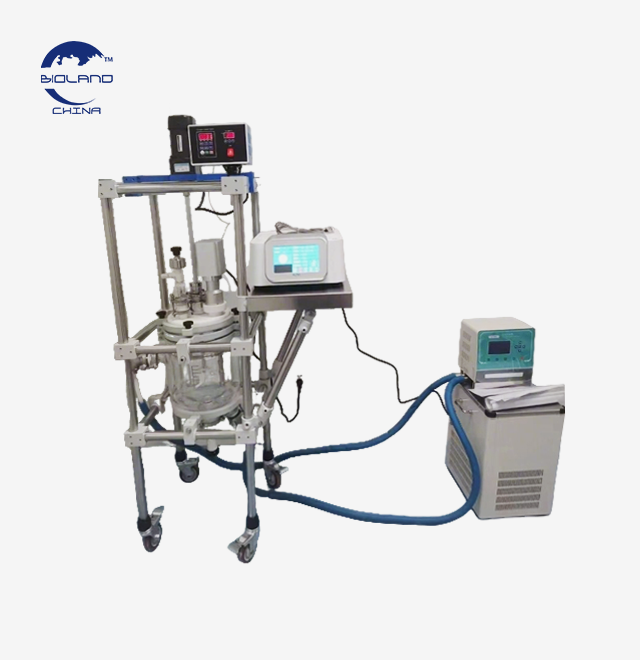
Because synthesis programs vary widely, an automated solid phase synthesizer from Bioland Instrument can be customized in size, shape, material, and internal structure. Configuration options include fully explosion-proof systems, electric lifting, integrated temperature-control units, and combined filtration-crystallization-ultrasonic-distillation modules, letting the same automated platform support very different synthesis chemistries without compromising on process control.
Supporting Reliable Results in Complex Synthesis Processes
Application Range Across Peptide and Carrier-Material Synthesis
An automated solid phase synthesizer supports far more than standard linear peptide chains. The same platform is widely selected for thymosin peptide preparation, antimicrobial peptide screening, and carrier-material synthesis, alongside broader chemical, pharmaceutical, and new-material applications requiring reliable, repeatable solid-liquid handling across multi-step sequences.
Certification and Compliance for Regulated Development Work
Research and production teams deploying an automated solid phase synthesizer for regulated pharmaceutical work should confirm CE and ISO certification and GMP/FDA-aligned manufacturing practices before purchase. Bioland Instrument's equipment is built to these standards, giving quality teams the documentation needed to support pilot verification and eventual regulatory submissions.
After-Sales Support That Protects Long-Term Reliability
An automated solid phase synthesizer represents a long-term production asset, and Bioland Instrument backs every unit with a one-year warranty, lifetime maintenance access, weekly production tracking with photographic or video updates, and an optional Factory Acceptance Test at our facility, giving customers a documented, supported path from order through years of reliable operation.
Conclusion
Choosing an automated solid phase synthesizer protects yield by removing the timing, dosing, and handling variability that manual synthesis inevitably introduces. As the thymosin peptide and antimicrobial screening case studies show, programmable cycle control, integrated filtration, and data logging together deliver measurably higher and more consistent yield. Bioland Instrument backs this engineering with certification, OEM/ODM customization, and dedicated support behind every automated solid phase synthesizer supplied.
FAQ
1. How does automation actually improve synthesis yield?
An automated solid phase synthesizer executes coupling, washing, and deprotection cycles identically every time, removing the manual timing and dosing variability that erodes yield across long sequences.
2. What capacities are available?
Standard automated solid phase synthesizer volumes include 20L, 30L, 50L, and 100L, with custom sizes available for specific synthesis programs.
3. Can the equipment log process data for troubleshooting?
Yes, PLC-based data logging captures temperature, agitation, and cycle timing, giving teams a traceable record for investigating any yield deviation.
4. Does the reactor reduce resin loss during synthesis?
Yes, the built-in PTFE filtration base keeps the resin bed in the same vessel throughout reaction and washing, avoiding transfer-related losses.
5. What temperature range does the system support?
The standard jacket runs from -20°C to 200°C, extendable with a paired high-low temperature circulation unit for reaction-specific optimization.
Get Better, More Consistent Yield with Bioland Instrument
If inconsistent yield or unreliable reproducibility is limiting your synthesis program, automation is often the fastest path to a fix. Xi'an Bioland Instrument Co., Ltd. brings more than 15 years of engineering experience, CE and ISO certification, and flexible OEM/ODM customization to every automated solid phase synthesizer we build, backed by weekly production tracking, pre-shipment inspection, an optional Factory Acceptance Test, and a one-year warranty with lifetime maintenance support. Our technical team is ready to review your synthesis requirements and recommend the right configuration. Contact us at info@biolandequip.com to discuss your automated solid phase synthesizer project and request a quotation.
References
1. Beilstein Journal of Organic Chemistry, "Automated Solid-Phase Peptide Synthesis to Obtain Therapeutic Peptides."
2. Nature Communications, "Universal Peptide Synthesis via Solid-Phase Methods Fused with Chemputation."
3. PLOS ONE, "Design and Validation of a Frugal, Automated, Solid-Phase Peptide Synthesizer."
4. ScienceDirect, Journal of Peptide Science coverage, "Development of a Novel, Automated, Robotic System for High-Throughput Solid-Phase Peptide Synthesis."
5. Organic Process Research & Development, "Scale-Up Strategies for Solid-Phase Synthesis from Bench to Pilot Plant."
6. International Journal of Peptide Research and Therapeutics, "Filtration and Washing Efficiency in Automated Peptide Synthesis Equipment."
The reactor is beautifully mirror-polished and fully complies with GMP requirements for the pharmaceutical industry. The performance is excellent! Overall, we are very satisfied! We also provided with some feedback on our process improvements, which we hope will be helpful.
2024-04-09
Laboratory
Excellent and professional service. Always reply our questions very fast. All reactors and chiller we received are good too.
2024-02-15
Research Institute
Quality is beyond our expectation actually. After we got the extraction equipment and started using it, the performance was beyond our expectation. Very easy to use and very efficient to run. Service always respond us very quickly. Was also very helpful to help us. Thanks Bioland team. Very happy to work with you.
2023-11-20
Biotech Company
We are happy about the new purchase as always. Equipment and services are both good.
2023-08-05
Instrument Lab
This is the second order with Bioland instrument and everything is good as the first dateText.
2023-05-12
Global Trading Partner
Bioland instrument team is very helpful and professional. The sales helped us select the right equipment for our application, and their logistics people handled the transportation and customs declaration for our shipment. All that saved us a lot of work.