How Ultrasonic Extraction Equipment Reduces Production Costs
Nov 25, 2026
Every plant processor is struggling to make ends meet because the costs of solvents, raw materials, and long batch processes are all going up. The ultrasonic extraction equipment at Bioland instrument gets rid of these costs where they start. In just 24 to 40 minutes, it cuts the time it takes to extract the oil by 50 to 500% and only needs 40 to 60°C to work. Our ultrasonic extraction equipment turns extraction from a cost center into a profit driver. It is CE and ISO certified, designed to meet GMP standards, and priced competitively.
Which Factors Drive Extraction Production Costs?
Where Money Quietly Leaks in Plant Extraction
Five things use up most of the budget for extraction: buying solvents and getting them back, labor and downtime, steam or electricity, and losing raw materials because of low yields. It costs 40% more in herb, solvent, and energy per kilogram of finished extract for a plant that can only recover 60% of the target compounds. Before you choose any ultrasonic extraction equipment, you should first understand these drivers.
Why Traditional Maceration and Reflux Fall Short
Hot-water decoction and long maceration take a long time, high temperatures, and changing the solvent many times. Flavonoids, polyphenols, and volatile oils break down when heated, so manufacturers add more raw materials to meet standards. This equation is changed by ultrasonic extraction tools, which uses sound waves to physically open plant cells instead of heat and time. This makes it possible to do a fuller extraction in about a third of the time.
Selecting Ultrasonic Extraction Equipment by Process Need
Fit of the process is just as important as price. Our ultrasonic extraction equipment can work with any compound, no matter how polar it is or how heavy it is. To get herbs, fruits, vegetables, and medicinal plants out of the ground, one platform can use water, ethanol, methanol, or acetone. It can also do low-temperature ultrasonic extraction, dynamic extraction in the Soxhlet style, hot reflux, alcohol precipitation, and percolation, so you don't have to buy a different machine for each recipe.
Case: A Stevia Producer Cutting Cost per Kilogram
A Southeast Asian company that processed stevia had a hard time getting enough steviol glycoside back from the leaves and stems. This process took three hours per batch of hot water, and heavy impurities made it harder to clean.
The cycle sped up to about 35 minutes at 55°C after we put in a Bioland instrument stevia extraction machine that was based on our ultrasonic extraction equipment. The amount of glycosides produced went up by about 55%, and less resin was used in the next step. From the same supply of leaves, the line now sends out more finished goods.
How Cavitation Improves Extraction Efficiency
What Cavitation Does Inside Ultrasonic Extraction Equipment
Ultrasonic waves move through the solvent and make tiny bubbles that pop and fall apart in microseconds. When these layers fall apart, they make tiny jets and shock waves that break or bend the walls of plant cells, letting active compounds flow into the solvent. Our ultrasonic extraction equipment has an ultrasonic system built right into the extraction tank. This way, every batch gets the same level of cavitation, faster breakdown, and stronger mass transfer.
Gentle Temperatures That Protect Active Ingredients
The best temperature range for ultrasonic extraction is between 40°C and 60°C. This keeps compounds safe that break down, oxidize, or hydrolyze when heated. It's easier to separate and clean the extract when it's cleaner, which saves resin, filter media, and work further down the line. Ultrasonic extraction equipment works well for plant medicine, skincare, food ingredients, and medicinal raw materials because of its low-temperature benefit.
Case: Mushroom Polysaccharides With Higher Recovery
A company that makes supplements needed polysaccharides from reishi and shiitake mushrooms, but hot-water extraction took four hours and mostly left the tough cell walls alone. The yield was different between batches, and cooking for too long hurt some of the carbohydrate structure.
They used our ultrasonic extraction equipment to get mushrooms out of the ground. Cavitation broke down the walls that were high in chitin, and extraction was done in 30 minutes at 55°C. About 60% more polysaccharides were recovered, batches were made to be consistent, and orders for sweet potatoes and tremella are now filled with the same method.
Case: Flavonoids and Quercetin From Botanical Materials
A company that extracts flavonoids from ginkgo leaves, bamboo leaves, and sophora buds had to deal with rising ethanol costs and inconsistent potency. Rutin and quercetin were also lost when the food was heated for a long time.
They cut cycle time by more than two-thirds and used less ethanol per batch when they used Bioland ultrasonic extraction equipment to help extract quercetin. Once the potency was stable, the business grew to include celery leaf, mulberry leaf, and blueberry leaf materials without having to buy new machines.
Reducing Solvent Consumption Through Process Optimization
Closed-Loop Reflux and Solvent Recovery Step by Step
How the work is done is where solvent saves start. The extraction tank is filled with herbs and a set amount of water, ethanol, methanol, or acetone. The ultrasonic extraction equipment is then set to the right temperature and starts to work. It is then sucked into the concentration tank while there is a vacuum of 0.05 to 0.09 MPa.
The secondary vapor goes through the cooler and condenser, then comes back to the tank as a new solvent. It then flows through the herb bed until the liquid is clear. The closed-loop design of this ultrasonic extraction equipment lets the clear solvent be used for another run.
Case: Chilli Oleoresin Plant Reducing Solvent Loss
A spice company that made capsaicin and chili oleoresin lost a lot of solvent because it evaporated and washed many times. Capsaicin healing changed, and the open process made people worry about safety.
Our Chili Oleoresin Extraction Plant was built around ultrasonic extraction equipment that was covered. It combined protected reflux with vacuum concentration. Capsaicin content became more stable, solvent recovery went over 90%, and extraction time dropped from several hours to about 40 minutes. Cost per ton of oleoresin dropped accordingly.
Case: Propolis and Tincture Producers Using Less Ethanol
Because woody substances dissolve slowly, people who make propolis and tinctures often use large amounts of ethanol. One client who made health products wanted to keep the flavonoids and phenolic acids but cut down on the ethanol and speed up the process.
We used our ultrasonic extraction equipment to get more active compounds out of the plants. It worked better when combined with ethanol extraction and propolis extraction. The amount of ethanol dropped by about 25%, the recovered ethanol was added to the next batch, and the final extract needed less filtering.
Multi-Purpose Operation Without Extra Cleaning Waste
Plants don't have to buy separate lines because one platform can handle many materials. This also cuts down on changeover waste. Our ultrasonic extraction equipment is used to get plant proteins, peony seed oil, rose and mint essential oils, valerian aroma, jujube and goji actives, and even marine fish protein. With built-in CIP cleaning, changeovers are faster and less cleaning liquid is needed between goods.
Lowering Energy Costs with Efficient Extraction Systems
Shorter Cycles Mean Fewer Kilowatt-Hours
Heater time is the main thing that affects energy costs. Usually, ultrasonic extraction reaches its highest yield in 24–40 minutes, while traditional methods take several hours. This means that much less steam and electricity are used per batch. Running at 40–60°C instead of boiling temperatures lowers the need for heat even more. Ultrasonic extraction equipment can reduce monthly energy costs for plants with two or three shifts by a surprising amount.
Structure and Automation of Ultrasonic Extraction Equipment
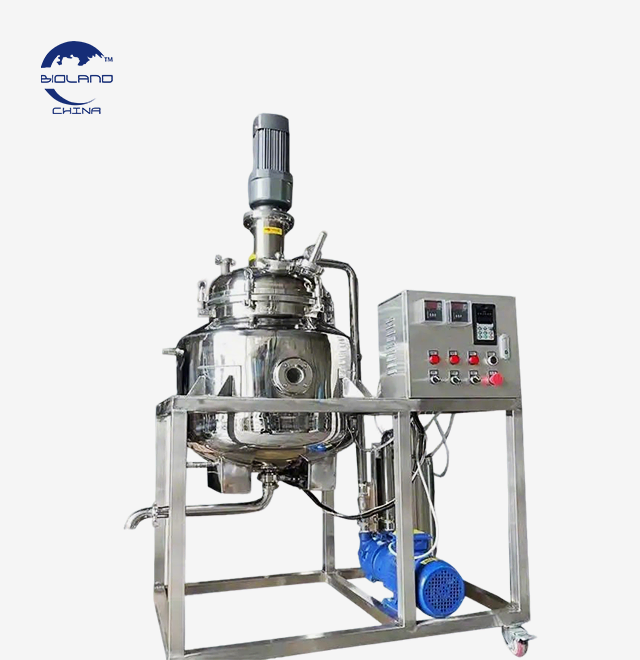
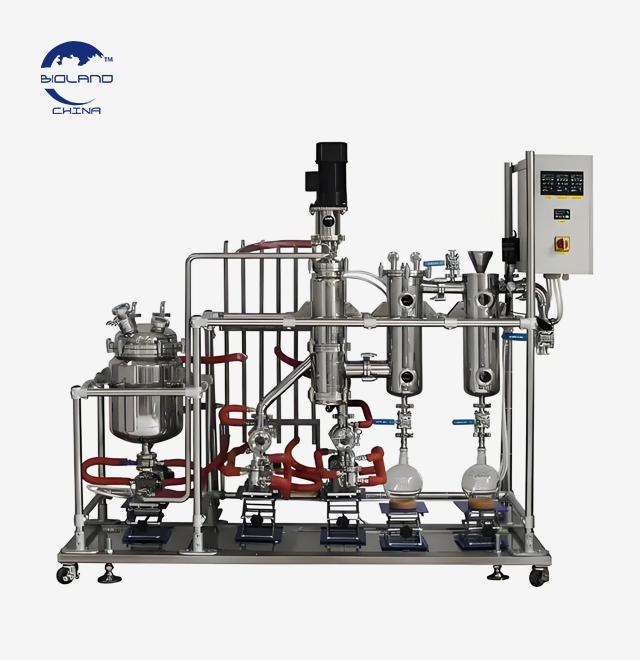
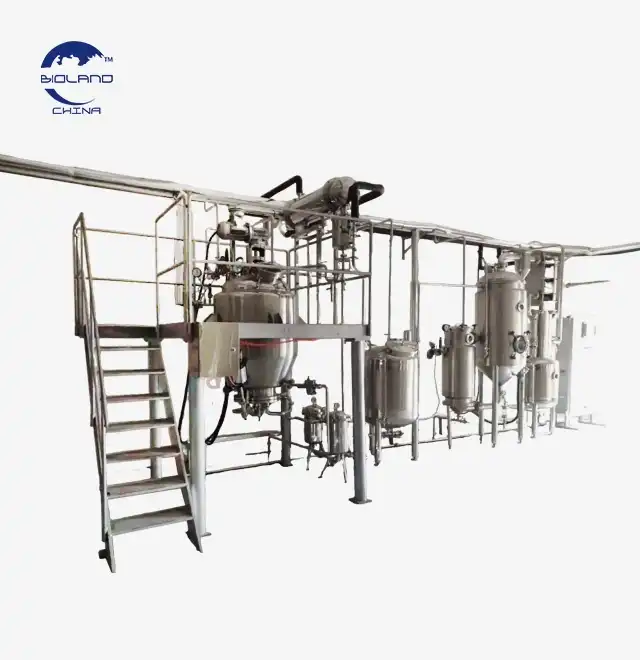
The whole system is made up of a control cabinet, an evaporator, a condenser, an oil separator, an oil collector, a liquid pump, a metering tank, a storage tank, a filter, a vacuum pump, and an ultrasonic unit. The vapor outlets are protected by demisters, and a thermal-oil heater can be used instead of steam if needed.
A PLC control system, online concentration monitoring, automatic discharge, and CIP make it possible to feed and discharge continuously with little work. Small amounts of energy are used during evaporation at -0.085 MPa and 60–100°C. This makes our ultrasonic extraction equipment work well, and the fact that it is made of SUS304/316L and follows GMP guidelines makes it easy to clean.
Case: Tea Polyphenol and Coffee Extraction Lines
A company that makes ingredients for drinks used hot water tanks that ran for hours to get the antioxidants, amino acids, and vitamins from tea and the caffeine from coffee. The steam costs were high, and smelly parts were often lost.
Temperature dropped to 50°C and cycle time was cut to 30 minutes after we switched to our Tea Extraction Machine and Coffee Extraction Machine, both of which were built on ultrasonic extraction equipment. About 45% less steam was used per batch, and the aroma and purity of the polyphenols got better.
Safe Operation and Preventive Maintenance
Equipment that is stable is also important for low running costs. Operators should check the vacuum level, check the seals, set the jacket pressure to between 0.09 and 0.3 MPa, and keep the compressed air at between 0.5 and 0.6 MPa before each run. Regular CIP cleaning, pump inspections, and ultrasonic transducer checks keep things running smoothly. Our techs will train you and keep up with the upkeep on your ultrasonic extraction equipment for life, so it works well for years to come.
How Equipment Capacity Affects Cost per Batch
Comparing Ultrasonic Extraction Equipment Models From 50L to 500L
How set costs are shared across output is based on capacity. The BL-TN-C line has 50L, 100L, 200L, 300L, and 500L types. The evaporation rate is 20 to 200 kg/h, and the steam usage rate is 25 to 250 kg/h.
The motor power stays low at 2.7–3.5 kW, so bigger ultrasonic extraction equipment doesn't use much more electricity per liter. Every model has a system vacuum of -0.085 MPa, which makes scale-up predictable from testing in the lab to production.
Technology parameter
Model
BL-TN-C50L
BL-TN -C100L
BL-TN -C200L
BL-TN -C300L
BL-TN -C500L
Volume (L)
50
100
200
300
500
Evaporation capacity (kg/h)
20
50
70
100
200
Motor power(KW)
2.7
2.7
2.7
3.5
3.5
Steam consumption(kg/h)
25
60
90
120
250
System vacuum (MPa)
-0.085
-0.085
-0.085
-0.085
-0.085
Pressure of jacket(MPa)
0.09~0.3
0.09~0.3
0.09~0.3
0.09~0.3
0.09~0.3
Compressed air (MPa)
0.5~0.6
0.5~0.6
0.5~0.6
0.5~0.6
0.5~0.6
Evaporation temperature(°C)
60~100
60~100
60~100
60~100
60~100
Case: From Pilot Tests to a Natural Pigment Line
A natural colorant company needed chlorophyll, anthocyanins, orange-peel pigment, and carotenoids, but they weren't sure what size would work. It was possible for costs to go up if the unit was too big, and orders could go down if it was too small.
We put samples through tests on a 50L unit and then suggested a 200L system of ultrasonic extraction equipment for getting plant pigments. As throughput doubled, yield went up by about 70% and cost per batch went down. Later, they used the same style for their goji polysaccharide line.
OEM/ODM Customization and Reliable Delivery
Over 15 years of experience, Xi'an Bioland Instrument Co.,Ltd. has been making and selling equipment for more than 15 years that is used for distillation, concentration, reaction, extraction, separation, filtration, purification, crystallization, emulsification, mixing, and drying. People in Europe, Southeast Asia, and other places buy our goods.
We're happy to take OEM and ODM orders. Standard models can be sent out in 5–7 days, while customized ultrasonic extraction equipment and production lines take 30 business days to ship. You can ship goods by sea, rail, or air, and all of them meet GMP/FDA standards.
Transparent Production and After-Sales Support
Every week, a dedicated expert sends you photos or videos of how your order is coming along. When the production is done, we send you detailed pictures to look over, and we won't ship until you say it's okay. You can also come to our facility to do a Factory Acceptance Test.
Our R&D engineers offer process support, a quality warranty for one year, and maintenance for life. This helps everyone who buys ultrasonic extraction equipment get up and running quickly, with top-notch quality at the lowest cost.
Conclusion
Low output, long cycles, solvent loss, high energy use, and capacity that isn't well matched all add to the cost of production in extraction. Ultrasonic extraction equipment can handle all five because it works at 40–60°C, recovers solvent in a closed loop, uses cavitation to open plant cells, and can handle volumes from 50L to 500L. As you can see, Bioland instrument is more than just a machine supplier. It is also a partner in finding process solutions. Our ultrasonic extraction equipment helps you lower the cost per batch. It is designed with GMP in mind, is CE and ISO certified, and is flexible for OEM and ODM orders.
FAQ
1. How much can ultrasonic extraction equipment improve yield?
Typically 50–500% over traditional methods, depending on material and solvent.
2. How long does a batch take?
Usually 24–40 minutes at 40–60°C.
3. Can ultrasonic extraction equipment handle different materials?
Yes. It processes stevia, chilli, mushrooms, tea, coffee, flavonoids, propolis, pigments, and essential oils.
4. Which capacities are available?
The BL-TN-C series runs from 50L to 500L, and OEM/ODM customization is supported.
5. What are the lead time and warranty?
Standard models are ready in 5–7 days and customized ones in 30 business days. Every order includes a one-year warranty and lifetime maintenance.
Ready to Cut Extraction Costs? Talk to Bioland Instrument Today
If solvent bills, slow cycles, or inconsistent yields are limiting your growth, Bioland Instrument is ready to help. With over 15 years of experience, a skilled R&D team, and CE, ISO, and GMP-compliant manufacturing, we design ultrasonic extraction equipment around your material, your target compound, and your budget. Send us your sample and we will recommend the right process, capacity, and configuration. We offer competitive pricing, OEM/ODM customization, weekly production updates, FAT options, a one-year warranty, and lifetime maintenance. Whether you extract stevia, tea polyphenols, mushroom polysaccharides, flavonoids, or propolis, our ultrasonic extraction equipment can turn your process challenge into measurable savings. Email us atinfo@biolandequip.comand start your cost-reduction plan today.
References
1. Chemat, F., Rombaut, N., Sicaire, A.-G., Meullemiestre, A., Fabiano-Tixier, A.-S., & Abert-Vian, M. (2017). Ultrasound assisted extraction of food and natural products: Mechanisms, techniques, combinations, protocols and applications. A review. Ultrasonics Sonochemistry, 34, 540–560.
2. Vinatoru, M., Mason, T. J., & Calinescu, I. (2017). Ultrasonically assisted extraction (UAE) and microwave assisted extraction (MAE) of functional compounds from plant materials. TrAC Trends in Analytical Chemistry, 97, 159–178.
3. Azmir, J., Zaidul, I. S. M., Rahman, M. M., et al. (2013). Techniques for extraction of bioactive compounds from plant materials: A review. Journal of Food Engineering, 117(4), 426–436.
4. Chemat, F., Vian, M. A., & Cravotto, G. (2012). Green extraction of natural products: Concept and principles. International Journal of Molecular Sciences, 13(7), 8615–8627.
5. Tiwari, B. K. (2015). Ultrasound: A clean, green extraction technology. TrAC Trends in Analytical Chemistry, 71, 100–109.
6. Picó, Y. (2013). Ultrasound-assisted extraction for food and environmental samples. TrAC Trends in Analytical Chemistry, 43, 84–99.
The reactor is beautifully mirror-polished and fully complies with GMP requirements for the pharmaceutical industry. The performance is excellent! Overall, we are very satisfied! We also provided with some feedback on our process improvements, which we hope will be helpful.
2024-04-09
Laboratory
Excellent and professional service. Always reply our questions very fast. All reactors and chiller we received are good too.
2024-02-15
Research Institute
Quality is beyond our expectation actually. After we got the extraction equipment and started using it, the performance was beyond our expectation. Very easy to use and very efficient to run. Service always respond us very quickly. Was also very helpful to help us. Thanks Bioland team. Very happy to work with you.
2023-11-20
Biotech Company
We are happy about the new purchase as always. Equipment and services are both good.
2023-08-05
Instrument Lab
This is the second order with Bioland instrument and everything is good as the first dateText.
2023-05-12
Global Trading Partner
Bioland instrument team is very helpful and professional. The sales helped us select the right equipment for our application, and their logistics people handled the transportation and customs declaration for our shipment. All that saved us a lot of work.