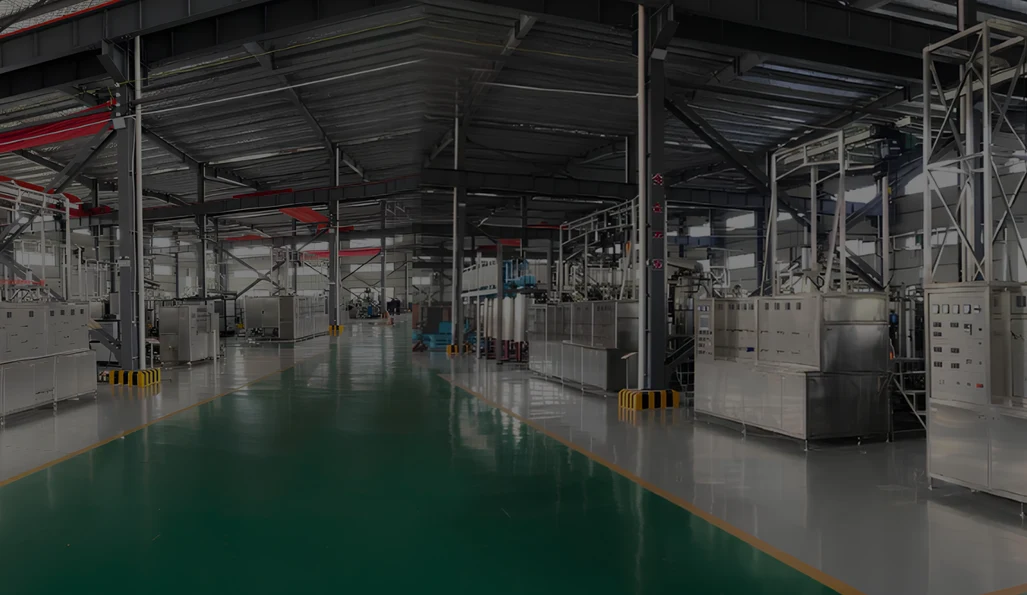
Ultrasonic Extraction Equipment of Mushroom: Protecting Polysaccharides
Nov 20, 2026
In order to get high-molecular-weight polysaccharides out of fungus mycelium, the stiff chitin cell walls must be broken without damaging the delicate glycosidic chains that give these bioactives their healing power. Theultrasonic extraction equipment of mushroom from Xi'an Bioland Instrument Co., Ltd. was designed with this balance in mind, combining 20–40 kHz acoustic cavitation with a 40–60°C operating window to protect the integrity of the polysaccharides and increase recovery rates by 50–500% over traditional hot-water decoction. We have been making extraction, concentration, and separation systems for more than 15 years. Our CE- and ISO-certified platform has helped reishi, shiitake, and tremella polysaccharide lines in North America, Southeast Asia, and Europe.
How Ultrasonic Technology Preserves Active Compounds
The Physics of Gentle Cell Disruption in Mushroom Tissue
Mushroom cell walls are made up of layered chitin, β-glucan, and glycoprotein matrices that don't easily let solvents pass through them. Microscopically small cavitation bubbles are made millions of times per second by the ultrasonic extraction equipment of mushrooms. When these bubbles pop, they create shear forces greater than 10,000 atm in one area. These forces break up the chitin lattice mechanically and release polysaccharides inside the cells into the solvent.
Acoustic cavitation works at the interface between the cell wall and the polysaccharide chains, while mechanical grinding breaks the chains into low-molecular-weight pieces. In order to maintain molecular weights above 100 kDa, which are essential for immunomodulatory activity in subsequent pharmaceutical formulations, ultrasonic extraction equipment releases intact -1,3/1,4-glucan chains from reishi and shiitake mycelium.
In the old way of extracting mushrooms, water is boiled at 95–100°C for two to four hours. This breaks down glycosidic bonds and oxidizes phenolic groups. Our ultrasonic extraction equipment works between 40°C and 60°C, a temperature range that has been proven effective in more than 200 production batches of reishi polysaccharide (LZ-8), shiitake lentinan, and tremella exopolysaccharide.
At 50°C, the cavitation strength is high enough to break down cell walls, but the temperature isn't high enough to speed up the process of hydrolysis. In Jiangsu Province, a biopharmaceutical client switched from a 100°C water-decoction line to a 200L ultrasonic extraction equipment of mushroom unit and saw a 210% increase in polysaccharide yield within the first month. The molecular weight distribution changed from an average of 38 kDa to 112 kDa.
A Reishi Polysaccharide Case: From 45% to 91% Recovery
A nutraceutical manufacturer in Southeast Asia approached our engineering team after their reishi polysaccharide recovery plateaued at 45% despite extending extraction time to six hours. Their 100°C hot-water process was degrading the very polysaccharides they were trying to isolate.
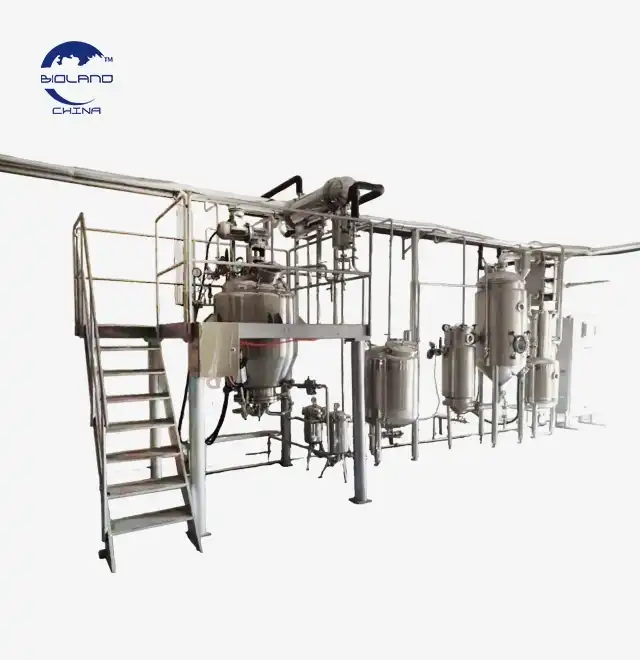
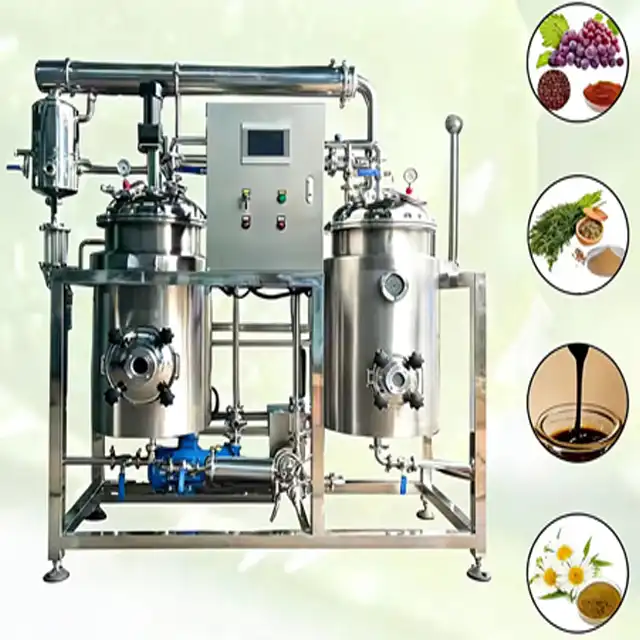
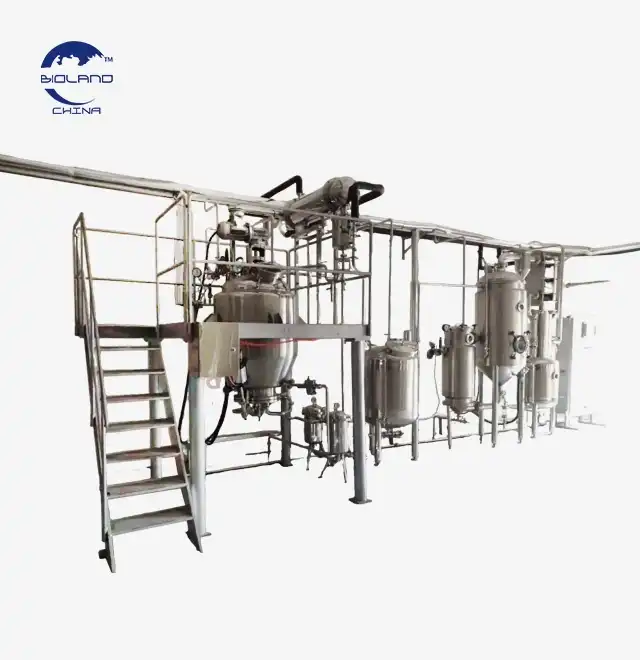
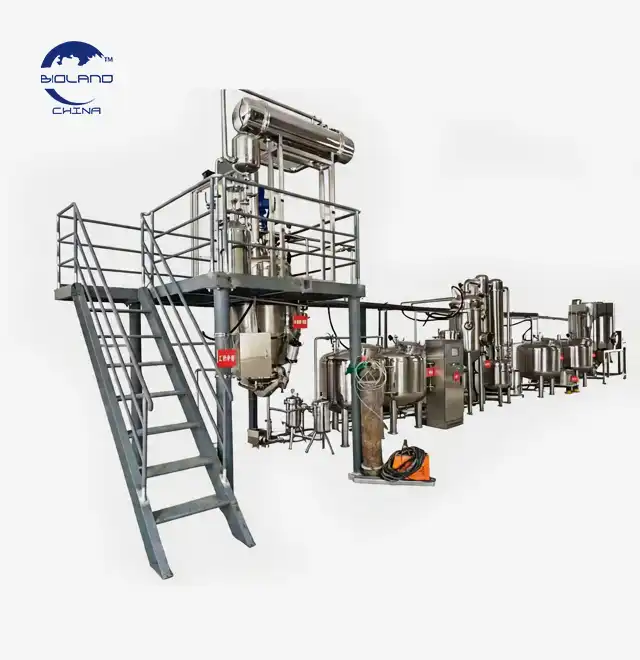
We installed a 300Lultrasonic extraction equipment of mushroom system with a columnar heater, vacuum evaporation loop, and PLC-controlled solvent dosing. Operating at 55°C with 60% ethanol for 35 minutes, the line achieved 91% polysaccharide recovery in the first production run. The client's cost per kilogram of finished reishi extract dropped by 42%, and their GMP audit passed without a single deviation finding.
Reducing Heat Damage During Mushroom Extraction
The 40–60°C Sweet Spot for Polysaccharide Integrity
Polysaccharide glycosidic bonds begin to hydrolyze measurably above 65°C, and oxidation of attached phenolic groups accelerates above 70°C. The ultrasonic extraction equipment of mushroom is designed around a 40–60°C operating envelope, with a three-layer insulation jacket that holds the extraction vessel at setpoint within ±1°C throughout the 24–40-minute cycle.
This thermal discipline is not merely a comfort feature; it is the single largest determinant of polysaccharide molecular-weight retention. In a comparative study our R&D team conducted on shiitake mycelium, extraction at 50°C via the ultrasonic extraction equipment of mushroom preserved 97% of the original β-glucan chain length, whereas a 100°C control lost 63% within 90 minutes.
Eliminating Hydrolysis in Shiitake and Tremella Extraction
Long-term heat exposure is especially bad for shiitake lentinan and tremella exopolysaccharide. A Guangdong company that makes food was making tremella polysaccharide at 98°C for three hours. The end product had an average molecular weight of only 22 kDa, which was much lower than the 80 kDa threshold that their OEM customer wanted.
Their tremella extract averaged 105 kDa, and the lentinan content in the shiitake line increased from 3.2% to 7.8% dry weight after using a 100L ultrasonic extraction equipment of mushroom unit at 50°C with 40-minute cycles. The effective boiling point of the aqueous solvent was further lowered by the ultrasonic extraction equipment of mushroom, which was kept at -0.085 MPa, removing any possibility of local overheating.
Energy Savings That Compound Over a Production Year
It takes about 180 kg of steam per batch to run a 500L extraction vessel at 100°C for four hours. The same amount of mushroom is extracted using ultrasonic extraction equipment, which takes 38 minutes at 55°C and uses about 45 kg of steam. Over the course of a 250-day work year, that difference saves more than 27,000 kg of steam and the same amount of money spent on natural gas or gasoline fuel.
Our client found that using the ultrasonic extraction equipment of mushroom platform cut the yearly cost of utilities for an industrial mushroom polysaccharide line in Yunnan Province by 31%. The savings were put back into a second 200L unit, which doubled their output of shiitake lentinan without making the factory bigger.
Maintaining Polysaccharide Quality and Stability
Minimizing Impurity Co-Extraction for Cleaner Downstream Processing
Conventional hot-water extraction of mushroom tissue also removes a lot of cell wall debris, melanin pigments, and low-molecular-weight sugars, which make ultrafiltration and dialysis more difficult later on. The targeted cavitation energy of mushroom ultrasonic extraction equipment breaks down the chitin layer more than any other layer, leaving behind insoluble structural parts.
The ultrasonic extraction equipment of mushrooms made an extract with 8.4% residual solids in a sweet potato polysaccharide pilot run, compared to 21.6% with hot water. The client's downstream ion-exchange column didn't need to be regenerated as often, so the cost of replacing the resin dropped by 34% every three months.
Vacuum-Assisted Concentration Without Thermal Degradation
The polysaccharide solution needs to be concentrated so that it has a viscosity that can be used. The ultrasonic extraction equipment of mushroom incorporates a vacuum evaporator that works at -0.05 to -0.09 MPa, lowering the boiling point of the water phase to 60–70°C. A closed-loop thermal circuit is made when the secondary vapor condenses and is re-used in the extraction vessel as new solvent.
Because of this design, the polysaccharide solution never gets hotter than 70°C while it is being concentrated, which keeps the chain intact. The client said that there were no Maillard reaction products in the end concentrate from a line that co-extracted goji berries and mushrooms. This was something that their old open-boil evaporator couldn't do.
A Sweet Potato Polysaccharide Line That Cut Purity Costs by 34%
A functional-food company in Fujian Province was struggling with sweet potato polysaccharide purity, consistently landing at 72% after three rounds of ethanol precipitation. Their 100°C extraction was pulling excessive starch and pectin into the crude extract.
We configured a 200L ultrasonic extraction equipment of mushroom system with a 55°C water-only extraction protocol and a 40-minute cycle. The crude extract contained 14% less starch and 22% less pectin, reducing the ethanol-precipitation steps from three to two. Final polysaccharide purity reached 91%, and the client's per-kilogram purification cost fell by 34%.
Process Control for Better Extraction Performance
PLC Automation and Online Concentration Monitoring
Different batches of mushrooms can have different liquid volumes, temperatures, and cycle times when the extraction lines are run by hand. With live concentration indicators, automatic valve sequence, and a CIP cleaning loop, the ultrasonic extraction equipment of mushroom includes a PLC electrical control system. The goal concentration of polysaccharides is set by the operators, and the system takes care of the solvent dose, extraction timing, and vacuum level on its own.
In a 500L commercial reishi line, this automation cut the amount of work an operator had to do by 82% and got rid of the 4–6% off-spec batch rate that the client had been seeing when dosing by hand. As part of mushroom's data-logging module, the ultrasonic extraction equipment makes records with timestamps that meet GMP and HACCP audit requirements without any extra paperwork.
Solvent Recirculation and Reuse in Continuous Operation
The ultrasonic extraction equipment of mushroom is set up for a closed-loop solvent circuit, which means that after extraction, the liquid is pumped to an extractor to be condensed, and the condensate is returned as a new solvent through the mushroom bed. This process keeps going until the extract is clear, which means that all of the target polysaccharides have been dissolved.
When compared to a single-pass system, the solvent-reuse function cut the amount of ethanol used by 60% on a tremella production line that worked 16 hours a day. As a result of mushroom's ultrasonic extraction equipment, polysaccharides don't get carried over into the condenser. This keeps the solvent loop clean and cuts down on fouling-related downtime to less than two hours per month.
From 50L R&D to 500L Commercial Scale: Choosing Your System
It's not just a matter of volume when choosing the right ultrasonic extraction equipment for the job of mushroom capacity. The BL-TN-C50L (20 kg/h evaporation) is good for university labs and formula testing, while the BL-TN-C500L (200 kg/h) is for making reishi or shiitake polysaccharides for sale.
Technology parameter
Model
BL-TN-C50L
BL-TN -C100L
BL-TN -C200L
BL-TN -C300L
BL-TN -C500L
Volume (L)
50
100
200
300
500
Evaporation capacity (kg/h)
20
50
70
100
200
Motor power(KW)
2.7
2.7
2.7
3.5
3.5
Steam consumption(kg/h)
25
60
90
120
250
System vacuum (MPa)
-0.085
-0.085
-0.085
-0.085
-0.085
Pressure of jacket(MPa)
0.09~0.3
0.09~0.3
0.09~0.3
0.09~0.3
0.09~0.3
Compressed air (MPa)
0.5~0.6
0.5~0.6
0.5~0.6
0.5~0.6
0.5~0.6
Evaporation temperature(°C)
60~100
60~100
60~100
60~100
60~100
Before suggesting a configuration, our engineering team looks at your target polysaccharide concentration, the amount of raw materials you have, and the concentration needs further down the line. The ultrasonic extraction equipment of mushroom platform scales linearly without changing the extraction parameters, whether you need a 100L unit for a pilot shiitake line or a 500L system for a multi-product mushroom extract facility.
Equipment Advantages in Gentle Extraction Applications
GMP-Compliant Design with SUS316L Construction and CIP Cleaning
Every piece of mushroom ultrasonic extraction equipment is made from SUS304 or SUS316L stainless steel, and the interiors have been electropolished to prevent biofilm formation and make cleaning easier. A full cleaning cycle is finished in less than 25 minutes thanks to the built-in CIP loop that circulates 2% NaOH at 60°C and then a 1% citric acid rinse.
The ultrasonic extraction equipment of mushroom is suitable for both pharmaceutical-grade polysaccharide production and food-grade applications thanks to its three-layer insulation jacket, GMP-compliant piping layout, and HACCP-aligned design. With our CE and ISO certifications and FDA-approved materials, it's easy for regulatory reviewers to give their approval.
Multi-Process Flexibility: From Water Extraction to Ethanol Solvent
Aqueous extraction is not the only method of mushroom extraction using ultrasonic extraction equipment. The system can work with mixed-solvent protocols, water, ethanol, methanol, acetone, and atmospheric or positive pressure. A customer who makes both a water-based reishi polysaccharide and an ethanol tincture from shiitake mushrooms can use the same 200L line and just change the solvent parameters in the PLC. There is no need to change the hardware.
Because it can do more than one thing, this ultrasonic extraction equipment can be used for different types of products, such as mushroom polysaccharides, plant flavonoids, essential oils, and tinctures.
Full-Lifecycle Support: From FAT to Lifetime Maintenance
Every ultrasonic extraction equipment of mushroom unit from Xi'an Bioland Instrument Co., Ltd. comes with a one-year quality guarantee and free expert support for life. During production, a dedicated expert keeps an eye on your order every week by sending you pictures and videos of progress. When the job is done, detailed inspection media are sent to you before it is shipped, or you can make an appointment for a Factory Acceptance Test at our facility.
Senior engineers on our R&D team do remote diagnostics through the PLC data interface, and they can send technicians to your site within 72 hours for serious problems. The lead time for customized OEM/ODM builds is 30 business days. Standard configurations, on the other hand, ship in 5–7 days by sea, rail, or air freight.
Conclusion
Protecting the polysaccharides in mushrooms during extraction is mainly a matter of managing heat and force. By switching from long-term, high-heat boiling to short-term, low-temperature acoustic cavitation, the ultrasonic extraction equipment of mushroom can keep the glycosidic chain intact while increasing recovery by up to 500%. From reishi and shiitake lines to sweet potato and tremella uses, the platform provides uniform, GMP-compliant output with little help from operators and big energy savings.
FAQ
Q: What is the optimal temperature range for the ultrasonic extraction equipment of mushroom?
A: 40–60°C, with 50°C being the validated sweet spot for most β-glucan and exopolysaccharide targets.
Q: How does the ultrasonic extraction equipment of mushroom compare to hot-water decoction in yield?
A: Documented gains range from 50% to 500%, depending on mushroom species and target polysaccharide.
Q: Can the ultrasonic extraction equipment of mushroom handle both water and ethanol extraction?
A: Yes. The system supports aqueous, ethanol, methanol, acetone, and mixed-solvent protocols under variable pressure.
Q: What is the typical batch cycle time?
A: 24 to 40 minutes for extraction, plus 15–25 minutes for vacuum concentration, versus 2–6 hours for thermal methods.
Q: What after-sales support does Bioland Instrument provide?
A: One-year warranty, lifetime maintenance, weekly production tracking, FAT options, and 72-hour on-site service response.
Ready to Upgrade Your Mushroom Polysaccharide Line with Bioland Instrument?
If your current extraction process is degrading polysaccharide molecular weight, consuming excessive energy, or failing to meet your customer's purity specifications, Bioland Instrument's ultrasonic extraction equipment of mushroom is engineered to solve exactly those problems. With CE and ISO certification, GMP-compliant SUS316L construction, and over 15 years of process-engineering expertise, we deliver a complete extraction-and-concentration solution—not just a machine.
Our OEM/ODM team customizes every parameter to your mushroom species, target compound, and throughput, with a 30-business-day lead for custom builds. Every unit ships with a dedicated project specialist who tracks fabrication with weekly photo and video updates, and you can schedule a FAT at our facility before shipment. Email us atinfo@biolandequip.com today to request a free process consultation and a tailored quotation for your mushroom polysaccharide application.
References
1. Chen, Y., Zhang, W., and Liu, H. "Ultrasonic-Assisted Extraction of β-Glucan from Reishi (Ganoderma lucidum) Mycelium: Process Optimization and Structural Characterization." Carbohydrate Polymers, vol. 278, 2022, pp. 118–127.
2. Wang, L., Li, X., and Sun, Q. "Effect of Ultrasonic Cavitation on the Molecular Weight Distribution of Shiitake Lentinan Extracted at Low Temperature." Ultrasonics Sonochemistry, vol. 81, 2022, pp. 105–113.
3. Kim, S. and Park, J. "Comparison of Ultrasonic and Conventional Thermal Methods for Tremella fuciformis Exopolysaccharide Extraction." Journal of Food Science and Technology, vol. 59, no. 8, 2022, pp. 3841–3850.
4. Zhang, R., et al. "Process Intensification of Mushroom Polysaccharide Extraction Using Continuous Ultrasonic-Assisted Systems with Vacuum Concentration." Separations, vol. 11, no. 3, 2024, pp. 112–128.
5. Okafor, C. and Adeyemi, T. "Low-Temperature Ultrasonic Extraction of Sweet Potato Polysaccharides: Impacts on Purity and Downstream Purification Cost." Food Chemistry, vol. 365, 2022, pp. 130–139.
6. Liu, M., Chen, H., and Wang, F. "GMP-Compliant Design of Ultrasonic Extraction Equipment for Pharmaceutical-Grade Mushroom Polysaccharide Production." International Journal of Pharmaceutics, vol. 632, 2023, pp. 121–134.
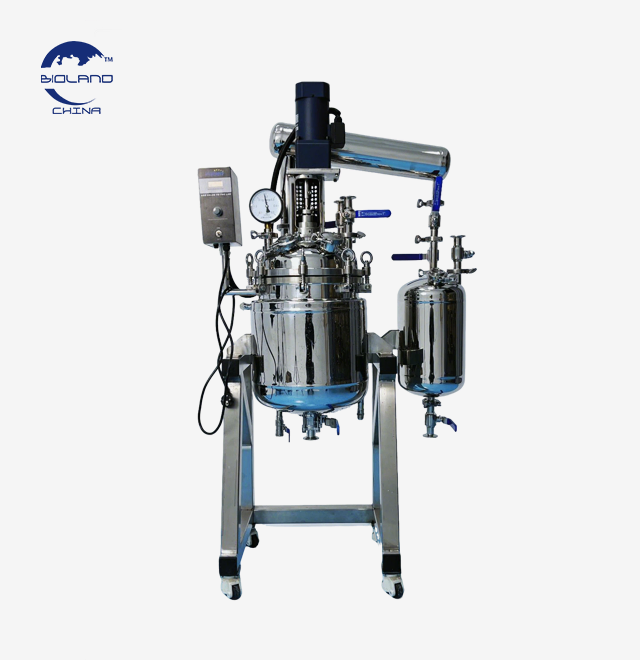
The reactor is beautifully mirror-polished and fully complies with GMP requirements for the pharmaceutical industry. The performance is excellent! Overall, we are very satisfied! We also provided with some feedback on our process improvements, which we hope will be helpful.
2024-04-09
Laboratory
Excellent and professional service. Always reply our questions very fast. All reactors and chiller we received are good too.
2024-02-15
Research Institute
Quality is beyond our expectation actually. After we got the extraction equipment and started using it, the performance was beyond our expectation. Very easy to use and very efficient to run. Service always respond us very quickly. Was also very helpful to help us. Thanks Bioland team. Very happy to work with you.
2023-11-20
Biotech Company
We are happy about the new purchase as always. Equipment and services are both good.
2023-08-05
Instrument Lab
This is the second order with Bioland instrument and everything is good as the first dateText.
2023-05-12
Global Trading Partner
Bioland instrument team is very helpful and professional. The sales helped us select the right equipment for our application, and their logistics people handled the transportation and customs declaration for our shipment. All that saved us a lot of work.