Is Ultrasonic Extraction Equipment worth the investment? A Manufacturer's ROI Guide
Oct 20, 2026
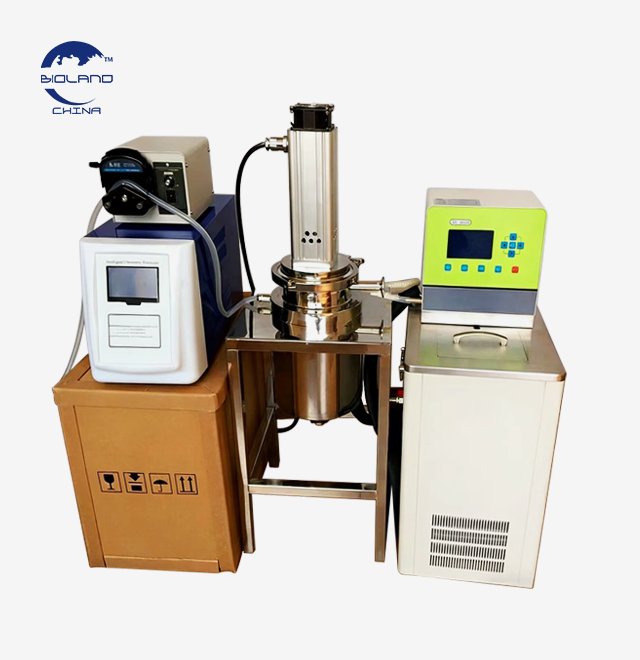
When manufacturers have to deal with low recovery, long batch cycles, and rising utility costs, ultrasonic extraction equipment can be a good buy if it is the right fit for the material and the goal of production. Bioland instrument's system combines ultrasound-assisted cell disruption with filtration, vacuum concentration, solvent circulation, PLC control, and CIP cleaning to make a coordinated process instead of just another extraction tank that works on its own.
Bioland instrument's ultrasonic extraction equipment usually works at a temperature range of 40 to 60°C, and it can reach the best recovery point for botanical uses in 24 to 40 minutes. According to the manufacturer, the data show that the extraction rate could be 50% to 500% higher than with some traditional methods. The output you get relies on the product you want to make, the particle size, the liquid, the raw material, and the confirmed working recipe.
When ultrasonic extraction equipment improves several cost centers at the same time, like batch production, labour, energy use, solvent recovery, product consistency, and the use of raw materials, the investment case gets stronger. This guide tells producers how to figure out those benefits, compare other options, and decide if a Bioland extraction and concentration solution can give them a good payback time.
The cost of buying ultrasonic extraction equipment is only one component of the total cost. A good budget should include things like process design, extraction capacity, filtration, concentration, controls, utilities, setup, commissioning, freight, validation, spare parts, training for operators, and validation. By outlining this whole project, you can keep a cheap quote from turning into an expensive project once work starts.
Define the Complete Equipment Boundary
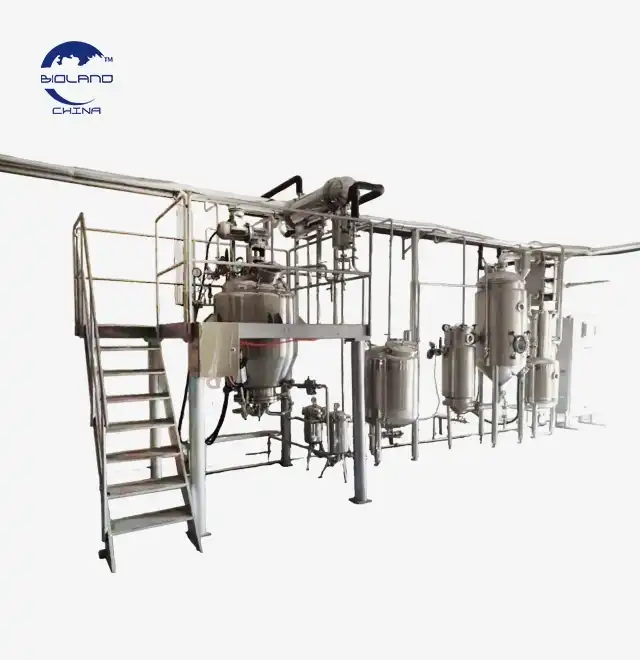
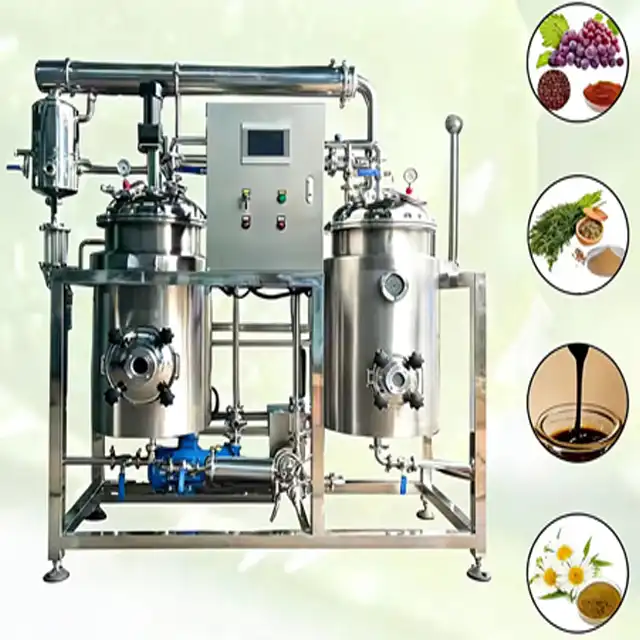
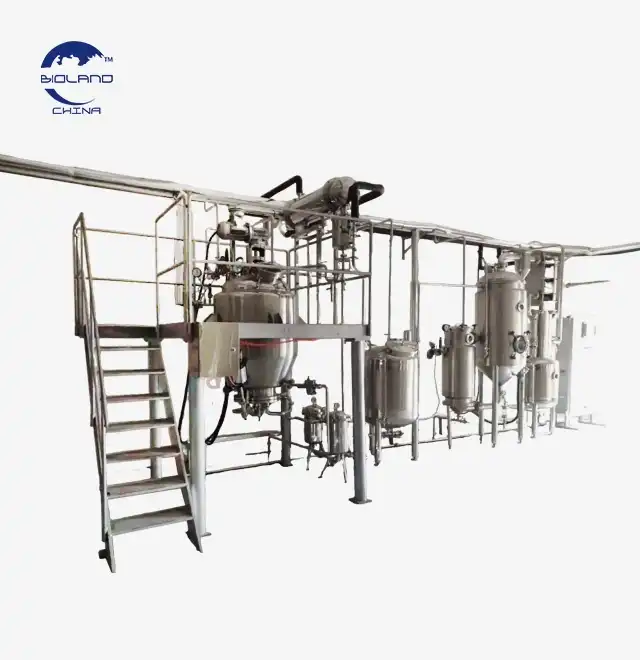
The price of ultrasonic extraction equipment changes based on whether the project only needs an extraction vessel or a full line. An ultrasonic system, extraction tank, tubular heater, evaporator, condenser, oil separator, liquid receiver, product pump, metering tank, storage vessel, filter, vacuum pump, control cabinet, valves and connecting pipelines can all be part of a Bioland instrument configuration.
Buyers should ask for a detailed list of the materials that come into contact with the product, the instruments, the automation, the heating method, the filtration area, the condenser capacity, and the installation limits. It is also necessary to find out how much platforms, electricity safety, air, cooling water, steam lines, and drying further downstream cost. A full quote makes it easier to compare different plans on an even playing field.
Match Capacity to Production and Utility Demand
Bioland instrument has ultrasonic extraction equipment that comes in five different models: BL-TN-C50L, C100L, C200L, C300L, and C500L. They say that they can evaporate 20, 50, 70, 100, or 200 kg/h. To make the right choice, you need to know the working volume, the ratio of solvents to materials, the extraction time, the filtration rate, the evaporation load, and the number of batches you need to make each shift.From 50 to 200 L, the motor power is stated as 2.7 kW. For 300 L and 500 L, the motor power is 3.5 kW. Between 25 and 250 kg/h of steam is used. The system vacuum for each type of ultrasonic extraction equipment is -0.085 MPa, the jacket pressure is 0.09–0.3 MPa, and the evaporation temperature is 60–100°C.
Technology parameter
Model
BL-TN-C50L
BL-TN -C100L
BL-TN -C200L
BL-TN -C300L
BL-TN -C500L
Volume (L)
50
100
200
300
500
Evaporation capacity (kg/h)
20
50
70
100
200
Motor power(KW)
2.7
2.7
2.7
3.5
3.5
Steam consumption(kg/h)
25
60
90
120
250
System vacuum (MPa)
-0.085
-0.085
-0.085
-0.085
-0.085
Pressure of jacket(MPa)
0.09~0.3
0.09~0.3
0.09~0.3
0.09~0.3
0.09~0.3
Compressed air (MPa)
0.5~0.6
0.5~0.6
0.5~0.6
0.5~0.6
0.5~0.6
Evaporation temperature(°C)
60~100
60~100
60~100
60~100
60~100
Include Customization, Compliance, and Delivery
The SUS304 construction may work for many food and plant uses, while the SUS316L construction can be used for tougher process conditions. There are other factors that affect the price of ultrasonic extraction equipment, such as CIP cleaning, three-layer insulation, online concentration monitoring, automatic discharge, continuous feeding, solvent recovery, custom PLC programming, and electrical or safety configurations that are made for a specific application.
Xi'an Bioland Instrument Co., Ltd. takes OEM and ODM orders and offers prices that come straight from the plant. Customised ultrasonic extraction equipment usually takes 30 business days, while stock items are usually ready in 5–7 days, depending on the specifics of the order. Customers can choose between sea, rail, and air freight to find the best balance between project schedule and transportation cost.
Calculating Production Benefits and Long-Term Returns
If you want to do a good ROI calculation for ultrasonic extraction equipment, you should start with the manufacturer's past production records. Before figuring out how much a new line will help, management should look at the current salable yield, batch length, labour hours, utility use, liquid loss, refused batches, cleaning time, and yearly maintenance.
Establish the Current Cost per Kilogram
Start by writing down how much raw material was handled in each batch and how many kilograms of specification-compliant extract were made. When judging ultrasonic extraction equipment, don't just look at the volume of the crude liquid. The important sign is an extract that can be sold after it has been filtered, concentrated, cleaned, and quality checked.
Add up the costs of labour, cleaning, waste treatment, maintenance, quality losses, steam, electricity, cooling water, raw materials, and solvents to get the current cost of production. Divide this amount by the amount that can be sold each year. The number that was come up with is a good starting point for measuring how well healing, faster processes, and lower running costs are working.
Use a Transparent Payback Formula
The total fixed cost of ultrasonic extraction equipment, which includes freight, utilities, installation, testing, and qualification, is the first thing that needs to be figured out. The annual net benefit is the difference between the extra money made from extracting more and the money saved on labour, utilities, and solvents, minus the extra money spent on maintenance. The simple payback is the total amount of money invested divided by the net benefit received each year.
Let's look at an example of a plant that handles 100 batches of 10% return every month. If tests show that increasing salable recovery from 10% to 11% is possible, then output goes up by 100 kg per month for every 10,000 kg of fuel. If the ultrasonic extraction equipment saves $2,000 a month on labour and utilities and adds $4,000 to the monthly contribution, the annual gross benefit is $72,000 before maintenance.
If the extra maintenance costs $6,000 a year and the investment is $165,000, the net benefit is expected to be $66,000, with a simple payback time of 2.5 years. This example doesn't promise that it will work. Every theory should be replaced by trial results, real margins, energy rates, production plans, and financial discount rates that have been accepted.
Add Revenue from Higher-Value Products
If you soak Ganoderma, shiitake, enoki, or Tremella mushrooms the normal way, you might lose polysaccharides because the water doesn't get into the material equally. A Bioland instrument ultrasonic extraction equipment solution can handle adding water, using moderate-temperature ultrasound, filtering, and concentrating the vacuum. The operational benefit is a more consistent way to get concentrated polysaccharide extract with less reliance on the judgement of the operator.
Steviol glycosides, flavonoids, quercetin, caffeine, propolis compounds, plant proteins, natural colours, and aromatic oils can all be extracted using multipurpose ultrasonic extraction equipment. This can help get better use out of tools when goods are seasonal. For every new material, there still needs to be a tested solution, recipe, testing method, and cleaning process.
Improving Efficiency Through Advanced Extraction Technology
When ultrasonic extraction equipment improves mass transfer and links extraction with processes further down the line, efficiency goes up. Ultrasound makes it less necessary to soak things for a long time, and pumps, filters, condensers, hoover systems and automated controls keep things moving along a set production sequence. This lets manufacturers look at the total output for each shift instead of just the volume of the vessel.
Accelerate Mass Transfer Through Cavitation
Microscopic bubbles form and pop in the liquid inside ultrasonic extraction equipment. The turbulence, shear, and pressure changes that happen can change the shape of plant or fungus cell structures, make it easier for solvents to get through, and lower the resistance of the border layer. Because of this, target compounds can get into the solvent faster than through passive diffusion alone.
Bioland instrument sets up ultrasonic extraction equipment based on the type of material, its moisture level, particle size, solvent, target compound, and how it will behave after being filtered. There are different settings that need to be used for soft tea leaves, woody roots, dense mushrooms, fruit, flowers, and sticky propolis. Through pilot testing, the right mix is found between the ultrasound strength, temperature, extraction time, and solid-to-liquid ratio.
Connect Extraction with Vacuum Concentration
The operator puts the ready-to-use material into the ultrasonic extraction equipment and adds the right amount of water, ethanol, or another approved solvent. The method uses the temperature, ultrasound, mixing, and working time that were given. The valves open one at a time after extraction, and the liquid is pumped through filtering into the vacuum concentration tank.
The ultrasonic extraction equipment system usually works in a process vacuum range of -0.05 to -0.09 MPa when it is concentrating. Before it turns into condensation, secondary vapour goes through the cooler and condenser. When the tested process allows it, the recovered solvent goes back through the material bed. This helps with more extraction and cuts down on the need for new solvent.
Automate Repeatability and Sanitation
Temperature, extraction time, pumps, pressure, valve sequence, concentration ends, warning, and automatic release can all be managed by PLC-controlled ultrasonic extraction equipment. Online concentration tracking is an option that helps workers figure out when the extract has hit the right density. Having stored recipes also cuts down on differences between shifts and makes it easier to spot process problems.
Bioland instrument's ultrasonic extraction equipment can use closed pipelines, demisters, three layers of insulation, and CIP cleaning, as well as parts made of SUS304 or SUS316L that come into contact with the product. Pharmaceutical and nutraceutical projects can be supported by construction that is based on good manufacturing practices (GMPs). Food configurations can meet HACCP and FDA requirements. Final compliance relies on the location, the application, the paperwork, and the rules in the area.
Comparing ROI with Conventional Extraction Methods
Ultrasonic extraction equipment may make more money than soaking, boiling, or extended reflux because it can move mass more quickly, work at a reasonable temperature, recover more, and control batches more effectively. The right comparison should look at the whole process, from loading the material to getting the finished concentrate. This is because a faster extraction stage doesn't help much if filtration or evaporation is still slow.
Compare Complete Cycle Time
The company Bioland instrument says that ultrasonic extraction equipment can reach the best point for extracting herbs in 24 to 40 minutes. Compared to some other methods, this could cut the intensive extraction stage by more than two-thirds. The actual results must be checked using standard raw materials and agreed upon chemical targets.
Ultrasonic extraction equipment can free up the tank for the next batch more quickly with shorter processing times. The company that makes the product should check the time for loading, pre-wetting, extraction, filter, concentration, release, and CIP separately. This shows if the investment increases the daily throughput or just moves the slow spot in the production line to a different part of it.
Evaluate Yield, Quality, and Utility Use Together
Normal ways might try to improve diffusion by raising the temperature or making the dwell time longer. When ultrasonic extraction equipment is set up correctly, the extraction stage is usually done at 40–60°C. This can help protect ingredients that are easily damaged by too much heat, oxidation, or hydrolysis. Processing at moderate temperatures may also lower the need for heating and then cooling.
The manufacturer says that ultrasonic extraction equipment can improve some botanical processes by 50% to 500%. This number should not be put directly into a ROI spreadsheet, though. Instead, you should do material trials. Check the amount of target chemical recovered, the quality of the crude extract, the rate of filtration, the solvent used, the amount of utility used, the safety of the product, and the yield of the final extract under similar conditions.
Examine Application Evidence, Not Generic Claims
In a Bioland instrument mushroom-polysaccharide line application, processing was not constant because the liquid moved slowly and the mass of the raw materials changed. Controlled water extraction, filtering, and pressure concentration were all built into ultrasonic extraction tools. The customer got a clear workflow that could be changed to work with Ganoderma, shiitake, enoki, Tremella, or other materials that contain polysaccharides.
When getting steviol glycosides from leaves, stems, and roots, a stevia grinder may have to do more than one extraction. Pre-wetting, cavitation, filtration, and concentration can all be done with Bioland instrument'sultrasonic extraction equipment. The business benefits from fewer handling steps that aren't connected while setting measurable conditions for temperature, time, solvent ratio, and discharge.
Polyphenols, amino acids, flavonoids, aromatic oils, and sometimes caffeine are what tea lines try to get. Long-term hot extraction may make it harder to keep the flavour. A Bioland solution can use enclosed transfer, recipe-controlled ultrasound, and vacuum concentration to make the consistency better while lowering the amount of heat that isn't needed.
Chilli oleoresin and capsaicin, propolis flavonoids and phenolic acids, orange-peel colours, anthocyanins, betalains, carotenoids, chlorophyll, goji polysaccharides, and essential oils are some other things that have been used successfully. These projects show that the process can be changed, but each result needs to be validated on its own.
Key Metrics for Evaluating Equipment Performance
Make an acceptance scorecard that includes technical performance, financial return, product quality, safety, and supplier support before you buy ultrasonic extraction equipment. Before trials start, metrics should be set, and if necessary, they should be written into the business deal. This keeps the final choice from being based on a presentation that doesn't show how things work in the workplace every day.
Track Technical and Product KPIs
Kg of salable extract per kilogram of material, target compound recovery, extraction time, batches per shift, filter rate, drying capacity, and product stability are the main performance measures for ultrasonic extraction equipment. Some of the things that can be used to judge quality are the amount of polysaccharides, flavonoids, colour, smell, leftover liquid, consistency, wetness, and antioxidant activity.
This information should include things like stable temperature, stable vacuum, pump flow, ultrasonic operation, heating reaction, condensate recovery, CIP length, and unexpected downtime. Instead of one test, write down these numbers over several groups. Repeated statistics show if the process is steady and if changes in raw materials can be controlled by making small changes to the recipe.
Monitor Financial and Lifecycle Indicators
When figuring out how much ultrasonic extraction equipment costs, you should look at its simple payback, annual ROI, net present value, internal rate of return, and cost per kilogram of good extract. Businesses should also keep track of the number of hours worked on each batch, the amount of steam used per kilogram of concentrate, the amount of liquid lost, the amount of refused product, the use of cleaning chemicals, the use of extra parts, and the number of hours spent on upkeep.
Bioland instrument backs up every project that uses ultrasonic extraction equipment with low factory prices, a one-year warranty on quality, and maintenance for life. Before they are shipped, important spares like seals, gaskets, filters, pump parts, instruments, hoover system parts and ultrasonic parts should be figured out. Preventive maintenance keeps things available and the original financial assumptions true.
Validate the Decision Before Shipment
A factory acceptance test should make sure that the ultrasonic extraction equipment works as agreed. This includes the pumps, the ultrasound, the heating, the cooling, the hoover, the alarms, the valve sequences, the discharge, and the cleaning. If customer material can't be used at the factory, the FAT should list alternative tests and say which performance criteria for the product will be confirmed during site commissioning.
Bioland instrument hires a professional to provide production photos or videos every week. Once the ultrasonic extraction equipment is finished, customers are given detailed inspection media and are welcome to visit the FAT before approving shipment. Xi'an Bioland Instrument Co., Ltd. has been making systems for more than 15 years that can remove, concentrate, filter, distil, separate, react, mix, crystallise, and dry things.
Conclusion
Ultrasonic extraction equipment is only worth what it can increase production by a certain amount, not just ultrasound. A strong investment case includes higher sellable yield, faster cycles, processes at mild temperatures, solvent recovery, steady concentration, less human handling, and quality that can be repeated. Instead of making general claims about performance, manufacturers should figure out returns based on tested methods and the full cost of installation. Biologica makes the business case stronger by offering 50–500 L choices, PLC control, CIP cleaning, SUS304 or SUS316L building, OEM/ODM engineering, and factory-direct price. The project risk is also lowered by having CE and ISO certifications, weekly manufacturing updates, FAT support, a one-year warranty, and maintenance for life. Payback can be easily measured and handled in a structured way for the right use and usage rate
FAQHow should ROI be calculated?
Divide total installed investment by annual net benefit, including additional extract value and operating savings.
What extraction temperature is typical?
Many botanical applications operate at 40–60°C, subject to process validation.
Which capacities are available?
Bioland offers 50, 100, 200, 300, and 500 L models.
Can the system process ethanol?
Yes, with suitable solvent-compatible components and application-specific safety measures.
Can one line process several products?
Yes. Multipurpose ultrasonic extraction equipment requires separate validated recipes and cleaning procedures.
Build Your ROI Case with Bioland Instrument
Is low yield, long extraction time, high energy use, or inconsistent concentration weakening your margins? Bioland Instrument can evaluate your feedstock, target compound, solvent, daily capacity, utilities, and current production costs before recommending ultrasonic extraction equipment. The engineering team can integrate ultrasound, filtration, vacuum concentration, solvent recovery, automation, and CIP cleaning into one practical line.
With more than 15 years of experience, factory-direct pricing, CE and ISO credentials, OEM/ODM capability, weekly production updates, optional FAT, a one-year warranty, and lifetime maintenance, Bioland Instrument helps reduce technical and purchasing risk. Send your current yield, batch time, and production target to info@biolandequip.com. The team will help you assess suitable ultrasonic extraction equipment and build a data-based investment plan.
References
1. Chemat, F., Rombaut, N., Sicaire, A. G., et al. “Ultrasound Assisted Extraction of Food and Natural Products: Mechanisms, Techniques, Combinations, Protocols and Applications.” Ultrasonics Sonochemistry, vol. 34, 2017, pp. 540–560.
2. Vinatoru, M. “An Overview of the Ultrasonically Assisted Extraction of Bioactive Principles from Herbs.” Ultrasonics Sonochemistry, vol. 8, no. 3, 2001, pp. 303–313.
3. Vilkhu, K., Mawson, R., Simons, L., and Bates, D. “Applications and Opportunities for Ultrasound Assisted Extraction in the Food Industry—A Review.” Innovative Food Science & Emerging Technologies, vol. 9, no. 2, 2008, pp. 161–169.
4. Tiwari, B. K. “Ultrasound: A Clean, Green Extraction Technology.” TrAC Trends in Analytical Chemistry, vol. 71, 2015, pp. 100–109.
5. Azmir, J., Zaidul, I. S. M., Rahman, M. M., et al. “Techniques for Extraction of Bioactive Compounds from Plant Materials: A Review.” Journal of Food Engineering, vol. 117, no. 4, 2013, pp. 426–436.
6. Chemat, F., Zill-e-Huma, and Khan, M. K. “Applications of Ultrasound in Food Technology: Processing, Preservation and Extraction.” Ultrasonics Sonochemistry, vol. 18, no. 4, 2011, pp. 813–835.
The reactor is beautifully mirror-polished and fully complies with GMP requirements for the pharmaceutical industry. The performance is excellent! Overall, we are very satisfied! We also provided with some feedback on our process improvements, which we hope will be helpful.
2024-04-09
Laboratory
Excellent and professional service. Always reply our questions very fast. All reactors and chiller we received are good too.
2024-02-15
Research Institute
Quality is beyond our expectation actually. After we got the extraction equipment and started using it, the performance was beyond our expectation. Very easy to use and very efficient to run. Service always respond us very quickly. Was also very helpful to help us. Thanks Bioland team. Very happy to work with you.
2023-11-20
Biotech Company
We are happy about the new purchase as always. Equipment and services are both good.
2023-08-05
Instrument Lab
This is the second order with Bioland instrument and everything is good as the first dateText.
2023-05-12
Global Trading Partner
Bioland instrument team is very helpful and professional. The sales helped us select the right equipment for our application, and their logistics people handled the transportation and customs declaration for our shipment. All that saved us a lot of work.