How to Vet Tea Extraction Equipment Suppliers for Beverage Plants
Oct 15, 2026
It's not enough to just compare prices and vessel capacities to find a supplier. Ultrasonic extraction, controlled low-temperature processing, filtration, vacuum concentration, solvent circulation, PLC automation, and CIP cleaning are all parts of Bioland instrument'stea extraction equipment. This method covers the whole process instead of just giving one extraction tank to beverage plants that want higher polyphenol recovery, faster cycles, repeatable flavour, and easier cleaning.
When looking at tea extraction equipment, buyers should make sure that the suggested line can handle their specific tea material, keep the flavour and heat-sensitive parts, reach the needed concentration, and work with their current utilities. Bioland instrument provides 50–500 L sizes, building in SUS304 or SUS316L, OEM/ODM engineering, CE and ISO certifications, GMP-focused production, FAT inspection, and lifelong support for upkeep.
Key Criteria for Evaluating Equipment Suppliers
Begin with Your Beverage and Yield Targets
Describe the type of tea, the annual output, the batch size, the target compounds, the extraction solvent, and the finished product before you ask for a quote. Instead of just picking a pot from a catalogue, a seller should size tea extraction equipment for green tea, black tea, herbal tea, or a mix of plant materials. Different conditions may be needed to work with tea's antioxidants, amino acids, flavonoids, caffeine, fragrance oils, and volatile parts.
Ask each company that sells tea extraction equipment to turn your business goal into process signs that can be measured. These should include the amount of raw materials used, the solids-to-liquids ratio, the extraction temperature, the length of the cycle, the expected filtrate volume, the concentration endpoint, the amount of energy used, and the number of batches done each shift. Suppliers you can trust will know the difference between assumptions made in the lab and values that need to be proven through trials with raw materials or a Factory Acceptance Test.
Assess Extraction Technology, Not Just Tank Volume
Strong tea extraction equipment should make it easier for mass to move around inside the tea matrix. Bioland instrument's ultrasonic system creates cavitation, which can change the shape or structure of plant cells. This makes it easier for water or an approved solvent to get to compounds that are soluble. Bioland instrument says that the extraction rate goes up by 50% to 500% when compared to some traditional methods for some plant processes. However, each tea application needs to be tested to make sure the claims are true.
Ultrasonic extraction can usually get to the best place for extraction in 24 to 40 minutes, which is longer than some standard methods but may cut the extraction stage by more than two-thirds. Ultrasounds usually work at temperatures between 40°C and 60°C, which can help protect flavonoids, amino acids, flavours, and aromatic parts that are sensitive to heat. Buyers should ask for trial data that uses similar liquid conditions, leaf size, and wetness levels.
Verify Hygienic Design and Compliance Documents
For beverage plants, tea extraction equipment needs to be carefully checked for both how well it works and how clean it is. Stainless steel SUS304 or SUS316L, safe process connections, three-layer insulation, demisters, sealed pipes, and possible CIP cleaning are some of the things that Bioland instrument usually uses. Buyers should ask for proof of materials, machine plans, weld paperwork, information on surface treatment, and a list of all the parts that come into touch with the product.
CE and ISO credentials can help qualify a supplier, but you should still check their validity and scope. Based on GMP, FDA, and food HACCP requirements, Bioland instrument builds systems. The final layout must also meet the electrical, pressure vessel, food contact, and workplace safety standards of the destination country. Before production starts, a responsible provider should talk to you about these needs.
Compare Total Process Cost Rather Than Purchase Price
A cheap quote for tea extraction equipment might not include things like filtering, hoover generation, condensers, pumps, controls, cleaning functions, or extras that are needed for installation. As a buyer, you should ask for a detailed list of everything that comes with the ultrasonic system, including the extraction tank, tube heater, evaporator, condenser, filter, liquid pump, storage vessel, measuring tank, vacuum pump, control cabinet, valves, instruments, and pipes that you need.
Find the best tea extraction equipment by comparing its total ownership cost, including its yield, cycle time, steam demand, water use, labour, cleaning time, solvent recovery, access to spare parts, and ease of maintenance. Bioland instrument's factory-direct price can lower the original investment, and the fact that extraction and concentration are done at the same time may avoid costly transfer delays. The best offer is the one that gives you what you need with clear limits and few extras that you didn't ask for.
Checking Supplier Experience and Manufacturing Capability
Confirm Process Engineering Experience
A trustworthy company that makes tea extraction equipment should know more than just how to make things out of stainless steel. It needs to say how the type of tea, particle size, wetness, solvent ratio, ultrasound strength, temperature, filtering resistance, and vacuum concentration affect the quality in the end. Find out who will make the process flow diagram, choose the instruments, go over the utilities, and set up the control sequence.
For more than 15 years, Bioland instrument has worked with chemical and plant process tools. Ultrasonic extraction tools, ethanol extraction systems, concentration units, essential oil processing equipment, reactors, filter systems, mixing tanks, vacuum spray dryers, freeze dryers and ultrasonic homogenisers are some of the things that it sells. The engineering team can better coordinate upstream extraction with downstream sorting and finishing thanks to this wider range of capabilities.
Review Relevant and Adjacent Project Applications
When checking out tea extraction equipment, ask to see examples of tea-polyphenol lines and other botanical projects that use the same mass-transfer, filtration, or concentration methods. In Bioland instrument's list of uses, you can find capsaicin production, propolis, natural colours, anthocyanins, mushroom polysaccharides, goji polysaccharides, and stevia extraction.
In a tea-polyphenol line, the main issue is that the strength isn't always the same because the leaves come from different places and are extracted by hand. This is taken care of by Bioland instrument with temperature, time, ultrasound, hoover and discharge controls that are based on recipes. The practical benefit is a framework for a process that can be used again and again, and operators can use it for different batches as long as it works with the customer's material first.
For a stevia line to work, steviol glycosides need to be released from the leaves, stems, or roots. For chilli oleoresin projects, the focus is on capsaicin and pigments. For mushroom projects, the focus is on polysaccharides from Ganoderma, shiitake, enoki, or Tremella. These applications next to each other show if a supplier can change its engineering instead of using the same design over and over.
Check Whether Capacity Can Scale Realistically
The Bioland instrument BL-TN-C50L, C100L, C200L, C300L, and C500L types are all tea extraction equipment. The listed rates of evaporation are 20, 50, 70, 100, and 200 kg/h. These choices help with research in the lab, testing in a small or medium-sized batch, and small to medium-sized business production. For plants with specific needs, we can also talk about unique systems.
Technology parameter
Model
BL-TN-C50L
BL-TN -C100L
BL-TN -C200L
BL-TN -C300L
BL-TN -C500L
Volume (L)
50
100
200
300
500
Evaporation capacity (kg/h)
20
50
70
100
200
Motor power(KW)
2.7
2.7
2.7
3.5
3.5
Steam consumption(kg/h)
25
60
90
120
250
System vacuum (MPa)
-0.085
-0.085
-0.085
-0.085
-0.085
Pressure of jacket(MPa)
0.09~0.3
0.09~0.3
0.09~0.3
0.09~0.3
0.09~0.3
Compressed air (MPa)
0.5~0.6
0.5~0.6
0.5~0.6
0.5~0.6
0.5~0.6
Evaporation temperature(°C)
60~100
60~100
60~100
60~100
60~100
A 2.7 kW motor is used in the 50–200 L models, and a 3.5 kW motor is used in the 300 L and 500 L models. There is a need for 25 to 250 kg/h of steam. All of the models on this page work with a system vacuum of -0.085 MPa, a jacket pressure of 0.09–0.3 MPa, and compressed air of 0.5–0.6 MPa.
You should never choose capacity based on vessel volume alone. The supplier has to figure out the working volume that can be used, the leaf's expansion, the solvent load, the heating time, the filtering time, the cleaning time, the evaporation duty, and the shift pattern. Also, companies that make drinks should check to see if the suggested evaporator can keep up with the extraction process without slowing down the production of intermediate products.
Audit Manufacturing and Inspection Controls
Before giving the plant permission to make tea extraction equipment, you should find out how they handle the raw materials, manufacturing, welding, assembly, pressure testing, electrical integration, and functional checking. Bioland instrument hires a professional to provide production photos or videos every week. This way, buyers from other countries can keep an eye on important manufacturing stages without having to wait until the planned ship date.
Standard products are usually ready in 5–7 days, while customised equipment usually takes about 30 business days. It depends on the final order. After production, Bioland instrument sends detailed inspection photos or videos and only ships after the customer says it's okay. Buyers can also set up a FAT at the plant to check the work and make sure it does what it was supposed to do.
How to Compare Quality, Service and Technical Support
Examine Construction and Component Configuration
High-quality tea extraction equipment should stay clean, steady, and usable even after many rounds of making drinks. Buyers should look at the grade of steel, the thickness of the plates, the insulation, the seal materials, the type of pump, the ultrasonic configuration, the quality of the valves, the instruments, the condenser area, the filter design, and the parts of the control panel. The materials that come into contact with the product must be safe for that solvent, cleaning chemicals, temperature, and final beverage specification.
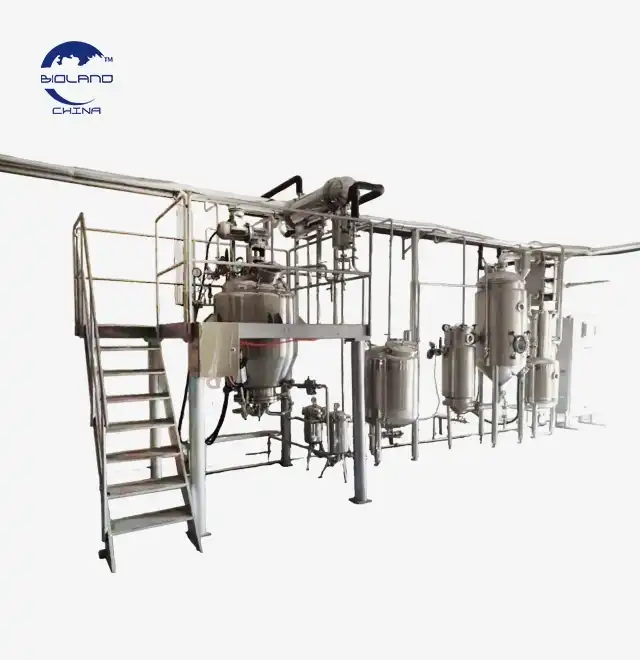
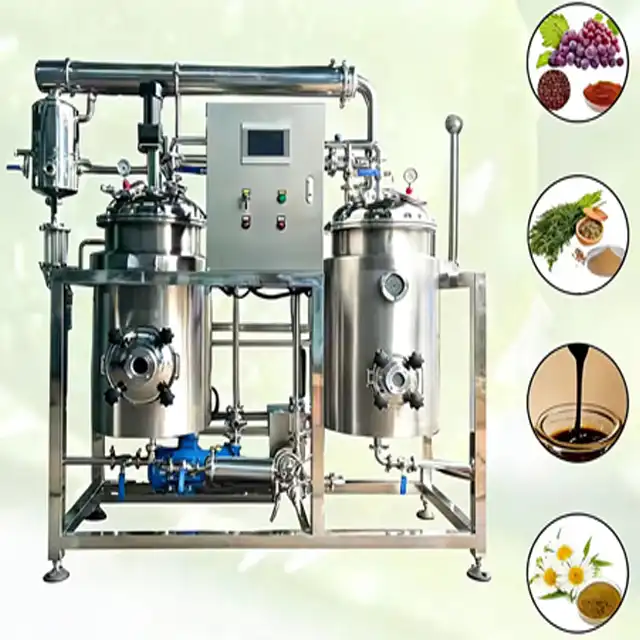
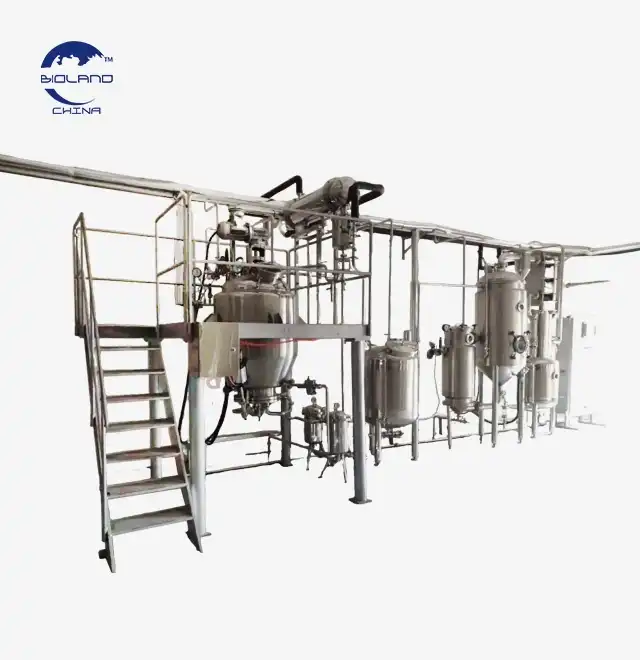
An ultrasonic unit, an extraction tank, a tubular heater, an evaporator, a condenser, an oil separator, a receiver, a liquid pump, a metering tank, a storage tank, a filter, a vacuum pump and an electrical cabinet can all be part of a full Bioland instrument system. Installing demisters at vapour outlets helps keep liquids from mixing in during evaporation. Thermal-oil heating can be set up in companies that don't have access to steam.
Evaluate the Supplier’s Process-Solution Ability
The best plan for tea extraction equipment should explain how the whole process works. After putting the tea into the extraction vessel, a known amount of water or another solvent that is okay for the process is added. Through the control system, you can set the temperature, ultrasound, stirring, and time for extraction. Once the oil is extracted, it is cleaned and put into the concentration tank.
Bioland instrument can set up enclosed pipes, lower-temperature ultrasonic extraction, immediate filtration, and vacuum concentration for a tea-polyphenol producer who is worried about losing aroma and having to wait a long time for the product to be transferred. The solution solves the customer's production issue by combining several tasks into a single flow. Less manual transfer speeds up handling, and PLC recipes make it easier to repeat and record critical conditions.
Usually, the vacuum is kept within the approved range during concentration, which is usually between -0.05 and -0.09 MPa. Before it turns into condensation, secondary vapour goes through the cooler and condenser. If the recipe allows it, the recovered liquid can go back through the material bed. This makes better use of the solvent until all the soluble compounds are removed and the concentrate reaches the right specific gravity.
Compare Installation, Training, and Maintenance Support
Support after the sale determines whether tea extraction equipment works as expected after it is delivered. People who are buying something should find out who will look over the installation, plumbing, electrical connections, setup, recipes, cleaning instructions, and training for the user. While remote support is helpful, the agreement should make it clear when on-site help is available and what travel or service costs are not covered.
Bioland instrument offers a quality warranty for one year and maintenance support for life. Its technical team helps with choosing the right process, setting it up, running it, and fixing problems. Ask for a suggested extra parts list that includes instruments, instruments, pump parts, ultrasonic parts and vacuum system parts. This list should include seals, gaskets, filters, instruments and ultrasonic parts. Clear periodic repair intervals cut down on unneeded downtime during times when a lot of drinks are being made.
Use a Weighted Supplier Comparison
Before you compare quotes for tea extraction equipment, make a report. In real life, you might give 25% of the weight to how well the process fits your needs, 20% to how clean it is, 15% to projects that have already been done, 15% to automation and documentation, 15% to service, and 10% to price. Change these numbers based on what the rules are in your area, the risk of production, and how important it is to switch products quickly.
A reasonably priced package of tea extraction equipment is only appealing if it is clear what it includes. On the same level, compare the drawings, utility lists, certificates, contracts, shipping terms, FAT codes, extra parts, and things that aren't covered. Bioland instrument's OEM/ODM support lets customers change things like capacity, contact materials, controls, heating method, filtration, plant layout, and cleaning functions instead of having to settle for a standard package that doesn't work for them.
Questions to Ask Before Choosing an Equipment Supplier
Can the System Process Your Specific Tea?
Check to see if the suggested tea extraction equipment was chosen based on the raw materials you have and the extract you want to make. Caffeine, plant liquids, volatile oils, amino acids, flavonoids, green tea polyphenols, and black tea grounds are all important in their own ways. Give samples that are typical of the final product and say whether it will be a beverage base, a concentrated extract, a powder feed, or an ingredient that has been cleaned up.
The supplier should find out about the leaf size, moisture, storage conditions, seasonal changes, solids content, water quality, target concentration, and the kind of sensory profile that is considered acceptable. If these questions aren't asked, the quote might be based on the tank's theoretical size instead of how well it works in the process. Tests on materials can show issues with filtration and concentration limits before the final design of commercial equipment is made.
What Data Support the Proposed Output?
Ask for test results or figures that show how the tea extraction equipment will meet the needs for yield, cycle time, and daily output. Bioland instrument says that ultrasound can boost extraction rates by 50% to 500% for certain plant types and can achieve optimal extraction in 24 to 40 minutes. These numbers should not be taken as guarantees for every tea, but rather as ranges that depend on the application.
When selling tea extraction equipment, any company should be clear about how performance will be measured. Heating reaction, vacuum stability, pump flow, ultrasound operation, valve sequence, control warning, automatic release, CIP coverage, and concentration performance are all useful FAT factors. Product-yield acceptance should use a test method that everyone agrees on, material that is representative, and analytical indicators that are easy to understand.
How Will the System Fit the Existing Plant?
Enquire about how the tea extraction equipment will connect to systems that use steam, thermal oil, cooling water, electricity, drainage, ventilation, and systems that fill or dry the tea later on. The Bioland models that are listed use 25–250 kg/h of steam, and the range of temperatures for evaporation is said to be 60–100°C. How much is actually used depends on the recipe, the load, the temperature, and the insulation.
Check the equipment's size, servicing space, floor loading, entry doors, platform needs, and the assembly route. A process flow diagram, general arrangement drawing, utility schedule, foundation information, and interface list should all be sent to the buyer. A three-dimensional plan review can find problems with user access and pipe clashes before the production stage gets too far along.
How Are Cleaning, Safety, and Changeovers Managed?
Tea extraction equipment must have the proper locks, wiring, air, controls, and electrical safety if ethanol or another solvent is used. Before each run, operators should check the pressure limits, valves, cooling flow, pumps, vacuum parts, safety interlocks, ultrasound units, and vacuum components. The supplier should give you operating manuals and go over how to safely handle solvents and shut down in an emergency.
Ask how the tea extraction equipment keeps the flavours from moving from green tea to herbal extracts or coffee. Bioland instrument can offer CIP cleaning, automatic discharge, pipelines that are closed off, and recipes that can be programmed. Cleaning factors like removing dust, soap content, movement time, temperature, rinsing, and drainage should all be checked to make sure they don't cause production delays that aren't necessary.
Ensuring Reliable Supply for Beverage Production Lines
Put Procurement Milestones into the Contract
In the purchase agreement, include the tea extraction equipment project schedule, which should include things like confirming the design, getting approval for the drawings, buying materials, fabricating, putting together, testing, FAT, packing, and sending the equipment. Explain which delays will cause the delivery date to be pushed back and how changes requested by the customer will be handled. As a result, everyone knows what to expect, and an unfinished plan doesn't get made.
Bioland instrument can handle both OEM and ODM orders, which means that custom flow paths, tank capacities, automation, filtration, heating, and concentration modules can be looked over before they are made. Weekly photos or films make the creation process clear. Buyers should designate one internal project manager to review plans, collect comments, and make sure that different areas don't give mixed directions.
Verify Packing, Logistics, and Spare-Parts Readiness
International tea extraction equipment needs to be packed in a way that keeps the tanks, instruments, control boxes, pipes, and smooth surfaces safe during transport. Find out how holes are sealed, loose parts are marked, and parts that are sensitive to moisture are kept safe. Bioland instrument handles goods by sea, rail and air, so customers can choose the best delivery time, destination and cost.
There should be a packing list, drawings, manuals, certificates, and information on how to install the equipment in the shipping file. Along with the main package, buyers should also order important launching parts. Valves, sensors, seals, filter elements, and pipe sections that are correctly labelled save time when local workers start putting them together and lower the chance that production will be held up by small missing parts.
Plan FAT, Commissioning, and Validation Early
Before you send the tea extraction equipment out, you should test it against a standard FAT protocol. Check the cleaning routines, controls, alarms, pumps, heating, cooling, ultrasound, hoover, discharge and controls. Set up safe replacement tests and make a list of the performance indicators that will be checked during Site Acceptance Testing when customer material can't be used at the plant.
The tea extraction equipment should come with information on how to set it up, how to use it, how to keep it in good shape, how to use spare parts, and a working manual. Commissioning should check the quality of the power, the direction of spin, the accuracy of the instruments, the lack of leaks, the effectiveness of the hoover, and the operator's comprehension. Before putting a drink on the market, beverage plants should do cleaning and process evaluation.
Select a Partner That Can Support Future Products
Pick tea extraction equipment that can handle planned portfolio growth without sacrificing cleanliness. It is possible to set up Bioland instrument's platform to work with flavonoids, quercetin, natural pigments, essential oils, capsaicin, goji and mushroom polysaccharides, plant proteins, and aromatic compounds like capsaicin and chilli oleoresin.
Contractors and beverage makers have more options when they use multipurpose tea extraction equipment, but each new material needs its own approved recipe and cleaning process. If a seller knows how to do extraction, filtration, concentration, distillation, mixing, and drying, they can help customers add new products by putting together parts that work together instead of changing the whole production line.
Conclusion
There's more to checking out a provider than just comparing price and ability. Drinking water factories should check their process knowledge, extraction tests, clean building, automation, concentration performance, utility demand, documentation, FAT procedures, delivery control, and lifecycle service. The right tea extraction equipment should solve the customer's issues with yield, flavour, uniformity, cleanliness, and throughput all at the same time.
Bioland instrument offers ultrasonic extraction, hoover concentration, CIP cleaning, OEM/ODM customisation, CE and ISO credentials, factory progress updates, a one-year warranty, and maintenance for life. They also have more than 15 years of engineering experience. Buyers can choose a scalable line with lower project risk and higher long-term production value by carefully examining its technical aspects.
FAQ
What tea compounds can the system extract?
The tea extraction equipment can target polyphenols, flavonoids, amino acids, caffeine, aromatic oils, and soluble tea solids.
What capacities are available?
Standard models include 50, 100, 200, 300, and 500 L configurations.
Can customers request a FAT?
Yes. Customers may inspect agreed construction and operating functions at Bioland’s factory.
Which contact materials are offered?
SUS304 and SUS316L stainless-steel configurations are available according to process requirements.
Build a Better Tea Extraction Line with Bioland Instrument
Is your plant dealing with inconsistent polyphenol recovery, excessive extraction time, aroma loss, difficult filtration, or limited concentration capacity? Bioland Instrument can configure tea extraction equipment around your tea type, target compounds, daily throughput, utilities, cleaning standard, and available floor space. Send the team your raw-material data, process flow, required output, and current production bottleneck for a tailored evaluation.
With factory-direct pricing, over 15 years of engineering experience, OEM/ODM capability, CE and ISO credentials, weekly production updates, FAT support, a one-year warranty, and lifetime maintenance, Bioland Instrument provides more than machinery. It delivers an integrated extraction solution designed for reliable beverage production. Discuss your customized tea extraction equipment project at info@biolandequip.com.
References
1. International Organization for Standardization. ISO 9001:2015—Quality Management Systems: Requirements. ISO, 2015.
2. International Organization for Standardization. ISO 22000:2018—Food Safety Management Systems: Requirements for Any Organization in the Food Chain. ISO, 2018.
3. European Hygienic Engineering and Design Group. EHEDG Guideline Document 8: Hygienic Design Principles. EHEDG.
4. American Society of Mechanical Engineers. ASME BPE: Bioprocessing Equipment. ASME, 2022.
5. Both, S., Chemat, F., and Strube, J. “Extraction of Polyphenols from Black Tea—Conventional and Ultrasound Assisted Extraction.” Ultrasonics Sonochemistry, vol. 21, no. 3, 2014, pp. 1030–1034.
6. Chemat, F., Rombaut, N., Sicaire, A. G., et al. “Ultrasound Assisted Extraction of Food and Natural Products: Mechanisms, Techniques, Combinations, Protocols and Applications.” Ultrasonics Sonochemistry, vol. 34, 2017, pp. 540–560.
The reactor is beautifully mirror-polished and fully complies with GMP requirements for the pharmaceutical industry. The performance is excellent! Overall, we are very satisfied! We also provided with some feedback on our process improvements, which we hope will be helpful.
2024-04-09
Laboratory
Excellent and professional service. Always reply our questions very fast. All reactors and chiller we received are good too.
2024-02-15
Research Institute
Quality is beyond our expectation actually. After we got the extraction equipment and started using it, the performance was beyond our expectation. Very easy to use and very efficient to run. Service always respond us very quickly. Was also very helpful to help us. Thanks Bioland team. Very happy to work with you.
2023-11-20
Biotech Company
We are happy about the new purchase as always. Equipment and services are both good.
2023-08-05
Instrument Lab
This is the second order with Bioland instrument and everything is good as the first dateText.
2023-05-12
Global Trading Partner
Bioland instrument team is very helpful and professional. The sales helped us select the right equipment for our application, and their logistics people handled the transportation and customs declaration for our shipment. All that saved us a lot of work.