How to Prevent Protein Degradation During Extraction
Oct 15, 2026
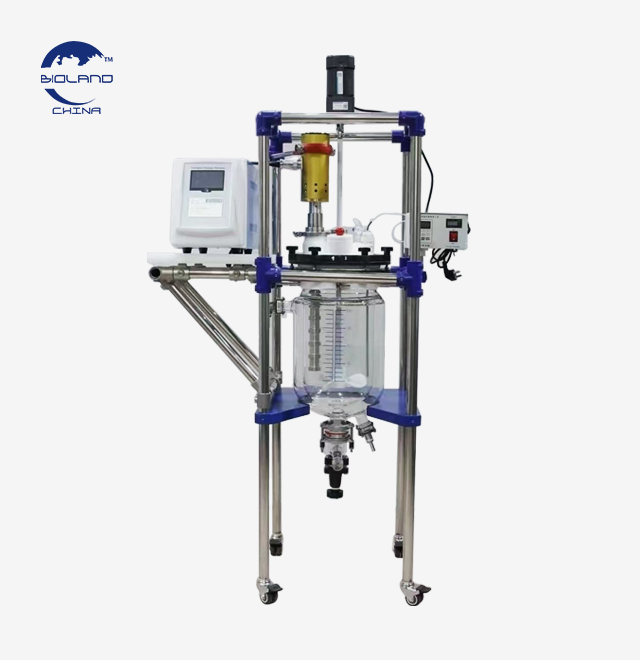
Protein degradation is the silent profit killer in botanical and marine extraction lines. Denatured soy isolate that will not gel, mushroom polysaccharide-protein complexes that lose bioactivity, fish peptides that turn bitter — most of these failures trace back to heat, shear, pH drift and over-processing during extraction, not to raw material quality. Xi'an Bioland Instrument Co., Ltd. builds the protein extraction machine around one principle: get the protein out of the cell fast, cold and gently. Our ultrasonic protein extraction machine ruptures cell walls by acoustic cavitation at 40–60 °C, cutting extraction time to 24–40 minutes and lifting yield by 50–500% versus hot-water or long-maceration methods. Built from SUS304/316L, PLC-controlled, CIP-ready and GMP/FDA compliant, every protein extraction machine is delivered as a complete process solution — not just a tank. With 15+ years of engineering, CE and ISO certification, OEM/ODM capability and a one-year warranty with lifetime maintenance, Bioland helps you protect molecular integrity from the first pass to the final dryer.
Why Are Temperature and Processing Time Critical for Protein Stability?
The thermal denaturation threshold most producers cross without knowing
Most globular plant and marine proteins begin to unfold between 55 °C and 70 °C. Traditional reflux or decoction lines sit at 85–100 °C for two to four hours, which is a guaranteed recipe for aggregation, solubility loss and Maillard browning. A Bioland protein extraction machine works in the 40–60 °C window because ultrasonic cavitation — not heat — does the cell-wall disruption. The jacket carries a controlled thermal fluid, three-layer insulation stabilises the wall temperature, and a PT100 probe feeds the PLC so the set point never overshoots by more than ±1 °C.
Shorter residence time means less cumulative damage
Damage to proteins is cumulative: time multiplied by temperature. Because the ultrasonic protein extraction machine reaches equilibrium extraction in 24–40 minutes instead of 3 hours, the total thermal load drops by over two thirds. This matters enormously for heat-labile fractions such as mushroom polysaccharide-peptide complexes, wheat germ proteins and enzymatically active fish hydrolysates. Less time in the tank also means less oxidation, fewer off-flavours and a cleaner filtrate downstream.
A real case: a Shandong soy protein workshop losing gel strength
A soy isolate producer complained that every second batch failed gel-strength testing. Their alkaline extraction ran 2.5 hours at 80 °C. We replaced the process with a 300 L ultrasonic protein extraction machine operating at 52 °C for 35 minutes. Nitrogen solubility index rose from 61% to 84%, gel strength passed on 19 of 20 batches, and steam consumption fell from 120 kg/h equivalent load to under half.
Energy saved is protein saved
Lower operating temperature is not only a quality decision, it is an economic one. Our 50 L to 500 L models consume 25–250 kg/h of steam depending on size, and because the ultrasonic protein extraction machine avoids prolonged boiling, most clients report 30–45% lower utility cost per kilogram of finished protein. Where no steam is available, Bioland instrument supplies a thermal-oil heating package with the same protein extraction machine platform.
How Can Excessive Shear Stress Be Minimized During Extraction?
Rotor-stator homogenisers and high-RPM agitators generate localised hot spots and violent turbulence that fragment tertiary structure, foam the liquor and entrain air that accelerates oxidation. Ultrasonic cavitation is fundamentally different: micro-bubble collapse acts on the cell wall at micron scale, releasing intracellular protein without dragging the free molecule through a high-shear gap. That is the core advantage of choosing an ultrasonic protein extraction machine over a purely mechanical line.
Controlled power density, not brute force
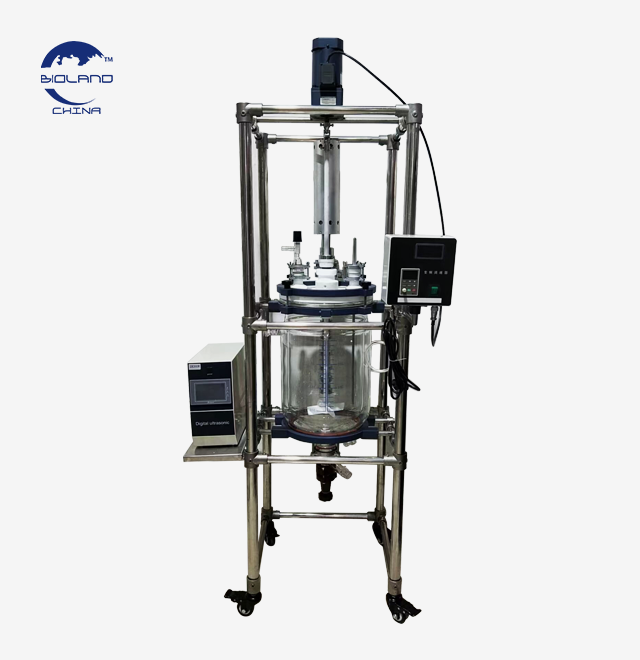
Each Bioland instrument protein extraction machine distributes transducers around the vessel wall so that acoustic energy is uniform rather than concentrated at one probe tip. Power density is adjustable from the PLC panel, and operators can run pulsed mode — for example 5 seconds on, 2 seconds off — to prevent localised heating. Motor power is modest by design: 2.7 kW for 50–200 L units and 3.5 kW for 300–500 L, because the process relies on cavitation efficiency, not horsepower.
Gentle liquid handling through the whole train
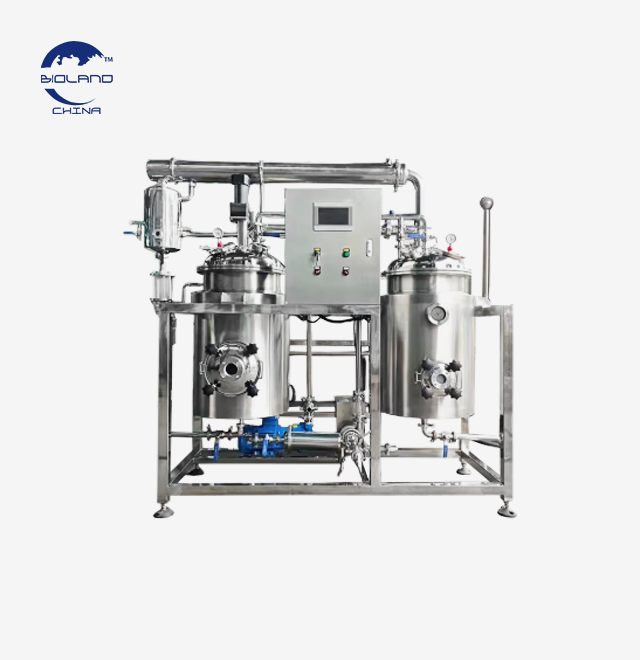
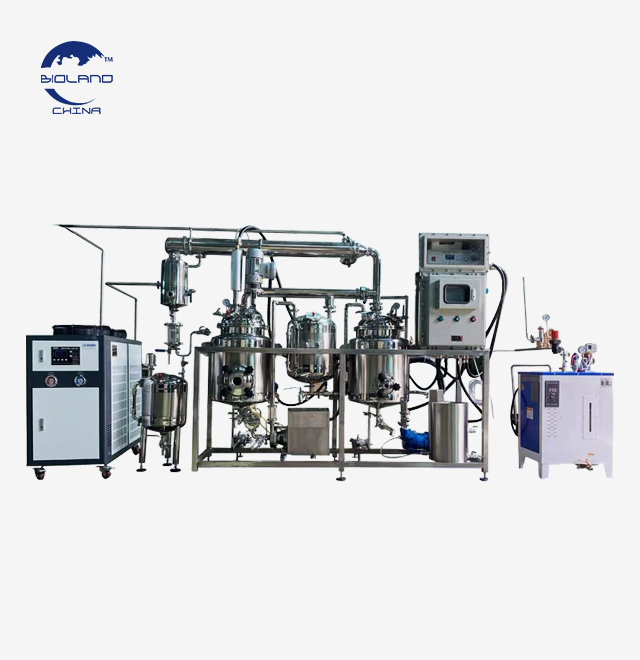
Protein damage often happens after the tank. We specify low-shear lobe or diaphragm transfer pumps, generously sized pipework, and a demister on both the extraction vessel and evaporator vapour outlets so foam does not carry over. The complete protein extraction machine skid integrates the extractor, shell-and-tube heater, evaporator, condenser, oil separator, receiver, metering tank, filter, vacuum pump and control cabinet — all sized to keep velocity and shear low.
A marine peptide case from Fujian
A fish protein producer saw molecular weight distribution drift batch to batch because of an in-line colloid mill. We supplied a 500 L protein extraction machine with pulsed ultrasound and a low-shear circulation loop. Average peptide chain length became consistent within ±6%, bitterness complaints stopped, and their downstream membrane filtration flux improved by roughly 25% because fewer fine fragments blinded the membrane.
How Does pH Control Affect Protein Structure and Recovery?
The isoelectric point is your friend and your enemy
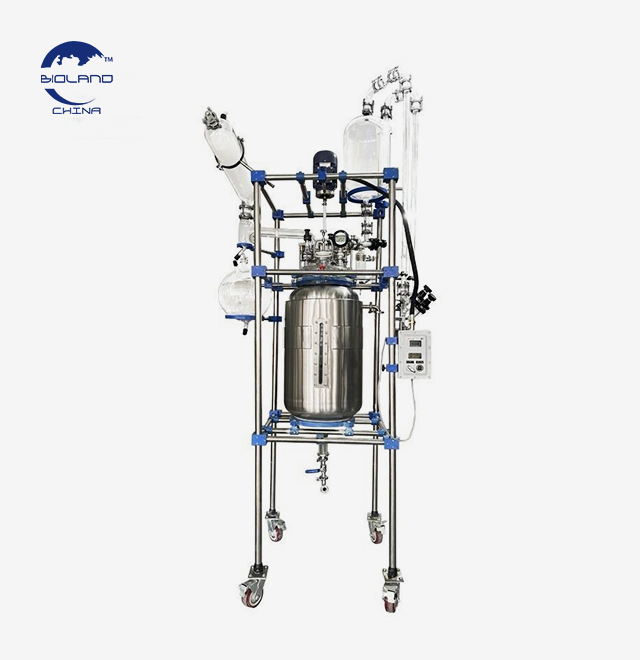
Solubility collapses near the isoelectric point, which is exactly why alkaline extraction followed by acid precipitation is standard for soy, pea, rice and sunflower proteins. But overshooting to pH 11 or above triggers lysinoalanine formation and irreversible denaturation. A Bioland instrument protein extraction machine is supplied with corrosion-resistant 316L wetted parts, metering tanks for acid and alkali dosing, and optional in-line pH monitoring so the extraction stays inside a narrow, validated band.
Milder pH becomes possible when cavitation does the work
Because ultrasound already opens the cell matrix, many clients find they can extract at pH 8.5–9.0 instead of pH 10.5 and still exceed their previous yield. That single change dramatically reduces racemisation and colour formation. This is the practical meaning of buying a process solution rather than a vessel: our engineers run bench trials to find the gentlest pH that still meets your recovery target on the protein extraction machine you will actually operate.
Solvent flexibility widens the safe window
The same protein extraction machine platform handles water, ethanol, methanol, acetone and mixed solvents, under negative, atmospheric or slight positive pressure. For protein-polysaccharide complexes from Ganoderma, Lentinus or Tremella, a hydro-alcoholic sequence preserves structure better than strong alkali. Bioland instrument's ultrasonic extraction concentration unit performs low-temperature extraction, solvent extraction, Soxhlet dynamic extraction, hot reflux, water or alcohol precipitation and percolation on one skid.
Case: a pea protein start-up in Europe
A client extracting pea protein at pH 11 had a grey, bitter isolate. We reconfigured the process on a 200 L protein extraction machine: pH 8.8, 48 °C, 30 minutes ultrasound, then isoelectric precipitation at pH 4.5. Colour L* value improved from 71 to 83, protein content rose to 82% dry basis, and their customer's sensory panel score doubled.
Which Extraction Conditions Help Preserve Protein Bioactivity?
Bioactivity is not the same as yield
Total nitrogen tells you how much protein you captured; it says nothing about whether enzymes still work, whether peptides still bind receptors, or whether a glycoprotein still stimulates immune response. Preserving bioactivity requires low temperature, short time, oxygen exclusion and minimal solvent aggression — precisely the operating envelope of a Bioland ultrasonic protein extraction machine. Vacuum operation down to −0.085 MPa also allows concentration at 60 °C or below, protecting the molecule after extraction.
Broad adaptability across raw materials
The protein extraction machine is not limited by molecular weight or polarity, which is why the same platform serves protein work and adjacent product lines: stevia glycosides from stevia leaf, stem and root; capsaicin and chilli oleoresin; mushroom polysaccharides from Ganoderma, shiitake and sweet potato; tinctures from medicinal herbs; tea polyphenols, aromatic oils, amino acids and flavonoids from tea; caffeine and alkaloids from coffee.
Pigments, flavonoids and quercetin on the same skid
Clients extracting flavonoids from ginkgo, bamboo leaf, mesona, okra flower, ginger, ephedra, chrysanthemum, sophora bud, lotus leaf, gromwell leaf, toosendan or onion skin use the identical protein extraction machine hardware with different recipes. The same is true for quercetin, rutin and quercitrin from larch, celery, mulberry leaf and Chinese cypress, for propolis flavonoids and phenolic acids via ultrasound-assisted ethanol extraction, and for plant pigments — anthocyanin, betaine, carotenoid, chlorophyll and citrus peel pigment.
Case: Ganoderma polysaccharide-peptide in Zhejiang
A nutraceutical maker needed a polysaccharide-peptide complex that passed an immunological activity assay. Hot-water decoction at 95 °C for 4 hours destroyed activity. Our 300 L protein extraction machine ran 55 °C, 40 minutes, three cycles. Polysaccharide yield rose from 3.1% to 5.4%, and macrophage activation in their assay improved by 38%. They ordered a second protein extraction machine within eight months.
How Can Process Monitoring Improve Protein Quality Consistency?
Intelligent PLC control removes operator variability
Every Bioland instrument protein extraction machine carries a PLC and HMI with recipe storage, so temperature, ultrasonic power, cycle time, vacuum and pump sequencing are repeated identically batch after batch. Online concentration monitoring, automatic discharge and automatic CIP allow continuous feeding and discharging, and make the concentration stage piped, continuous and automated. Batch records can be exported for GMP audits.
Instrumentation that actually protects the molecule
Temperature probes on jacket inlet, jacket outlet and liquid bulk; vacuum transmitters holding −0.05 to −0.09 MPa during concentration; level sensors; and demisters on the extractor and evaporator vapour outlets. Together these let the protein extraction machine hold evaporation temperature at 60–100 °C for robust products, or far lower under deeper vacuum for fragile ones. Jacket pressure runs 0.09–0.3 MPa, compressed air 0.5–0.6 MPa.
Validation, documentation and scale-up confidence
Bioland instrument runs feasibility trials, then scales from a 50 L laboratory protein extraction machine to 100 L, 200 L, 300 L and 500 L production units with matched evaporation capacity of 20, 50, 70, 100 and 200 kg/h. Because geometry and power density scale together, pilot data transfers reliably. All units meet GMP and HACCP requirements and are CE and ISO certified.
Case: a Xinjiang goji polysaccharide and protein line
A goji producer had 12% batch-to-batch variation in active content, which blocked a large export contract. We installed a 500 L protein extraction machine with online concentration monitoring and automatic CIP. Variation fell below 3.5%, cleaning time dropped from 90 to 25 minutes, and the contract was signed. The same client later added a stevia extraction line and a propolis line from Bioland instrument.
Service that keeps consistency alive
Xi'an Bioland Instrument Co., Ltd. is a professional manufacturer and solution provider for R&D, production and sales of distillation, concentration, reaction, extraction, separation, filtration, purification, crystallization, emulsification, mixing, drying and ancillary heating, cooling and vacuum equipment, with more than 15 years in the field. During manufacture of your protein extraction machine, a dedicated specialist sends weekly photo or video progress updates. On completion we supply detailed inspection media, or you may schedule a Factory Acceptance Test at our facility before shipment.
Conclusion
Preventing protein degradation is a matter of engineering discipline: keep temperature at 40–60 °C, keep residence time under 40 minutes, avoid crushing shear, control pH within a validated band, and monitor every batch. Bioland instrument's ultrasonicprotein extraction machine delivers all five in one GMP-compliant, CE and ISO certified skid, with yields 50–500% above traditional methods. From soy and pea isolates to fish peptides, mushroom polysaccharide-peptides and goji actives, our documented cases show real gains in solubility, bioactivity and batch consistency. Choose a protein extraction machine backed by 15 years of process expertise, OEM/ODM flexibility and lifetime maintenance support.
FAQ
1. What temperature should a protein extraction machine run at?
Typically 40–60 °C. Ultrasonic cavitation replaces heat, so proteins stay native while yield rises 50–500%.
2. How long does one extraction cycle take?
Usually 24–40 minutes, more than two thirds shorter than conventional reflux or decoction.
3. What sizes are available?
50 L, 100 L, 200 L, 300 L and 500 L, with evaporation capacity of 20–200 kg/h. Custom sizes available.
4. Is the equipment GMP compliant?
Yes. SUS304/316L construction, CIP, three-layer insulation, CE and ISO certification, GMP/FDA compliant design.
5. What is the lead time and warranty?
Customised units ship in about 30 business days, standard units in 5–7 days. One-year warranty with lifetime maintenance.
Ready to Stop Losing Protein to Heat and Shear? Talk to Bioland Instrument Today
Every batch you run at the wrong temperature is money evaporating. Bioland Instrument has spent 15+ years turning extraction headaches into validated, profitable processes — stevia lines, tea polyphenol lines, capsaicin lines, mushroom polysaccharide lines, goji lines, natural pigment and anthocyanin lines, propolis lines, and protein lines across Europe and Southeast Asia. Our in-house R&D team, CE and ISO certification, GMP/FDA-compliant build quality, OEM/ODM flexibility and price advantage mean you get first-class equipment without first-class pricing. Send us your raw material, target compound and capacity, and we will propose a complete protein extraction machine solution — with trial data, weekly production updates, FAT option, sea/rail/air freight, one-year warranty and lifetime maintenance. Contact us at info@biolandequip.com — let's protect your protein.
References
1. Damodaran, S. & Parkin, K. L. Fennema's Food Chemistry, 5th Edition. CRC Press.
2. Chemat, F., Rombaut, N., Sicaire, A.-G., et al. "Ultrasound assisted extraction of food and natural products: Mechanisms, techniques, combinations, protocols and applications." Ultrasonics Sonochemistry.
3. Kadam, S. U., Tiwari, B. K. & O'Donnell, C. P. "Application of novel extraction technologies for bioactives from marine algae." Journal of Agricultural and Food Chemistry.
4. Sun, X. D. "Enzymatic hydrolysis of soy proteins and the hydrolysates utilisation." International Journal of Food Science & Technology.
5. Ashokkumar, M. "Applications of ultrasound in food and bioprocessing." Ultrasonics Sonochemistry.
6. Wang, L. & Weller, C. L. "Recent advances in extraction of nutraceuticals from plants." Trends in Food Science & Technology.
The reactor is beautifully mirror-polished and fully complies with GMP requirements for the pharmaceutical industry. The performance is excellent! Overall, we are very satisfied! We also provided with some feedback on our process improvements, which we hope will be helpful.
2024-04-09
Laboratory
Excellent and professional service. Always reply our questions very fast. All reactors and chiller we received are good too.
2024-02-15
Research Institute
Quality is beyond our expectation actually. After we got the extraction equipment and started using it, the performance was beyond our expectation. Very easy to use and very efficient to run. Service always respond us very quickly. Was also very helpful to help us. Thanks Bioland team. Very happy to work with you.
2023-11-20
Biotech Company
We are happy about the new purchase as always. Equipment and services are both good.
2023-08-05
Instrument Lab
This is the second order with Bioland instrument and everything is good as the first dateText.
2023-05-12
Global Trading Partner
Bioland instrument team is very helpful and professional. The sales helped us select the right equipment for our application, and their logistics people handled the transportation and customs declaration for our shipment. All that saved us a lot of work.