Nutsche Filter Reactor: How to Choose Filter Area and Volume
Nov 20, 2026
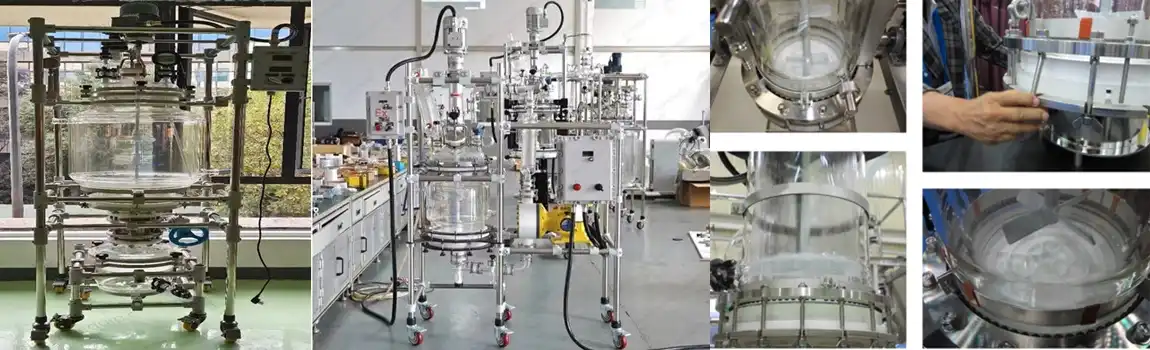
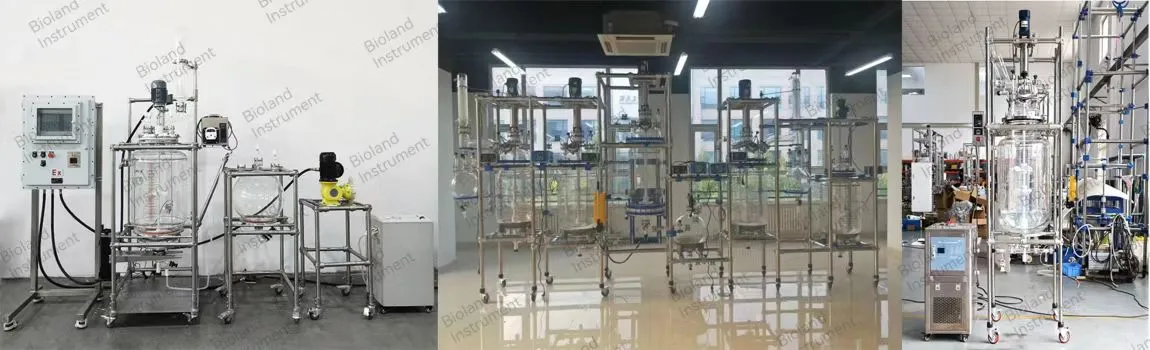
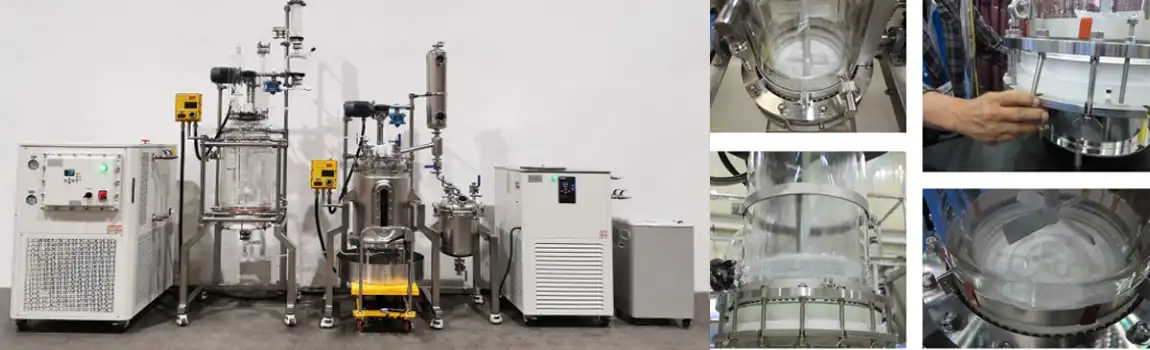
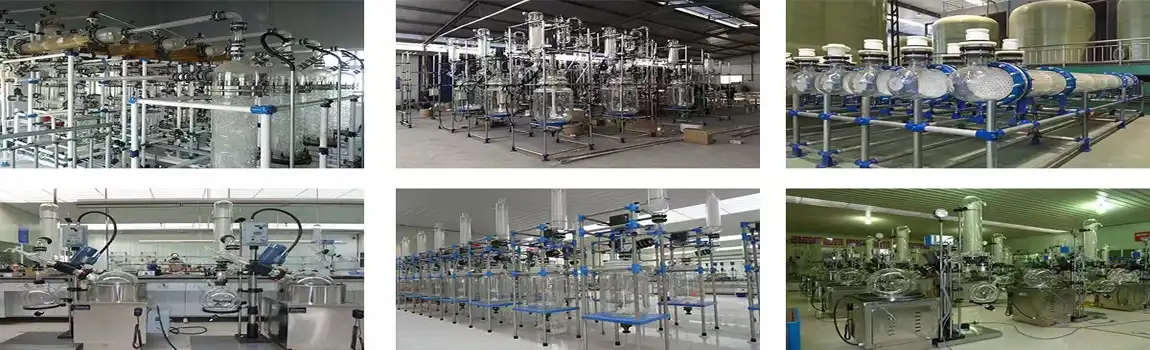
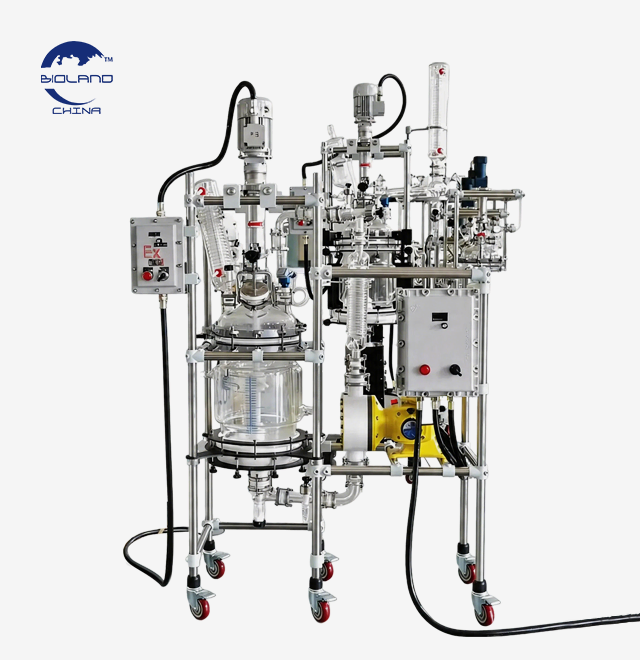
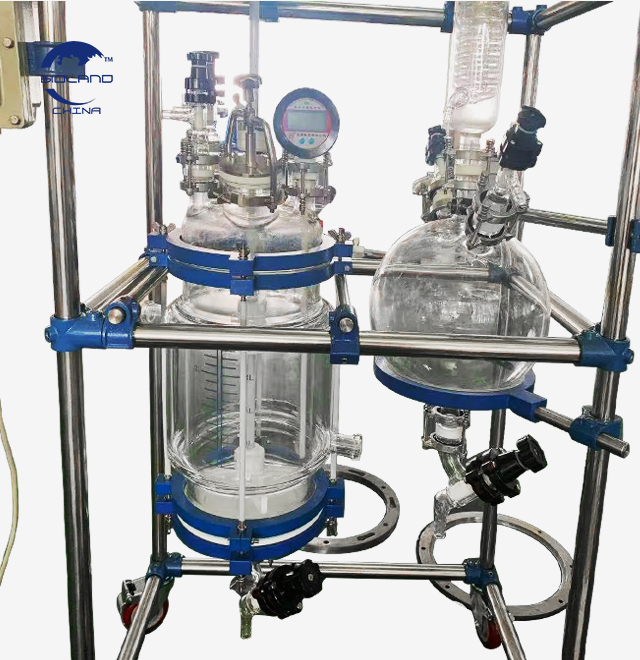
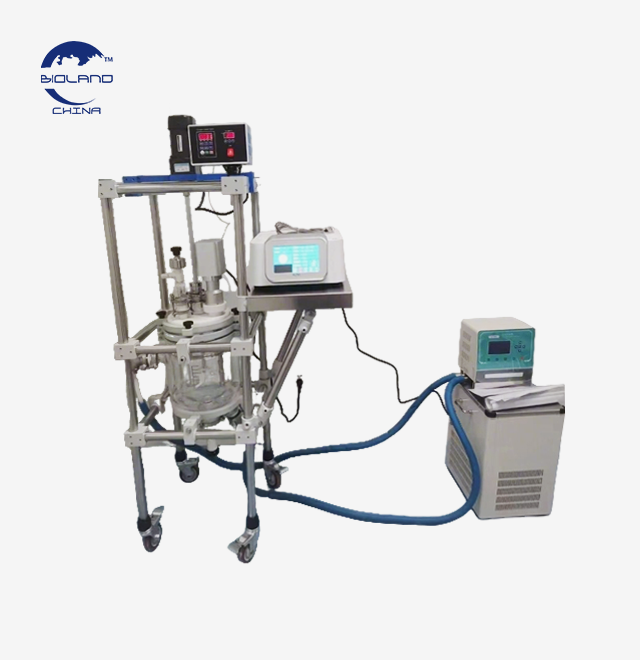
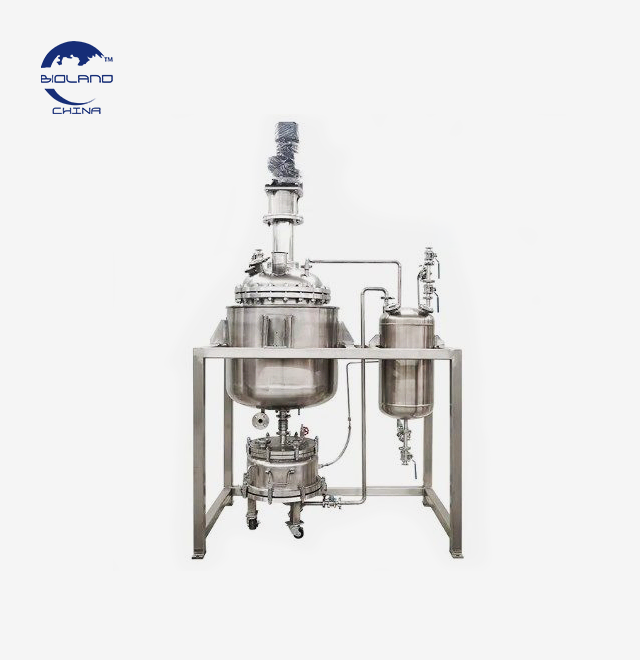
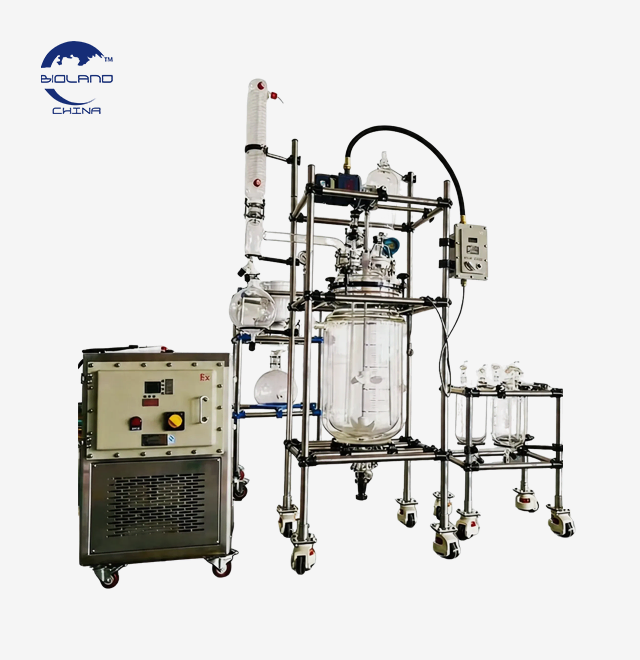
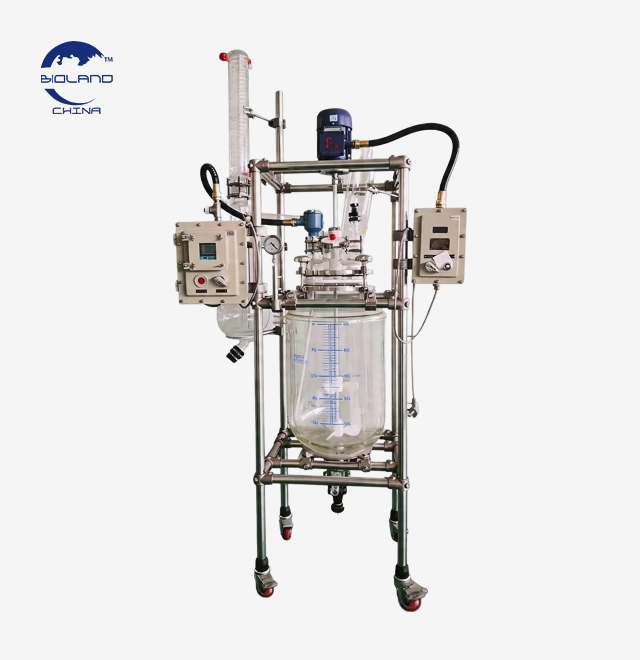
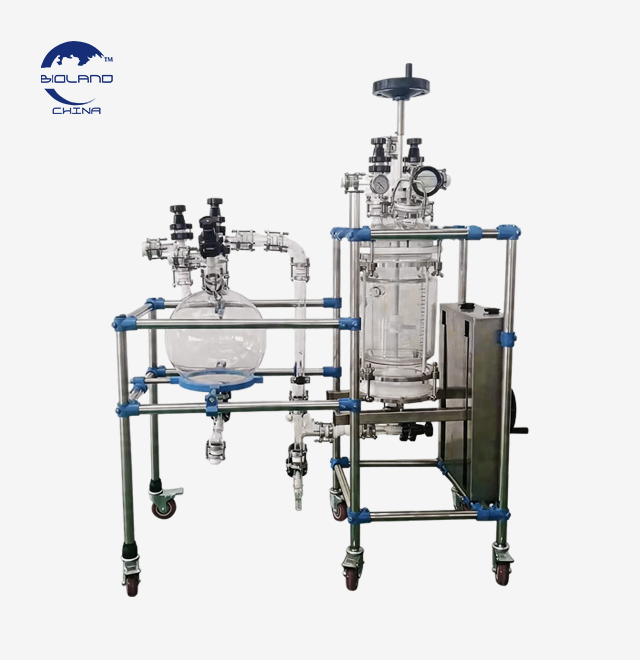
Most buyers open the conversation with a single question — "how many litres?" But in solid–liquid separation, vessel volume is only half of the specification. The filter area underneath it decides how long the cake takes to deliquor, how evenly it washes, and whether a batch closes out in two hours or drags into twelve. Specifying a nutsche filter reactor therefore means sizing two numbers together, never separately. Xi'an Bioland Instrument Co., Ltd. engineers every nutsche filter reactor around exactly that pairing: high-borosilicate glass bodies with full process visibility, a PTFE filter assembly as standard (with stainless steel or titanium alternatives and a wide choice of cloths, meshes and membranes), jacket performance from −80 °C to 200 °C with a matched high–low temperature control unit, programmable agitation, optional fully explosion-proof construction, electric lifting and PLC automation. Standard working volumes of 20 L, 30 L, 50 L and 100 L carry you from bench synthesis to GMP pilot validation — and any nutsche filter reactor can be built non-standard.
Key Factors That Determine the Required Filter Area
Start With Cake Thickness, Not the Catalogue Page
The honest starting point for area selection is not a model number but the cake you intend to form. For most laboratory and pilot crystallisations, a target cake thickness of 20–50 mm gives predictable filtration, clean displacement washing and manageable discharge. Thicker beds resist flow disproportionately; thinner beds crack and let gas channel through, ruining the wash. Once you fix a target thickness and estimate wet cake volume, the required area falls out arithmetically. This is the first calculation our engineers run when a client enquires about a nutsche filter reactor, and it frequently overturns the size the customer first assumed.
Driving Force: Vacuum, Nitrogen Pressure and Cake Compressibility
Area and driving force trade against each other. A nutsche filter reactor can be operated under vacuum typically around −0.08 to −0.09 MPa, or under gentle nitrogen overpressure on the headspace, which is often preferable for solvent systems because it avoids pulling volatiles through the pump. With freely filtering crystals, raising pressure raises throughput almost linearly, so a modest filter area suffices. With compressible cakes — fine needles, gels, amorphous precipitates — extra pressure simply consolidates the bed and flow collapses. Those systems need generous area rather than more force, which is why Bioland sizes the nutsche filter reactor against cake behaviour, not against pump capability.
Filter Media: PTFE Sintered Core, Mesh, Cloth or Membrane
Our standard configuration is a PTFE sintered filter plate, chosen because it tolerates aggressive acids, strong bases and most organic solvents without contaminating the product with metal ions. Where mechanical strength or thermal duty demands it, stainless steel or titanium supports are available, and filter cloths, woven meshes or membranes can be layered on top for fine particles. Retention rating should be selected from the actual particle size distribution — typically one tier finer than the D10 of your crystals. A quick-release clamp lets operators swap media on anutsche filter reactor in minutes between campaigns.
Client Project — 100 L Chiral API Intermediate, Europe
A European biopharma developer struggled with incomplete reaction, low crystal purity and repeated manual transfers between vessels, with constant cross-contamination risk in a strongly basic system.
Bioland instrument supplied a customised 100 L glass nutsche filter reactor. Catalytic coupling ran at 0–5 °C under nitrogen, with the transparent body allowing colour change to be tracked in real time.
Jacket cooling to −20 °C at a controlled 1–2 °C/hour produced uniform crystals without impurity occlusion. The PTFE filter then performed separation in the same vessel.
Result: purity above 99.5%, yield up 15%, mother liquor recycled, and zero transfer steps between reaction and filtration.
How Slurry Properties Affect Filtration Capacity
Particle Size and Crystal Habit Set the Flux Ceiling
Nothing influences filtration capacity more than the crystals you grow. Coarse, blocky, uniform crystals above roughly 50 µm can deliver filtrate fluxes of several hundred litres per square metre per hour; fine needles or plates below 10 µm may struggle to reach twenty. Habit matters as much as size, because platelets stack and seal. This is why crystallisation control belongs in the same discussion as filter sizing — and why a nutsche filter reactor that lets you programme cooling ramps, seed temperature and agitation speed effectively buys you filter area for free.
Solids Loading, Viscosity and Corrosive Mother Liquors
Slurry density determines how much volume you must pump to build a given cake. A 5% w/v suspension requires roughly four times the vessel capacity of a 20% slurry for the same product mass, so dilute systems push you toward a larger nutsche filter reactor even when the cake itself is small. Viscous or highly solvated mother liquors slow flow further. Chemically, high-borosilicate glass plus PTFE wetted parts handle strong acid, strong alkali and most solvents without attack, which is a decisive advantage over metal filters in halide or acidic media.
Washing, Blinding and Cake Cracking
Capacity is lost in washing as often as in filtration. If the bed deliquors too far before wash solvent arrives, it cracks, and solvent short-circuits through the fissures instead of displacing mother liquor. The remedy is a properly sized area that keeps cake depth even, plus a stirrer that can smooth and re-level the bed between washes. Bioland instrument's agitator on each nutsche filter reactor is height-adjustable for exactly this purpose, and programmable speed control lets operators reslurry gently without shattering fragile crystals or driving fines into the media.
Client Project — 50 L Precious-Metal Catalyst Recovery, Poland
A Polish fine-chemicals producer developing palladium and platinum catalysts faced poor metal recovery, corrosive attack on existing equipment, catalyst deactivation during high-temperature steps and costly cleaning downtime.
Bioland instrument delivered a customised 50 L nutsche filter reactor for a closed reaction-and-recovery loop. Solid-phase reaction between metal precursor and organic ligand ran at 150 °C, with the borosilicate body tolerating short high-temperature exposure without deactivating the catalyst.
Filtration followed immediately through the PTFE assembly, no transfer required. Residual precious metal in the mother liquor was recovered at over 90%, and the quick-release filter design cut changeover cleaning dramatically, eliminating carryover between batches.
Calculating Reactor Volume for Batch Processing
Working Volume, Fill Ratio and Freeboard
Nominal volume is not usable volume. Plan on filling a nutsche filter reactor to 60–75% of nominal so the impeller can actually move the slurry without splashing solids onto the upper wall or into the vapour line. Reserve freeboard for foaming during anti-solvent addition, for gas evolution, and for the vortex that forms at higher stirring speeds. If your process includes reflux or distillation in the same vessel, allow more. A 50 L unit realistically handles a 30–35 L batch; a 100 L unit handles 60–70 L comfortably.
A Worked Sizing Example From Dry Cake Backwards
Suppose your target is 3 kg of dry product per batch. At a typical wet cake bulk density near 600 kg/m³, that is about 5 L of wet cake. Choosing a 40 mm cake depth requires roughly 0.125 m² of filter area — a DN400 plate. If the crystallisation runs at 10% w/v, you need about 30 L of slurry, which points directly to a 50 L nutsche filter reactor at a sensible 60% fill. Change any one assumption and the answer shifts, which is precisely why our team runs this calculation with your real data.
Budgeting Volume for Anti-Solvent, Wash and Reslurry
Batch volume rarely stays constant. Anti-solvent addition can add 30–100% to the starting charge; displacement washing typically consumes 0.5–1.5 cake volumes per pass across two or three passes; reslurry washing temporarily restores a full suspension. All of this must fit inside the vessel you buy. Undersizing here is the most common and most expensive specification mistake we see. When clients describe their full recipe, we size the nutsche filter reactor to the largest instantaneous volume in the cycle, not the initial charge.
Standard Capacities and When to Go Non-Standard
Bioland instrument's standard nutsche filter reactor range covers 20 L, 30 L, 50 L and 100 L, which maps neatly onto laboratory research, process development, pilot scale-up and small GMP production. Beyond that, non-standard builds are routine: different vessel geometry, alternative materials, enlarged filter diameter relative to volume, jacketed receivers, integrated distillation or rectification heads, and combined crystallisation modules. Because we design in-house, changing a dimension does not mean changing supplier. Many customers begin with a catalogue unit and return later for a bespoke nutsche filter reactor built to a validated recipe.
Balancing Filter Area and Vessel Volume for Efficiency
The Area-to-Volume Ratio That Keeps Cycles Short
The practical metric worth tracking is square metres of filter area per 100 litres of working volume. Generous ratios shorten filtration and drying, improve wash uniformity and reduce operator time, at the cost of a larger-diameter vessel. Tight ratios save floor space and capital but build thick cakes that resist flow. For free-filtering pharmaceutical crystals a modest ratio is fine; for fine or compressible solids, insist on a wide plate. Specifying a nutsche filter reactor with large-diameter filtration is the single most effective way to protect cycle time at scale.
Why Wide and Shallow Beats Deep and Narrow
Two vessels of identical litreage can perform completely differently. A tall, slim body gives a small filter plate and a deep cake; a squat, wide body gives the opposite. Deep cakes also wash poorly, because the solvent front disperses as it travels. Bioland instrument's nutsche filter reactor geometry is deliberately biased toward diameter, delivering high-speed filtration without raising pressure. Discharge is easier too — operators scrape a shallow bed from the top rather than digging product out of a narrow throat, and recovery of high-value solids improves measurably.
One Vessel, Four Unit Operations
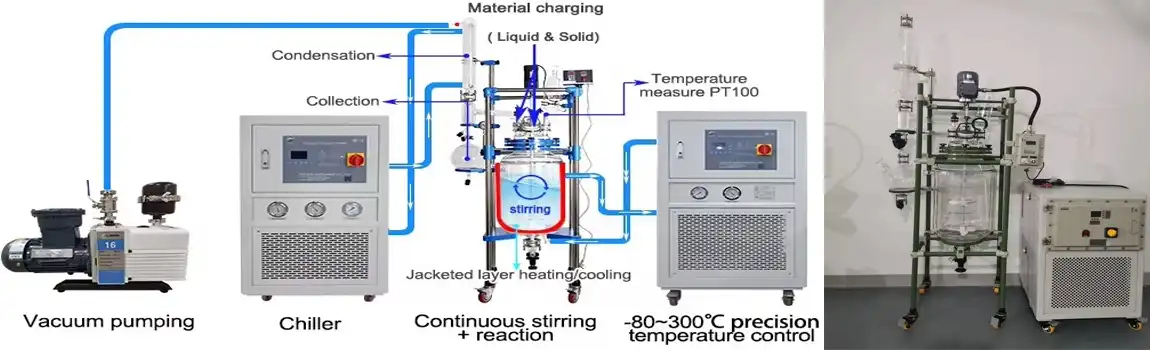
The commercial logic of this equipment is integration. A single nutsche filter reactorperforms reaction, crystallisation, filtration, washing, and — with the right configuration — vacuum drying, extraction, condensation and distillation. Every transfer you delete removes a yield loss, a contamination route and a cleaning validation. Jacketed double-glass construction, paired with a stainless-steel high–low temperature control unit, gives precise control across a wide range, letting you dissolve warm, crystallise cold and dry under vacuum without moving the batch. That is the difference between buying a filter and buying a process platform.
Client Project — 30 L Solid-Phase Peptide Synthesis, Asia
A peptide developer producing thymopeptide and screening antibacterial peptides needed repeated resin washing cycles with minimal bead damage and no metal contact.
Bioland instrument supplied a 30 L nutsche filter reactor with PTFE media, gentle programmable agitation and nitrogen-assisted drainage.
Each coupling, deprotection and wash step ran in the same vessel; resin never left the body of the nutsche filter reactor. Wash cycle time fell by around a third, solvent consumption dropped roughly 20%, and crude peptide purity improved consistently because residual reagents were displaced more completely.
How to Match Equipment Capacity to Production Demand
Working Back From Annual Output to Batch Size
Capacity planning should run backwards. Take annual kilogram demand, divide by realistic operating days, then divide by achievable batches per day. A full reaction–crystallisation–filtration–wash–dry sequence often occupies 8–16 hours, so one to two batches per shift is typical. Only once batch mass is fixed can filter area and volume be chosen. Buying a nutsche filter reactor that is too large wastes solvent and jacket energy on every batch; buying one too small caps your revenue. Our engineers build this table with clients before quoting anything.
Scale-Up Path: 20 L Screening, 50 L Pilot, 100 L Validation
A disciplined scale-up keeps the area-to-volume ratio and the specific wash volume constant while increasing batch size. Run habit and flux screening on a 20 L nutsche filter reactor, confirm cooling profile and wash efficiency at 50 L, then validate at 100 L under GMP conditions. Because all Bioland instrument units share the same control philosophy, media type and discharge concept, recipes transfer with minimal rework. Clients who follow this path routinely reach validated production faster than those who jump straight from flask to pilot vessel.
Custom Build Options: Explosion-Proof, Electric Lift, PLC and More
Where flammable solvents are involved, we supply fully explosion-proof systems with certified motors and controls, high-strength pressure-rated structures and precise safety interlocks across the 20 L to 100 L range. Other popular options include electric lifting for effortless vessel opening, full PLC automation with touchscreen recipe storage, integrated temperature control units, ultrasonic crystallisation assistance, and combined rectification columns. Because Bioland instrument is CE and ISO certified with an in-house R&D team, a custom nutsche filter reactor is engineered, not improvised, and documentation supports GMP/FDA expectations.
Installation, Safe Operation and Lifetime Maintenance
Glass equipment rewards discipline. Ramp jacket temperature gradually rather than shocking the vessel, tighten clamps evenly to seat PTFE gaskets, keep the system within its rated pressure, verify media seating before every batch, and inspect seals during routine cleaning. Customised units typically ship in 30 business days; standard items in 5–7 days. Bioland instrument supports sea, rail and air freight, provides a one-year warranty with lifetime maintenance, and assigns a dedicated specialist to send weekly photo or video progress reports. You may also attend a Factory Acceptance Test before your nutsche filter reactor leaves our plant.
Conclusion
Choosing anutsche filter reactorcomes down to three linked decisions: how thick a cake you want, how much slurry and wash liquor must fit above it, and how fast your cake actually filters. Fix cake thickness, calculate area, then size volume for the largest point in the cycle — not the initial charge. Favour wide, shallow geometry, chemically inert PTFE media and precise jacket control, and the same vessel will handle reaction, crystallisation, filtration, washing and drying without a single transfer. With 20 L to 100 L standard capacities, explosion-proof and PLC options, CE/ISO certification and full custom engineering, Bioland builds the nutsche filter reactor around your process rather than the reverse.
FAQ
1. What standard volumes are available?
20 L, 30 L, 50 L and 100 L, with non-standard sizes and geometries built to order.
2. What filter media do you supply?
PTFE sintered plate as standard, plus stainless steel or titanium supports and a range of cloths, meshes and membranes.
3. What temperature range is supported?
−20 °C to 200 °C standard; double-jacket builds with a matched TCU extend this to −80 °C to 200 °C.
4. Can the unit be made explosion-proof?
Yes — fully explosion-proof systems with PLC automation and electric lifting are available across all capacities.
5. What is the lead time?
About 30 business days for custom units; 5–7 days for standard models.
Stop Guessing Your Filter Size — Let Bioland Instrument Engineer It
Xi'an Bioland Instrument Co., Ltd. has spent more than 15 years solving reaction, crystallisation, filtration, separation, purification and drying problems for pharmaceutical, fine-chemical, precious-metal, peptide and new-materials producers across Europe and Southeast Asia. Our nutsche filter reactor combines transparent high-borosilicate construction, PTFE chemical resistance, large-diameter high-speed filtration, −80 °C to 200 °C control and optional explosion-proof PLC automation — all at genuine factory pricing, with CE and ISO certification and GMP-ready documentation. Send us your slurry data, target batch mass and solvent system, and our engineers will return a sized nutsche filter reactor proposal with filter area, working volume and projected cycle time. OEM/ODM welcome, weekly production videos, FAT available, one-year warranty and lifetime maintenance included. Contact info@biolandequip.com.
References
1. Wakeman, R. J., & Tarleton, E. S. (2005). Solid/Liquid Separation: Principles of Industrial Filtration. Elsevier.
2. Tarleton, E. S., & Wakeman, R. J. (2007). Solid/Liquid Separation: Equipment Selection and Process Design. Butterworth-Heinemann.
3. Svarovsky, L. (2000). Solid–Liquid Separation (4th ed.). Butterworth-Heinemann.
4. Mullin, J. W. (2001). Crystallization (4th ed.). Butterworth-Heinemann.
5. Green, D. W., & Perry, R. H. (2008). Perry's Chemical Engineers' Handbook (8th ed.), Section 18: Liquid–Solid Operations and Equipment. McGraw-Hill.
6. am Ende, D. J. (Ed.). (2011). Chemical Engineering in the Pharmaceutical Industry: R&D to Manufacturing. John Wiley & Sons.
The reactor is beautifully mirror-polished and fully complies with GMP requirements for the pharmaceutical industry. The performance is excellent! Overall, we are very satisfied! We also provided with some feedback on our process improvements, which we hope will be helpful.
2024-04-09
Laboratory
Excellent and professional service. Always reply our questions very fast. All reactors and chiller we received are good too.
2024-02-15
Research Institute
Quality is beyond our expectation actually. After we got the extraction equipment and started using it, the performance was beyond our expectation. Very easy to use and very efficient to run. Service always respond us very quickly. Was also very helpful to help us. Thanks Bioland team. Very happy to work with you.
2023-11-20
Biotech Company
We are happy about the new purchase as always. Equipment and services are both good.
2023-08-05
Instrument Lab
This is the second order with Bioland instrument and everything is good as the first dateText.
2023-05-12
Global Trading Partner
Bioland instrument team is very helpful and professional. The sales helped us select the right equipment for our application, and their logistics people handled the transportation and customs declaration for our shipment. All that saved us a lot of work.