Top Uses of Ultrasonic Extraction Equipment of Mushroom Processing
Oct 26, 2026
Functional mushrooms have gone from being sold in traditional pharmacies to being at the center of the world's nutritional stage. People love reishi, shiitake, lion's mane, maitake, and cordyceps for their beta-glucans, polysaccharides, triterpenes, and antioxidants. However, most of these useful molecules are hidden inside tough chitin cell walls that can't be broken down with hot water. With advanced ultrasonic extraction equipment that increases extraction rates by 50–500%, finishes batches in 24–40 minutes, and works at a gentle 40–60°C, Xi'an Bioland Instrument Co., Ltd., a professional manufacturer and solution provider with more than 15 years of engineering experience, solves this problem.
Our ultrasonic extraction equipment of mushroom blends cavitation physics with combined vacuum concentration, PLC automation, and SUS304/316L construction. It is certified to CE and ISO standards and is built to GMP requirements. This guide explains the best ways to use it, gives examples of real productions with numbers, and demonstrates why processors all over the world choose ultrasonic extraction equipment of mushroom as the core of their processing lines.
Extracting Functional Compounds from Mushroom Materials
For every gram of mushroom extract that can be sold, there is one question that needs to be answered: how can the useful chemicals inside the growing body or mycelium be completely freed? Grinding, soaking, and boiling in the usual ways only get to part of the payload. With acoustic cavitation, ultrasonic extraction tools of mushroom extracts the beta-glucans, triterpenes, proteins, and phenolic substances that older ways leave behind. Ultrasonic extraction equipment of mushroom can work with almost any type of mushroom and solvent system because it is not limited by polarity or molecular size. This gives R&D teams and plant managers a flexible platform for a whole product portfolio.
Breaking Cell Walls for Complete Compound Release
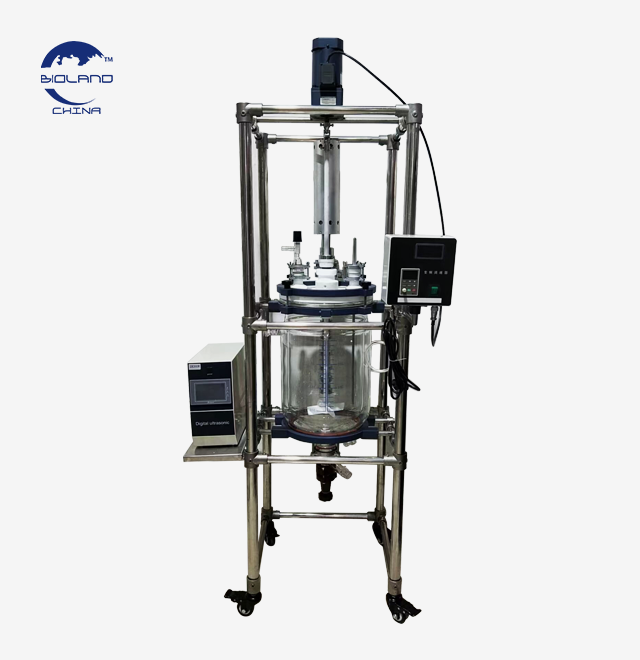
Acoustic cavitation is the fundamental method of mushroom extraction using ultrasonic extraction equipment of mushroom. High-frequency waves make millions of tiny bubbles in the extraction liquid. When these bubbles pop, they send out shock waves and micro-jets that hit the walls and membranes of cells directly. Chitin-rich fungus cell walls—the same structures that make mushrooms tough in nature—are broken or distorted within minutes, letting the liquid reach the insides of the cells almost right away. Processors consistently report higher recoveries rather than marginal gains because this ultrasonic extraction equipment of mushroom achieves much more complete mass transfer than passive diffusion.
Targeting Beta-Glucans, Triterpenes, and Phenolic Compounds
As far as business goes, different mushrooms carry different goods. Ganoderma lucidum's reishi offers immunomodulatory polysaccharides and bitter triterpenes; shiitake provides lentinan; lion's mane provides hericenones and erinacines; and Tremella provides hydrating polysaccharides for cosmetics. Weaknesses of ultrasonic extraction equipment of mushroom are the processes that can be changed easily: water can get back water-soluble glucans, ethanol can get back alcohol-soluble triterpenes, and mixed liquids can get broad-spectrum actives—all on the same machine. This flexibility is a strong economic case for brands that want to make more than one product line from the same equipment.
Protecting Heat-Sensitive Actives with Low-Temperature Operation
Many of the active ingredients in mushrooms break down, oxidise, or simply dissolve at high temperatures, which destroys their effectiveness during a normal stew. Ultrasonic extraction tools of mushroom works best when the temperature is between 40°C and 60°C. This is a cool enough range to protect unstable molecules while cavitation does the mechanical work. With the same mild profile, much less steam is needed and heat is lost, which leads to a big improvement in both product quality and operating costs. When it comes to heat-sensitive ganoderma triterpenes and delicate protein-bound actives, the choice of ultrasonic extraction equipment of mushroom often decides whether the finished goods live up to what they say on the label.
Cleaner Extracts for Easier Downstream Purification
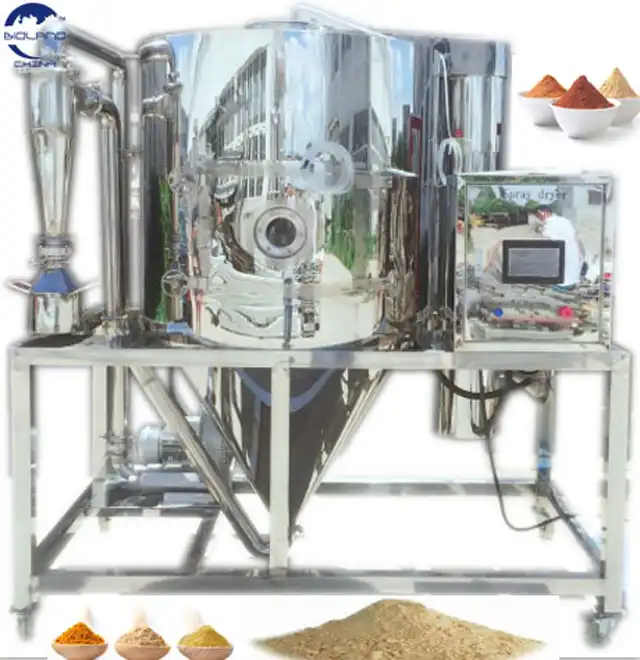
Plant managers often say that regular mushroom extracts are full of starches, colloids, and pigments that make chromatography harder and clog filters. The liquid made by ultrasonic extraction equipment of mushroom includes significantly fewer impurities because cavitation works quickly and selectively on cell contents. This makes the subsequent separation, filter, and crystallisation easier. Bioland can pair the extractor with filter reactors, Nutche filter dryers, and vacuum spray dryers from its own catalogue. This makes a single-source line from extraction to powder with matched process logic and a single seller that is responsible.
Supporting Polysaccharide Extraction in Industrial Production
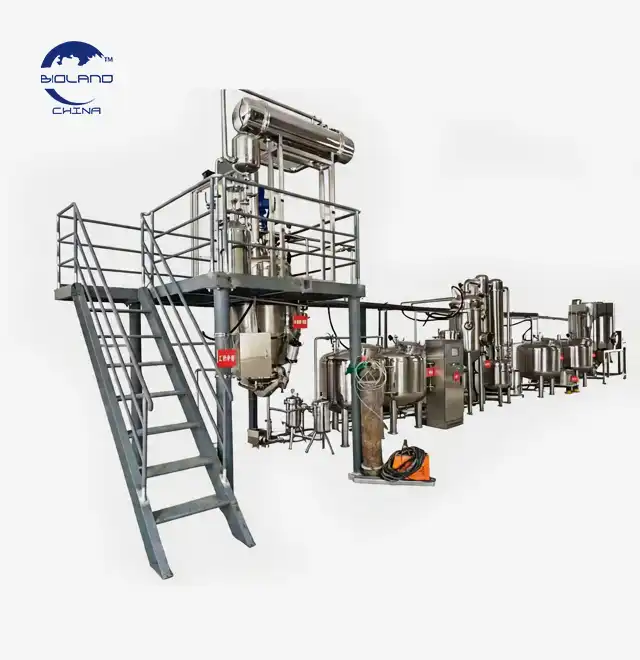
The most valuable part of mushroom processing is the polysaccharides. In the pharmaceutical, medicinal, and beauty markets, reishi glucans, lentinan from shiitake mushrooms, Flammulina polysaccharides, and Tremella polysaccharides all fetch high prices. Industrial makers choose ultrasonic extraction equipment of mushroom because of its proven output, which includes combined extraction and vacuum concentration, constant feed and outlet, and vessels ranging in size from 50 to 500 litres. This ultrasonic extraction equipment of mushroom scales with the business rather than causing it to scale around it, whether the objective is a university test study or continuous commercial output.
Proven Lines for Reishi, Shiitake, Tremella, and More
Bioland instrument's project references are like a map of the polysaccharide economy. They include a line for making polysaccharides from mushrooms and goji berries, as well as extraction tools for golden needle mushrooms (Flammulina), silver ear mushrooms (Tremella), sweet potatoes and other plants. In each project, ultrasonic extraction equipment of mushroom was used to extract water, precipitate alcohol, and recover solvents all on the same skid. The lesson for buyers is easy to understand: the platform that runs out of reishi today can run out of tremella or non-fungal polysaccharides tomorrow, which protects capital against changes in market demand.
Case Study: A Nutraceutical Producer Doubles Polysaccharide Yield
A company that makes supplements that use reishi got stuck. Hot-water decoction took eight hours per batch and only got back about 45% of the polysaccharides that were there. The cost of steam kept going up while orders waited in queue behind slow tanks.
There is a BL-TN-C200L ultrasonic extraction equipment of mushroom system here. At 50°C, the extraction time dropped to about 35 minutes, and the extract was constantly condensed by the built-in evaporator while it was under a vacuum of 0.085 MPa.
Over 70% of the polysaccharide was recovered, energy use dropped by about a third, and the backlog of orders was cleared in just two months. The brand's marketing claims are now based on the yield statistics.
Case Study: Smooth Scale-Up from Laboratory to Pilot Line
A food science research institute ran into a common problem: the results from using a sonicator on a benchtop never translated to performance on a pilot scale. This meant that the team had to redesign protocols for each step of the scale-up process.
Bioland instrument's engineers configured a 50L laboratory unit and a 200L pilot unit from the same ultrasonic extraction equipment of mushroom platform—identical PLC logic, temperature profiles, and vacuum parameters—so scale-up became a matter of volume, not process reinvention.
Within a few percentage points, pilot returns matched lab data. This cut down on regulatory paperwork and time to market. From the purchase order to delivery, the project was fully open to everyone with weekly production pictures and launching films.
An Integrated Extraction–Concentration Train, Not Just a Tank
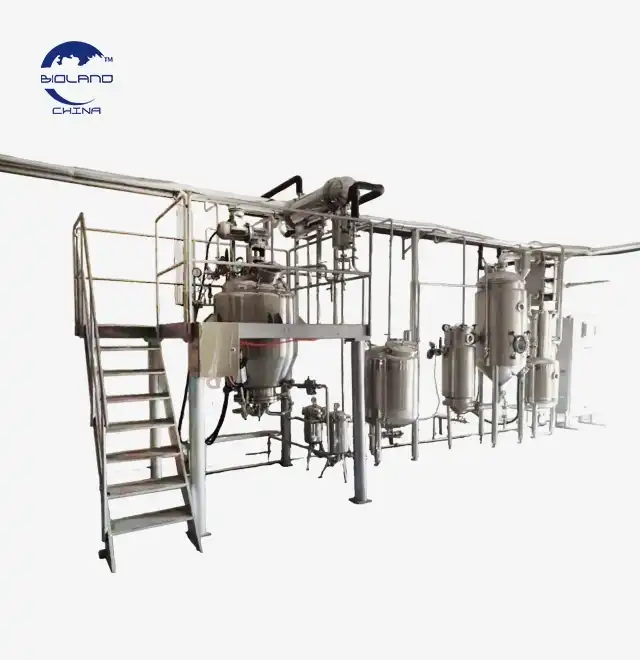
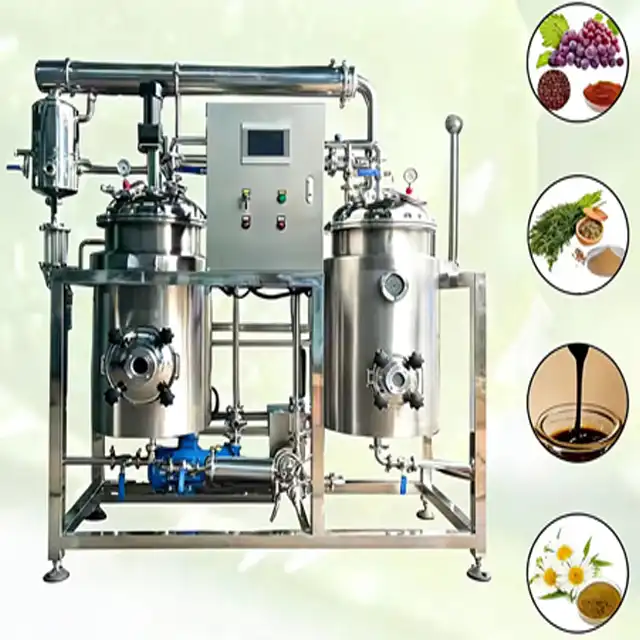
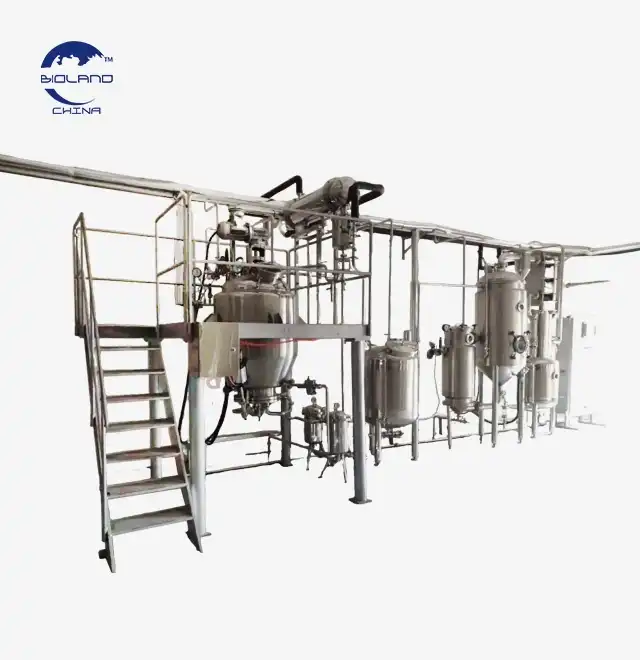
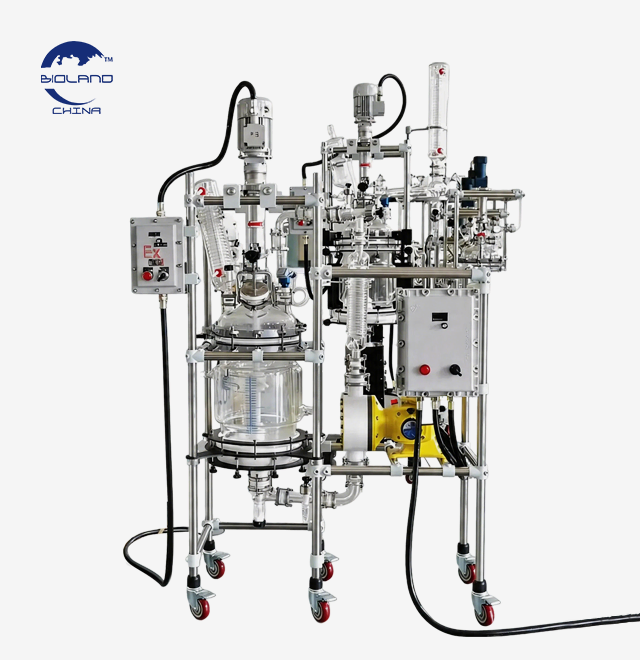
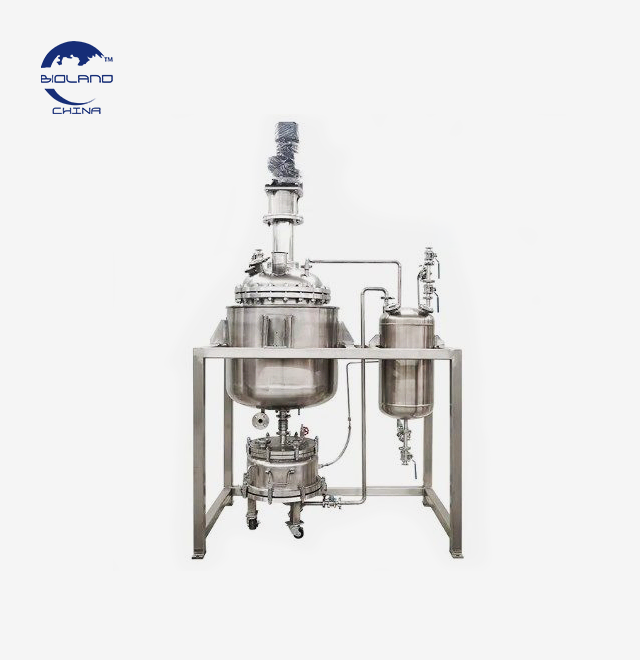
People who are really interested should look at the whole train, not just the sonicated vessel. Each ultrasonic extraction equipment of mushroom system ships with an extraction tank, tubular heater, evaporator, condenser, oil–water separator, oil collector, liquid pumps, metering tanks, storage vessels, filters, vacuum pumps, and control cabinet, with demisters fitted on both tank and evaporator steam outlets. During concentration, secondary steam is cooled down and sent back to the extraction tank as new solvent. This keeps the reflux extraction going until all the material is gone. Once the concentrate reaches the target specific gravity, the colourless solvent that is left over is used in the next batch. A thermal-oil heating system can be added to sites that don't have access to steam, and the ultrasonic extraction equipment of mushroom can still operate at full speed.
Efficiency determines how much it costs to extract something. The biggest cost in mushroom processing is usually the raw materials. This means that every extra percentage point of recovery goes straight to profit, and every hour taken out of the batch cycle increases the annual throughput. The known performance of ultrasonic extraction equipment of mushroom includes 50–500% higher extraction rates, batch times of 24–40 minutes, and low-temperature operation, which means those gains. This part talks about where the numbers come from and what they really mean for movie budgets.
50–500% Higher Recovery Than Conventional Techniques
The big number surprises people who are buying for the first time: extraction rates are 50–500% higher than with traditional methods. It's simple physics: cavitation opens up cell contents that passive soaking never gets to. This means that more beta-glucan, triterpene, and colour move from the mushroom into the product instead of staying with the leftovers. Field tests on mushroom and goji polysaccharide lines show that ultrasonic extraction equipment of mushroom consistently works better than boiling on the same material. Some customers have even found a way to make extra money by selling the mycelium and fruiting bodies they used to throw away.
Completing Extraction in 24–40 Minutes
Usually, traditional mushroom extraction takes hours. Ultrasound-assisted extraction, on the other hand, usually works best in 24 to 40 minutes, which cuts the cycle time by at least two-thirds. These minutes add up: every day, the same tanks, workers, and floor area handle more material, or new orders are handled by the current capacity without the need for capital growth. Processors who use ultrasonic extraction equipment of mushroom to process stevia, tea polyphenols, and mushroom polysaccharides always say that cutting down on cycle time is the benefit that pays for itself the quickest.
Lower Energy Consumption Through Mild Temperatures
When compared to boiling decoction, steam demand drops sharply because the best temperature range for extraction is between 40°C and 60°C, and evaporation happens between 60°C and 100°C under vacuum. The tanks are insulated with three layers, and vapour is recovered through the return loop to cut down on heat loss even more. The result of ultrasonic extraction equipment of mushroom is a rare double win: energy bills go down and thermolabile actives stay alive, which lowers costs and raises quality at the same time. When a business runs continuously for a year, the money it saves on steam, cooling water, and labour often covers the cost of replacing the equipment.
One Platform, Multiple Extraction Processes
Modern ultrasonic extraction equipment of mushroom provides the flexibility that industrial reality demands. Ultrasonic low-temperature extraction, room-temperature ultrasonic extraction, Soxhlet dynamic extraction, hot-reflux extraction, percolation, water precipitation, and alcohol precipitation are all done by the same machine. The process ends with vacuum concentration. It can work with normal, negative, or positive pressure, and depending on your process, it can take water, ethanol, or other solvents. Therefore, the ultrasonic extraction equipment of mushroom purchased for polysaccharides today can be used for tinctures, oleoresins, or aromatic-oil projects tomorrow without the need for additional funding.
Applications in Nutraceutical and Food Industries
There are now coffees, capsules, gummies, broths, sports drinks, and cosmetics that contain mushroom extracts. All of these products start with an effective and safe extraction step. Formulators choose ultrasonic extraction equipment of mushroom because it produces clean, powerful extracts on an industrial scale and meets auditors' requirements for SUS304/316L contact surfaces, CIP cleaning, and GMP/HACCP-aligned design. From university labs to commercial plants, the same ultrasonic extraction equipment of mushroom can adapt to shifting market demands and government scrutiny.
Functional Foods, Beverages, and Dietary Supplements
When it comes to mushroom coffee blends, adaptogenic powders, and immune-support capsules, the quality of the extract is what makes the brand famous. Since low-temperature ultrasound keeps aromatic volatiles and actives safe, mushroom coffee that has been treated with ultrasonic extraction equipment of mushrooms keeps its flavour and meets the standard beta-glucan content. Online concentration monitoring helps beverage makers hit exact solids goals batch after batch, which makes sure label claims stand up to scrutiny. On the other hand, cosmetics makers like how mild processing keeps the slippery polysaccharide texture that people associate with Tremella hydration products.
One Platform Beyond Mushrooms: Botanical Versatility
Smart processors spread out the cost of equipment across multiple product lines. Steviol glycosides from stevia leaves, stems, and roots; capsaicin and oleoresin from chillies; polyphenols, aromatic oils, and amino acids from tea; caffeine from coffee; and flavonoids and phenolic acids from propolis are all extracted using the same ultrasonic extraction equipment of mushroom platform that exhausts reishi batches. Plant-based materials are used in pigment lines to get anthocyanins, betalains, carotenoids, and chlorophyll. Sophora flower buds, ginkgo leaf, mulberry leaf, and onion skin are used in quercetin lines. You can make a whole line of natural products on one machine by adding plant proteins, wheat germ oil, jujube and goji actives, rose and mint essential oils and marine fish protein.
Real Production Lines, Real Numbers
As three completed projects show, the results of mushroom extraction using ultrasonic extraction equipment are consistent across plant production lines.
A company that makes stevia had trouble with slow diffusion, which limited their daily output. By switching from maceration to a Bioland ultrasonic-assisted line, batch time was cut by more than half, and steviol glycoside recovery went up. This let the plant take on export orders it had turned down before.
A spice company had to make sure that buyers of oleoresin had uniform capsaicin content. Controlled ultrasonic extraction successfully recovered capsaicin and colour parts, and combined solvent recovery cut down on ethanol losses and made the margin and safety compliance better.
A company that makes propolis used both ultrasound-assisted extraction and ethanol to neatly separate flavonoids and phenolic acids. The time it took to make the medicine went from days to hours, and it passed its first food safety test.
GMP- and HACCP-Compliant Manufacturing
Quality that can be proven is needed in regulated markets. Using SUS304/316L stainless steel, CIP online cleaning, three-layer insulation, and in accordance with GMP and HACCP standards for medicinal and food uses, every piece of ultrasonic extraction equipment of mushroom systems is manufactured in an ISO-certified facility with CE compliance. For research and development (R&D) and small to medium-sized pilot production, the equipment works well in business laboratories, universities, and research institutes. Bioland instrument supports audits with full records and can set up a Factory Acceptance Test before shipment to make sure compliance is met before the cargo leaves China.
Expanding Mushroom Processing with Advanced Equipment
Companies that are still growing need equipment that can grow with them instead of equipment that they outgrow. The ultrasonic extraction equipment of mushroom ranges from 50L to 500L working volumes with matched evaporation capacity, intelligent automation, and customisation options, so a lab success today can be used on a production line tomorrow without switching platforms. With OEM/ODM engineering, global shipping, and service for life, the range is made for businesses that are planning for the next five years, not just the next batch.
Intelligent PLC Control for Automated Production
Each piece of ultrasonic extraction equipment of mushroom has a PLC electrical control system that can monitor concentration online, discharge automatically, and clean itself automatically online. This allows for continuous feed, continuous discharge, and fully automated concentration that is piped in. Once the temperature, time, and hoover are set by the operator, the machine follows the same method for each batch. Aside from saving time and money on labour, automation gets rid of batch-to-batch variation, which is the enemy of standardised extract potency and regulatory consistency. This frees up skilled staff to do quality control tasks instead of doing the same things over and over again.
A Model for Every Scale: 50L to 500L
The normal range shows how engineering works. The BL-TN-C50L has a volume of 50 litres and an evaporation rate of 20 kg/h. Other types range from 100 litres to 500 litres and an evaporation rate of 200 kg/h. It has a motor that runs on 2.7–3.5 kW, uses 25–250 kg/h of steam, has a system vacuum of 0.085 MPa, a jacket pressure of 0.09–0.3 MPa, compressed air of 0.5–0.6 MPa, and an evaporation temperature of 60–100°C. Bioland engineers perform this size exercise for free during consultations: matching the capacity of ultrasonic extraction equipment of mushroom to the flow of raw materials.
Technology parameter
Model
BL-TN-C50L
BL-TN -C100L
BL-TN -C200L
BL-TN -C300L
BL-TN -C500L
Volume (L)
50
100
200
300
500
Evaporation capacity (kg/h)
20
50
70
100
200
Motor power(KW)
2.7
2.7
2.7
3.5
3.5
Steam consumption(kg/h)
25
60
90
120
250
System vacuum (MPa)
-0.085
-0.085
-0.085
-0.085
-0.085
Pressure of jacket(MPa)
0.09~0.3
0.09~0.3
0.09~0.3
0.09~0.3
0.09~0.3
Compressed air (MPa)
0.5~0.6
0.5~0.6
0.5~0.6
0.5~0.6
0.5~0.6
Evaporation temperature(°C)
60~100
60~100
60~100
60~100
60~100
Custom Engineering, OEM/ODM, and Fast Delivery
Bioland instrument has its own research and development team with years of engineering knowledge, and they are happy to take OEM and ODM orders. Customised equipment usually ships in 30 business days, while standard items are ready in 5–7 days. Goods can be sent by sea, rail, or air to anywhere in the world. Goods are sent to Europe, Southeast Asia, and other places. With every order, you get a quality guarantee for one year and support for life. The customer service center takes care of all of your buying needs, whether you choose a model of ultrasonic extraction equipment of mushroom from a catalogue or ask for technical help for a unique application.
Transparent Production, FAT Testing, and Lifetime Support
Build trust while making something, not just after. A committed expert keeps an eye on every ultrasonic extraction equipment of mushroom order every week and sends you photos or videos to let you know how things are going with production. Once the job is done, you will be given thorough pictures and videos to look over. The shipment will only happen after you give your approval. You can also plan a Factory Acceptance Test at the site once the goods are ready. This openness, along with lifetime support and helpful after-sales experts, is what makes Bioland instrument so popular with extraction processes around the world.
Conclusion
Ultrasonic extraction equipment of mushroom has changed what processors can expect from fungal feedstock, with 50–500% higher extraction rates, 24–40 minute batches, gentle 40–60°C operation, and integrated concentration in a GMP-compliant SUS304/316L platform. Real projects, like reishi polysaccharide and goji lines, as well as stevia, chilli oleoresin, and propolis extraction, show improvements in yield, energy, and transport efficiency that can be measured. With more than 15 years of engineering experience, CE and ISO certification, OEM/ODM customisation, and clear weekly production tracking, Xi'an Bioland Instrument Co., Ltd.'s technology is more than just a machine purchase for companies that make functional foods and nutraceuticals.
FAQ
Q1: How much can ultrasonic extraction equipment of mushroom improve my yield?
A: Extraction rates typically rise 50–500% versus conventional methods, with batches finishing in 24–40 minutes.
Q2: Will heat damage my active compounds?
A: No. Optimal extraction occurs at 40–60°C, protecting heat-sensitive, easily hydrolyzed, or oxidizable actives.
Q3: Which species and materials can it process?
A: Reishi, shiitake, Tremella, Flammulina, and most medicinal fungi, plus botanicals such as stevia, tea, chilli, and propolis.
Q4: What capacities are available?
A: Standard models span 50L to 500L with 20–200 kg/h evaporation; custom sizes are available via OEM/ODM.
Q5: How long is delivery, and what support do I receive?
A: Non-customized units ship in 5–7 days, customized systems in about 30 business days, with a one-year warranty, lifetime maintenance, and optional FAT.
Ready to Upgrade Your Mushroom Extraction Line? Talk to Bioland Instrument Today
Your competitors are already squeezing more value from every kilogram of raw material—why leave a large share of your actives in the residue? Bioland Instrument delivers more than machines: complete, GMP-compliant solutions engineered around your process, your feedstock, and your growth plan. With over 15 years of experience, CE and ISO certification, an in-house R&D team, OEM/ODM flexibility, weekly production transparency, and lifetime maintenance, we turn extraction challenges into documented profit. Whether you need a 50L pilot system or a 500L production line of ultrasonic extraction equipment of mushroom, our engineers respond with specifications, quotations, and honest advice. Email info@biolandequip.com today and request your customized solution—your first consultation could be the most profitable hour of your production year.
References
1. Vilkhu, K., Mawson, R., Simons, L., & Bates, D. (2008). Applications and opportunities for ultrasound assisted extraction in the food industry: A review. Innovative Food Science & Emerging Technologies, 9(2), 161–169.
2. Chemat, F., Rombaut, N., Sicaire, A.-G., Meullemiestre, A., Fabiano-Tixier, A.-S., & Abert-Vian, M. (2017). Ultrasound assisted extraction of food and natural products: Achievements, challenges and future perspectives. Ultrasonics Sonochemistry, 34, 540–560.
3. Huang, S.-Q., & Ning, Z.-X. (2010). Extraction of polysaccharide from Ganoderma lucidum and its immune enhancement activity. Carbohydrate Polymers, 83(1), 26–30.
4. Wen, C., Zhang, J., Zhang, H., Dzah, C. S., Zandile, M., Oluwaseun, O. B., & Luo, X. (2018). Advances in ultrasound assisted extraction of bioactive compounds from cash crops and natural products: A review. Ultrasonics Sonochemistry, 48, 538–549.
5. Gil-Chávez, J., González de Mejía, E., Lopez, M. G., et al. (2013). Technologies for extraction and production of bioactive compounds to be used as nutraceuticals and food ingredients: An overview. Comprehensive Reviews in Food Science and Food Safety, 12(1), 5–23.
6. Azmir, J., Zaidul, I. S. M., Rahman, M. M., et al. (2013). Techniques for extraction of bioactive compounds from plant materials: A review. Journal of Food Engineering, 117(4), 426–436.
The reactor is beautifully mirror-polished and fully complies with GMP requirements for the pharmaceutical industry. The performance is excellent! Overall, we are very satisfied! We also provided with some feedback on our process improvements, which we hope will be helpful.
2024-04-09
Laboratory
Excellent and professional service. Always reply our questions very fast. All reactors and chiller we received are good too.
2024-02-15
Research Institute
Quality is beyond our expectation actually. After we got the extraction equipment and started using it, the performance was beyond our expectation. Very easy to use and very efficient to run. Service always respond us very quickly. Was also very helpful to help us. Thanks Bioland team. Very happy to work with you.
2023-11-20
Biotech Company
We are happy about the new purchase as always. Equipment and services are both good.
2023-08-05
Instrument Lab
This is the second order with Bioland instrument and everything is good as the first dateText.
2023-05-12
Global Trading Partner
Bioland instrument team is very helpful and professional. The sales helped us select the right equipment for our application, and their logistics people handled the transportation and customs declaration for our shipment. All that saved us a lot of work.