How Ultrasonic Herbal Extraction Equipment Protects Natural Ingredients
Oct 19, 2026
Controlling the temperature, extraction time, liquid contact, and downstream concentration as a single process is what makes ultrasonic herbal extraction equipmentsafe for natural ingredients. Bioland instrument's ultrasonic herbal extraction equipment uses cavitation to help solvents get deeper into cells and break them up. This lets processors get back valuable chemicals without having to use high temperatures for a long time.
Bioland instrument's ultrasonic herbal extraction equipment can handle polyphenols, flavonoids, polysaccharides, pigments, aromatic oils, and other plant-based ingredients that are sensitive to heat. It works at a normal extraction temperature of 40–60°C. According to data from the manufacturer, ultrasound can increase the rate of extraction by 50% to 500% compared to some other methods, but this is only true after testing the material and making sure the parameters are correct.
Bioland instrument offers a complete solution, not just an extraction tank, which is more important. In its ultrasonic herbal extraction equipment, extraction, filter, vacuum concentration, liquid recovery, PLC automation, live concentration tracking, automatic release, and CIP cleaning can all be done at the same time. This organised process helps companies that make plant medicines, food, drinks, cosmetics, and medicines keep product quality high while growing output.
Reducing Heat Damage During Herbal Extraction Processes
When a processor counts on high temperatures to make up for slow liquid diffusion, damage is likely to start. Bioland instrument's ultrasonic herbal extraction equipment uses ultrasound to apply physical extraction energy. This lets manufacturers cut down on unnecessary heat exposure while still transferring mass efficiently. This is especially important for herbs that have volatile, oxidation-sensitive, or hydrolysis-sensitive ingredients.
Traditional methods like decoction and hot reflux can heat plant materials for long periods of time. Ultrasonic herbal extraction equipment, on the other hand, typically works well at temperatures between 40 and 60 degrees Celsius. The exact setting is based on the plant matrix, the solvent, the particle size, the target compound, and the level of selectivity that is needed.
Polyphenols, amino acids, flavonoids, colours, and aromatic parts can keep their natural properties better when the body temperature is lower. They can also lower the need for heating and cooling. Instead of using the same setting for leaves, roots, flowers, fruit, fungus, and sticky materials, process trials should be used to find the lowest temperature that works best.
Shorten the Total Exposure Window
Time is also a big cause of temperature stress. According to Bioland instrument, their ultrasonic herbal extraction equipment can reach the best extraction point in 24 to 40 minutes for organic uses. The intensive extraction step may be cut down by more than two-thirds compared to some traditional methods.
A shorter cycle lets go of the vessel faster and cuts down on the time that the ingredients are exposed to heat, air, and processing liquid. Manufacturers should look at the whole batch time, which includes loading, extracting, filtering, transferring, concentrating, discharging, and cleaning. It's a more accurate way to measure production improvement than just looking at the time it takes to extract the product.
Protect Tea Polyphenols and Anthocyanins
A company that processed tea polyphenols had trouble with uneven extract strength and taste loss that could have been avoided during long hot-water processing. The ultrasonic herbal extraction equipment that Bioland instrument set up has recipe-controlled ultrasound, extraction at a mild temperature, contained transfer, filter, and pressure concentration. The design made it less necessary to heat for long periods of time and gave different types of tea measured working conditions.
The customer had to work with anthocyanin-rich material in a natural-pigment job without letting it get too hot. Bioland instrument used ultrasonic extraction at a lower temperature and fast enclosed transfer as the main method. The process was finished by concentration under vacuum, which also helped the producer control the temperature, residence time, and repeatability of the batch.
Separate Extraction from Controlled Concentration
Theultrasonic herbal extraction equipment at Bioland instrument moves the filtered liquid into a pressure concentration tank after extraction. Depending on the mix and setup, the process pressure is usually kept between -0.05 MPa and -0.09 MPa. The system vacuum for the BL-TN-C series is given as -0.085 MPa.
Before it turns into condensate, secondary vapour goes through fans and condensers. As long as the approved process allows it, the recovered solvent can go back to the extraction tank and flow through the plant bed. By separating controlled evaporation from moderate-temperature extraction, producers can find the best mix between protecting the active ingredients, using the right solvents, concentrating quickly, and getting the right end specific gravity.
How Cavitation Helps Preserve Active Compounds
Through cavitation, ultrasonic herbal extraction equipment can transfer a lot of mass without using only heat. In the extraction liquid, tiny bubbles appear, grow, and then pop. Their physical action causes localised flow and turbulence that help solvents move through plant tissue better and encourage the release of chemicals inside cells.
Open Plant Structures More Efficiently
Cavitation can change the shape or break down cell walls inside ultrasonic herbal extraction equipment, making the resistance around plant particles lower. This makes the solvent-accessible surface bigger, which lets the soluble ingredients move into the liquid more quickly than if they were just passively soaked.
It's not just more crude liquid that comes out of it. Choosing the right ultrasound, particle size, solvent ratio, and treatment time can help get back the compounds you want while avoiding extracting insoluble matter that isn't needed. Filtration, precipitation, purification, and concentration can be made easier later on in the production line if the crude extract is better controlled.
Match Ultrasonic Energy to the Material
For ultrasonic herbal extraction equipment to work well, it needs to be set up around the organic matrix. Soft leaves, tough roots, thick fungi, fruit, flowers, and sticky propolis don't all need the same amount of ultrasound or liquid touch. Before suggesting process settings, Bioland instrument's engineers look at the structure of the tissue, the amount of moisture, the particle size, the target compound, and the downstream filtration.
When optimising, one usually looks at ultrasonic power, extraction time, temperature, motion, the ratio of solids to liquids, and the type of solvent. A study should find the point at which healing is at a good enough level that treatment doesn't need to be extended any further. This process-based approach keeps the value of the ingredients safe and keeps equipment choices from being based only on the nominal tank volume.
Improve Mushroom and Goji Polysaccharide Recovery
Because dense fungal material absorbed water unevenly, a mushroom processor had trouble recovering polysaccharides. Bioland instrument built ultrasonic herbal extraction equipment that includes filtration, vacuum concentration, controlled water addition, and ultrasound at a moderate temperature. Instead of relying on long soaks and operator judgement, the new workflow gave the customer a process that could be used again and again.
The answer can be changed to work with polysaccharides from Ganoderma, shiitake, enoki, sweet potatoes, and goji berries. Because wetness, cellular structure, stickiness, and filtering behaviour are all different, each material has its own recipe. Instead of a box that can only do one thing, the customer gets a process that can be scaled up or down and has clear limits.
Release Steviol Glycosides and Flavonoids
A company that makes stevia had to get steviol glycosides out of the leaves, stems, and roots without having to extract them over and over again. Bioland instrument set up ultrasonic herbal extraction equipment that lets them manage the touch with the liquid, cavitation, filter, and concentration. The line made process coordination better and cut down on the amount of work that had to be done to move materials from one stage of production to another.
Flavonoids can be taken out of ginkgo leaves, bamboo leaves, ginger, chrysanthemum, Sophora buds, lotus leaves, and onion skins using the same engineering principle. Ultrasound can also be used to get quercetin out of larch, celery, mulberry leaves, and other plants that contain quercetin or its precursors, like rutin and quercitrin.
Maintaining Ingredient Quality Through Controlled Processing
More than just a reasonable temperature is needed to protect the ingredients. Through a combined production process, Bioland instrument's ultrasonic herbal extraction equipmentmanages the time of extraction, the amount of liquid used, the pressure, the transfer, the discharge, and the concentration. This lowers variation that depends on the user and lets makers turn successful lab conditions into trial or commercial recipes that can be used again and again.
Standardize Every Batch with PLC Recipes
Temperature, ultrasound time, pump operation, vacuum level, valve sequence, concentration, warning, and automatic release can all be managed by a PLC-controlled ultrasonic herbal extraction equipment system. Operators can use stored methods to make sure that the same material is processed in the same way during different shifts.
Online concentration monitoring, which is optional, gives a measurable endpoint during evaporation. It is possible to include continuous feeding, continuous outflow, concentration based on pipelines, and CIP cleaning. These features help quality teams keep track of important process parameters for herbal, nutraceutical, food, beverage, cosmetic, and pharmaceutical uses. They also make it easier to find production deviations.
Protect Extracts Through Hygienic Construction
SUS304 or SUS316L stainless steel is often used to make Bioland instrument's ultrasonic herbal extraction equipment. Sanitary pipes, three-layer insulation, protected transfer, demisters, and possible CIP cleaning keep the environment from being exposed to needless chemicals and make cleaning the product between batches easier.
Construction and food-process layouts that are geared toward GMP can meet the needs of GMP, FDA, and HACCP projects. Final compliance depends on the whole facility, the application, the validation program, and the rules in the area. Because of this, material certificates, models, working instructions, and cleaning instructions should all be a part of the process of qualifying equipment.
Follow a Controlled Extraction Workflow
First, the operator puts ready-to-use herbs into the ultrasonic herbal extraction equipment. They then add a set amount of water, ethanol, or another solvent that is okay for the process. Then, the standardised temperature, ultrasound, circulation, and extraction time are used by the PLC. When the liquid gets to the endpoint, it goes through filtration and then into the concentration system.
The chosen hoover keeps the concentration going until the extract reaches the right density. When the method and quality system allow it, condensed liquid can be collected and used again. Depending on the needs of the finished product, different methods like percolation, dynamic reflux, standard extraction, water precipitation, or solvent recovery can be used.
Preserve Tea, Coffee, and Aromatic Components
Polyphenols, amino acids, flavonoids, aromatic oils, and volatile components are some of the things that tea processors may look for. Caffeine, other chemicals, and soluble flavour molecules may be what coffee makers focus on. With Bioland instrument's ultrasonic herbal extraction equipment, different recipes can be made for each of these extraction goals.
Other plant-based ingredients that the system can handle are peppermint oil, rose oil, plant aromatic oils, valerian fragrance compounds, and more. Enclosed pipes and careful temperature control help cut down on handling that isn't necessary. Validated CIP methods should be used during product changes to stop flavour transfer and keep each extract's identity.
Improving Extraction Stability with Ultrasonic Technology
For production to stay stable, the whole line must work at full capacity. With heating, filtration, pumping, hoover, condensation, storage, and automation modules, Bioland instrument configures its ultrasonic herbal extraction equipment. This keeps an extraction tank that works well from being limited by a filter, condenser, evaporator, or transfer device that is too small.
Integrate the Components That Control Performance
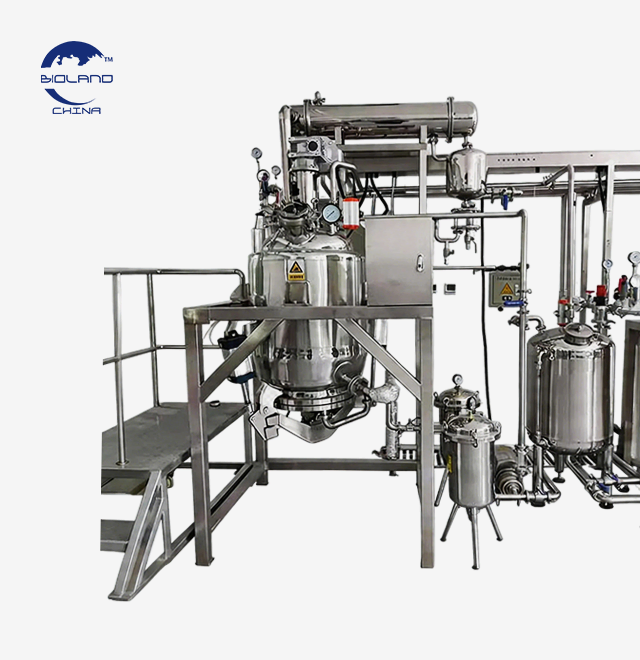
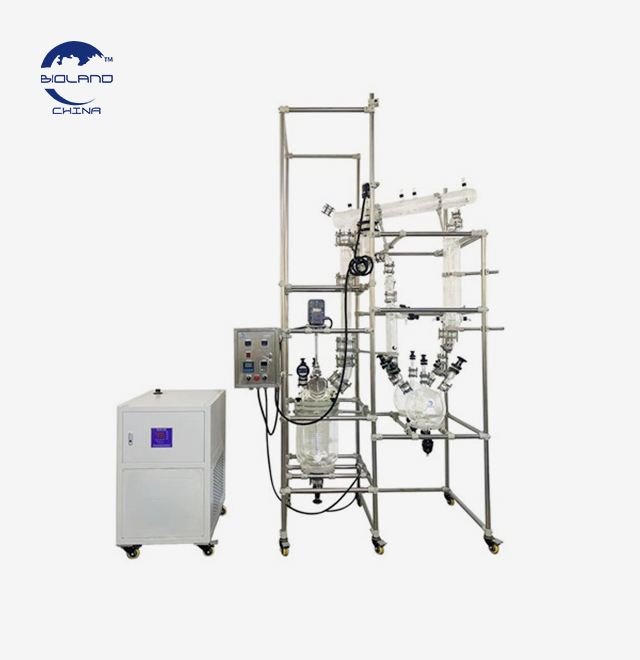
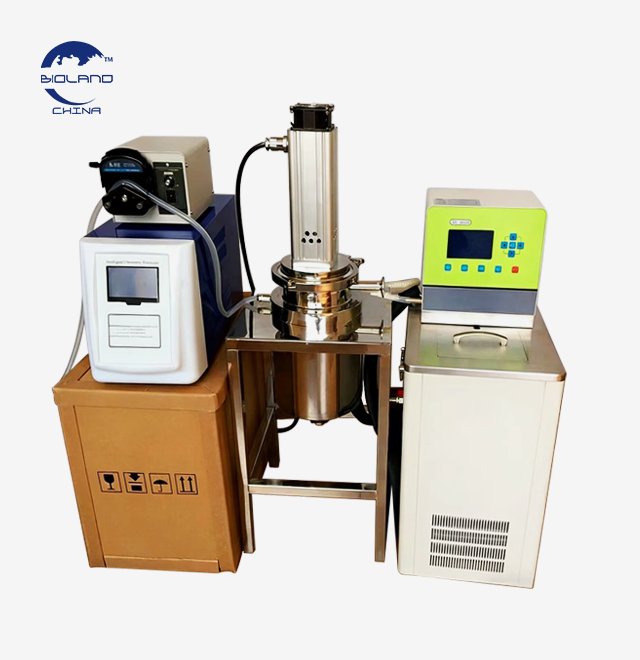
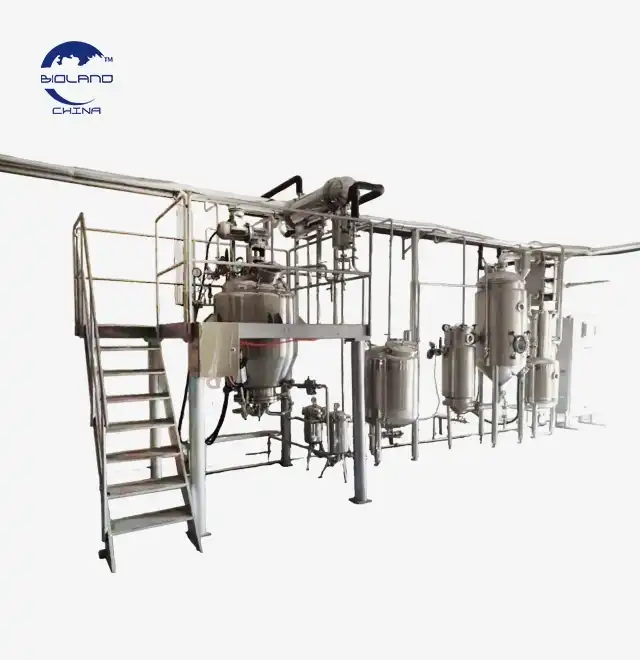
An ultrasonic system, extraction tank, tubular heater, evaporator, condenser, oil separator, oil receiver, liquid pump, metering tank, storage vessel, filter, vacuum pump, and electrical cabinet are some of the parts that can make up a full line of ultrasonic herbal extraction equipment. At the extraction and evaporation vapour outlets, demisters can be added.
Before finalising the equipment plan, Bioland instrument looks at the amount of raw materials, the liquid ratio, the stickiness, the formation of foam, the resistance to filters, the job of evaporation, and the utilities that are available. Buildings can be heated with thermal oil instead of steam. This process assessment keeps customers from buying too much capacity or getting a system that has problems further down the line.
Select Capacity Using Real Process Data
The BL-TN-C50L, C100L, C200L, C300L, and C500L models from Bioland are all ultrasonic herbal extraction equipment. The evaporation rates listed are 20, 50, 70, 100, and 200 kg/h, which means they can be used for research in the lab, field tests, and small to medium-scale production.
Technology parameter
Model
BL-TN-C50L
BL-TN -C100L
BL-TN -C200L
BL-TN -C300L
BL-TN -C500L
Volume (L)
50
100
200
300
500
Evaporation capacity (kg/h)
20
50
70
100
200
Motor power(KW)
2.7
2.7
2.7
3.5
3.5
Steam consumption(kg/h)
25
60
90
120
250
System vacuum (MPa)
-0.085
-0.085
-0.085
-0.085
-0.085
Pressure of jacket(MPa)
0.09~0.3
0.09~0.3
0.09~0.3
0.09~0.3
0.09~0.3
Compressed air (MPa)
0.5~0.6
0.5~0.6
0.5~0.6
0.5~0.6
0.5~0.6
Evaporation temperature(°C)
60~100
60~100
60~100
60~100
60~100
The motor power for the 50–200 L models is stated as 2.7 kW, and for the 300 L and 500 L types, it is 3.5 kW. It takes 25 to 250 kg/h of steam, has a jacket pressure of 0.09 to 0.3 MPa, and evaporates at 60 to 100°C. Time for loading and cleaning must be included in the final size.
Maintain Stability Through Safe Operation
Operators should check the seals, valves, filters, pumps, cooling water flow, hoover parts, ultrasonic units, instruments and safety interlocks before turning on ultrasonic herbal extraction equipment. Solvents that have been cleared should be the only ones used, along with the right ventilation, grounding, safety gear, pressure limits, and emergency plans.
Filters, vacuum pumps, condensers, CIP devices, measuring tools and ultrasonic transducers should all be checked for wear and tear as part of preventative maintenance. Stable heat transfer, hoover performance, and clean operation are all supported by regular inspection. For solvent-based uses, the process and installation environment must be taken into account when choosing electrical protection and component compatibility.
Control Manufacturing and Project Delivery
The engineers at Xi'an Bioland Instrument Co., Ltd. have worked in the field for more than 15 years. In-house research and development, factory-direct prices, OEM/ODM support, CE and ISO certifications, and skilled workers with experience in extraction, concentration, filtration, reaction, distillation, mixing, crystallisation, and drying are all advantages for every ultrasonic herbal extraction equipment project.
Standard goods are usually ready in 5–7 days, while customised equipment usually takes about 30 business days. A professional provides production photos or videos every week. When the job is done, the customer gets detailed inspection materials, can set up a Factory Acceptance Test, and signs off on the equipment before it is shipped by sea, rail, or air.
Protecting Herbal Extract Purity and Functional Properties
Selective extraction is the first step toward purity. The next steps are filtration, enclosed transfer, concentration, cleaning, and storage. When ultrasonic herbal extraction equipment is set up correctly, it helps manufacturers get back the ingredients they want while keeping extra solids and impurities in check. This makes the feed easier to handle for cleaning, precipitation, crystallisation, drying, or making the final product.
Improve Selectivity Before Purification
It's not the goal of ultrasonic herbal extraction equipment to break down every part of the raw material. It's meant to make it easier for solvents to get to certain substances under certain circumstances. Different factors like particle size, solvent polarity, ultrasound strength, temperature, pH, time, and the amount of solid to liquid all affect the specificity of extraction.
When Bioland instrument engineers design the harvest stage, they think about what will come after. If you want to blow dry a rough liquid, it might need different solids and viscosity than an extract that is going to be chromatographed or crystallised. Aligning extraction with what needs to be done later can cut down on filter loading, purification losses, solvent use that isn't necessary, and production delays.
Protect Flavonoids and Phenolic Acids in Propolis
A company that processed propolis had to deal with sticky raw materials, slow ethanol entry, and hard to do moves by hand. Bioland instrument changed ultrasonic herbal extraction equipment to run enclosed pumping, filtration, solvent recovery, vacuum concentration, and ultrasonic-assisted ethanol extraction. The approach went after flavonoids and phenolic acids while making it easier to work with a wide range of feedstocks.
Bioland instrument has also worked with lines of natural pigment, capsaicin, anthocyanin, stevia, mushrooms, goji, chilli, and oleoresin. Different solvents and separation steps are needed for these uses, but they can all benefit from integrating processes, controlling recipes, building in a way that is safe, and coordinating downstream capacity.
Confirm Protection with Analytical Results
Measurable product factors should be used to check how well ultrasonic herbal extraction equipment works. Some useful signs are the concentration of the target chemical, the yield of the extraction, the antioxidant activity, the colour, the taste profile, the polysaccharide content, the flavonoid content, the moisture, the leftover solvent, the filter behaviour, and the stability of the extract.
Bioland instrument's reported yield and time ranges are just a starting point for engineers; they are not a guarantee for everyone. Realistic acceptance criteria are set by representative material trials. By comparing samples made at various temperatures, ultrasound settings, and extraction times, it is possible to find the process window that gives the best mix of purity, useful features, recovery, and cost.
Work with a Process-Solution Partner
If a customer is having trouble making something, not a standard equipment catalogue, should be used to choose ultrasonic herbal extraction equipment. Before suggesting a line, Bioland instrument looks at the plant material, chemicals that are wanted, daily capacity, fluid, utilities that are accessible, floor space, concentration goal, cleaning standard, and needs for processing further down the line.
Customers get engineering help before the sale, process setup, production changes, help with inspections, a quality guarantee for one year, and upkeep for life. OEM/ODM services can change the layout, size, automation, heating, filter, concentration, solvent recovery, and material that comes into touch with the liquid. In this way, the buy goes from being just a piece of gear to a full extraction process answer.
Conclusion
Managing temperature, time, cavitation, solvent contact, filtration, and concentration all at the same time is the best way to protect natural ingredients. Bioland instrument's ultrasonic herbal extraction equipmentuses low-temperature ultrasound, enclosed transfer, vacuum concentration, automation, and clean construction to help keep sensitive compounds while increasing the efficiency of extraction and the ability to repeat batches.
There is less project risk because it comes in 50–500 L sizes, has application-specific engineering, PLC control, CIP cleaning, OEM/ODM support, CE and ISO credentials, FAT inspection, a one-year warranty, and lifetime maintenance. The system makes it easier for companies to make more high-quality herbal extracts. It can be used to make polyphenols, flavonoids, polysaccharides, pigments, aromatic oils, and propolis compounds.
FAQ
What temperature is normally used?
Many herbal applications operate at 40–60°C, depending on the material and target compound.
How long can extraction take?
Suitable processes may reach an optimized point within 24–40 minutes.
Can ultrasonic herbal extraction equipment use ethanol?
Yes, with suitable solvent-compatible and safety configurations.
Which capacities are available?
Bioland offers standard 50, 100, 200, 300, and 500 L models.
Protect Your Natural Ingredients with Bioland Instrument
Are excessive heat, inconsistent recovery, difficult filtration, or long processing cycles reducing the value of your herbal materials? Bioland Instrument can evaluate your raw material, target compound, solvent, required capacity, utilities, and quality objectives before designing suitable ultrasonic herbal extraction equipment.
With more than 15 years of engineering experience, competitive factory pricing, an in-house technical team, OEM/ODM capability, CE and ISO credentials, and GMP-oriented production, Bioland instrument delivers more than a machine. Customers receive weekly manufacturing updates, detailed pre-shipment inspection, optional FAT, flexible freight, a one-year warranty, and lifetime maintenance. Send your material data, current process, and production bottleneck to info@biolandequip.comand start developing a lower-temperature, fully integrated extraction solution.
References
1. Chemat, F., Rombaut, N., Sicaire, A. G., et al. “Ultrasound Assisted Extraction of Food and Natural Products: Mechanisms, Techniques, Combinations, Protocols and Applications.” Ultrasonics Sonochemistry, vol. 34, 2017, pp. 540–560.
2. Chemat, F., Zill-e-Huma, and Khan, M. K. “Applications of Ultrasound in Food Technology: Processing, Preservation and Extraction.” Ultrasonics Sonochemistry, vol. 18, no. 4, 2011, pp. 813–835.
3. Vinatoru, M. “An Overview of the Ultrasonically Assisted Extraction of Bioactive Principles from Herbs.” Ultrasonics Sonochemistry, vol. 8, no. 3, 2001, pp. 303–313.
4. Tiwari, B. K. “Ultrasound: A Clean, Green Extraction Technology.” TrAC Trends in Analytical Chemistry, vol. 71, 2015, pp. 100–109.
5. Azmir, J., Zaidul, I. S. M., Rahman, M. M., et al. “Techniques for Extraction of Bioactive Compounds from Plant Materials: A Review.” Journal of Food Engineering, vol. 117, no. 4, 2013, pp. 426–436.
6. Vilkhu, K., Mawson, R., Simons, L., and Bates, D. “Applications and Opportunities for Ultrasound Assisted Extraction in the Food Industry—A Review.” Innovative Food Science & Emerging Technologies, vol. 9, no. 2, 2008, pp. 161–169.
The reactor is beautifully mirror-polished and fully complies with GMP requirements for the pharmaceutical industry. The performance is excellent! Overall, we are very satisfied! We also provided with some feedback on our process improvements, which we hope will be helpful.
2024-04-09
Laboratory
Excellent and professional service. Always reply our questions very fast. All reactors and chiller we received are good too.
2024-02-15
Research Institute
Quality is beyond our expectation actually. After we got the extraction equipment and started using it, the performance was beyond our expectation. Very easy to use and very efficient to run. Service always respond us very quickly. Was also very helpful to help us. Thanks Bioland team. Very happy to work with you.
2023-11-20
Biotech Company
We are happy about the new purchase as always. Equipment and services are both good.
2023-08-05
Instrument Lab
This is the second order with Bioland instrument and everything is good as the first dateText.
2023-05-12
Global Trading Partner
Bioland instrument team is very helpful and professional. The sales helped us select the right equipment for our application, and their logistics people handled the transportation and customs declaration for our shipment. All that saved us a lot of work.