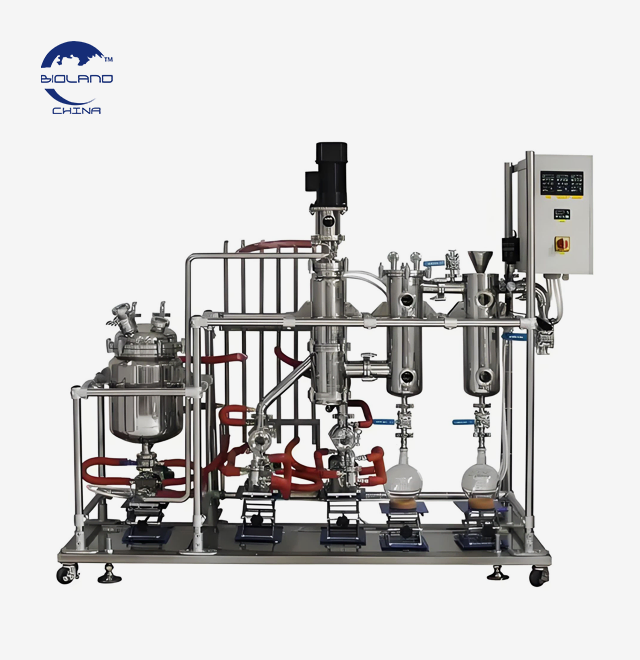
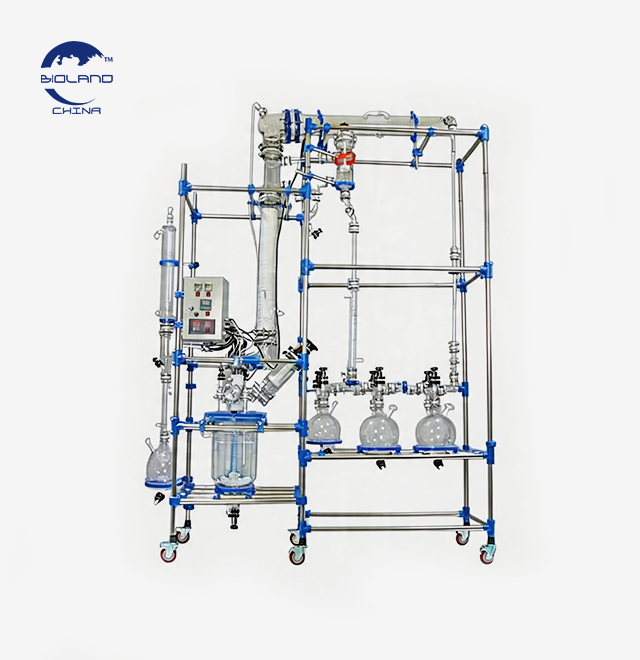
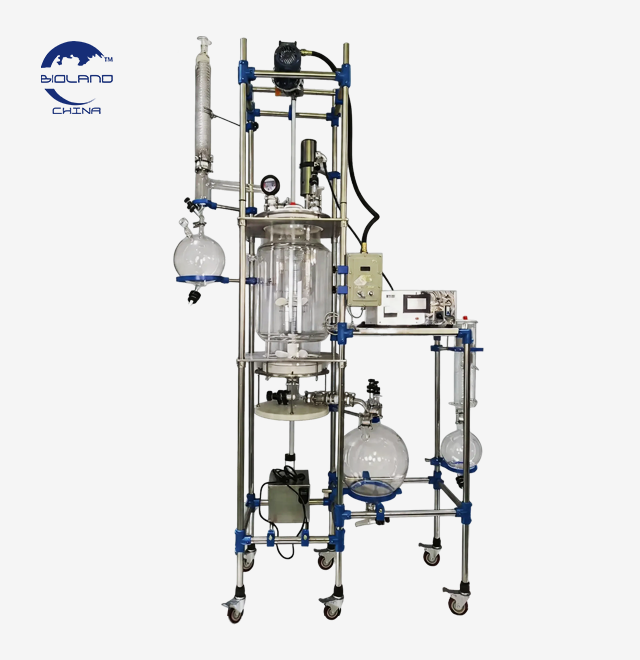
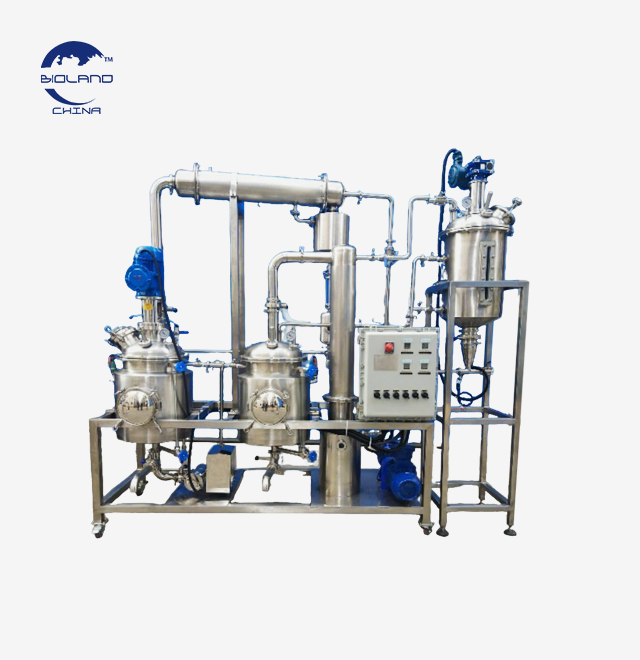
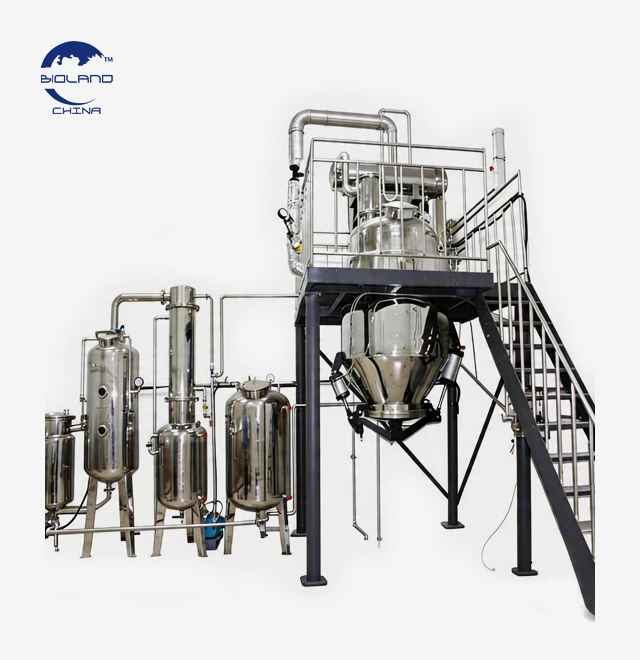
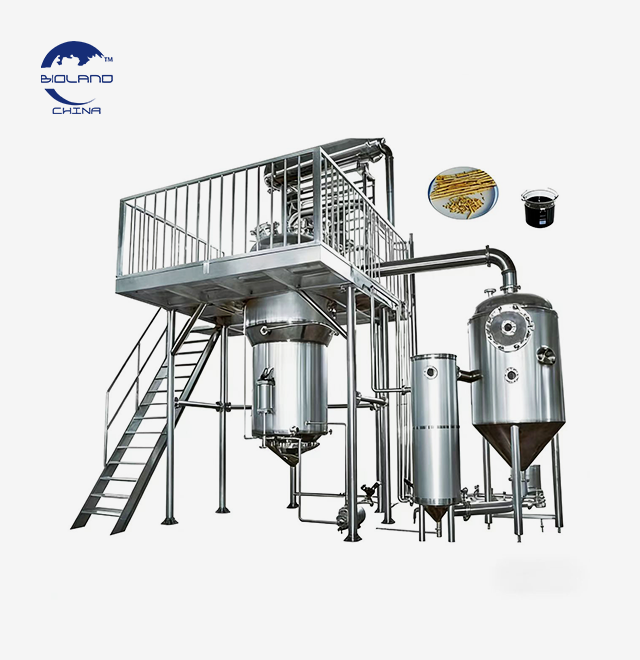
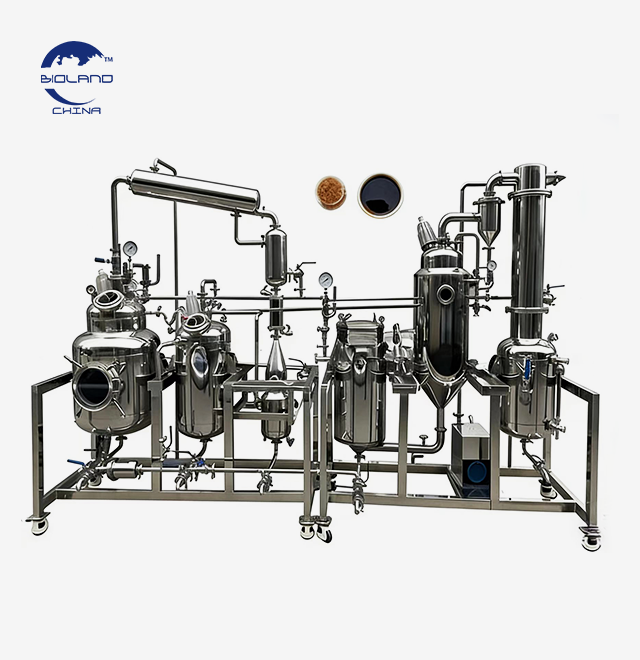
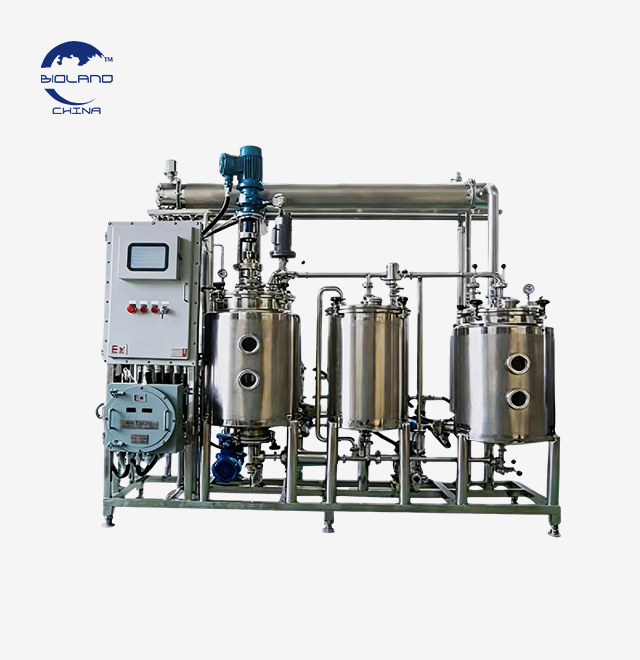
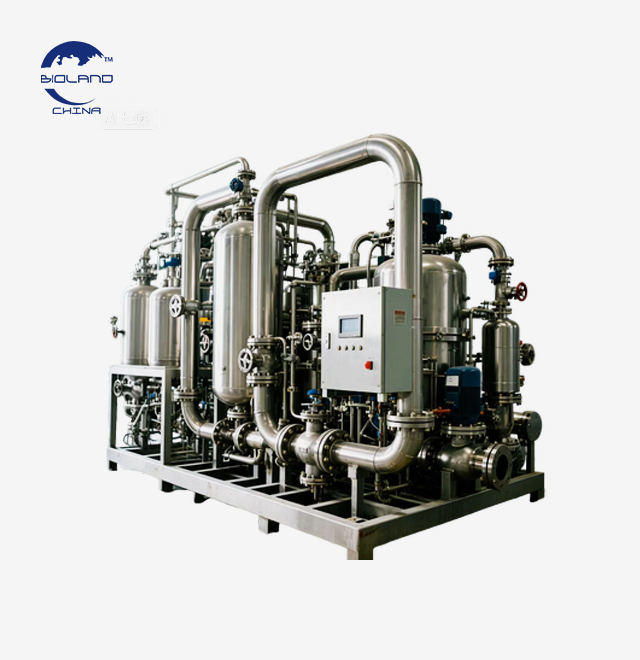
Stainless Steel Molecular Distillation System for Industrial Purification — High Vacuum, GMP-Grade Separation Solution
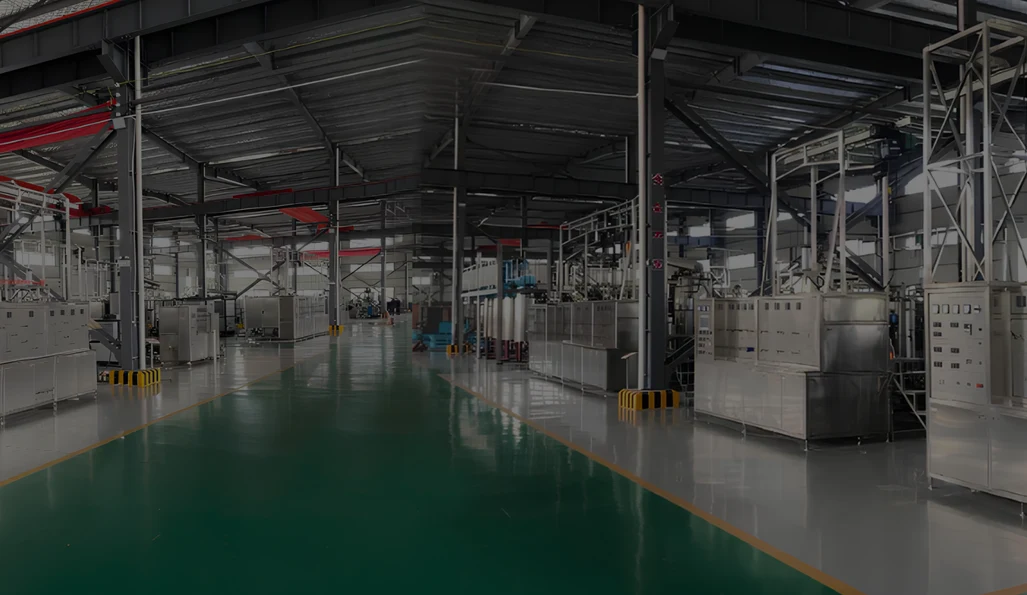
Stainless steel molecular distillation is a high-vacuum thermal separation technology for industrial purification of heat-sensitive, high-boiling-point, and high-viscosity materials. Xi'an Bioland Instrument Co., Ltd. brings 15+ years of engineering experience and 50+ verified industrial installations across pharmaceuticals, nutraceuticals, and fine chemicals. Built from 316L stainless steel with vacuum capability down to 0.01 Pa, our systems carry CE, ISO, UL, and ATEX certification. OEM/ODM customization available. 12-month warranty included.
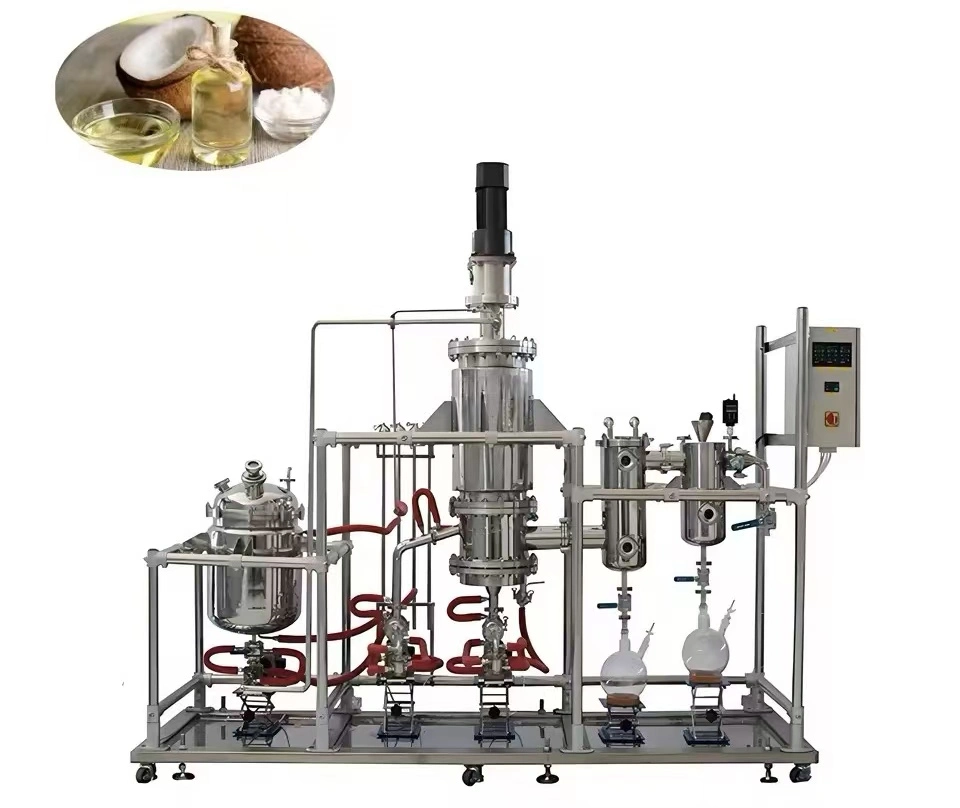
Key Features & Benefits
2–3× Faster Heat Transfer vs. Glass Systems
316L stainless steel delivers thermal conductivity of ~16.3 W/m·K — significantly higher than borosilicate glass. Result: shorter processing cycles and better protection for temperature-sensitive compounds like cannabinoids, omega-3 esters, and pharmaceutical APIs.
Mirror-Polished Surface for GMP/FDA Compliance
Internal Ra ≤ 0.4 μm finish eliminates residue buildup, accelerates CIP solvent cleaning between batches, and satisfies cGMP and FDA sanitary surface requirements without additional surface treatment.
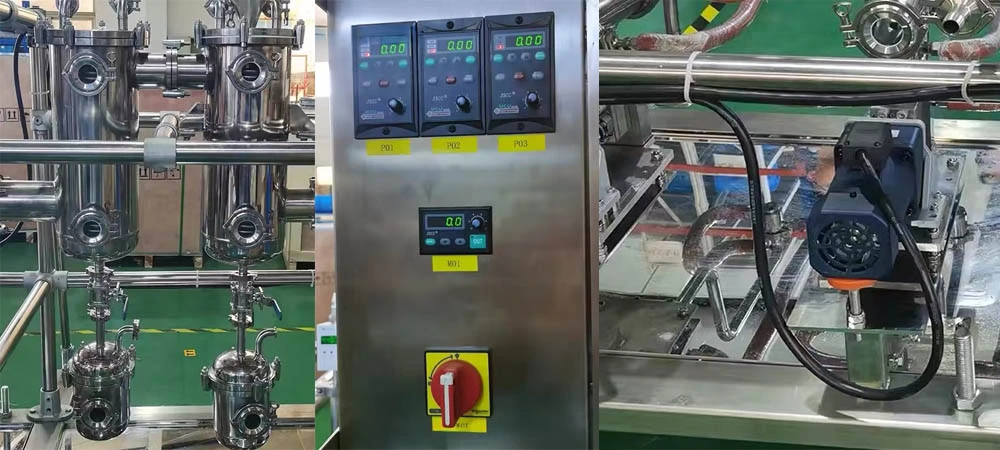
Real-Time Process Visibility via Sight Glasses
Borosilicate sight glasses on the evaporator body, feed lines, and discharge pumps allow continuous visual monitoring of film formation and flow — without stopping the process.
Handles High-Viscosity Feeds Without Clogging
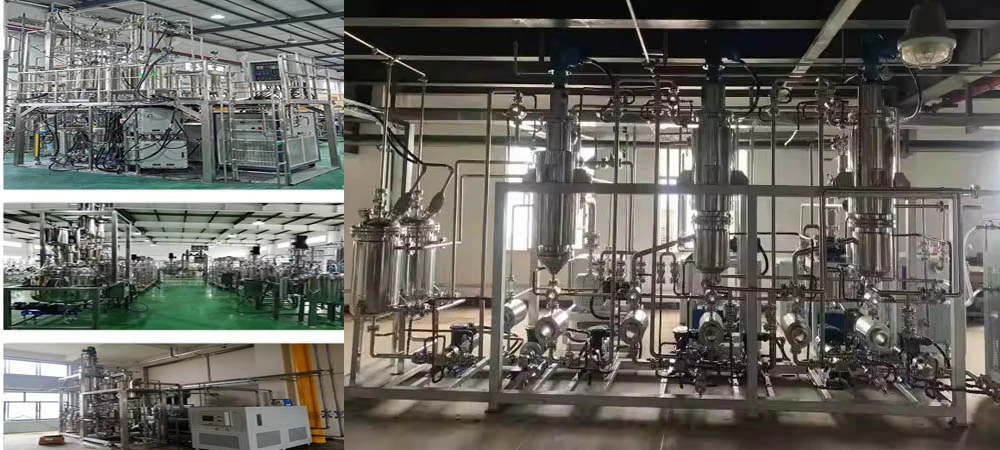
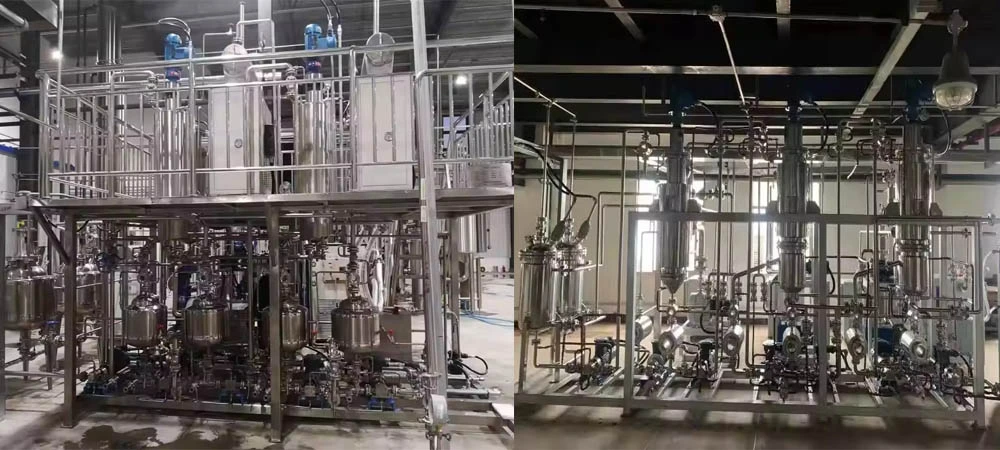
Roller or PTFE wiper systems process feeds up to 100,000 cps. Precision-machined flanges maintain consistent vacuum integrity below 1 Pa across extended continuous operation.
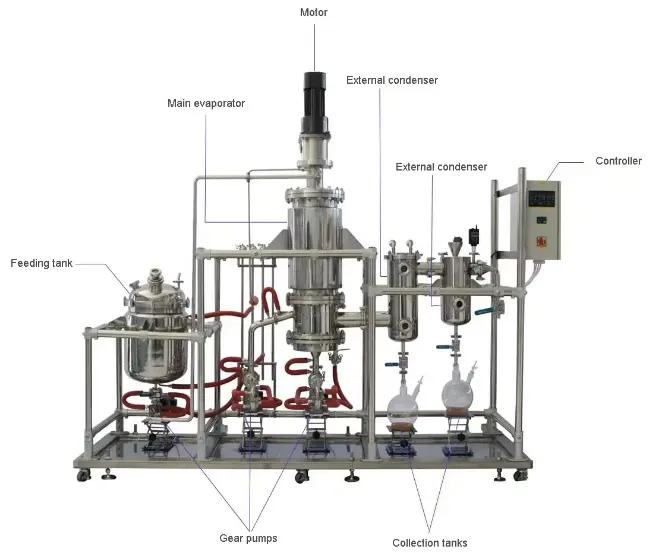
How It Works?
The core principle: Under high vacuum, evaporation and condensation surfaces are positioned closer than the mean free path of gas molecules — enabling separation at far lower temperatures than conventional stainless steel Molecular distillation.
Step-by-step process:
- Feed Entry — Material enters the heated evaporator cylinder via a metered feed pump
- Film Formation — The rotating wiper spreads feed into a thin, uniform film across the heated wall
- Selective Evaporation — Volatile components evaporate before molecules can collide, preventing oxidation and thermal decomposition
- Condensation & Collection — Light fractions condense on the internal condenser; heavy fractions exit via the bottom residue outlet
- Vacuum Protection — The entire process operates at ≤ 0.01 Pa, preserving product integrity throughout
Construction & Materials
Standard Wetted Material: SUS316L Stainless Steel
Resists mild acids, organic solvents, and common extraction chemicals. Fully cGMP-compliant surface finish. Suitable for pharmaceutical, nutraceutical, and specialty chemical applications.
Corrosive Media Upgrade Options
| Feed Type |
Recommended Material |
| Strong HCl, HF, fluoride compounds |
Titanium Grade 2 |
| Mixed aggressive acids |
Hastelloy C276 |
| Fluorinated solvents |
PTFE / Halar lining |
Control & Automation
ABB or SEW drive systems provide precise temperature and rotation speed control. All seals and flanges are precision-machined for sustained vacuum integrity during 24/7 continuous operation.
Services & After-Sales Support
- Warranty: 12 months on all components (seals, wipers, control system, vessel)
- Lifetime Technical Support: Engineering assistance available beyond warranty period
- Remote Commissioning: Step-by-step installation and startup guidance via video call
- Spare Parts Program: Wiper blades, mechanical seals, and sight glasses kept in stock
- CIP Documentation: Batch cleaning protocols tailored to your solvent and product type
- FAT Available: Factory Acceptance Testing at our Xi'an facility before shipment
Technical Parameters
|
Product model
|
evaporation tube specifications Φ (mm)
|
Evaporation tube heat transfer area()
|
Built-in cooling area ()
|
Constant pressure feeding bottle( L)
|
Sample throughput (L/H)
|
motor speed
(rpm)
|
|
MD-60
|
60
|
0.05
|
0.03
|
1
|
0.8
|
800
|
|
MD-80
|
80
|
0.1
|
0.25
|
1
|
1.5
|
800
|
|
MD-100
|
100
|
0.15
|
0.3
|
1
|
3
|
800
|
|
MD-150
|
150
|
0.25
|
0.4
|
2
|
5
|
800
|
|
MD-200
|
200
|
0.4
|
0.5
|
3
|
8
|
800
|
|
MD-300
|
300
|
0.6
|
0.8
|
5
|
10
|
500
|
Application Fields
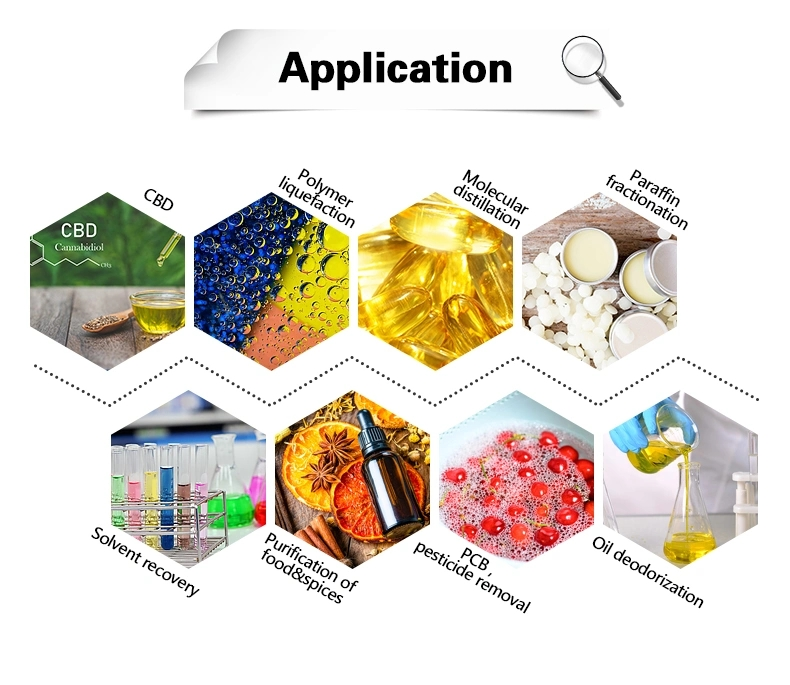
Cannabis & Hemp — CBD/THC Distillate Production
High-viscosity oleoresins require wiper systems that won't clog and vessels that withstand repeated solvent cleaning. Our 316L construction handles throughput levels glass systems cannot sustain, and CIP compatibility means no etching or cracking after repeated washes.
Typical use: Broad-spectrum CBD distillate, THC remediation, terpene removal
Fish Oil & Omega-3 Nutraceuticals — EPA/DHA Concentration
The opaque stainless steel body protects light-sensitive fatty acid ethyl esters from photodegradation — a critical limitation of glass systems. 316L material grade ensures zero heavy metal migration into sensitive nutraceutical products.
Typical use: EPA/DHA concentration, PCB/pesticide removal, finished omega-3 products
Fine Chemicals & Polymers — High-Temperature Processing
Processing up to 350°C with hot oil systems enables effective stripping of low-molecular-weight monomers from high-viscosity batches. Designed for continuous 24/7 industrial operation.
Typical use: Silicone oil purification, wax fractionation, lactic acid, plasticizer refining
Why Choose Xi'an Bioland Instrument?
15+ Years | 50+ Industrial Installations | CE/ISO/UL/ATEX Certified
| What You Get |
Details |
| Verified Engineering Experience |
15+ years focused on distillation & separation systems; in-house R&D team |
| Fast Delivery |
Standard units: 5–7 days. Custom configurations: 30 business days |
| OEM/ODM Support |
Custom evaporator size, material grade, automation level, and branding |
| Transparent Order Tracking |
Weekly photo/video updates; FAT (Factory Acceptance Testing) available |
| Global Shipping |
Sea, rail, and air freight options to all major markets |
| Post-Delivery Support |
Remote commissioning, CIP protocol documentation, spare parts supply |
FAQ
Q: How does this compare to glass short path distillation systems?
A: 316L stainless steel offers 2–3× faster heat transfer, no breakage risk under pressure or thermal cycling, higher continuous throughput capacity, and full GMP compliance. Glass systems are well-suited for lab-scale R&D; stainless steel is engineered for industrial production.
Q: Can the system handle corrosive materials like strong acids?
A: Standard SS316L performs reliably with mild acids and organic solvents. For strong HCl, hydrofluoric acid, or fluoride-based feeds, upgrade options include Titanium Grade 2, Hastelloy C276, or PTFE/Halar lining — selected based on your specific chemistry.
Q: What scale configurations are available?
A: Evaporator areas range from 0.1 m² (pilot-scale) to 30 m² (full industrial production), available in single, dual, or three-stage configurations. Contact us to match configuration to your target throughput.
Q: How is the process monitored during operation?
A: Borosilicate sight glasses on the evaporator body, feed inlet lines, and discharge pumps allow real-time visual monitoring of film formation and flow without interrupting operation.
Q: What is the recommended wiper maintenance schedule?
A: Roller wipers and PTFE scrapers typically require inspection every 1,000–2,000 operating hours, depending on feed viscosity and particulate content. Mechanical seal oil levels should be checked monthly. We provide a full maintenance schedule document at delivery.
Q: How is the system cleaned between product batches?
A: Automated CIP protocols using heated solvent circulation clean the system thoroughly and efficiently. This approach is not feasible with glass equipment due to thermal shock and chemical etching risk.
Contact Us
📧 Send your stainless steel Molecular distillation process requirements to info@biolandequip.com — our engineers will respond within 24 hours with a tailored solution.