Perfume Extraction Equipment: Which Method Preserves Fragrance?
Nov 23, 2026
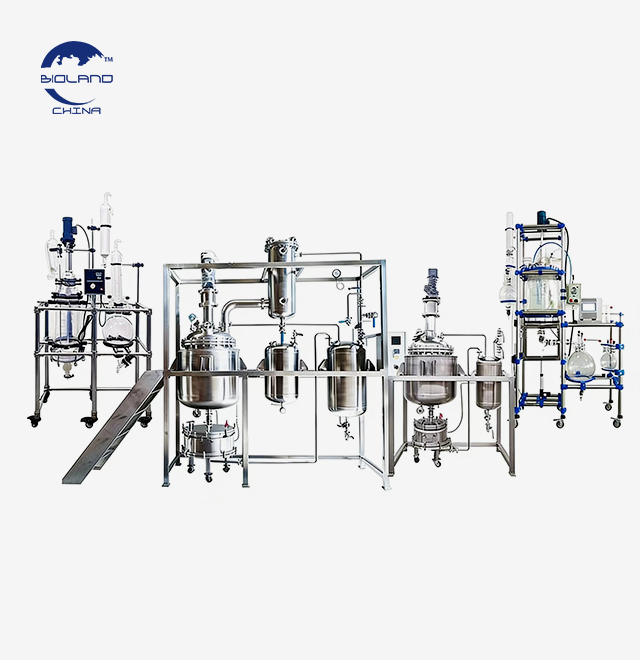
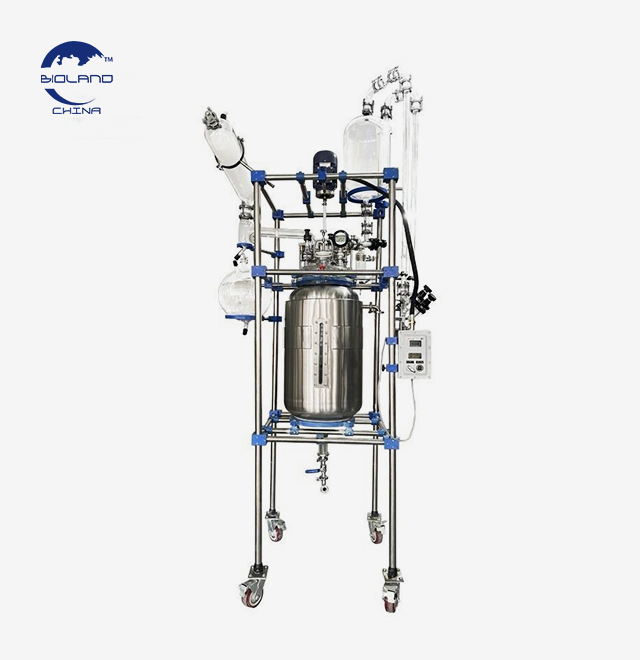
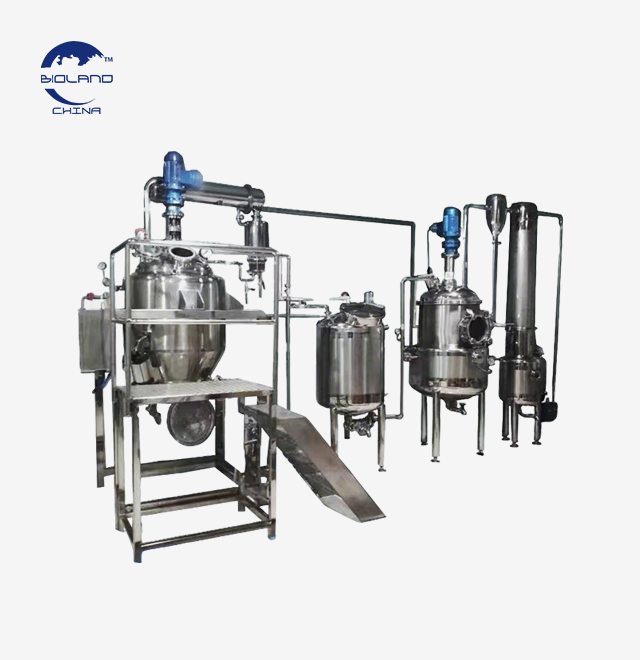
Ask a perfumer to evaluate an extraction line and they will not reach for the yield sheet first — they will uncap the vial and smell it. Yield can be rebuilt; a burnt, flat or "cooked" top note cannot. That single truth explains why choosing perfume extraction equipment is a fragrance-quality decision long before it is a capital decision. Xi'an Bioland Instrument Co., Ltd. builds perfume extraction equipment around that priority: intelligent dynamic temperature control from ambient to 100 °C with ±0.5 °C accuracy, dual independently regulated heating zones, low-liquid-level protection, high-borosilicate condensers and oil–water separators you can actually see through, and multi-layer internal distillation baskets that make loading and discharge effortless. Available from 50 L to 1000 L, GMP-compliant and CE/ISO certified, our perfume extraction equipment is sold as a complete aromatic process solution — not a tank with a burner under it.
How Extraction Temperature Affects Fragrance Compounds
Why Top Notes Disappear First
The molecules that define a fragrance's opening — linalool, citral, limonene, cineole, phenylethyl alcohol, delicate acetate esters — are precisely the ones least able to tolerate heat. Above roughly 100 °C, esters begin to hydrolyse into acids and alcohols, terpenes isomerise, and oxidation products build a stewed, hay-like background that no blending can hide. Many small producers fight this blindly, using open fire and guesswork. Properly specified perfume extraction equipment removes the guesswork by controlling the vapour path temperature, not just the boiler temperature, so volatile fractions leave the plant material and reach the condenser before thermal damage accumulates.
Dual-Zone ±0.5 °C Control in Practice
Bioland instrument's intelligent dynamic temperature system regulates the charge zone and the vapour/condensing zone independently, holding setpoints to ±0.5 °C across the full ambient-to-100 °C range. In practice, operators set a gentle ramp for the first 20 minutes to release top notes slowly, then raise the rate to drive out heavier sesquiterpenes. Built-in low-liquid-level protection prevents dry boiling — the single most common cause of scorched oil in field stills. Every Bioland instrument perfume extraction equipment package includes digital display control, with a touchscreen dynamic control system available where recipe storage and batch logging are required. Consistent temperature means consistent olfactory profile, batch after batch.
Heating Options: Gas, Electric Thermal Oil or Steam
Different sites need different energy strategies, so our perfume extraction equipment supports direct gas firing, electric thermal-oil jacket heating and plant steam. Gas suits remote farm distilleries with no boiler; electric jacketed oil gives very smooth, flame-free heat ideal for heat-sensitive flowers; live or jacketed steam is the standard for 500 L and larger lines where throughput matters. Jacket heating in particular eliminates hot spots on the vessel wall, protecting material in direct contact with the shell. Our engineers select the method based on your botanical, your site utilities and your target distillation curve rather than on what is cheapest to fabricate.
Field Note: A Bulgarian Rose Producer Recovers Its Opening
A rose oil producer near Kazanlak complained that oil distilled in their old direct-fired still smelled "flat and slightly caramelised" against their reference sample.
Root cause: uncontrolled wall temperature exceeding 110 °C during the first charge, degrading phenylethyl alcohol and rose oxide.
Bioland instrument supplied a 300 L jacketed perfume extraction equipment unit with thermal-oil heating and dual-zone control.
Distillation now runs a programmed ramp at 96–99 °C. GC analysis showed a 22% increase in retained rose oxide, and the buyer's sensory panel approved the oil at first submission.
The Role of Pressure in Aroma Compound Retention
Atmospheric, Water-Diffusion and Reduced-Pressure Routes
Pressure sets the boiling point, and the boiling point sets how hard your botanical is cooked. Standard atmospheric hydrodistillation is the workhorse for lavender, mint, rosemary and lemongrass. Water-diffusion and water–steam ("hydro-separated") distillation — where material sits on a perforated layer above the water line — is gentler and avoids waterlogging delicate petals. For particularly fragile charges, running slightly reduced pressure lowers the effective distillation temperature by several degrees. Bioland instrument perfume extraction equipment is configured to run hydrodistillation, water-plus-steam distillation and atmospheric extraction in the same vessel, so a producer can switch strategy by season or by crop.
Why Lower Boiling Points Protect Delicate Esters
Dropping the operating temperature by even 8–10 °C has a disproportionate effect on ester survival, because hydrolysis and oxidation rates rise sharply with heat. This is why linalyl acetate content in lavender oil — a key commercial specification — is so sensitive to still management. Correctly engineered perfume extraction equipment combines moderate pressure, a short vapour path and rapid condensation to minimise residence time at temperature. Our water-drop and short-reflux condenser designs cool vapour almost immediately after it leaves the basket, limiting the window during which fragile molecules can rearrange. The result is a brighter, truer oil with fewer off-notes.
Where Supercritical CO₂ and Ultrasonic Routes Fit In
Some materials simply refuse to give their true scent to heat. Agarwood resin, vanilla, orris and many spice oleoresins respond better to supercritical CO₂ extraction at near-ambient temperature, while root and leaf polysaccharide-rich matrices often suit ultrasonic-assisted extraction at 40–60 °C. Because Bioland instrument also manufactures supercritical fluid extraction equipment, CO₂ extraction machines, ultrasonic plant extraction machines and ethanol extraction machines, we specify the right route honestly rather than forcing every project into distillation. Many clients eventually operate steam-based perfume extraction equipment alongside a CO₂ unit, covering both volatile and non-volatile fragrance fractions.
Field Note: Osmanthus Without the Cooked Note
A Guangxi fragrance house lost the apricot-honey character of osmanthus whenever they used hard boiling. Bioland instrument proposed a 200 L water-diffusion configuration with a layered basket, gentle steam injection and a chilled short-path condenser.
Distillation temperature at the charge dropped roughly 7 °C versus their previous method. The customer reported a 14% uplift in oil yield and, more importantly, their perfumer confirmed the floral-fruity top note was preserved. A second perfume extraction equipment unit was ordered within the same season.
Comparing Steam and Solvent Extraction Results
Steam Distillation: Clean, Compliant and Commercially Safe
Steam distillation remains the benchmark for most commercial aromatics because the product contains no residual solvent, requires no explosion-proof building and faces the fewest regulatory barriers in food, cosmetic and pharmacopoeial applications. Our perfume extraction equipment operating principle is deliberately simple and robust: botanical is loaded into the extraction vessel, water or steam is introduced, the heater raises the system, volatile compounds are carried upward with the vapour, the condenser converts that vapour to liquid, and the oil–water separator divides essential oil from hydrosol into the collection tank. Fewer variables mean fewer ways to ruin a batch.
Solvent, Ethanol and Enfleurage-Style Routes for Difficult Flowers
Jasmine, tuberose, mimosa and narcissus yield almost nothing to steam — their aroma lives in fragile molecules that heat destroys. These require solvent extraction to a concrete, then ethanol washing to an absolute. For these producers, Bioland instrument integrates extraction vessels, filtration, ethanol recovery and vacuum concentration around the core perfume extraction equipment, with explosion-proof motors, nitrogen blanketing and solvent recovery condensers specified as standard. The absolute route delivers richer, more faithful florals but costs more in solvent handling and documentation. Choosing between the two is a commercial judgement we help clients make with real numbers, not marketing.
Reading the Real Data: Yield, GC Profile and Cost per Kilogram
Comparisons only matter when measured consistently. We advise clients to benchmark three things per route: mass yield on dry botanical, GC-MS marker content for the compounds their buyer pays for, and total cost per kilogram including labour, fuel, water and solvent losses. Steam-based perfume extraction equipment typically wins on operating cost and compliance; solvent routes win on olfactory fidelity for certain flowers. Our application lab can run trials on a 50 L BL-JT unit before you commit to a 500 L or 1000 L line, so the decision rests on your material, not on an industry generalisation. That derisking step has saved clients substantial capital.
Parameter
Type
Voltage
Volumn (L)
Heating Method
Cooling Area(m2)
Power (kw)
BL-JT-50
Three-phase 380/220V
50
Electric heating
1
10
BL-JT-100
100
1.5
12
BL-JT-200
200
2
18
BL-JT-300
300
3
25
BL-JT-500
500
Steam heating
4
2.2
BL-JT-1000
1000
8
3
Field Note: Egyptian Jasmine Producer Splits the Difference
An Egyptian grower wanted both absolute and hydrosol revenue from one harvest but had only solvent capability. Bioland instrument supplied a 500 L steam-configured perfume extraction equipment line to process the post-solvent biomass and the surplus field-grade flowers into hydrosol and trace oil.
Previously discarded material became a second revenue stream. The client reported roughly 11% additional margin per hectare, with the new line commissioned in under two weeks after arrival.
How Equipment Design Minimizes Aroma Loss
Multi-Layer Internal Baskets and a Top-Opening Lid
Aroma is lost long before condensation if the charge is packed badly. Compressed petals channel steam, leaving dead zones where oil never releases; soggy bottom layers scorch. Bioland instrument's steam distillation units use purpose-built internal layered distillation baskets that distribute material in shallow beds for even vapour penetration, with a top-opening cover that makes loading flowers, grasses, roots and fruit peel genuinely quick. The design solves the chronic complaints of older stills — difficult residue removal and blocked discharge outlets. Cleaning between campaigns is fast, which matters when the same perfume extraction equipment handles lavender on Monday and ginger on Thursday.
Water-Drop Condensers and Transparent Oil–Water Separators
Condensation efficiency is where measurable oil goes missing. Our water-drop and short-distance reflux condensers cool vapour rapidly over a large exchange area, raising recovery and shortening cycles. Downstream, the oil–water separator is fabricated in high-borosilicate glass — heat-resistant, chemically inert and shatter-resistant — with narrow multi-tube geometry of ≤20 mm diameter so even a thin oil layer is clearly visible. Illuminated sight glasses and level sight glasses keep the entire separation under visual control. Operators collect precisely at the interface instead of guessing, which is one of the quiet reasons Bioland perfume extraction equipment consistently outperforms generic stills on recovery.
Field Note: 1000 L Lemongrass Line in Indonesia
A Sumatran citronella and lemongrass processor was running three small stills with inconsistent oil recovery and heavy manual labour. Bioland instrument delivered a 1000 L steam-heated perfume extraction equipment line with an 8 m² condenser, 50 L separator and layered baskets.
Cycle time fell from 4.5 hours to 2.8 hours, and oil recovery rose approximately 16%. Labour dropped from six operators to two. The client calculated payback in roughly nine months and has since requested a quotation for a 2000 L unit.
Sizing the Line: From BL-JT-50 to BL-JT-2000
Correct sizing prevents both bottlenecks and wasted capital. Our range runs 50 L, 100 L, 200 L, 300 L, 500 L, 1000 L , with cooling area scaling from 1 m² up to 15 m² and separator volumes from 15 L to 70 L. Smaller models operate on electricity or steam; the 500 L and above are normally steam-heated for throughput. Every perfume extraction equipmentpackage is compact, floor-space-efficient and GMP-compliant in construction. We size the condenser against your expected vapour load — undersized cooling is the most common reason imported stills underperform their datasheet.
Which Extraction Process Best Preserves Floral Notes?
Matching Flower Type to Process
There is no universal answer, only correct matching. Lavender, lavandin, rosemary, mint, thyme, chamomile and chrysanthemum distil beautifully by steam. Rose and osmanthus prefer water-diffusion distillation with tight temperature control and often benefit from cohobation of the hydrosol to recover dissolved phenylethyl alcohol. Jasmine, tuberose and mimosa need solvent extraction. Resinous materials such as agarwood, clove and frankincense frequently perform best under supercritical CO₂. Bioland instrument's role is to map your botanical portfolio against these routes and configure perfume extraction equipment that covers the majority economically while recommending a second technology only where genuinely justified.
Field Note: 500 L Lavender Line in Xinjiang
A Xinjiang lavender cooperative harvested 400 tonnes per season but was selling oil below grade because of variable linalyl acetate content. Bioland instrument installed a 500 L perfume extraction equipment line with 4 m² cooling, a 35 L borosilicate separator, programmed temperature ramping and hydrosol cohobation.
Linalyl acetate stabilised within a 1.8% band across the season versus 6% previously. The cooperative moved from bulk commodity sales to a branded contract, lifting average selling price by about 28%.
Operating Discipline: Charging, Cohobation, Safety and Cleaning
Hardware sets the ceiling; operation decides where you land beneath it. We train operators to charge evenly without compaction, purge air before heating, confirm cooling water flow before the heater engages, and never bypass low-liquid-level protection. Hydrosol cohobation is recommended for rose and neroli to recover water-soluble aroma. After each campaign, the top-opening lid and removable baskets allow thorough washing, with CIP available on larger lines. Routine checks on gaskets, sight glasses and separator alignment keep perfume extraction equipment performing at year-one levels for a decade. Our commissioning package includes written SOPs in English.
Manufacturing, FAT, Warranty and Lifetime Support
Xi'an Bioland Instrument Co., Ltd. has worked in distillation, concentration, reaction, extraction, separation, filtration, purification, crystallisation, emulsification, mixing and drying equipment for more than 15 years, supplying Europe, Southeast Asia and beyond. We are CE and ISO certified with an in-house R&D team and welcome OEM/ODM orders. Customised perfume extraction equipment typically ships in 30 business days; standard items in 5–7 days. A dedicated specialist sends weekly photo or video progress reports during fabrication, and you may inspect final documentation or attend a Factory Acceptance Test at our facility before dispatch. Sea, rail and air freight are supported, with a one-year warranty and lifetime maintenance.
Conclusion
Which method preserves fragrance best? For most botanicals, carefully controlled steam or water-diffusion distillation wins — provided temperature stays within ±0.5 °C of target, the vapour path is short, condensation is fast and the oil layer is visible during separation. Solvent and supercritical CO₂ routes remain essential for jasmine, tuberose and resinous materials. The deciding factor is rarely the method name on a brochure; it is how precisely the hardware executes it. Bioland instrument's perfume extraction equipment, from BL-JT-50 to BL-JT-1000, delivers that precision with GMP-compliant construction, CE/ISO certification and full process engineering support. Choose perfume extraction equipment that protects the note your customer actually pays for.
FAQ
1. What sizes are available?
Seven standard models from 50 L to 2000 L, with 1–15 m² cooling area and 15–50 L separators.
2. Which heating method should I choose?
Gas for remote sites, electric thermal-oil jacket for heat-sensitive flowers, steam for 500 L and above.
3. Can one unit run both hydrodistillation and steam distillation?
Yes — layered baskets allow water-separated, water-plus-steam and atmospheric extraction in the same vessel.
4. Do you support customisation?
Full OEM/ODM, touchscreen control and capacity changes, with roughly 30 business days lead time.
5. What after-sales service is included?
One-year warranty, lifetime maintenance, weekly production updates, optional FAT and installation guidance.
Protect Your Top Notes — Talk to Bioland Instrument Today
If your oil smells cooked, your yield swings batch to batch, or your buyer keeps rejecting GC results, the problem is almost always process control — and that is exactly what Bioland Instrument solves. With 15+ years in distillation, extraction, concentration and separation engineering, CE and ISO certification, GMP-compliant fabrication and an in-house R&D team, we design complete aromatic production lines rather than selling standalone vessels. Our perfume extraction equipment combines ±0.5 °C dual-zone control, borosilicate visual separation, high-efficiency condensers and competitive factory pricing, backed by weekly production videos, Factory Acceptance Testing, one-year warranty and lifetime maintenance. Send us your botanical, target capacity and oil specification, and our engineers will return a tailored perfume extraction equipment proposal. Contact us at info@biolandequip.com.
References
1. Guenther, E. (1948). The Essential Oils, Volume I: History — Origin in Plants — Production — Analysis. D. Van Nostrand Company.
2. Başer, K. H. C., & Buchbauer, G. (Eds.). (2015). Handbook of Essential Oils: Science, Technology, and Applications (2nd ed.). CRC Press.
3. Masango, P. (2005). Cleaner production of essential oils by steam distillation. Journal of Cleaner Production, 13(8), 833–839.
4. Cassel, E., Vargas, R. M. F., Martinez, N., Lorenzo, D., & Dellacassa, E. (2009). Steam distillation modeling for essential oil extraction process. Industrial Crops and Products, 29(1), 171–176.
5. Reverchon, E., & De Marco, I. (2006). Supercritical fluid extraction and fractionation of natural matter. The Journal of Supercritical Fluids, 38(2), 146–166.
6. Chemat, F., Vian, M. A., & Cravotto, G. (2012). Green extraction of natural products: Concept and principles. International Journal of Molecular Sciences, 13(7), 8615–8627.
The reactor is beautifully mirror-polished and fully complies with GMP requirements for the pharmaceutical industry. The performance is excellent! Overall, we are very satisfied! We also provided with some feedback on our process improvements, which we hope will be helpful.
2024-04-09
Laboratory
Excellent and professional service. Always reply our questions very fast. All reactors and chiller we received are good too.
2024-02-15
Research Institute
Quality is beyond our expectation actually. After we got the extraction equipment and started using it, the performance was beyond our expectation. Very easy to use and very efficient to run. Service always respond us very quickly. Was also very helpful to help us. Thanks Bioland team. Very happy to work with you.
2023-11-20
Biotech Company
We are happy about the new purchase as always. Equipment and services are both good.
2023-08-05
Instrument Lab
This is the second order with Bioland instrument and everything is good as the first dateText.
2023-05-12
Global Trading Partner
Bioland instrument team is very helpful and professional. The sales helped us select the right equipment for our application, and their logistics people handled the transportation and customs declaration for our shipment. All that saved us a lot of work.