Why Ultrasonic Assisted Tea Extraction Equipment Beats Traditional Methods
Nov 6, 2026
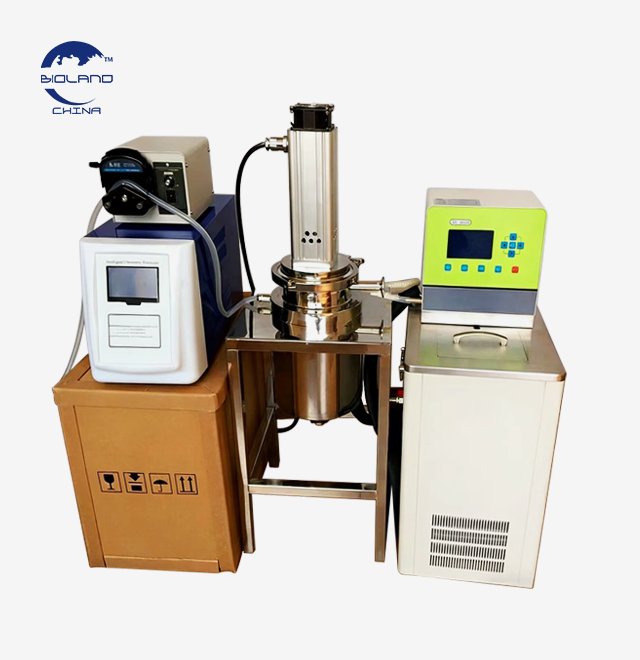
Tea makers may be able to get better control over their tea production by using ultrasonic-assisted extraction instead of long soaking or heating cycles. Bioland instrument's tea extraction equipment includes ultrasonic systems, filtration, and vacuum concentration, as well as vessels that can be set up in different ways. The practical benefit is that you can better control the temperature and batch conditions while improving the contact between the solvent and the tea material. However, this does not mean that the yield will go up for every tea or recipe.
When picking the right tea extraction equipment, you need to think about the whole process, including the type of tea, the chemicals you want to separate, the liquid, the filter, the concentration, and the cleaning. Bioland instrument has extraction-concentration models that range from 50 to 500 L, and they can talk about OEM/ODM configurations for pilot or commercial projects. The tools specs are just a starting point. The end process should be decided by tests with the buyer's own tea and quality checks.
How Ultrasonic Cavitation Enhances Tea Compound Release
What cavitation changes inside the slurry
Cavitation bubbles are made and broken down by ultrasonic waves as they travel through liquid. The local compression and turbulence that results can help the liquid stick to the tea particles better and help the mass move. It's not just the generator's rated wattage that matters when it comes to tea extraction equipment; the effect is also affected by frequency, delivered power, vessel geometry, solids loading, and temperature.
Ultrasound can't be used instead of milling, wetting, or mixing. If the leaves don't get wet enough or the slurry isn't spread out evenly, the extraction may not be regular. The right tea extraction equipment uses ultrasound along with a recipe that sets the particle size, fluid ratio, temperature, and cycle time. After filtering the extract, it is checked to see if the target chemicals are present.
Why target compounds need different recipes
Polyphenols, catechins, amino acids, antioxidants, caffeine, and flavor molecules are all found in tea. The type of tea, the solvent, the temperature, and the time all affect how they are extracted. Instead of making maximum total solids the goal of a tea extraction equipment trial, the goal should be set: a polyphenol-rich ingredient, a tea beverage base, or an aroma fraction, for example.
Green and black tea can react to the same things in different ways, and if the flavor or color changes, extracting more may not always be better. You can use a tea extraction equipment process to see how the settings match up with the assay and sensory profile that you need. Instead of using a fixed "one-size-fits-all" cycle, take samples at set times and stop when a certain point is reached.
From cell disruption to controlled mass transfer
Putting ready-made tea and the chosen solvent into the extraction vessel is the first step in a practical process. The operator sets the recipe, uses ultrasound and temperature control, and when the extraction is done, moves the liquid through filtration. The tea extraction equipment may then send the clear extract to a concentration stage, depending on the project.
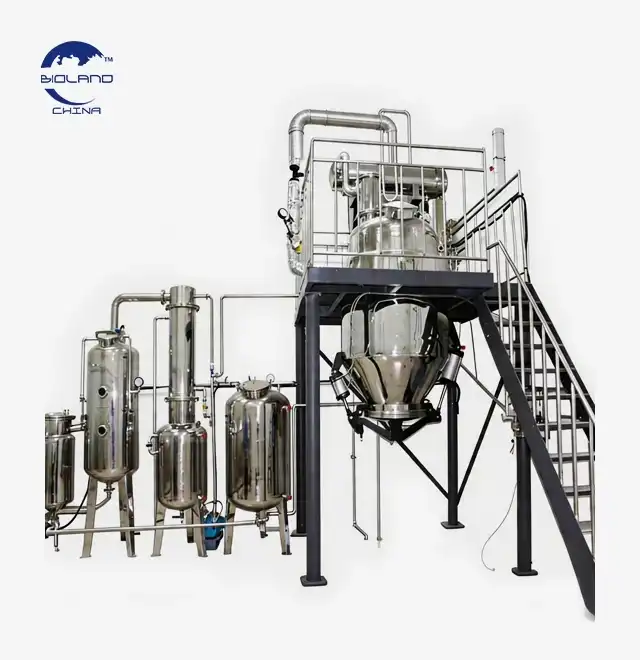
An extraction tank, heater, liquid pump, filter, evaporator, condenser, receiver, and vacuum system are some of the things that can be in a tea extraction equipment train. Options from Bioland instrument are also listed in their product information. These include PLC control, live concentration tracking, automatic release, and CIP. Check to see which things are required for the suggested setup and which ones are not.
Avoiding indiscriminate extraction
The goal is selective extraction that can be done again and again, not just using more ultrasonic energy. Too much treatment could change the balance of compounds that give food its taste, color, and smell, so recipes should be compared to product specifications. For each test, write down the time, temperature, generator settings, solvent ratio, filtrate volume, assay results, and solvent ratio.
Pilot tests fortea extraction equipment should also check how well it filters tea and how long it takes to clean. If a recipe gives a high lab result but clogs a production filter or takes too long to clean, it might not be good for use in a business setting. Before moving on to larger-scale production, make sure the whole cycle works, from loading to unloading.
Ultrasonic vs Conventional Tea Extraction Efficiency
Compare one raw-material lot, not two recipes by memory
It is fair to compare things when they start with the same amount of blended tea, dry-feed mass, liquid ratio, and target test. Follow the steps for both the traditional method and the ultrasonic tea extraction equipment. If you don't compare the extraction time, quality of the extract, filter behavior, energy use, and user time, differences in the raw materials or recipe could make it hard to see how the equipment changes.
If you can, use replicate batches and figure out the recovery by comparing the dry tea input to the amount used. If you want to make a good product, you should measure more than just the weight of the crude extract. A useful outcome of tea extraction equipment is a lot that can be used again and again, meets the requirements, and fits the plant's ability to handle it further.
Tea-polyphenol production: an evidence-led case
Bioland instrument uses its lines for tea-polyphenol extraction among other things. The product information for this article doesn't list a customer by name or include tea-line yield data that has been checked by a third party. So, what follows is just an example of size. It's not a claim about a finished customer project or a promise of a certain outcome.
Let's say that the normal extraction stage of a processor takes 90 minutes and a matched pilot suggests that an ultrasonic stage can do the same job in 30 minutes. At the extraction step, that would free up 60 minutes for each batch. Two batches could free up 120 minutes of scheduled time. Test the tea extraction equipment to make sure the numbers are correct. This should include charging, filtering, concentrating, and cleaning, not just extraction time.
Include quality, filtration and flexibility
A product may already work well with the usual hot-water extraction method. Ultrasound is most helpful when tests show that it fixes a specific problem, like a slow extraction, a variable recovery, or a long processing time. Cost-per-kilogram, including steam, electricity, work, and cleaning, should be used to compare the new tea extraction equipment to the old way.
Bioland instrument also gives examples of how to use equipment to get mushroom polysaccharides, stevia, propolis, plant pigments, and flavonoids out of coffee. It can extract a lot of different things, as shown by these examples. However, the process designs need to be different for each material. A tea extraction equipment configuration should be chosen first for tea, and then any future use for more than one product should be looked at to see if the solvents will work with each other and what cleaning needs to be done.
Comparing Extraction Time and Energy Consumption
Separate sonication time from the full batch cycle
The time that ultrasound is used is only one part of the process. Keep separate records for loading, wetting, extraction, pumping, filtration, concentration, discharge, and CIP. Bioland instrument's general information on plant extraction says that 24 to 40 minutes is a possible extraction window for certain processes. However, that range does not guaranty results for tea in particular.
Use the pilot to find out how long it takes to meet the target assay at each temperature and solvent ratio for the tea extraction equipment. A faster extraction step is only useful if it improves the whole batch cycle or frees up capacity that can be used elsewhere in the plant. Compare how long it takes to process each batch that is legal.
Calculate energy per kilogram, not motor nameplate
Find out how much electricity and heat are needed for the whole process. To give you an easy example, it takes about 1.39 kWh of theoretical sensible heat to heat 40 kg of water from 20°C to 50°C. This is before the tank heats up and system losses happen. This math doesn't give a full picture of how much energy tea extraction equipment uses, but it does show why starting temperature and heat recovery are important.
Record the power from the ultrasonic generator, the pumps, the heating system, and any steam or cold water that is used. Then divide by the number of kilograms of extract that meet the requirements. A quote for tea extraction equipment should separate motor rates from ultrasonic generator output and list the site services that are needed for the chosen setup.
Convert validated time savings to capacity
Matching tests should show that the extraction step takes less time. Figure out what that extra time saves for daily production. For instance, a made-up 60-minute savings spread over two batches frees up two hours of schedule time. Depending on hiring, filtering, concentration capacity, and shift length, that may allow for another batch.
To find out how much different pieces of tea extraction equipment cost, you should look at things like batch size, target yield, labor hours, energy use, solvent use, and downtime. Don't base payback on an assumed rise in extraction rate. Instead, use pilot records and a conservative guess of the amount of output that can be sold. Then, have the production and finance teams look over the math.
Preserving Tea Polyphenols Through Temperature Control
Control temperature around tea chemistry
Temperature changes the rate of extraction and the types of chemicals that are collected. Some tea products need catechins or polyphenols more than anything else, and others may also need a certain color or flavor. Choose an operating range based on the type of tea, the target assay, and the product specification. Then, check the actual liquid temperature during the batch.
Bioland says that 40–60°C is a good temperature range for some heat-sensitive herbs, but not for making all kinds of tea. A test of tea extraction equipment should check for the right temperatures and, if necessary, compare the results of the tests with measurements of taste or color. Not only rely on the jacket setpoint, but also use calibrated sensors to record the temperature of the product.
Manage water, solvent and oxygen
Tea drinks and chemicals that dissolve in water often contain water. For some ingredient uses, a food-grade ethanol-water mix might work, but only if it meets the needs of the product and follows the rules in the area. The right tea extraction tools should be chosen based on the liquid, seals, working temperature, and needs for recovery further down the line.
Limit the amount of liquid used and keep the mixture from touching air when oxidation could change the desired extract profile. At the beginning and end of the extraction process, use the same analytical method to compare samples that are representative of the whole. It is easy to tell the difference between the effect of ultrasound on tea extraction equipmentand changes in liquid, material, or temperature when process records are kept.
Concentrate gently and preserve the chosen profile
Once the liquor has been extracted and filtered, it can be concentrated under vacuum before going through more steps of processing. Bioland instrument says that the evaporation temperatures for its extraction-concentration models are between 60°C and 100°C, and the system vacuum is around 0.085 MPa. These are the specs for the concentration method; they are not the same as the temperature chosen for the tea extraction.
There may be an evaporator, a condenser, and a receiver in a line of tea extraction equipment. The receiver collects the vapor after it has been condensed. Check to see how the system handles keeping the aroma, condensation, foaming, and the final concentration that needs to be reached. If the product depends on volatile aromas, don't think that one concentration setup will work for all tea products. Instead, plan appropriate sampling and process checks.
Scaling Up Ultrasonic Tea Extraction for Commercial Production
Size from the product mass balance
Figure out how many kilograms of dry tea you need for each batch, the ratio of solvent to solid, the volume of the filtrate you expect, the concentration you want, and the daily production demand. Include seasonal supplies and the amount of time needed to clean or switch out products. This gives a more useful way to choose tea extraction equipment based on capacity than just looking at the stated jar amount.
Before going full-scale, a 50-liter test setup can help you figure out the recipe and how to handle it. A bigger tank, on the other hand, might change how mixing, sound distribution, heat transfer, and filtering work. Either do the tests again at the size that was planned, or agree with the supplier on how the process will be checked before going ahead with full commercial capacity.
Read the model data correctly
Bioland instrument has types called BL-TN-C50L, C100L, C200L, C300L, and C500L. These have tank sizes of 50, 100, 200, 300, and 500 L, respectively. The listed rates of evaporation are 20, 50, 70, 100, and 200 kg/h. These are ratings for concentration, not how many kilograms of dry tea are extracted every hour.
Technology parameter
Model
BL-TN-C50L
BL-TN -C100L
BL-TN -C200L
BL-TN -C300L
BL-TN -C500L
Volume (L)
50
100
200
300
500
Evaporation capacity (kg/h)
20
50
70
100
200
Motor power(KW)
2.7
2.7
2.7
3.5
3.5
Steam consumption(kg/h)
25
60
90
120
250
System vacuum (MPa)
-0.085
-0.085
-0.085
-0.085
-0.085
Pressure of jacket(MPa)
0.09~0.3
0.09~0.3
0.09~0.3
0.09~0.3
0.09~0.3
Compressed air (MPa)
0.5~0.6
0.5~0.6
0.5~0.6
0.5~0.6
0.5~0.6
Evaporation temperature(°C)
60~100
60~100
60~100
60~100
60~100
The C100L type on the list, for instance, has a 2.7 kW motor, uses 60 kg/h of steam, and has a system vacuum of 0.085 MPa. These numbers about tea extraction equipment help with planning how to use it, but they don't say anything about ultrasonic output or guarantyd throughput. Make sure that the final specification includes the generator's power, frequency, working volume, and test conditions.
Specify an integrated hygienic process train
The structure of the described equipment can include an ultrasonic system, an extraction tank, a tubular heater, a pump, a filter, an evaporator, a condenser, an oil separator, a receiver, measuring and storage tanks, a vacuum pump, and a control cabinet. There is a list of demisters at vapor outlets. For tea extraction equipment, ask for a process-flow diagram that shows which parts touch the product and which parts are supplied.
You can choose between SUS304 or 316L stainless steel, insulation, and CIP based on the product and how it needs to be cleaned. You may also be able to get PLC control, live concentration tracking, and automatic release. Check with the provider and your quality team to make sure of the surface finish, ability to drain, sealing materials, CIP covering, and cleaning.
Evaluate engineering support and supply terms
The Xi'an Bioland Instrument Co., Ltd. says it has been making process tools and providing solutions for more than 15 years. It sells equipment for heating, cooling, vacuuming, reaction, filtration, distillation, extraction, and concentration. For tea extraction equipment, you should get process engineering help, drawings, a list of features, and a clear explanation of what is included.
The business says it has CE and ISO certifications, supports OEM and ODM, provides weekly photos or videos of production, does pre-shipment inspections, and lets customers set up a Factory Acceptance Test. The site says that lead times for standard items are 5–7 days and for custom builds they are about 30 business days. Write down the information of the certificate's coverage, guarantee terms, operational support, and shipping.
Conclusion
Ultrasonic-assisted extraction can work better than traditional tea processing when it fixes a specific problem in the production process, like an extraction step that takes too long or recovery that isn't consistent. Cavitation, a recipe made just for the tea, controlled temperature, the right kind of filtration, and the right kind of concentration stage are all parts of the righttea extraction equipment. Bioland instrument's 50–500 L models can be customized, and PLC, CIP, and vacuum-concentration features can be added as options to help with planning from the pilot to the production stage.
However, model scores and general claims about plant extraction are not guaranties when it comes to tea. Compare batches that were made with the same amount of raw material, solvent, test, and full-cycle time. Then, before you buy, make sure you understand the utilities, cleanliness standards, acceptance tests, and service coverage. A validated process, not just ultrasound, is what makes a piece of equipment useful for business.
FAQ
Does ultrasound suit every tea?
No. Test the tea type, target compound, solvent and quality criteria in a pilot.
Are the listed evaporation capacities tea throughput figures?
No. They describe concentration capacity, not kilograms of tea extracted per hour.
Can the system concentrate tea extract?
Listed configurations include evaporation and vacuum-concentration components; confirm the required scope.
What should a supplier quote include?
Ask for ultrasonic specifications, working volume, process flow, materials, utilities and acceptance criteria.
Can Bioland customize a line?
OEM/ODM options are available; agree on process requirements and documentation before ordering.
Plan Your Tea Extraction Line with Bioland Instrument
Are long cycles, inconsistent polyphenol recovery or concentration bottlenecks limiting your tea production? Bioland Instrument works with customers to develop equipment solutions covering extraction, filtration and concentration—not just a vessel purchase. Share your tea type, target assay, batch size, solvent, required product format and site utilities to start a practical process discussion.
Xi’an Bioland Instrument Co., Ltd. reports more than 15 years in process equipment and offers OEM/ODM engineering, competitive manufacturer pricing, CE/ISO credentials and GMP-oriented configurations. Its tea extraction equipment can be tailored to project requirements, with weekly build updates, pre-shipment review and optional FAT. Sea, rail and air freight, a one-year warranty and lifetime maintenance are available under the stated terms. Contact info@biolandequip.comto discuss a pilot, request a quotation or review a production-line specification.
References
1. Chemat, F., Zill-e-Huma, & Khan, M. K. (2011). Applications of ultrasound in food technology: Processing, preservation and extraction. Ultrasonics Sonochemistry, 18(4), 813–835.
2. Vilkhu, K., Mawson, R., Simons, L., & Bates, D. (2008). Applications and opportunities for ultrasound assisted extraction in the food industry. Innovative Food Science & Emerging Technologies, 9(2), 161–169.
3. Toma, M., Vinatoru, M., Paniwnyk, L., & Mason, T. J. (2001). Investigation of the effects of ultrasound on vegetal tissues during solvent extraction. Ultrasonics Sonochemistry, 8(2), 137–142.
4. Chemat, F., Rombaut, N., Sicaire, A.-G., Meullemiestre, A., Fabiano-Tixier, A.-S., & Abert-Vian, M. (2017). Ultrasound-assisted extraction of food and natural products: Mechanisms, techniques, combinations, protocols and applications. A review. Ultrasonics Sonochemistry, 34, 540–560.
5. Perva-Uzunalic, A., Škerget, M., Knez, Z., Weinreich, B., Otto, F., & Grüner, S. (2006). Extraction of active ingredients from green tea (Camellia sinensis): Extraction efficiency of major catechins and caffeine. Food Chemistry, 96(4), 597–605.
6. Astill, C., Birch, M. R., Dacombe, C., Humphrey, P. G., & Martin, P. T. (2001). Factors affecting the caffeine and polyphenol contents of black and green tea infusions. Journal of Agricultural and Food Chemistry, 49(11), 5340–5347.
The reactor is beautifully mirror-polished and fully complies with GMP requirements for the pharmaceutical industry. The performance is excellent! Overall, we are very satisfied! We also provided with some feedback on our process improvements, which we hope will be helpful.
2024-04-09
Laboratory
Excellent and professional service. Always reply our questions very fast. All reactors and chiller we received are good too.
2024-02-15
Research Institute
Quality is beyond our expectation actually. After we got the extraction equipment and started using it, the performance was beyond our expectation. Very easy to use and very efficient to run. Service always respond us very quickly. Was also very helpful to help us. Thanks Bioland team. Very happy to work with you.
2023-11-20
Biotech Company
We are happy about the new purchase as always. Equipment and services are both good.
2023-08-05
Instrument Lab
This is the second order with Bioland instrument and everything is good as the first dateText.
2023-05-12
Global Trading Partner
Bioland instrument team is very helpful and professional. The sales helped us select the right equipment for our application, and their logistics people handled the transportation and customs declaration for our shipment. All that saved us a lot of work.