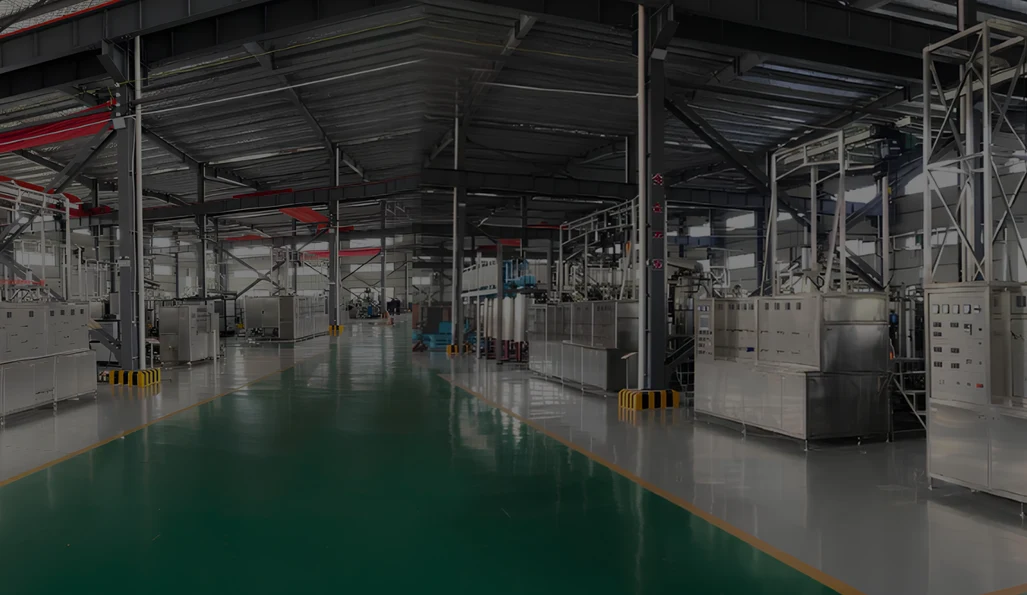
High-Yield Solutions for Polysaccharides Extraction Machine
Nov 3, 2026
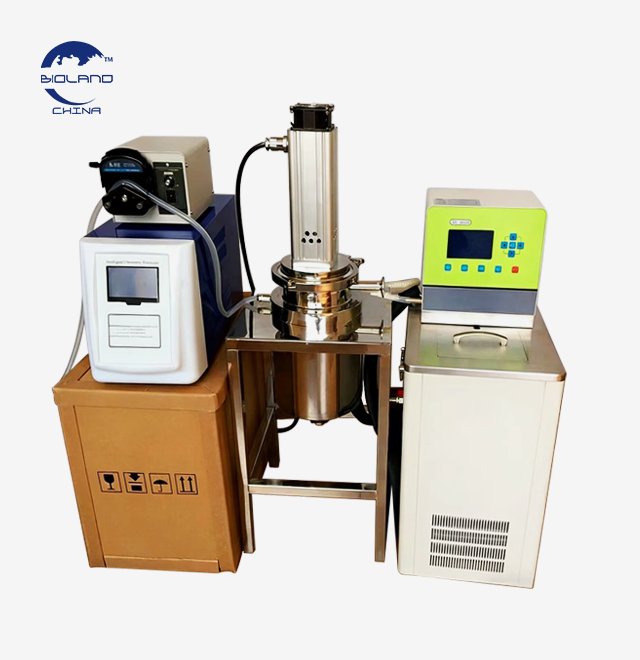
Many people who make polysaccharides are stuck on one question: why do different workshops get such different amounts from the same plant, berry, or root? The answer is generally based on how well the process breaks down cell walls, keeps the material safe, and gets the same results every time. This piece talks about the things that affect yield and how thepolysaccharides extraction machine from Xi'an Bioland Instrument Co.,Ltd. can help with those things. Ultrasonic cavitation in our polysaccharides extraction machine increases extraction rates by 50–500% compared to standard methods. It works best at 40–60 °C for 24–40 minutes to get the best result. It is made of SUS304/316L stainless steel, has PLC control, is cleaned with CIP, and is designed to meet GMP standards. It is a reliable way to get high-yield polysaccharides because it is CE and ISO certified, supports OEM and ODM, and has factory-direct prices.
Polysaccharides are big molecules that move slowly. They are found inside the tough walls of cellulose, chitin, pectin, and protein. When you use traditional hot water decoction, time and heat are needed to push them out. This is why processors usually run for three to four hours at 90–100 °C and still leave a lot of them in the leftovers. Heating for a long time also uses more energy and makes the extract darker. When a polysaccharides extraction machine is built right, it goes straight at the barrier instead of waiting for diffusion to happen. This one change is what makes most of the yield increase customers see.
How the Polysaccharides Extraction Machine Releases More in Less Time
Ultrasonic waves make small bubbles inside the extraction tank that pop in a matter of microseconds. When the particles fall apart, they create tiny jets that break or bend the cell walls and keep the fresh liquid moving across the particle surfaces. The polysaccharides extraction machine works at 40–60 °C, which protects heat-sensitive polymers, lowers energy use, and makes the liquor less contaminated, which makes it easier to separate and clean later on. With ultrasound extraction, you don't have to worry about molecular weight or polarity. The best result is usually reached in 24–40 minutes, which is more than two-thirds faster than with regular extraction.
Case: A Lingzhi Plant Escapes the Four-Hour Cycle
People in southern China who work with Ganoderma (Lingzhi) boiled the growing bodies for four hours, twice for each batch. The amount of polysaccharides changed, the steam bills were high, and each shift only made one batch, which made supplement customers' purchases late.
A BL-TN-C200L vacuum-concentrated polysaccharides extraction machine was put in place. By using ultrasound at 58 °C for 38 minutes, the amount of polysaccharide recovered went up by about 70%, and the amount of steam used went down by about 45%. The plant now does three shifts of work and got its money back in less than 14 months.
One Platform Behind Many Extracts
Our stevia extraction machine, tea extraction machine, coffee extraction machine, chili oleoresin extraction plant, and tincture extraction machine all use the same ultrasonic platform. As well as the polysaccharides extraction machine. The same tool can also be used to extract flavonoids, remove pigments from plants, help remove quercetin using ultrasound, and remove propolis. So, people who buy a polysaccharides extraction machine can use seasonal raw materials in more than one workshop. This makes better use of the equipment and speeds up the payback period.
Selecting Raw Materials for Higher Polysaccharide Recovery
Match the Material to the Method
Different things can hold polysaccharides in various shapes and sizes. The walls of ganoderma and shiitake mushrooms are full of β-glucans that are bound to chitin. The polymers in Tremella and enoki, on the other hand, are softer and dissolve in water. Along with sugars and colors, goji berries and jujube have polysaccharides. Sweet potatoes have starch-rich tissue that needs to be handled carefully. Knowing these differences is the first step in choosing the way. Our engineers use test runs to choose the liquid, time, and temperature for the polysaccharides extraction machine. This way, it is tailored to your raw material instead of a standard recipe.
Pretreatment That Protects Yield
A cheap crop comes from good preparation. Remove any dirt or other foreign objects, dry the material until it has a steady moisture level, and mill it until the particles are all the same size. This is done so that the polysaccharides are not hidden by large pieces, and very fine powder can pack tightly and make filtration slow. Before the main step, a short ethanol pre-wash gets rid of fats and small molecules from materials that are high in pigments or lipids, like goji. As soon as the material goes into the polysaccharides extraction machine, the PLC screen sets the liquid ratio, temperature, and ultrasonic time, and these settings are always kept the same.
Case: Goji Berries With Too Many Impurities
A goji processor in Ningxia sold polysaccharide powder with dark color and a sugary taste. Its decoction tank ran for three hours, yet the product kept failing customers' purity checks, and rework consumed nearly 15% of weekly output.
We designed a line around a BL-TN-C100L polysaccharides extraction machine: ethanol pre-wash, ultrasonic water extraction at 55 °C for 35 minutes, vacuum concentration and alcohol precipitation. Recovery rose by about 55%, the color became lighter and rework fell below 4%. Weekly progress videos let the owner follow manufacturing remotely.
Test Before You Commit
Raw material variation is the most common reason a new line disappoints, so we encourage a pilot trial first. The BL-TN-C50L offers 50 L volume for laboratories, universities and small-batch work, and the data it produces transfer directly to larger models. Customers can also schedule a Factory Acceptance Test at our facility once the equipment is ready. This way you scale up knowing the polysaccharides extraction machine will behave as expected.
Optimizing Extraction Temperature and Solvent Ratios
Why 40–60 °C Is the Productive Zone
Too low of a temperature stops diffusion, while too high of a temperature speeds up breakdown but can break down polymer chains and make the extract darker. The conflict is solved by ultrasonic extraction because cavitation gives the mechanical energy that heat used to give. Most materials work best between 40 and 60 °C, which keeps heat-sensitive parts safe and saves energy. That window stays steady even during long shifts on a polysaccharides extraction machinewith jacket temperature control and triple-layer insulation.
Setting the Liquid-to-Solid Ratio
The solvent ratio is a deal. More water or ethanol dissolves more polysaccharide, but it also makes more of it evaporate and slows down the concentration. Small samples are often used to test different ratios, and the point where adding more solvent doesn't make a big difference in yield is then chosen. You can use water, ethanol, methanol, acetone, and other solvents with our polysaccharides extraction machine. It can do water decoction, wet maceration, hot reflux, percolation, and alcohol precipitation, so the ratio can be set to fit the needs of your product instead of the limits of the equipment.
Case: Shiitake Water Bills and Slow Concentration
A seller of shiitake polysaccharide used a material-to-water ratio of 1:30 because lower dilutions led to lower yields. It took six hours to concentrate the huge amount of powder, and the cost of energy per kilogram of powder kept going up.
We tried a 1:18 ratio on a BL-TN-C300L polysaccharides extraction machine, and the cavitation made up for the lower concentration. The old yield was reached after 36 minutes of extraction at 55 °C, but the evaporation load dropped by about 40%, and the concentration time was cut down to less than three hours at a vacuum pressure of -0.085 MPa.
Solvent Recovery and Alcohol Precipitation in the Same Line
Afterward, the liquid is sucked into the concentrator while a vacuum of -0.05 to -0.09 MPa is in place. Secondary vapor comes back through the condenser and cooler as new solvent. Once the liquor reaches the right density, ethanol is slowly added to help the polysaccharides settle out. The ethanol that is recovered is then used in other batches. With this closed loop, the polysaccharides extraction machine costs less because it doesn't have to buy as much solvent, and the clear liquid that's left in the tank can be used for the next batch.
Improving Extraction Efficiency Through Process Control
Why Stored Recipes Make a Polysaccharides Extraction Machine Repeatable
A lot of problems with yield are really problems with consistency. The results don't stay the same from shift to shift when operators set the time by sight or the temperature by touch. Our polysaccharides extraction machinehas an advanced PLC system that stores recipes and checks the concentration online. It also has automatic drainage and online cleaning, so the best settings are always used. With pipeline-style concentration, products are fed and discharged continuously, which also cuts down on manual handling and cross-contamination.
Time and Ultrasonic Power: Finding the Window
Between 24 and 40 minutes is when most plant products give the best growth. Usually, we run a gradient of 20, 30, 40, and 50 minutes at different power levels. Then, we lock in the recipe that works best. Stronger treatment is better for dense, solid materials than for soft tissue, and middling power keeps the molecular weight profile good for use later on. The polysaccharides extraction machine can work with normal, negative, or positive pressure, so you can change the way you do things as your products do.
Case: Sweet Potato Batches That Would Not Match
A sweet potato polysaccharide producer saw assay results swing by 14% between batches. Operators changed extraction time to fit the day's schedule, and the buyer threatened to move to another supplier.
We replaced the old tank with a BL-TN-C100L polysaccharides extraction machine using fixed PLC recipes: 52 °C, 32 minutes, set ratio. Batch deviation fell to about 3% and extraction rate rose by around 60%. The producer kept its contract, and operators needed only a short training session.
Safe Operation and Routine Maintenance
Reliable control also depends on discipline. Before each run, operators should check vacuum level, jacket pressure and compressed-air supply, load solvent at the specified ratio, and confirm that the demisters on the tank and evaporator outlets are clear. After each batch, the CIP function cleans the polysaccharides extraction machine, and periodic inspection of seals, pumps and the vacuum system keeps performance stable. Our one-year warranty and lifetime maintenance mean support continues long after delivery.
Scaling Up Polysaccharide Production Without Yield Loss
Choosing the Right Polysaccharides Extraction Machine Model
Scale-up goes smoothly when every model keeps the same process logic. The BL-TN-C50L has 50 L volume and 20 kg/h evaporation capacity, the C100L and C200L reach 50 and 70 kg/h, the C300L offers 300 L and 100 kg/h, and the C500L reaches 500 L and 200 kg/h. Motor power is 2.7–3.5 kW, steam consumption runs from 25 to 250 kg/h, system vacuum is -0.085 MPa, jacket pressure is 0.09–0.3 MPa, compressed air is 0.5–0.6 MPa and evaporation temperature is 60–100 °C. Because parameters stay consistent, a polysaccharides extraction machine at 50 L predicts results at 500 L.
Technology parameter
Model
BL-TN-C50L
BL-TN -C100L
BL-TN -C200L
BL-TN -C300L
BL-TN -C500L
Volume (L)
50
100
200
300
500
Evaporation capacity (kg/h)
20
50
70
100
200
Motor power(KW)
2.7
2.7
2.7
3.5
3.5
Steam consumption(kg/h)
25
60
90
120
250
System vacuum (MPa)
-0.085
-0.085
-0.085
-0.085
-0.085
Pressure of jacket(MPa)
0.09~0.3
0.09~0.3
0.09~0.3
0.09~0.3
0.09~0.3
Compressed air (MPa)
0.5~0.6
0.5~0.6
0.5~0.6
0.5~0.6
0.5~0.6
Evaporation temperature(°C)
60~100
60~100
60~100
60~100
60~100
Structure and Working Principle Behind Consistent Yield
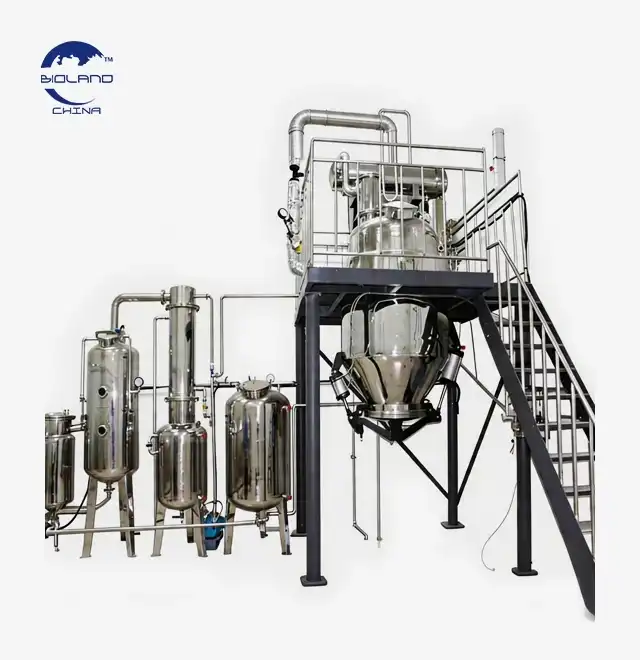
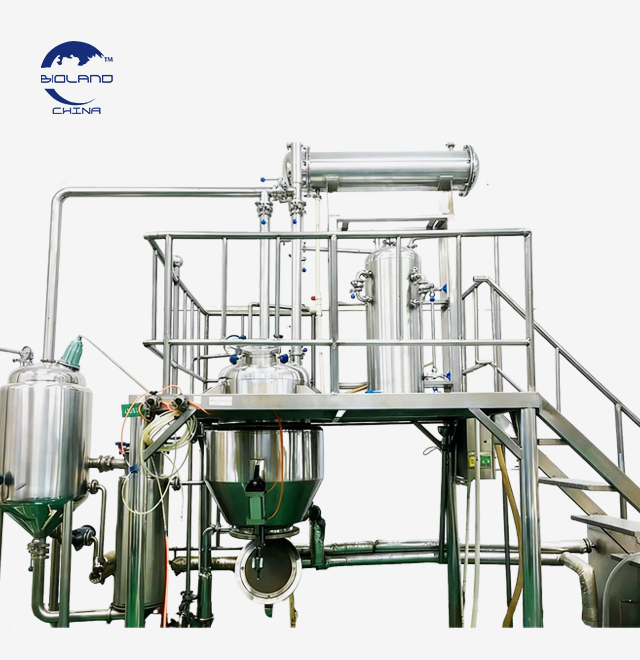
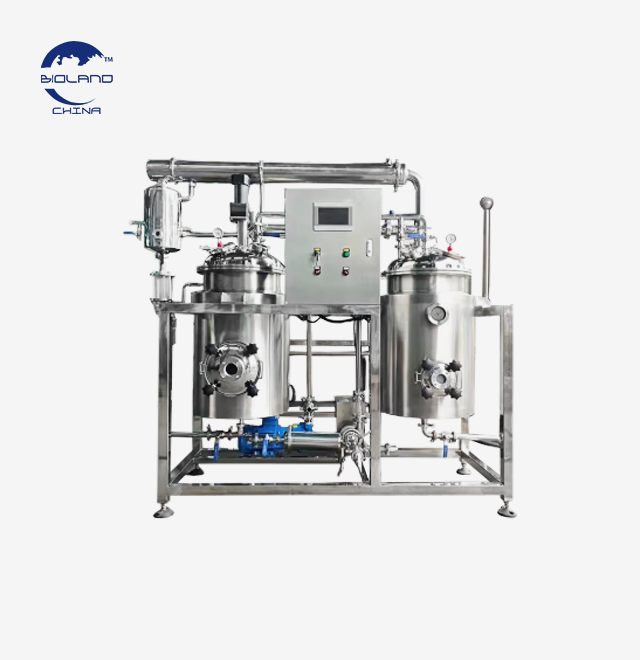
A complete unit includes the ultrasonic system, extraction tank, tubular heater, evaporator, condenser, oil separator, oil collector, liquid pump, metering tank, storage tank, filter, vacuum pump and electrical cabinet, with demisters on the steam outlets. Where steam is unavailable, a thermal-oil heating system can be added. Material and solvent are loaded, extraction runs at the set temperature, the liquor moves to the concentrator, and condensate returns as fresh solvent until the extract is colorless. The polysaccharides extraction machine can then continue concentrating to the required density.
Case: From Pilot Results to a 500 L Tremella and Enoki Line
A functional-food company had validated Tremella and enoki polysaccharide extraction at bench scale, but its first 300 L trial on other equipment lost nearly 20% of yield. Investors wanted proof the process could scale before approving production funding.
We built a BL-TN-C500L polysaccharides extraction machine line with SUS304/316L contact parts, CIP and recipe control, and sent weekly photos during manufacturing. After commissioning, yield stayed within 4% of pilot data and output reached three batches daily. Funding was approved within two months.
One Supplier for the Complete Process
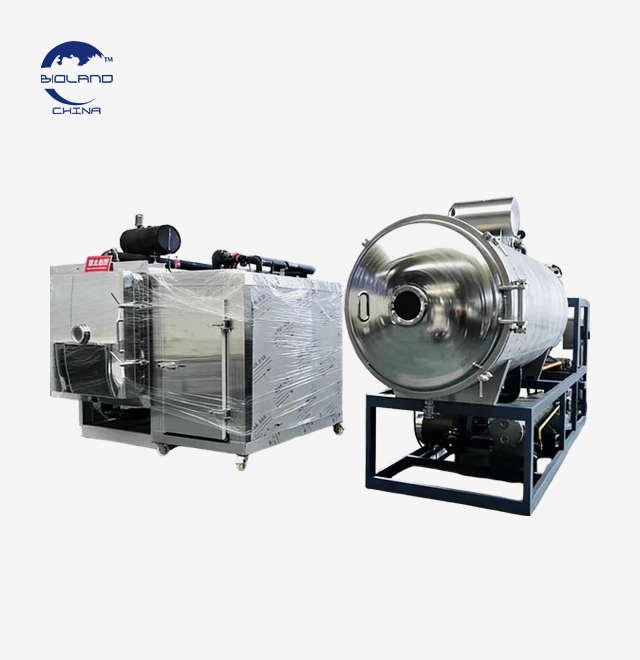
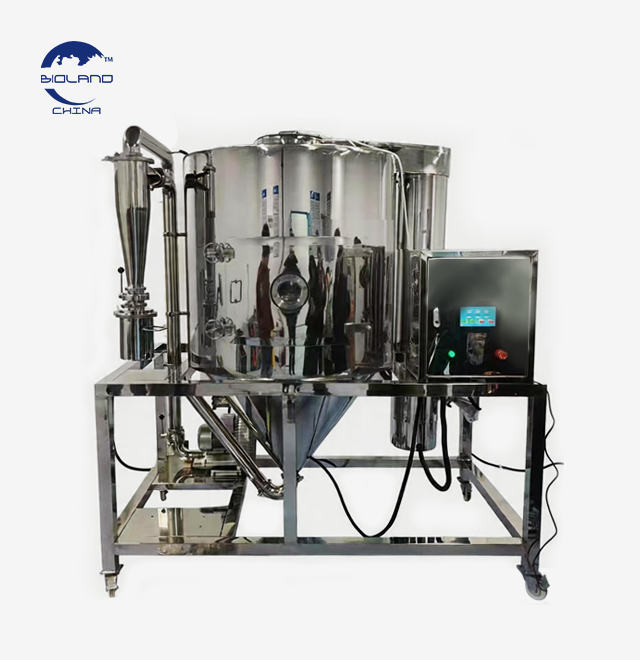
Xi'an Bioland Instrument Co.,Ltd. is a professional manufacturer and solution provider for distillation, concentration, reaction, extraction, separation, filtration, purification, crystallization, emulsification, mixing and drying equipment, with more than 15 years in the field. Our range includes ultrasonic plant extraction machines, ethanol and CO2 extraction machines, jacketed glass reactors, vacuum spray dryers and freeze dryers, exported to Europe and Southeast Asia. Every polysaccharides extraction machine carries CE and ISO certification and GMP/FDA-compliant design, with a one-year warranty and lifetime maintenance. Customized lines are ready in about 30 business days and standard units in 5–7 days, shipped by sea, rail or air. A dedicated specialist sends weekly photos or videos during production, and you can approve shipment after inspection. OEM and ODM orders are welcome, so each polysaccharides extraction machine can match your process.
Conclusion
High-yield polysaccharide production comes from linking several decisions: understanding where polysaccharides are trapped, choosing and preparing the right raw material, working within a gentle 40–60 °C window, controlling time and power through stored recipes, and scaling up on equipment that keeps the same process logic. The polysaccharides extraction machine from Bioland Instrument supports each step, with extraction rates 50–500% higher than traditional methods, 24–40 minute cycles and GMP-oriented construction. The cases show practical gains: shorter batches, steadier assays, lower steam and solvent use and faster payback. Backed by CE and ISO certification, OEM/ODM flexibility and lifetime maintenance, our polysaccharides extraction machine gives laboratories and factories a dependable path to better yield.
FAQ
Q1: How much can a polysaccharides extraction machine raise yield?
A: Ultrasonic cavitation raises extraction rates by 50–500% compared with traditional methods.
Q2: What time and temperature are typical?
A: Best yield usually appears in 24–40 minutes at 40–60 °C.
Q3: Can the polysaccharides extraction machine process other materials?
A: Yes. It handles Lingzhi, shiitake, Tremella, enoki, goji, jujube and sweet potato, plus flavonoids, stevia and tea.
Q4: Which models are offered?
A: BL-TN-C50L to BL-TN-C500L, from 50 to 500 L.
Q5: What certifications and warranty are included?
A: CE and ISO certification, GMP/FDA-compliant design, a one-year warranty and lifetime maintenance.
Ready to Raise Your Polysaccharide Yield? Talk to Bioland Instrument
Low yield, long cycles and batch-to-batch drift are process problems, and process problems can be solved. At Bioland Instrument, we do more than supply a polysaccharides extraction machine; we help you select the pretreatment, solvent ratio, model and layout that fit your product and budget. With more than 15 years of experience, CE and ISO certification, GMP/FDA-compliant construction, factory-direct pricing, OEM/ODM customization, weekly progress photos or videos, optional FAT and a one-year warranty with lifetime maintenance, you can invest with confidence. Share your raw material, target polysaccharide content and daily capacity, and our engineers will recommend a tailored polysaccharides extraction machine solution. Customized lines ship in about 30 business days, standard units in 5–7 days. Email info@biolandequip.comtoday for a quotation or pilot-test plan.
References
1. Chemat, F., Rombaut, N., Sicaire, A.-G., Meullemiestre, A., Fabiano-Tixier, A.-S., & Abert-Vian, M. (2017). Ultrasound assisted extraction of food and natural products. Mechanisms, techniques, combinations, protocols and applications. A review. Ultrasonics Sonochemistry, 34, 540–560.
2. Huang, S.-Q., & Ning, Z.-X. (2010). Extraction of polysaccharide from Ganoderma lucidum and its immune enhancement activity. International Journal of Biological Macromolecules, 47(3), 336–341.
3. Ying, Z., Han, X., & Li, J. (2011). Ultrasound-assisted extraction of polysaccharides from mulberry leaves. Food Chemistry, 127(3), 1273–1279.
4. Zhang, L., Ye, X., Ding, T., Sun, X., Xu, Y., & Liu, D. (2013). Ultrasound effects on the degradation kinetics, structure and rheological properties of apple pectin. Ultrasonics Sonochemistry, 20(1), 222–231.
5. Amagase, H., & Farnsworth, N. R. (2011). A review of botanical characteristics, phytochemistry, clinical relevance in efficacy and safety of Lycium barbarum fruit (Goji). Food Research International, 44(7), 1702–1717.
6. Ruthes, A. C., Smiderle, F. R., & Iacomini, M. (2016). Mushroom heteropolysaccharides: A review on their sources, structure and biological effects. Carbohydrate Polymers, 136, 358–375.
The reactor is beautifully mirror-polished and fully complies with GMP requirements for the pharmaceutical industry. The performance is excellent! Overall, we are very satisfied! We also provided with some feedback on our process improvements, which we hope will be helpful.
2024-04-09
Laboratory
Excellent and professional service. Always reply our questions very fast. All reactors and chiller we received are good too.
2024-02-15
Research Institute
Quality is beyond our expectation actually. After we got the extraction equipment and started using it, the performance was beyond our expectation. Very easy to use and very efficient to run. Service always respond us very quickly. Was also very helpful to help us. Thanks Bioland team. Very happy to work with you.
2023-11-20
Biotech Company
We are happy about the new purchase as always. Equipment and services are both good.
2023-08-05
Instrument Lab
This is the second order with Bioland instrument and everything is good as the first dateText.
2023-05-12
Global Trading Partner
Bioland instrument team is very helpful and professional. The sales helped us select the right equipment for our application, and their logistics people handled the transportation and customs declaration for our shipment. All that saved us a lot of work.