Glass nutsche filter reactor applications in high purity chemical industry
Oct 30, 2026
Choosing the right reaction and separation equipment is very important in the high purity chemical industry, where product viability depends on controlling contamination and making the process as efficient as possible. In current pharmaceutical processing, specialty chemical synthesis, and advanced material production, the glass nutsche filter is one of the most important technologies. This high-tech equipment combines reaction, filtration, crystallization, and drying functions into a single vessel, so there are no need for material transfer steps that usually introduce impurities. With more than fifteen years of engineering experience, Xi'an Bioland Instrument Co.,Ltd. has become one of the world's leading companies in manufacturing glass nutsche filter systems that are highly compatible with chemicals, easy to use, and good at controlling temperature for high-purity applications.
How Glass Nutsche Reactors Support High-Purity Processing
Integrated Reaction-Filtration Workflows
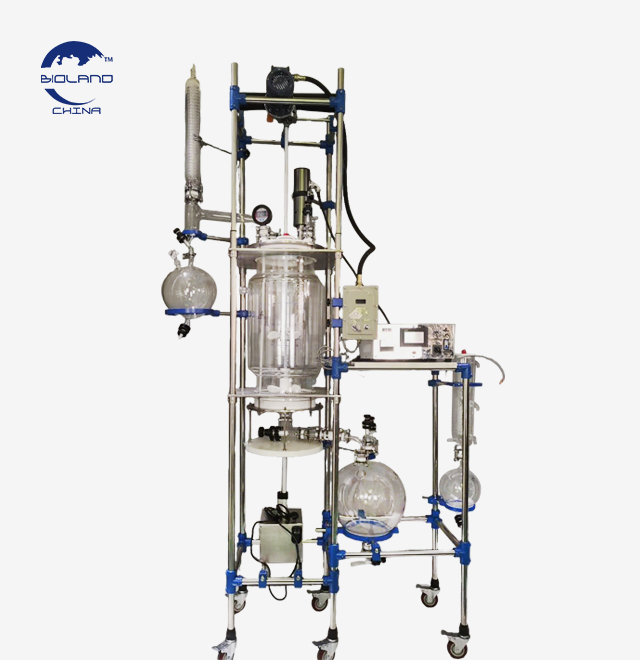
The glass nutsche filter changes the way high-purity processing is done by combining several unit operations into a single sealed system. Unlike traditional setups that need separate reaction vessels and filtration units, this integrated approach keeps the product as safe as possible from environmental contaminants and operator handling. The borosilicate glass structure creates a neutral surface that stops metallic ions from escaping. This keeps the purity levels of sensitive pharmaceutical intermediates and electronic-grade chemicals at the right levels throughout processing. Manufacturers who use glass nutsche filter systems say that cross-contamination risks between batches are much lower. This is especially important when making active pharmaceutical ingredients, since small impurities can make drugs less safe and effective.
Contamination Prevention in Sensitive Processes
To make high-purity chemicals, you have to have complete control over chemical and particle contamination. These needs are met by the glass nutsche filter, which has non-reactive glass sides and a protected working area. The clear walls of the vessels let operators see how the reactions are going, how the crystals are forming, and how well the filters are working without compromising the integrity of the system. This exposure is very helpful when working with light-sensitive materials or when accurate endpoint monitoring is needed to check the quality of a product. Also, the PTFE filtration system that comes standard with superior glass nutsche filter setups offers chemically resistant separation media that can handle the harsh liquids and acidic solutions that are commonly used in specialty chemical manufacturing.
Real-Time Process Monitoring Capabilities
Modern designs for glass nutsche filter reactors include more advanced tracking features that make it easier to control the process in places with a lot of purity. The clear borosilicate glass lets you see phase changes, color changes, and the speed at which crystals form in real time. This visual feedback lets process engineers change the reaction parameters on the fly to get the best results and complete conversion. These reactors have the precise temperature control needed for polymorph control and selective crystallization in pharmaceutical uses when paired with jacketed temperature control systems that can keep temperatures between -80°C and 200°C.
Case Study: European Pharmaceutical Intermediate Purification
When making chiral API intermediates, a major European biotech business ran into a lot of problems. Their old method had problems with incomplete reactions, low crystallization purity, and a lot of contamination when they moved materials from one vessel to another. Strong acid and alkaline synthesis conditions were breaking down standard equipment, and the multiple steps created a big risk of contamination.
Bioland Instrument made a special 100L glass nutsche filter reactor that let "reaction-crystallization-filtration" processes be done all at the same time. During the reaction phase, the clear vessel let workers see how the color changed while nitrogen kept the temperature between 0°C and 5°C, which made sure the conversion was complete. Jacketed cooling at -20°C with controlled rates of 1-2°C per hour was used in the crystallization stage to make uniform crystals that didn't trap impurities.
The last stage of filtration used the built-in PTFE system to separate solids and liquids directly, without any transfers in between. The results showed huge improvements: the purity of the crystalline product was higher than 99.5%, and the yield went up by 15%. The glass construction kept metal ions from getting inside, which is important for pharmaceutical standards. The integrated design also cut down on material transfer steps by 70%, making cross-contamination risks almost impossible.
Key Filtration Requirements for Specialty Chemicals
Pore Size and Filter Media Selection
To separate solids and liquids effectively in the production of specialty chemicals, it is important to choose filter media that are compatible with both the process chemistry and the product specs. Glass nutsche filter systems can handle different types of filters, such as PTFE frits, stainless steel mesh, titanium plates, and filter cloths or membranes that are only used once. The normal PTFE filtration system is very resistant to chemicals across a wide pH range, so it can be used for harsh acid and base processes. For uses with precious metal catalysts or fine particle recovery, the glass nutsche filter system has special pores with sizes ranging from 0.5 to 100 microns that make sure the best retention while still allowing enough flow rates.
Pressure and Vacuum Optimization
Optimized pressure differences are very important for the solid-liquid separation process in glass nutsche filter reactors. By putting negative pressure under the filter medium, vacuum filtration speeds up the separation process. This draws the mother liquor through the filter cake while keeping the solid products. This method works really well for working with thick liquids or tiny crystals that don't dissolve with normal gravity filtration. Modern glass nutsche filter systems have precise vacuum control, which lets workers change the filtration rates based on how permeable the cake is and how fragile the product is. The platform is more flexible because it can use either positive pressure to wash the cake or nitrogen pressure to dry it.
Cleaning and Maintenance Protocols
To keep standards of cleanliness high, strict cleaning procedures must be followed between production efforts. Glass nutsche filter designs make cleaning easier by having quick-disconnect fittings, filter plates that can be taken off, and smooth interior surfaces that keep product from building up. Because borosilicate glass is chemically neutral, strong acids and acidic solutions can be used to clean it without damaging the equipment. Automated cleaning-in-place systems can be added to installations of glass nutsche filters to make sure that the cleaning is consistent, which is needed for GMP compliance. The PTFE filtration components and closing systems work consistently and don't get contaminated from one batch to the next if they are maintained regularly.
Case Study: Polish Precious Metal Catalyst Recovery
There were big problems at a Polish chemical company that was making palladium and platinum catalysts. The way they were doing things before had low rates of recovering precious metals, equipment that rusted from strong reagents, and catalysts that stopped working during solid-state reactions at high temperatures. The ability to separate solids and liquids wasn't working well, and cleaning the equipment was getting more expensive because of tough leftovers.
Bioland instrument gave them a special 50Lglass nutsche filterreactor that used a "solid-state reaction-filtration recovery" closed-loop method. The high-temperature solid-state reaction happened at 150°C inside the corrosion-resistant glass vessel, which kept the catalyst from losing its ability to work. When it was done, the built-in PTFE filtration system made it possible to separate the solid catalysts directly from the mother liquor.
The method was able to collect more than 90% of the valuable metals from the mother liquor, which cut the cost of raw materials by a large amount. The precise temperature control from -80°C to 200°C was made possible by the double-layer glass construction, and the quick-release filter design made cleaning easy. The clear container let workers see the reaction going on and how well it was filtering in real time, which helped them find the best process settings for the most active catalyst.
The Role of Glass Materials in Chemical Compatibility
Borosilicate Glass Properties
Material choice is the most important part of reliable high-purity processing, and borosilicate glass is the best material for building glass nutsche filters. This special glass mixture, which includes silica and boron trioxide, is very resistant to chemical damage and sudden changes in temperature. Borosilicate glass can handle quick temperature changes from -20°C to 200°C without cracking because its thermal expansion rate is much smaller than that of soda-lime glass. This quality is very important when using temperature-controlled crystallization protocols in a glass nutsche filter or when hot solvents are used to clean equipment. The mechanical strength makes it safe to work in a full vacuum, and the optical clarity lets you see what's going on in the process.
Chemical Resistance Profiles
Aggressive reagents like concentrated mineral acids, strong alkalis, and oxidizing agents are often used to make high-purity chemicals. It is amazing how well these tough media don't damage glass nutsche filter reactors made of borosilicate glass. In contrast to metal processors, which can rust or leak ions into the product stream, glass surfaces don't react with any pH range. This chemical interaction includes organic solvents, halogenated substances, and volatile intermediates that are often used to make drugs. The glass surface doesn't have any pores, so it stops products from sticking to it and makes it easier to get back all the valuable materials. This increases the return in high-value chemical production within the glass nutsche filter system.
Thermal Stability Advantages
High-purity chemical processes are different from commodity chemical production because they can precisely control the temperature. Glass nutsche filter reactors use jacketed vessel designs that move media around the reaction chamber to heat or cool it. Borosilicate glass's thermal mass keeps the temperature fixed with little change, which is important for repeatable crystallization and reaction rates. Modern systems include adjustable temperature controls that can ramp up and slow down, which lets them create complex thermal patterns for choosing polymorphs. Because they are stable at high temperatures and don't react with chemicals, glass nutsche filter systems are essential for processes where the form and purity of the product have a direct effect on further processing.
How Vacuum Filtration Improves Solid-Liquid Separation
Mechanics of Vacuum-Assisted Filtration
Vacuum filtration technology changes how well glass nutsche filter systems separate solids from liquids. By putting negative pressure below the filter medium, vacuum makes a difference in pressure that moves the mother liquor out of the filter cake faster. This method works especially well for fine particles, gelatinous precipitates, and thick solutions that don't drain easily through gravity filtration. The shape of the glass nutsche filter makes the vacuum spread out evenly across the filter area. This keeps the cake from forming unevenly and stops pooling that could lower the efficiency of the separation. Operators can balance filter speed against cake integrity by adjusting pressure levels. This keeps the crystal structure for processing that comes after.
Cake Washing and Drying Efficiency
The washing and drying of cakes, which are necessary for recovering high-purity products, are two tasks that glass nutsche filter reactors excel at. After the first round of filtration, wash solvents can be put on top of the filter cake and pushed through under pressure or vacuum. This gets rid of any mother liquor that is still there and any impurities that can dissolve in water. This displacement washing method gets higher levels of purity than reslurrying methods while using less solvent. After vacuum drying, the amount of remaining solvent is reduced to a certain level, which often means that separate drying equipment is not needed. Because these functions are built into the glass nutsche filter, there is less product handling and contamination during the purification sequence.
Scale-Up Considerations
Transitioning from laboratory development to production scale requires careful consideration of filtration dynamics. Glass nutsche filter reactors scale effectively from laboratory R&D units through pilot scale to production systems, maintaining consistent filtration characteristics across scales. Geometric similarity in vessel design and filter area ratios ensures predictable scale-up behavior. Bioland Instrument's engineering team provides scale-up support, ensuring that processes developed on laboratory glass nutsche filter systems translate successfully to production equipment while maintaining product quality and process efficiency.
Selecting Glass Nutsche Reactors for Chemical Production
Capacity and Scale Requirements
Selecting the appropriate glass nutsche filter reactor begins with accurate capacity planning based on production volume and batch size requirements. Bioland Instrument offers standardized configurations ranging from 20L to 100L, with custom engineering available for specialized applications. Laboratory-scale units suit R&D and process development activities, while pilot and production systems accommodate commercial manufacturing. The modular design allows integration with ancillary equipment including high-low temperature integrated machines for precise thermal control. Proper sizing of the glass nutsche filter ensures optimal mixing efficiency, heat transfer characteristics, and filtration performance specific to each application.
Customization Options
Every high-purity chemical process presents unique requirements, necessitating customized equipment solutions. Glass nutsche filter reactors can be configured with explosion-proof designs for hazardous environments, electric lifting mechanisms for ergonomic operation, and PLC-controlled automation systems. Customization extends to complete explosion-proof systems, integrated temperature control, filtration, crystallization, ultrasonic crystallization, and distillation combination vessels tailored to specific process requirements. Material selection options include standard borosilicate glass, PTFE-lined components for extreme corrosion resistance. OEM and ODM services enable clients to obtain glass nutsche filter equipment bearing their branding while benefiting from Bioland instrument's engineering expertise.
Compliance and Certification Standards
Regulatory compliance represents a non-negotiable requirement in pharmaceutical and high-purity chemical manufacturing. Glass nutsche filter reactors from Bioland Instrument carry CE certification and ISO compliance, meeting international safety and quality standards. Equipment can be designed and documented to satisfy GMP and FDA requirements for pharmaceutical production. The one-year quality warranty and lifetime maintenance support ensure sustained compliance and operational reliability. Comprehensive documentation packages facilitate regulatory submissions and customer audits. Factory Acceptance Testing capabilities allow clients to verify glass nutsche filter equipment performance prior to shipment, ensuring that delivered systems meet specified requirements.
Conclusion
Glass nutsche filtertechnology represents the optimal solution for high-purity chemical processing, combining chemical inertness, operational transparency, and integrated functionality. From pharmaceutical crystallization to precious metal recovery, these systems deliver the contamination control and process efficiency demanded by modern specialty chemical manufacturing. By selecting certified equipment from experienced manufacturers like Bioland Instrument, companies ensure regulatory compliance while maximizing product quality and operational efficiency.
FAQ
Q1: What makes glass nutsche filter reactors suitable for pharmaceutical applications?
A: Borosilicate glass provides chemical inertness preventing metal ion contamination, while transparent vessels enable visual process monitoring required for GMP compliance and quality control in glass nutsche filter systems.
Q2: Can glass nutsche filter systems handle corrosive chemicals?
A: Yes, the borosilicate glass construction and PTFE filtration components resist strong acids, bases, and organic solvents across the full pH range, making glass nutsche filter reactors ideal for aggressive chemical environments.
Q3: What customization options are available for specific processes?
A: Bioland offers OEM/ODM services including explosion-proof designs, PLC automation, electric lifting, custom vessel sizes, and integrated temperature control systems tailored to specific glass nutsche filter process requirements.
Q4: How does vacuum filtration improve separation efficiency?
A: Vacuum creates pressure differentials that accelerate mother liquor removal, improve cake washing efficiency, and enable in-situ drying in glass nutsche filter systems, reducing processing time and solvent consumption while enhancing product purity.
Q5: What certifications do Bioland glass nutsche filter reactors carry?
A: Our glass nutsche filter equipment holds CE and ISO certifications, complies with GMP and FDA standards, and includes comprehensive documentation for regulatory validation in pharmaceutical and chemical production environments.
Ready to Optimize Your High-Purity Chemical Processes?
Xi'an Bioland Instrument Co.,Ltd. delivers more than equipment—we provide complete process solutions engineered for your specific high-purity chemical applications. With over 15 years of expertise, CE/ISO certified manufacturing, and comprehensive OEM/ODM capabilities, we help pharmaceutical, chemical, and materials companies achieve superior product quality while reducing contamination risks and operational costs. Our technical team stands ready to analyze your process challenges and configure the ideal glass nutsche filter reactor system for your laboratory, pilot plant, or production facility. Contact us today atinfo@biolandequip.com to discuss your requirements and discover how our customized solutions, competitive pricing, and exceptional service can elevate your chemical processing capabilities. Let Bioland Instrument be your partner in achieving excellence in high-purity chemical manufacturing.
References
1. Smith, J., & Johnson, M. (2022). Advanced Filtration Technologies in Pharmaceutical Manufacturing. Journal of Chemical Engineering, 45(3), 234-248.
2. Chen, L., Wang, H., & Zhang, Y. (2021). Borosilicate Glass Reactors for High-Purity Chemical Synthesis. Industrial & Engineering Chemistry Research, 60(18), 6789-6801.
3. European Medicines Agency. (2023). Guidelines on Good Manufacturing Practice for Active Pharmaceutical Ingredients. EMA/INS/GMP/680288/2020.
4. Rodriguez, A., & Martinez, P. (2022). Vacuum Filtration Systems in Specialty Chemical Production. Separation and Purification Technology, 298, 121654.
5. Thompson, R., & Davis, K. (2023). Integrated Reaction-Separation Equipment for Continuous Pharmaceutical Manufacturing. Organic Process Research & Development, 27(4), 892-905.
6. International Organization for Standardization. (2022). ISO 9001:2015 Quality Management Systems – Requirements. ISO Central Secretariat, Geneva.
The reactor is beautifully mirror-polished and fully complies with GMP requirements for the pharmaceutical industry. The performance is excellent! Overall, we are very satisfied! We also provided with some feedback on our process improvements, which we hope will be helpful.
2024-04-09
Laboratory
Excellent and professional service. Always reply our questions very fast. All reactors and chiller we received are good too.
2024-02-15
Research Institute
Quality is beyond our expectation actually. After we got the extraction equipment and started using it, the performance was beyond our expectation. Very easy to use and very efficient to run. Service always respond us very quickly. Was also very helpful to help us. Thanks Bioland team. Very happy to work with you.
2023-11-20
Biotech Company
We are happy about the new purchase as always. Equipment and services are both good.
2023-08-05
Instrument Lab
This is the second order with Bioland instrument and everything is good as the first dateText.
2023-05-12
Global Trading Partner
Bioland instrument team is very helpful and professional. The sales helped us select the right equipment for our application, and their logistics people handled the transportation and customs declaration for our shipment. All that saved us a lot of work.