Top applications of Glass Nutsche Filters in Pharmaceutical Research
Nov 10, 2026
It's not enough for the reaction to work for pharmaceutical research; the target solid must also be recovered, washed, and characterized in a way that can be used again and again. A Glass Nutsche Filter does all of these things with the help of a clear high-borosilicate container, a supported filter medium, controlled mixing, temperature control with a jacket, and vacuum-assisted separation. In development work, being able to see helps operators keep track of changes in the slurry and the growth of crystals. Isolation within the vessel can cut down on transfers and make it easier to keep track of material balances.
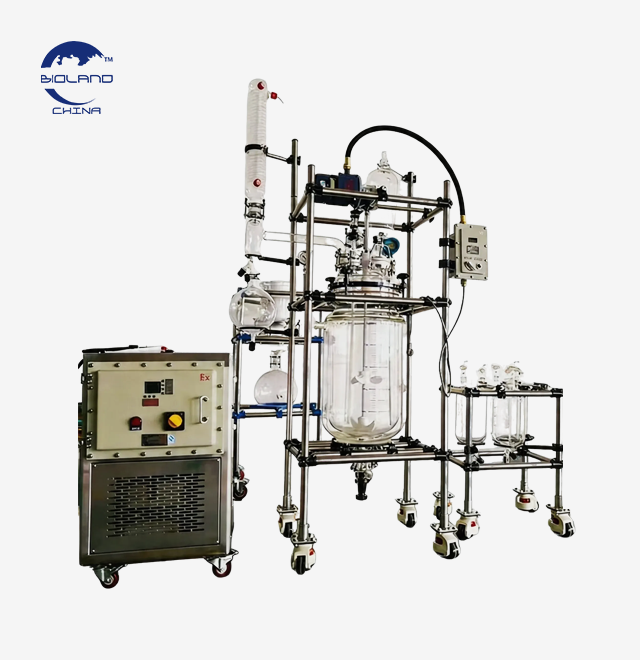
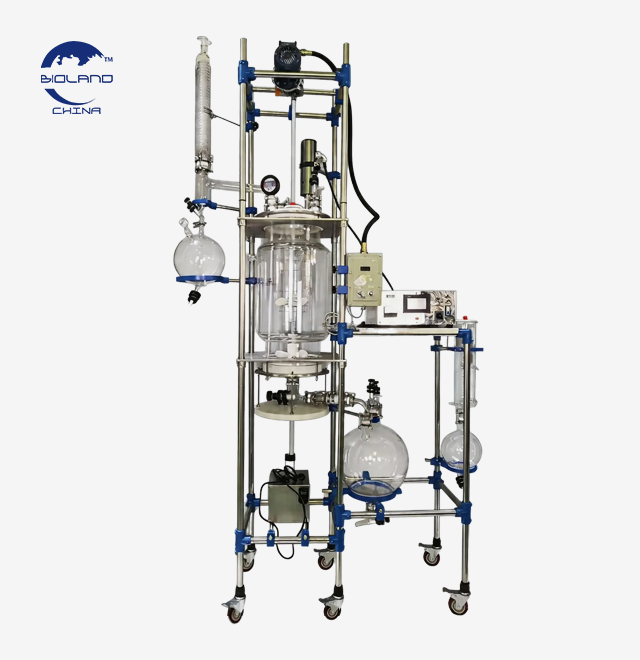
Bioland instrument's Glass Nutsche Filter systems can be set up to do reaction, crystallization, filtration, distillation, extraction, condensation, or vacuum functions, depending on what is needed. In the configuration described, PTFE filtration hardware comes standard. Supports made of stainless steel or titanium, filter cloth, and membrane media can also be chosen. Xi'an Bioland Instrument Co., Ltd. wants to offer a process solution that can help with work from early study to scale-up. It does this by offering OEM/ODM engineering and pilot-oriented choices.
Solid-Liquid Separation in Pharmaceutical Research
The hidden cost of an inconsistent cake
When building an API route, separation can slow things down, even if response exchange is fine. Filtration flow, retained mother liquor, wash demand, and product loss are all affected by particle size distribution, solids loading, viscosity, and cake compressibility. The team can use a Glass Nutsche Filter to look at the slurry, apply a controlled pressure differential, collect filtrate, and check on cake formation all at the same time. Before raising batch size, this can help researchers tell the difference between a crystal-habit problem and media blocking or an incorrect wash sequence.
Keep reaction and filtration in one observable workflow
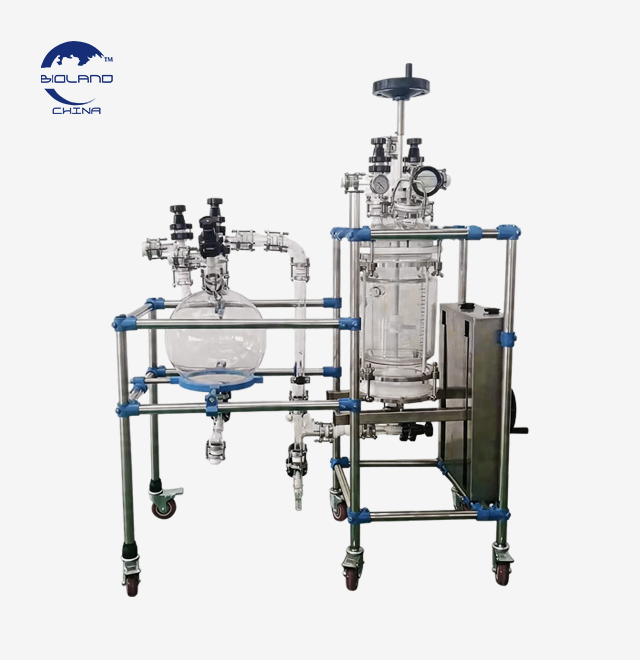
A connected batch path can start with charging and reacting, move on to controlled agitation, cooling or seeding, and finally filtration without having to move the slurry to a different funnel. The Glass Nutsche Filter keeps solids on the chosen support while liquid moves to a receiver. Depending on the recipe and configuration, the cake can be reslurried or washed right where it is. Less movement can help protect important study materials and make material-balance review easier.
As related process parameters, operators can write down temperature, agitation, vacuum, filtration time, wash volume, and the appearance of the filtrate. If you pair a Glass Nutsche Filter with the right temperature-control loop and vacuum system, you can run a process that includes reaction, crystallization, filtering, cake washing, discharge, and cleaning. Filterability tests are still very important. A clear tank makes it easier to see the process, but it doesn't replace particle-size analysis or product tests.
A peptide-development workflow that scales
Peptide teams working on thymosin-derived materials, antimicrobial peptide screening, or making peptide-carrier solids may come across fine, compressible cakes and reagent-rich liquor. It's possible for these batches to be sensitive to transfers and uneven cleaning. A 20–30 L Glass Nutsche Filter package can be customized to fit the slurry, filter medium, agitation needs, and temperature profile. PLC and electric-lifting options can also be thought about if needed.
Researchers can compare the clarity of the filtrate and the performance of the cake wash with this Glass Nutsche Filter method before selecting a pilot recipe. After that, HPLC or other assays that are appropriate for the task can be used to check the process. Recording the solvents that can be used, the limits of the vessel, the vacuum settings, and the cleaning steps helps with repeatability, without relying on the fact that the equipment alone will produce a certain result.
How Glass Nutsche Filters Support API Purification
Link the purity target to the separation plan
More than just the last step of filtering affects how clean an API is. The quality of the isolated solid is affected by how the reaction is finished, the type of impurities present, the solvent used, the conditions of crystallization, and the washing method. A Glass Nutsche Filterlets researchers do both crystallization and filtration in the same container. This lets them see if impurities stay in the mother liquor or get stuck in the cake.
It can also be easier to judge the wash sequence with a Glass Nutsche Filter. Researchers can use the right analytical methods to compare displacement washing and reslurry washing, check the clarity of the filtrate, and find out how much solvent or impurities are still present. Instead of just looking at how something looks, these studies help build a process reason for growth and scale-up.
An anonymized European chiral-API case
An anonymous European biotech team working on a chiral API intermediate had three problems that were all linked: it was hard to see when the reaction was finished, the crystal purity and yield were not always the same, and the corrosive acid or base steps needed to be transferred more than once. Open handling also made it harder to keep things clean and made it harder to stop cross-contamination.
Bioland instrument set up a 100-liter Glass Nutsche Filter system for a nitrogen-blanked reaction that took place between 0°C and 5°C. Once that was done, the team put -20°C coolant in the jacket and controlled the rate of cooling to 1–2°C per hour. Before moving to the PTFE filter system, the clear tank let workers see the reaction and crystal growth.
According to the secret project notes, using direct filtration and mother liquor again made crystals that were purer than 99.5% and increased the yield of isolated crystals by 15% compared to the previous method. The Glass Nutsche Filter supported reaction, crystallization, and filtration in one system, reducing transfers and making batch observations easier to document.
Configure the platform for development and GMP-oriented scale-up
A Glass Nutsche Filter can be chosen based on the chemistry, batch size, and site needs of API experts. Some of the options are a high-borosilicate tank, PTFE filtration hardware, chosen filter media, temperature control, pressure operation, and movement that is right for the process. Instead of assuming from a standard catalog, available capacities and configurations should be checked for each project.
A Glass Nutsche Filter system can also be made to fit the needs of the process and the site by adding things like PLC control, electric lifting, or an explosion-proof design. Bioland instrument provides OEM/ODM engineering for vessels with non-standard shapes, sizes, and built-in functions. For controlled development, buyers should make sure that the exact model has the right paperwork, material tracking, and proof support.
Applications in Crystallization and Product Isolation
Use temperature to shape filterable crystals
Supersaturation, planting, mixing, and cooling rate are some of the things that affect the quality of crystallization. If the temperature changes too quickly, crystals can form that are hard to filter or wash. On the other hand, a carefully studied profile can help researchers figure out the size and shape of crystals. These are well-known things to think about when developing crystals. Using a Glass Nutsche Filter with a jacketed reactor can help you control the temperature and separate solids all in one step.
In a solid-phase glass reactor that is suitable, a temperature-control package can be chosen for temperatures ranging from -20°C to 200°C, depending on the shape of the tank, the process pressure, the heat-transfer fluid, and the equipment rates. Researchers can test different levels of cooling and stirring in a Glass Nutsche Filter process and then look at the crystals that form by using the right analytical and filtration studies.
Carry the batch from crystallizer to cake wash
As soon as the ideal conditions for crystallization are found, keeping isolation steps linked can make development work easier. TheGlass Nutsche Filtercan cool or seed a pot, freeze it, filter it, and if the recipe allows it, wash it without moving the slurry to a different jar first. This can cut down on handling and help keep a clear record of the process.
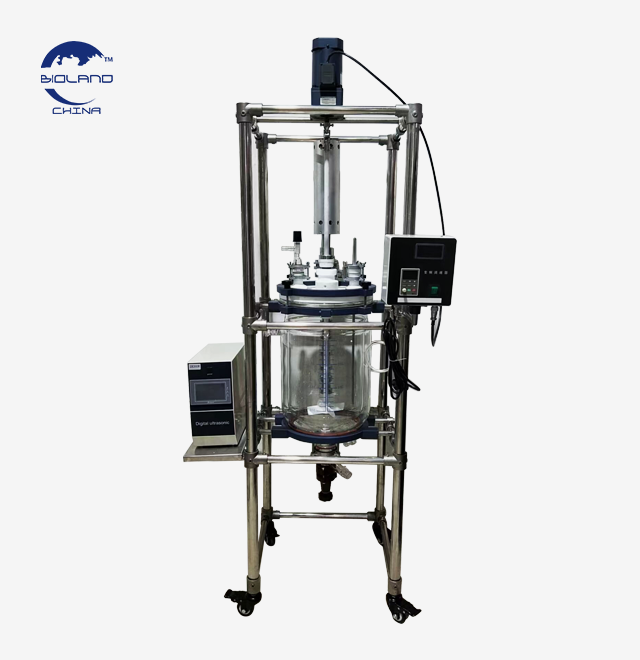
It is possible to add extra functions to a Glass Nutsche Filter configuration, like distillation, extraction, condensation, or vacuum operation, if they are needed for the process. Application designers should look at any extra features, like ultrasonic crystals, that are available. Making sure the system works with the process sequence is the main goal. Extra features that aren't needed for the research should not be added.
Peptide and carrier-material isolation at pilot scale
One of the hardest things for teams working on peptide-carrier materials is going from small study batches to a test process without losing control of how crystals form or how the cake is washed. Before the final specification, a 30 L Glass Nutsche Filter design could be tested with the liquid, solids loads, and filtering medium that were planned.
The group can look at different temperature profiles, agitation settings, filtrate clarity, and wash volumes and then use the analytical results to choose the best conditions to move forward with. This Glass Nutsche Filter pilot plan could include PLC control, PTFE filtration hardware, or functions that were chosen at the project's discretion. The next decision about scale-up should be based on the data, not just the vessel volume.
Maintaining Product Purity During Pharmaceutical Filtration
Reduce transfer-related contamination risk
Material transfers that happen over and over again can lead to product loss, operator exposure, and contamination between steps in the process. When the setup and process allow it, a Glass Nutsche Filter can keep reaction, crystallization, and isolation all in the same vessel. High-transparency glass also lets workers see how the batch has changed and know when a process step is ready to move on.
When it's important to keep chemicals from reacting with metal surfaces and the high-borosilicate surfaces of the Glass Nutsche Filter are wet, they can be useful. But every part that gets wet—including supports, seals, and fittings—should be checked to make sure it meets the requirements for the solvent, pH, temperature, and impurity control. As part of the process design, the choice of materials should be written down.
Build washing and cleaning into the batch record
How pure something is depends on how well mother liquor and soluble impurities are taken out of the cake. Researchers can look at the wash volume, solvent choice, and wash method, and then use the right assays to test the separated material. A Glass Nutsche Filter helps with this study because it lets the cake be washed and filtered in the same jar.
There should be a record of the filtration time, vacuum conditions, wash volumes, appearance of the filtrate, and cleaning steps in a practical development record. Depending on the design chosen, filtering parts that can be taken off can make cleaning and media changes easier. Cleaning and carryover limits still need to be set for the application. Analytical and visual checks help make sure that the process works for the next batch.
Engineer controls around solvents, vacuum, and heat
A process-specific risk review and equipment ratings are the first steps to safe operation. Glass containers should only be used at the temperature, pressure, and vacuum levels that are recommended for them. To avoid thermal shock, temperature changes should be kept under control. The Glass Nutsche Filter's working process should also include instructions on how to handle solvents, check connections, and take the right safety precautions for the spot.
Bioland instrument can talk about an explosion-protected setup, PLC control, electric lifts, and built-in temperature-control choices for processes that use flammable liquids or other known dangers. A Glass Nutsche Filtershould be set up according to the electrical classification of the site and local rules. Buyers should check the ratings and paperwork before placing an order. The reviews help make sure that the process works in a way that is safe and can be repeated.
A catalyst-recovery case relevant to pharmaceutical routes
A Polish company working on a precious metal catalyst had problems with low recovery, corrosive process liquor, and solid-liquid separation that didn't work well. This problem comes up in pharmaceutical route development when the use of catalysts and their recycling affect the cost of the process and the control of impurities.
A custom 50 L glass filtration and crystallization reactor was made by Bioland instrument for the process. According to the case profile, there is a reaction stage at 150°C that stays within the allowed operating range for that particular configuration. This is followed by separation using a PTFE filter assembly that can be taken off.
According to the project notes, more than 90% of the palladium or platinum that was still in the mother liquor was recovered. The custom Glass Nutsche Filter arrangement also made it easier to clean between batches and separated solids directly. Temperature and recovery numbers for a process should be understood in light of the equipment grade and the customer's process.
Choosing Filter Media for Pharmaceutical Applications
Characterize the slurry before sizing the filter
The slurry, not a catalog specification, is where media choice and equipment sizing begin. Researchers should think about the particle size distribution, solids concentration, viscosity, solvent, temperature, pH, required clarity of the filtrate, cake compressibility, and the need to wash. References on solid-liquid separation stress that filterability and cake resistance depend on the process and need to be tried. So, a Glass Nutsche Filter should be chosen based on how it will filter and the amount of the batches that will be made.
Bench tests can help you figure out if the particles can pass through the chosen medium, if the cake can be seen through, and how much liquid is left over after filtration. These findings help determine the filter area needs, the working conditions, and the wash plan. Before committing to a pilot configuration, it's especially helpful to test representative material.
Select media around the cake and solvent
A PTFE sintered filter assembly is used in the standard configuration that was described. Supports made of stainless steel or titanium, filter cloth, or membrane media may also be used, depending on the process and chemistry. The Glass Nutsche Filter should be paired with media that are chosen based on their ability to hold particles, their compatibility with chemicals, their cleaning needs, and the quality of the filter that is wanted.
The Glass Nutsche Filter media you choose should take into account more than just the nominal pore size. Researchers should check how well the medium works with the real slurry by looking at things like filter time, cake release, and wash behavior. It is important to check that solvents, acids, bases, and temperature conditions are compatible with the material. A material that works in one step might not work in every step of a multi-step process.
Specify controls, documentation, and service—not just capacity
Bioland instrument's Glass Nutsche Filter systems can be changed to fit the needs of the process, the tank size, and the shape and materials used. Explosion-proof systems, electric lifting, PLC automation, temperature control that is built in, ultrasonic crystallization, or combinations with distillation and other functions may be available as choices. The right specification depends on the route of the process, the needs of the operator, the needs of the site, and the plan to scale up.
A company called Xi'an Bioland Instrument Co., Ltd. has been making process equipment and offering solutions for more than 15 years. It has a wider range of products that include heating, cooling, vacuum, crystallization, mixing, drying, reaction, extraction, concentration, separation, purification, and crystallization equipment. Biopharmaceuticals, drug synthesis, chemicals, new materials, food, cosmetics, and research and development are some of the industries that use the goods. They are also exported to Europe and Southeast Asia.
The company says it has quality certifications from CE and ISO, an in-house research and development team, support for OEM and ODM, and products that are GMP and FDA-compliant. Buyers should make sure that the paperwork package matches the setup they have chosen. Standard models are usually ready in 5–7 days, while customized equipment usually takes 30 business days, but this is subject to confirmation. Bioland instrument also provides freight by sea, train, or air, a guarantee that lasts for one year, support for life, weekly progress reports, picture or video inspections, and the opportunity to set up a Factory Acceptance Test.
Conclusion
Pharmaceutical filtration is not an isolated unit operation: it shapes how reliably a research team can recover, wash, and characterize an API or peptide intermediate. A well-specified Glass Nutsche Filter combines process visibility with configurable reaction, temperature control, crystallization, and vacuum filtration, helping reduce transfers and gather scale-up evidence in one vessel. Results still depend on slurry properties, media selection, and validated operating limits, so equipment should be engineered around the chemistry rather than chosen by volume alone. Bioland Instrument supports this approach with PTFE and alternative media, OEM/ODM engineering, pilot configurations, and service from design review through FAT. Share your solvent, batch, and purity targets to explore a practical process solution.
FAQs
Q: What does a Glass Nutsche Filter do?
A: It retains solids on a filter support while liquid passes through under a controlled pressure differential.
Q: Can a Glass Nutsche Filter combine crystallization and filtration?
A: A configured system can cool, crystallize, filter, and wash a batch in one vessel, subject to equipment limits.
Q: Which filter media are available?
A: Options include PTFE, stainless steel, titanium, filter cloth, and membrane media, depending on compatibility and process needs.
Q: Is it suitable for GMP-oriented pilot work?
A: It can be specified for development and pilot needs; confirm model-specific documentation and validation scope.
Q: Can Bioland customize the system?
A: Yes. OEM/ODM options can include capacity, PLC control, lifting, temperature management, and explosion-protected configurations.
Discuss Your Pharmaceutical Filtration Challenge with Bioland Instrument
Need to move a promising flask result toward repeatable pilot isolation? Bioland Instrument can review your solvent system, solids loading, particle size, batch volume, purity target, cleaning needs, and site safety classification before recommending a Glass Nutsche Filter configuration. As a process-equipment manufacturer with more than 15 years of experience, Xi’an Bioland Instrument Co., Ltd. combines OEM/ODM engineering, competitive pricing, CE and ISO quality credentials, and R&D support across reaction, crystallization, filtration, extraction, and vacuum operations. Tell us whether your main challenge is cake washing, yield, transfer loss, or temperature control, and we can assess a Glass Nutsche Filter solution around your process. Contact info@biolandequip.com to request an application review.
References
1. Wakeman, R. J., and Tarleton, E. S. Solid/Liquid Separation: Principles of Industrial Filtration. Elsevier, 1999.
2. Mullin, J. W. Crystallization. 4th ed. Butterworth-Heinemann, 2001.
3. Myerson, A. S., Erdemir, D., and Lee, A. Y., eds. Handbook of Industrial Crystallization. 3rd ed. Cambridge University Press, 2019.
4. International Council for Harmonisation. ICH Q8(R2): Pharmaceutical Development. 2009.
5. U.S. Food and Drug Administration. Process Validation: General Principles and Practices. Guidance for Industry, 2011.
6. International Council for Harmonisation. ICH Q9(R1): Quality Risk Management. 2023.
The reactor is beautifully mirror-polished and fully complies with GMP requirements for the pharmaceutical industry. The performance is excellent! Overall, we are very satisfied! We also provided with some feedback on our process improvements, which we hope will be helpful.
2024-04-09
Laboratory
Excellent and professional service. Always reply our questions very fast. All reactors and chiller we received are good too.
2024-02-15
Research Institute
Quality is beyond our expectation actually. After we got the extraction equipment and started using it, the performance was beyond our expectation. Very easy to use and very efficient to run. Service always respond us very quickly. Was also very helpful to help us. Thanks Bioland team. Very happy to work with you.
2023-11-20
Biotech Company
We are happy about the new purchase as always. Equipment and services are both good.
2023-08-05
Instrument Lab
This is the second order with Bioland instrument and everything is good as the first dateText.
2023-05-12
Global Trading Partner
Bioland instrument team is very helpful and professional. The sales helped us select the right equipment for our application, and their logistics people handled the transportation and customs declaration for our shipment. All that saved us a lot of work.